Living
Malinois or Papillon: which fits most owners?
The Papillon, high marks for first-time owners (4/5) and apartment life (5/5), against the Malinois's 1/5 on both.

Quick answer
Malinois or Papillon: which fits most owners?
The Papillon, high marks for first-time owners (4/5) and apartment life (5/5), against the Malinois's 1/5 on both.
Belgian Malinois or Papillon? On paper they differ most on apartment suitability, and on the scales Belgian Malinois is the heavier at 55–65 lbs. Here is how the two compare on everything that shapes an ordinary week.
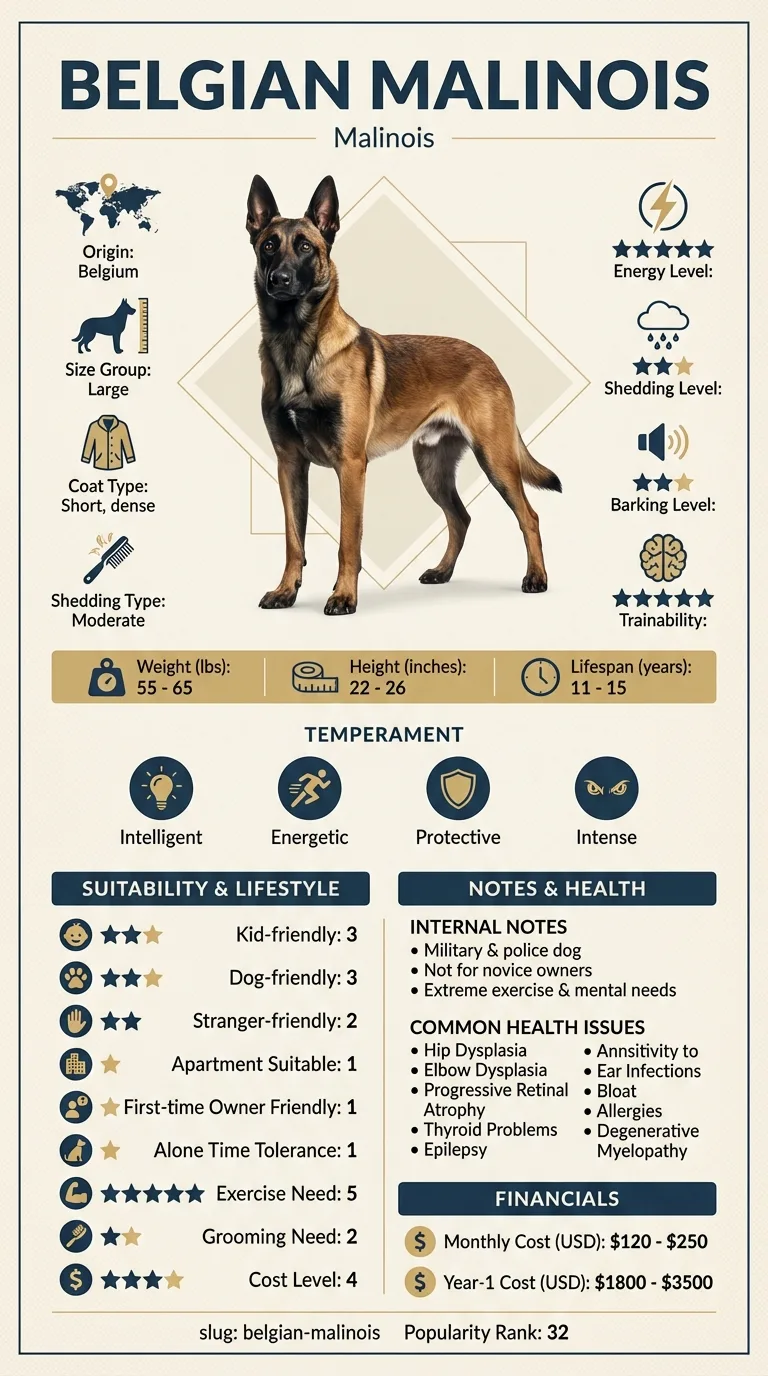
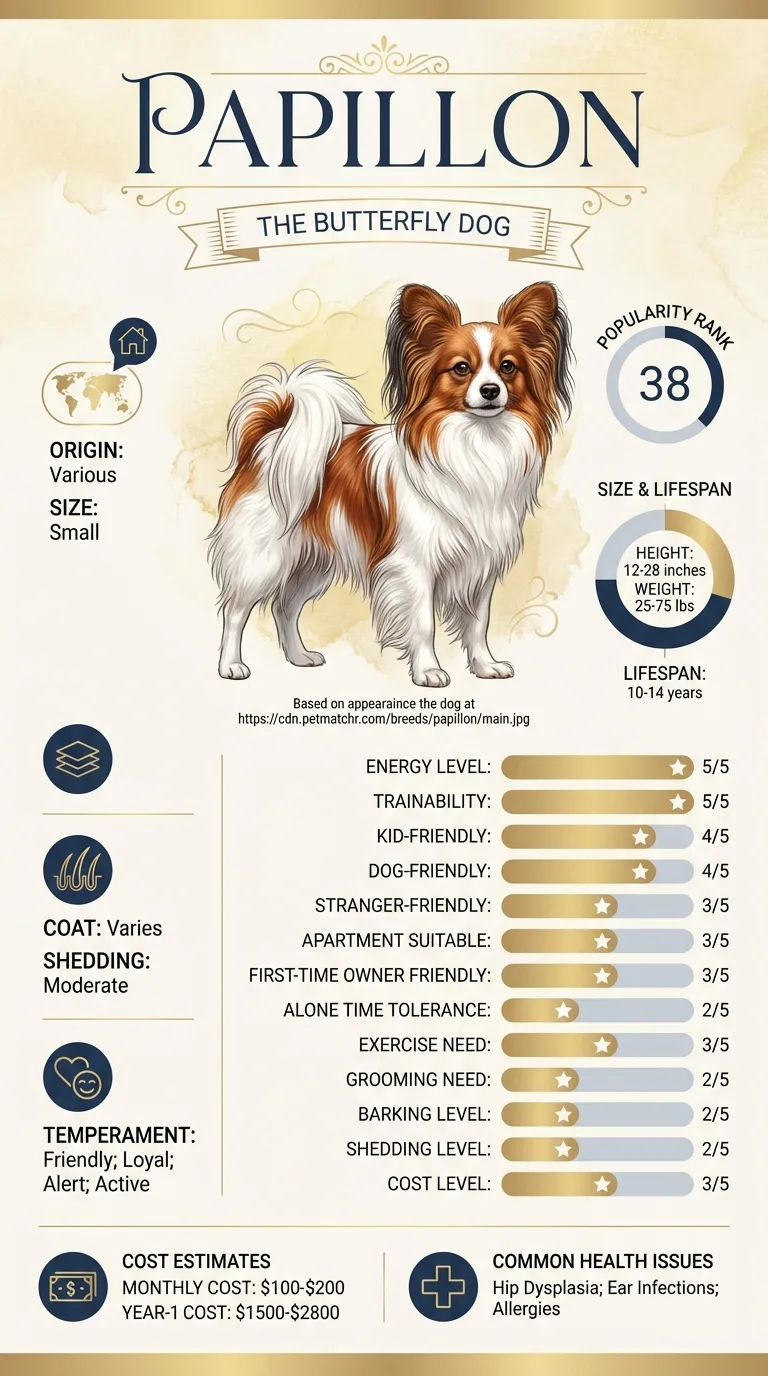
This is for someone already down to Belgian Malinois and Papillon and deciding between them. For this pair the decision usually turns on apartment suitability and good for first-time owners, so those are covered first and in most detail. Anyone choosing from a flat has a clear answer here: Papillon rates 5/5 against 1/5. The focus throughout is on daily consequences rather than breed background.
Between Belgian Malinois and Papillon, apartment suitability is what separates them, and Papillon is the lower-effort dog of the two to keep.
Choose Belgian Malinois if you want a dog that can keep up with an active routine and you want a dog that is more watchful with visitors.
Choose Papillon if you are in a flat or a smaller home, this is your first dog and shedding is a problem in your house.
| Feature | belgian malinois | papillon | Winner |
|---|---|---|---|
| Size class | large | small | Equal |
| Weight | 55–65 lbs | 5–10 lbs | Equal |
| Height | 22–26 in | 8–11 in | Equal |
| Lifespan | 11–15 years | 14–16 years | papillon |
| Exercise need | Very high (5/5) | Moderate (3/5) | papillon |
| Grooming need | Low (2/5) | Low (2/5) | Equal |
| Shedding | Moderate (3/5) | Low (2/5) | papillon |
| Energy level | Very high (5/5) | High (4/5) | Equal |
| Barking | Moderate (3/5) | High (4/5) | belgian malinois |
| Apartment suitability | Very low (1/5) | Very high (5/5) | papillon |
| Good for first-time owners | Very low (1/5) | High (4/5) | papillon |
| Tolerates being alone | Very low (1/5) | Low (2/5) | papillon |
| Trainability | Very high (5/5) | Very high (5/5) | Equal |
| Good with kids | Moderate (3/5) | Moderate (3/5) | Equal |
| Good with other dogs | Moderate (3/5) | High (4/5) | papillon |
| Friendly to strangers | Low (2/5) | High (4/5) | papillon |
| Cost level | High (4/5) | Low (2/5) | papillon |
| Coat | Short, dense | Long, silky single coat | Equal |
| Origin | Belgium | Various | Equal |
| Typical monthly cost | $120–$250 | $80–$150 | Equal |
| Typical first-year cost | $1,800–$3,500 | $1,100–$2,300 | Equal |
The Papillon is about as far from a Malinois as dog size gets, 5-10 lbs and 8-11 inches against the Malinois's 55-65 lbs and 22-26 inches. Its name comes from its butterfly-shaped ears, roughly the only feature that draws a second look at this size. Don't let the delicate look fool you though, Papillons are sturdier and more athletic than their toy-breed classification suggests, even if they'll never approach the Malinois's raw size or strength.
The Malinois needs far more daily output, 5/5 exercise and energy against the Papillon's moderate 3/5 exercise and high 4/5 energy. That's a notably high energy rating for such a small dog; the Papillon just burns it off differently, in shorter bursts rather than sustained work. A few short, engaging play sessions a day generally covers a Papillon's needs, a workload that fits easily around a full-time job in a way the Malinois's 5/5 rating simply doesn't.
Grooming ties at low (2/5) for both, which is unusual for a long-coated toy breed, the Papillon's silky coat doesn't mat the way a curly or wiry coat would. Shedding favors the Papillon slightly, low (2/5) against the Malinois's moderate (3/5). Regular brushing two or three times a week keeps a Papillon's coat in good shape without the professional trims a curlier or wirier coat would demand.
The Papillon barks more than you'd expect from its size, high (4/5) against the Malinois's moderate (3/5), so don't assume small means quiet here. It does win decisively on apartment suitability (5/5 vs 1/5) and tolerates being alone somewhat better, though its 2/5 rating still isn't strong. If noise is a genuine concern in a shared building, look into bark-training early rather than assuming its small size will keep things quiet on its own.
Both breeds are highly trainable, tied at 5/5, a notable number for a toy breed. The real gap is first-time-owner fit: the Papillon rates high (4/5) against the Malinois's very low (1/5), since trainability alone doesn't offset the intensity and space demands of a working-line dog. For a household set on a highly trainable dog without a working-line breed's intensity, the Papillon delivers nearly the same trainability score in a far more manageable package.
Both rate a moderate 3/5 with kids; small dogs and small children both carry some risk of accidental injury in either direction. The Papillon pulls ahead with other dogs (4/5 vs 3/5) and strangers (4/5 vs 2/5), matching its reputation as an outgoing toy breed rather than a shy one. Papillons in particular tend to be confident around new people despite their size, which shows up clearly in that stranger-friendliness gap over the more reserved Malinois.
The Papillon has the longest lifespan of any breed in this batch, 14-16 years against the Malinois's 11-15, and a shorter health list of five conditions, with only progressive retinal atrophy overlapping the Malinois's ten. Its list leans toward small-breed issues like patellar luxation, collapsing trachea, and open fontanel, a soft spot in the skull that's a known risk in toy breeds.
The Papillon is the cheapest dog to keep in this comparison, low cost (2/5) against the Malinois's high (4/5), $80-$150 monthly versus $120-$250, and a first-year ceiling of $2,300 against $3,500. Small size generally means smaller food and medication bills across the board. That's roughly half the Malinois's monthly outlay, a meaningful difference if budget is a real constraint alongside the temperament and space considerations covered above.
Belgian Malinois weighs 55–65 lbs and lives 11–15 years; Papillon weighs 5–10 lbs and lives 14–16 years. The two diverge most on apartment suitability, good for first-time owners and exercise need and 2 other rated axes. They are level on grooming need, good with kids and trainability, so those cannot decide it. The table below marks a winner only where one breed is genuinely easier for a typical owner; size and origin are facts rather than merits and stay level. Ratings come from one source applied to both breeds, so they are meaningful against each other rather than as absolute scores.

More than its size suggests, rated high (4/5), even above the Malinois's moderate (3/5). Don't assume a toy breed will be the quieter option by default.
The Papillon, by a solid margin, 14-16 years against the Malinois's 11-15. It's the longest lifespan of any breed in this comparison batch.
Very. It ties the Malinois at 5/5 trainability, an unusually high mark for a toy breed.
The Papillon, clearly, $80-$150 a month against the Malinois's $120-$250. It's the cheapest breed to keep across this whole batch of comparisons.
Yes, rated high (4/5) for first-time owners against the Malinois's very low (1/5). Its high trainability without a working dog's intensity makes it manageable for a beginner.
Barely, only progressive retinal atrophy overlaps. The Papillon's other risks, patellar luxation, collapsing trachea, open fontanel, are typical small-breed issues not seen on the Malinois's list.
The Papillon, decisively, 5/5 apartment suitability against the Malinois's 1/5. Just budget for some bark-training given its surprisingly high barking rating.
The Papillon, high marks for first-time owners (4/5) and apartment life (5/5), against the Malinois's 1/5 on both.
About $40-$100 less for the Papillon ($80-$150 vs $120-$250).
The Malinois, 5/5 versus the Papillon's moderate 3/5.
The Papillon, 14-16 years against the Malinois's 11-15.
Secure checkout on Stripe. We never see your card.
7-day money-back guarantee. Instant access.
Health information here is general and is not veterinary advice. If your dog shows pain, sudden behaviour change, or worsening symptoms, consult a licensed veterinarian.
Some links on this site are affiliate links. We may earn a commission at no extra cost to you, and we only suggest products we believe are helpful for dog owners.
We research and check what we publish, but we do not warrant that any figure, date, price, or statement is accurate, complete, or current, and we accept no liability for any loss, cost, injury, or other harm arising from the use of this site. Use it as one reference among several. You remain responsible for your own decisions and for your dog's care - confirm anything that matters with a licensed veterinarian or another qualified professional before you act on it. Full disclaimer.
Match your lifestyle to the right dog.
Take quizNot sure which breed is right for you? Take our 2-minute quiz to find out.
Take the quiz