Health
What should I do if my Belgian Malinois shows eye problems?
If you notice eye problems, schedule a vet appointment as soon as possible for a thorough examination.

Quick answer
What should I do if my Belgian Malinois shows eye problems?
If you notice eye problems, schedule a vet appointment as soon as possible for a thorough examination.
Belgian Malinois ocular disease can be a serious concern for dog owners. This condition can significantly affect their vision and overall health.
Owners who have Belgian Malinois, especially first-time dog parents, often face challenges with understanding and managing ocular disease. This condition can lead to anxiety in both the dog and the owner, making awareness and training essential.
This guide is not medical advice. If your dog shows pain, sudden behavior change, or worsening symptoms, consult a licensed veterinarian.
Some links may be affiliate links. We may earn a commission at no extra cost to you. We only suggest products we believe are helpful for dog owners.
We research and check what we publish, but we do not warrant that any figure, date, price, or statement is accurate, complete, or current, and we accept no liability for any loss, cost, injury, or other harm arising from the use of this site. Use it as one reference among several. You remain responsible for your own decisions and for your dog's care - confirm anything that matters with a licensed veterinarian or another qualified professional before you act on it. Full disclaimer.
Check this first
Knowing when to seek help for Belgian Malinois ocular disease is crucial. Some signs indicate a need for immediate veterinary attention, while others may allow for monitoring at home. If your Malinois experiences severe symptoms, it’s time to act quickly.
If any of these apply, call your vet or an emergency clinic now. The rest of this page is for the cases that are not an emergency.
Belgian Malinois ocular disease can manifest as a range of vision problems, affecting your dog's quality of life. Common symptoms include squinting, excessive tearing, or difficulty seeing in bright light. These issues can arise from genetic predispositions, injuries, or age-related factors.
Ocular disease is relatively common in Belgian Malinois, with studies showing these dogs face a 467% higher risk of vision issues compared to other breeds. Regular veterinary check-ups can help detect and manage these problems early.
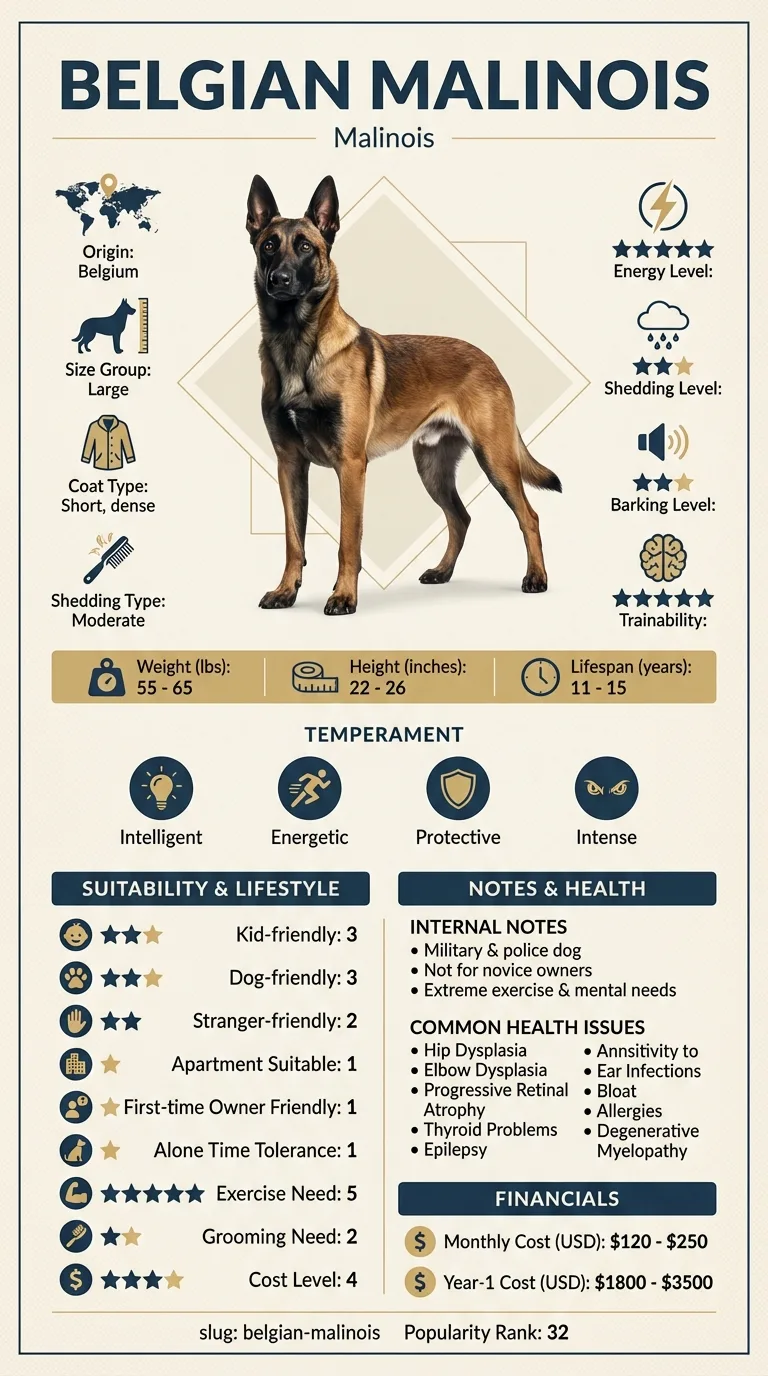
Belgian Malinois are prone to certain genetic conditions, including ocular diseases like Progressive Retinal Atrophy. Their intense energy levels and protective nature can sometimes lead to stress-related eye issues as well. So, if your Malinois shows symptoms, it might be linked to their breed characteristics.
Environmental factors can also contribute to ocular diseases in Belgian Malinois. Exposure to allergens, irritants, or injuries can impact eye health. Additionally, a lack of proper care or regular vet visits may worsen any existing conditions.
You should talk to a vet if you notice any changes in your dog's vision, such as difficulty seeing in bright light or increased squinting. Regular eye examinations are crucial for early detection of ocular diseases. If your Malinois experiences discomfort or shows signs of pain, a vet visit is essential.
Ignoring symptoms can lead to worsening conditions. If you notice any changes in your Malinois's eyes, such as redness or discharge, consult your vet promptly. Early intervention can prevent serious damage.
Overlooking vet visits is another mistake. Regular check-ups are crucial for detecting ocular diseases early. Schedule annual eye exams for your Malinois to monitor their eye health.
Neglecting proper diet can also worsen ocular issues. Feed your dog high-quality food rich in vitamins, especially those beneficial for eye health, like vitamins A and E. A balanced diet supports overall well-being and can help mitigate issues.
Inconsistent training is a common pitfall. Set clear boundaries and training routines for your Malinois. Consistency helps them understand what behaviors are acceptable and can reduce stress, which is important for managing ocular disease.
Using harsh corrections can lead to anxiety and behavioral issues. Instead, focus on positive reinforcement. Reward good behavior with treats or praise to create a supportive environment.
Failing to provide mental stimulation can also exacerbate problems. Belgian Malinois are high-energy dogs that need both physical and mental challenges. Engage them with puzzle toys or training exercises to keep their minds sharp and reduce stress.
Start here: Belgian Malinois Most Common Genetic Disorders: Screening
See all Belgian Malinois health problems, which breeds are prone to ocular disease, or the full Belgian Malinois breed guide for temperament, exercise needs and ownership costs.
Addressing Belgian Malinois ocular disease can take several weeks to months, depending on the severity and treatment plan. Regular vet visits and monitoring are crucial.
Success means improved vision and comfort for your dog, with reduced symptoms and a clear management plan in place.
Look out for these critical symptoms that require urgent veterinary care: - Sudden vision loss or blindness - Extreme redness or swelling of the eye - Persistent squinting or pawing at the eye - Discharge that is yellow or green - Bulging of the eye or unusual pupil shape

In less severe cases, you may monitor your Belgian Malinois at home. Here are signs that can often be observed without immediate vet visits: - Mild redness or irritation - Occasional squinting without discharge - Minor signs of discomfort that do not worsen

When Sarah adopted her Belgian Malinois, Max, she noticed he was squinting and seemed easily startled by sudden movements. After a vet visit, she learned that Max had ocular disease, which was common in his breed. Determined to help him, Sarah followed a treatment plan that included medication and regular eye check-ups. With patience and dedication, she worked on training exercises that kept Max's mind engaged while accommodating his vision challenges. After a few months, Max was more relaxed and responsive, and his overall health improved significantly.
Key takeaway: With the right support and training, managing Belgian Malinois ocular disease is possible, leading to a happier and healthier dog.
Common signs include excessive tearing, squinting, redness, or cloudiness in the eyes. You might also notice your dog being sensitive to light or having difficulty seeing. If you observe any of these symptoms, it's essential to consult your vet.
If your Malinois is diagnosed with ocular disease, consult your vet for a management plan. This may include medication or specialized diets to support eye health and regular check-ups to monitor the condition.
While you can't completely prevent ocular disease, you can reduce risks by selecting a reputable breeder who screens for genetic issues. Regular vet visits and a healthy lifestyle can also support your dog's overall well-being.
Training a Belgian Malinois with ocular disease should focus on positive reinforcement techniques. Teaching them to navigate obstacles and using verbal cues can help them adjust to their vision challenges.
Yes, ocular disease can sometimes indicate or lead to other health problems, such as progressive retinal atrophy. Regular check-ups can help catch any related issues early, so keep your vet informed about any changes in your dog's eyesight.
Management may include keeping your dog in a low-stress environment and avoiding bright lights. Training for obedience can also help, using positive reinforcement to encourage good behavior while adapting to their vision challenges.
Yes, older dogs are more likely to develop ocular diseases due to age-related changes in their eyes. Regular veterinary check-ups become increasingly important as your Malinois ages to monitor their ocular health.
Treatment options can vary based on the specific condition and severity. They may include medications, surgery, or specialized care. Always consult your veterinarian to determine the best course of action for your dog.
If you notice eye problems, schedule a vet appointment as soon as possible for a thorough examination.
Yes, they can face various health challenges, including hip dysplasia and thyroid problems; regular check-ups are important.
Choose a responsible breeder and ensure regular vet visits to monitor eye health and catch any issues early.
Yes, training can help your Belgian Malinois adapt to their condition, especially by teaching them to navigate their environment safely.
Keep your home well-lit and free of obstacles, and use consistent commands to help your dog navigate safely.
A one-page prep sheet for this condition: the signs, the questions to ask, what to get priced. Unlocks here.
You get: Vet visit prep sheet
No spam. One-click unsubscribe. See our privacy policy.
Preview page 1 before you decide.