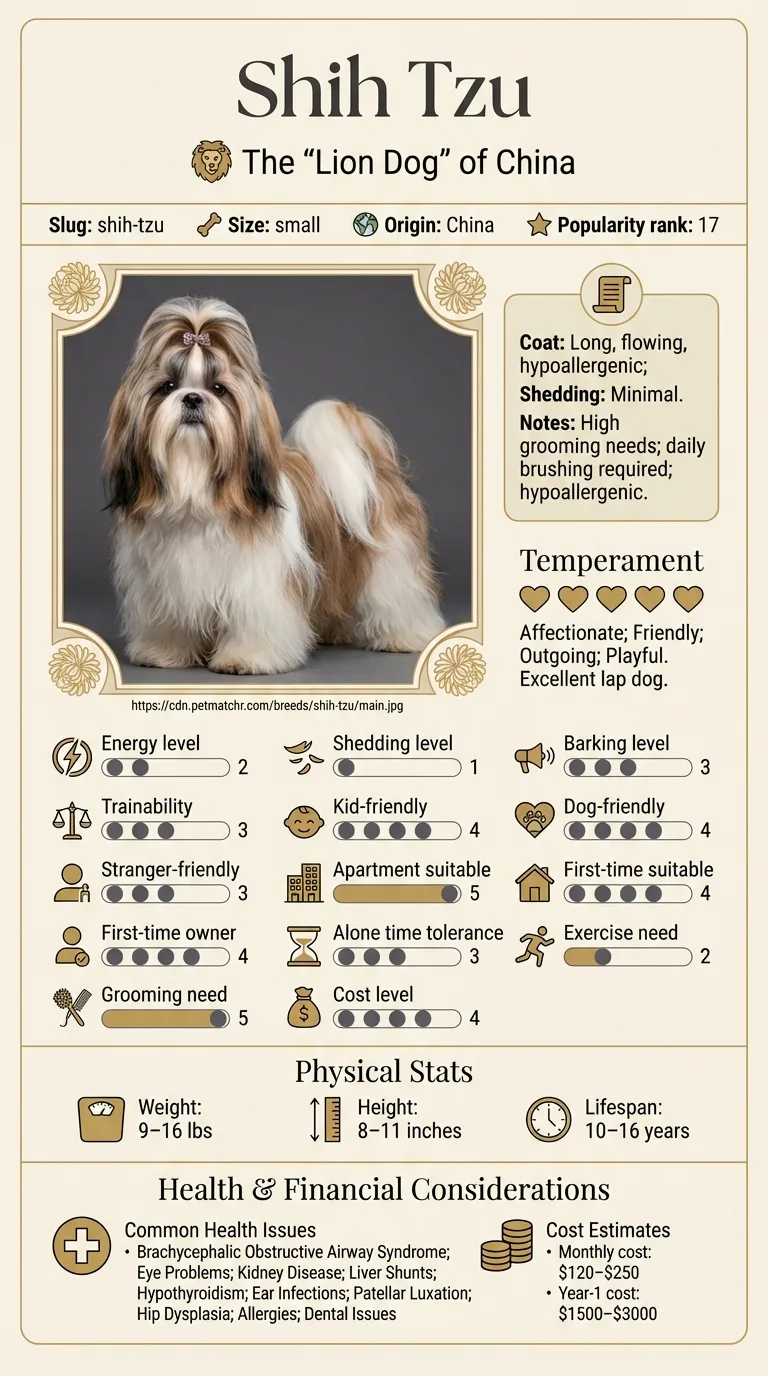
Eye problems sit second on the Shih Tzu's health list and they deserve to be understood as a category rather than a single condition, because two of them are emergencies.
The underlying issue is conformation. A shortened skull leaves shallow eye sockets, so the eyes sit prominently and the lids may not fully close during sleep. Prominent eyes are more exposed to knocks, scratches and drying, and long facial hair adds constant mechanical irritation.
Corneal ulcers are the common result. A Shih Tzu that is squinting, weeping, holding an eye closed or pawing at its face needs seeing the same day — a superficial scratch can deepen quickly, and delay changes the outcome substantially. Do not wait to see whether it settles overnight.
Proptosis is the rarer emergency: the eye displaced forward out of the socket, usually after a knock or during rough play or a scuffle. It is immediately obvious and it is a drive-to-the-vet-now situation where minutes matter for saving the eye.
Dry eye — reduced tear production — is the chronic version and shows as a thick discharge and a dull cornea. It is manageable with lifelong medication once diagnosed.
The rest of the list carries kidney disease, which in this breed includes a juvenile form that shows up in young dogs as excessive drinking, urination and poor growth; liver shunts, diagnosed with bile acid testing; dental issues, inevitable in a crowded short jaw and worth daily brushing from puppyhood; plus patellar luxation, hip dysplasia, hypothyroidism, ear infections and allergies.
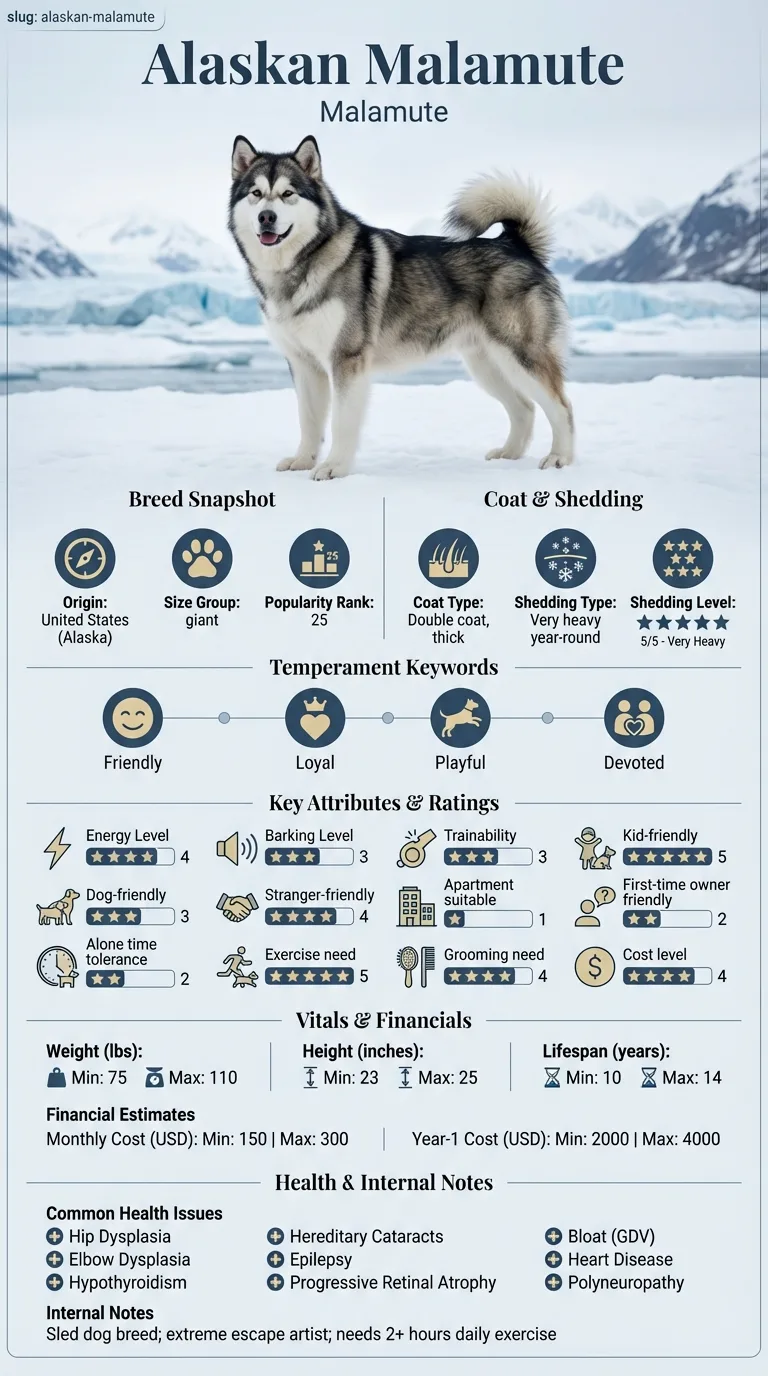
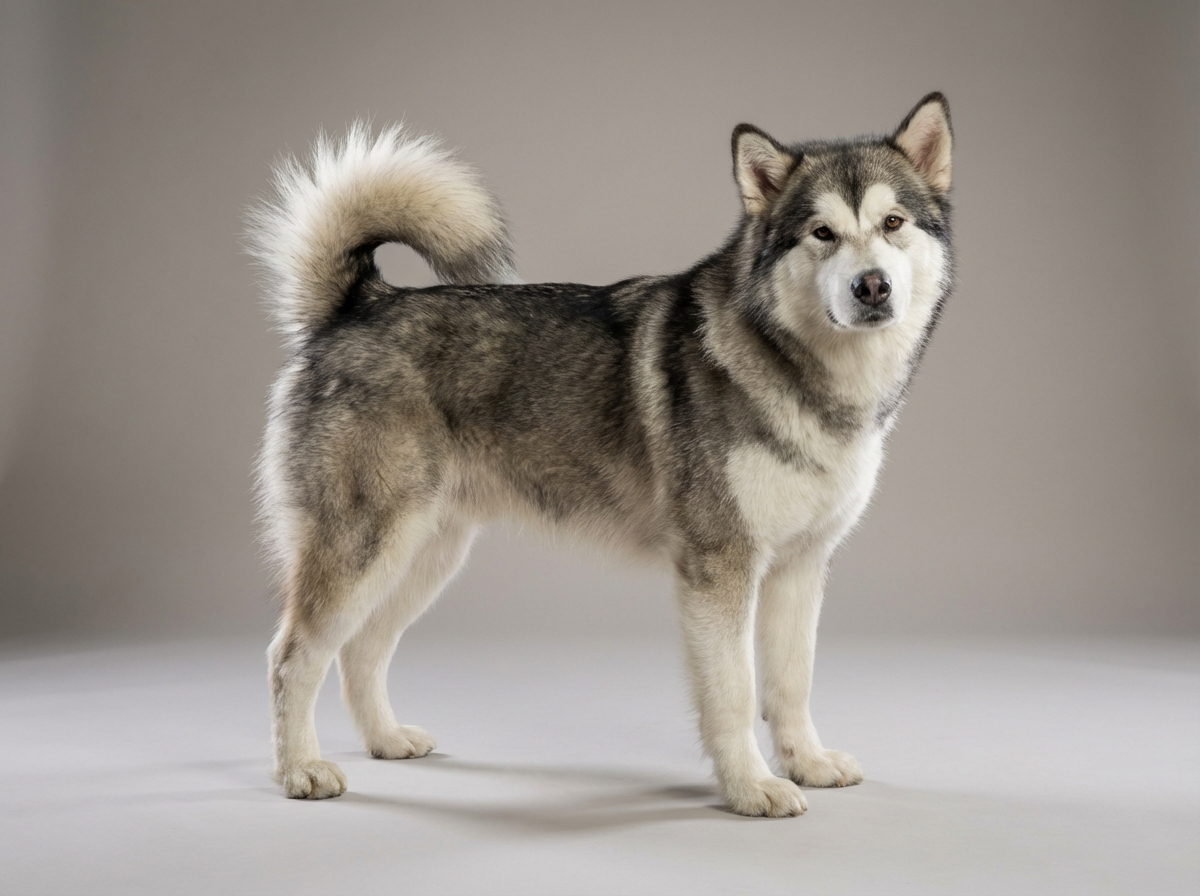
The Malamute's list is a large-breed one: hip and elbow dysplasia, bloat, hypothyroidism, epilepsy, progressive retinal atrophy, hereditary cataracts, zinc-responsive dermatosis and inherited polyneuropathy. Its problems are larger, rarer and less urgent.