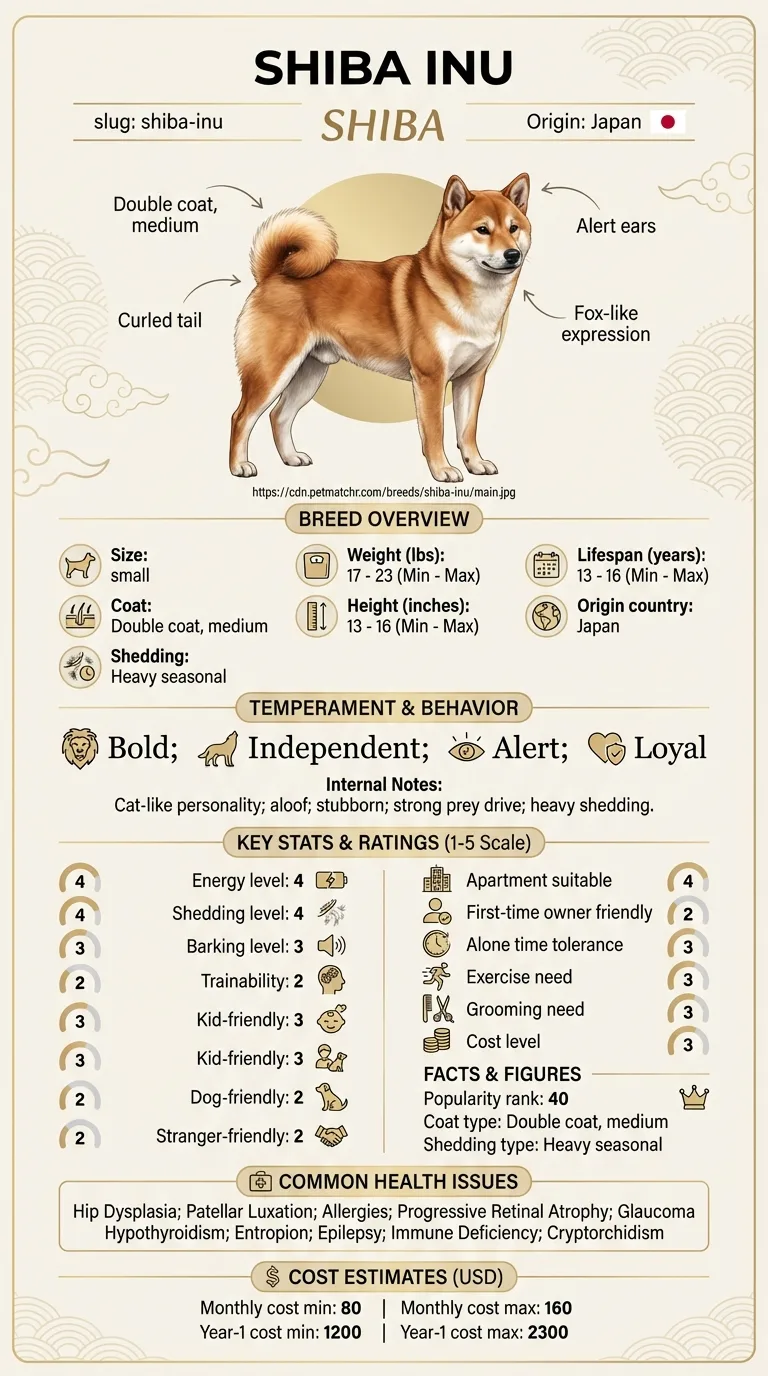
The Shiba's 13 to 16 year lifespan is one of the best on this site, and its health list is manageable, but two entries on it are eye conditions worth recognising quickly.
Glaucoma is raised pressure inside the eye, and in its acute form it is a genuine emergency — vision can be lost within a day or two if pressure is not brought down. The signs are a suddenly painful eye: squinting, a cloudy or bluish cornea, a red eye, a dilated pupil that does not respond, and a dog that is subdued or rubbing at its face. In a breed with glaucoma on its list, that combination is a same-day veterinary visit rather than a wait-and-see.
Entropion is the eyelid rolling inward so that lashes rub the cornea. It usually shows in the first year or two as persistent squinting or weeping in one eye, it causes ongoing corneal damage if left, and it is surgically corrected.
Progressive retinal atrophy completes the eye group and has DNA testing available in the breed.
The remainder runs hip dysplasia, patellar luxation, allergies, hypothyroidism, epilepsy, an immune deficiency and cryptorchidism — a retained testicle, which matters because retained testicles carry a much higher cancer risk and should be removed rather than left.
Allergies deserve a note of their own. Shiba skin allergies are common and present as itching, ear infections and paw-licking rather than anything dramatic, and they are managed rather than cured.
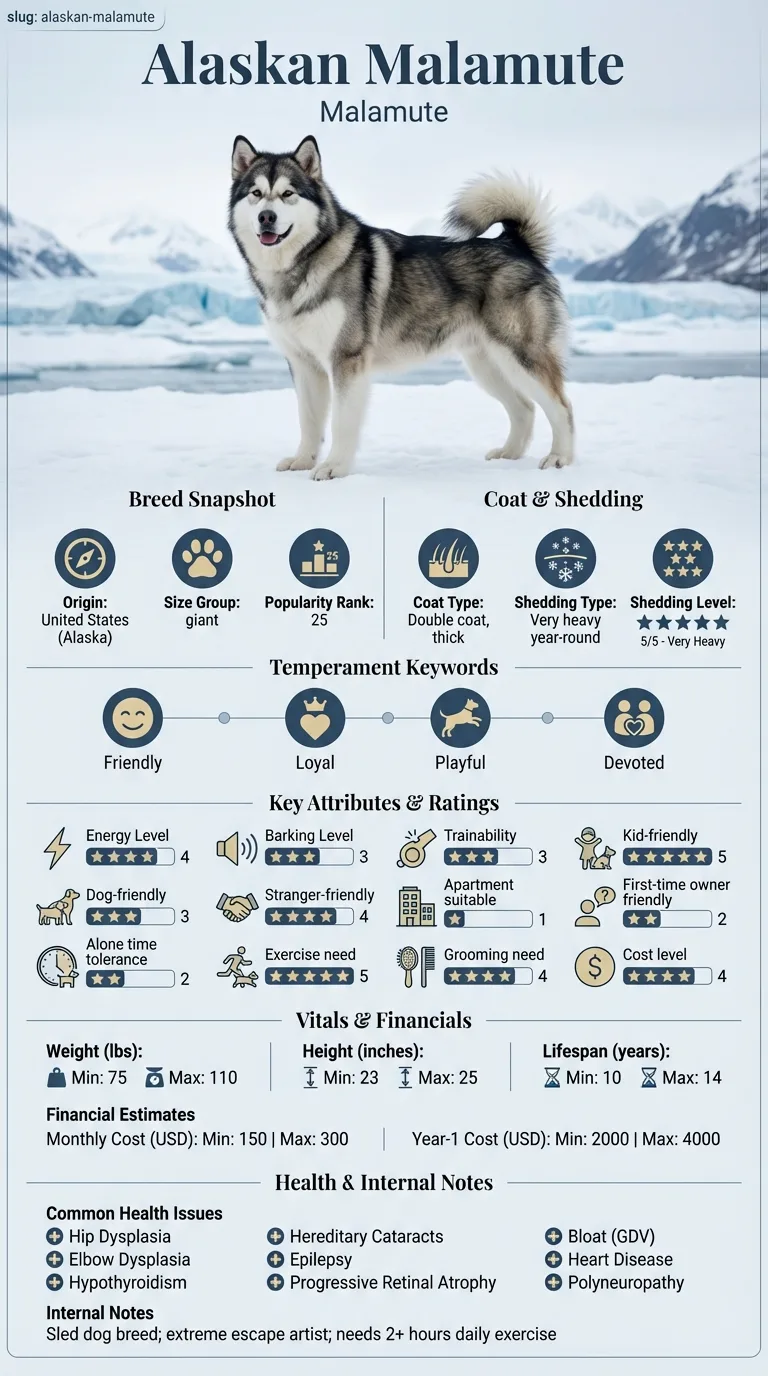
On cost the Shiba is much the cheaper dog: $80–160 a month against $150–300, and $1,200–2,300 in the first year against $2,000–4,000, at cost level 3/5 against 4/5.
The Malamute's list is the large-breed version: hip and elbow dysplasia, bloat, hypothyroidism, epilepsy, progressive retinal atrophy, hereditary cataracts, zinc-responsive dermatosis and inherited polyneuropathy.