Living
Havanese or Shiba Inu -- which fits your life?
The Havanese is the easier, more sociable choice across nearly every measure; the Shiba suits an owner specifically drawn to its independent character and willing to work with it.

Quick answer
Havanese or Shiba Inu -- which fits your life?
The Havanese is the easier, more sociable choice across nearly every measure; the Shiba suits an owner specifically drawn to its independent character and willing to work with it.
Havanese or Shiba Inu? On paper they differ most on good for first-time owners, and on the scales Shiba Inu is the heavier at 17–23 lbs. Here is how the two compare on everything that shapes an ordinary week.
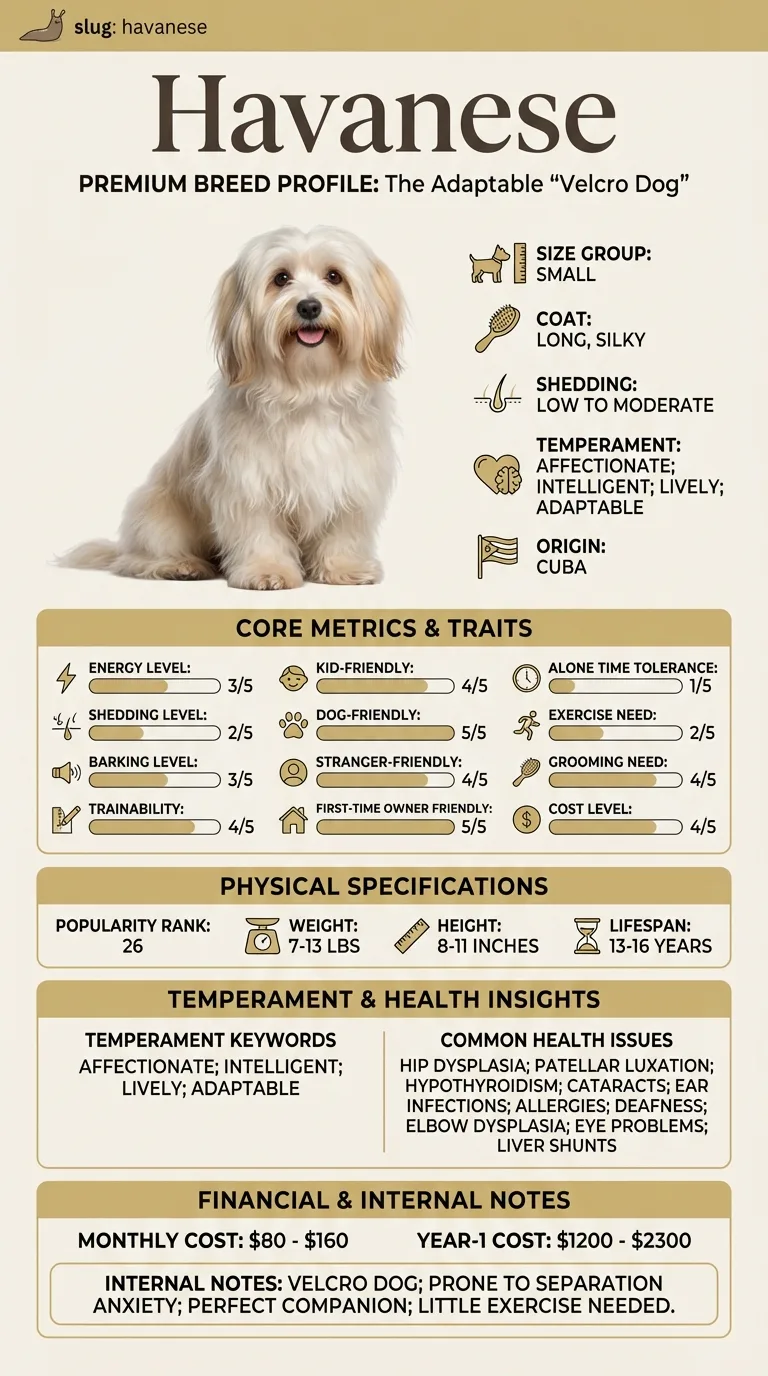
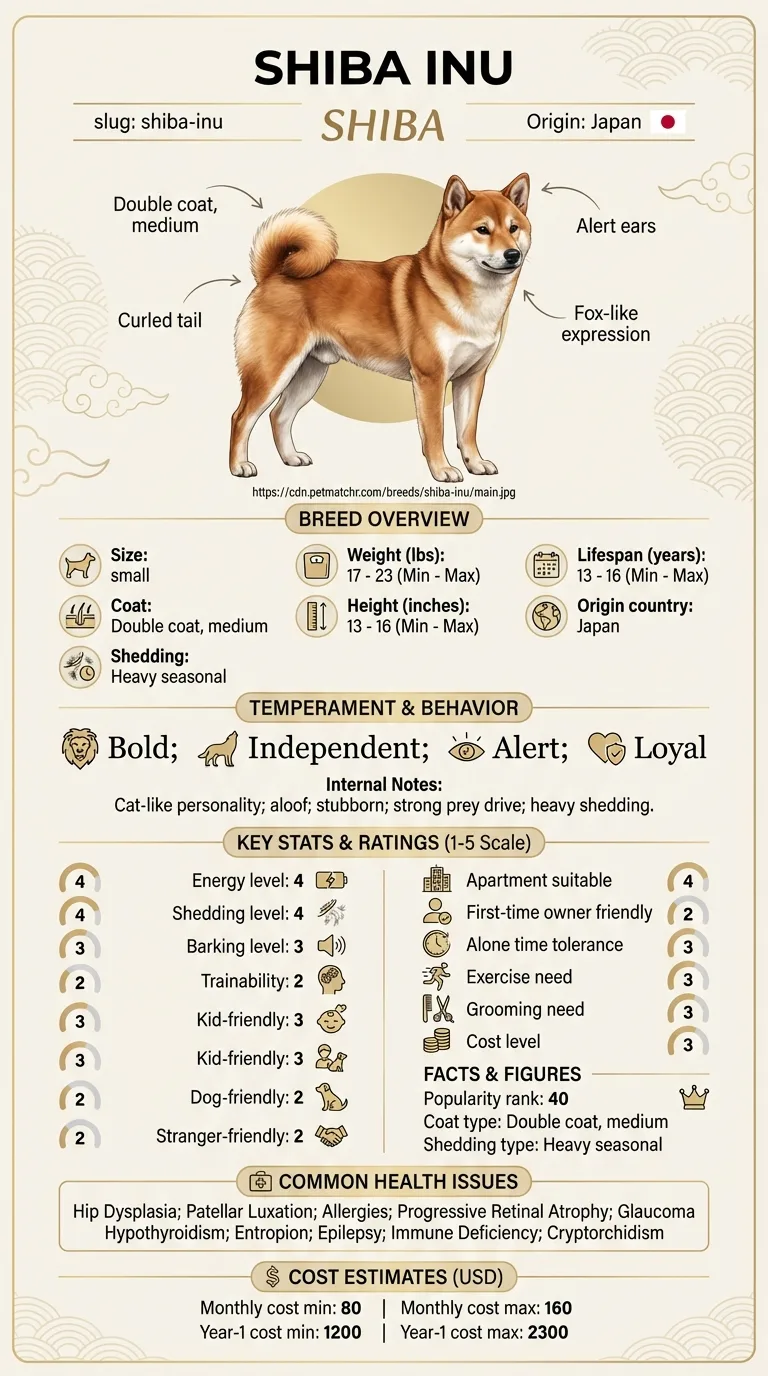
This is for someone already down to Havanese and Shiba Inu and deciding between them. For this pair the decision usually turns on good for first-time owners and good with other dogs, so those are covered first and in most detail. Anyone choosing from a flat has a clear answer here: Havanese rates 5/5 against 4/5. It is written for the decision rather than the breed history.
Between Havanese and Shiba Inu, good for first-time owners is what separates them, and Havanese is the lower-effort dog of the two to keep.
Choose Havanese if you are in a flat or a smaller home, this is your first dog and shedding is a problem in your house.
Choose Shiba Inu if you do not want a standing grooming appointment, the dog will be alone during the working day and you want a dog that can keep up with an active routine.
| Feature | havanese | shiba inu | Winner |
|---|---|---|---|
| Size class | small | small | Equal |
| Weight | 7–13 lbs | 17–23 lbs | Equal |
| Height | 8–11 in | 13–16 in | Equal |
| Lifespan | 13–16 years | 13–16 years | Equal |
| Exercise need | Low (2/5) | Moderate (3/5) | havanese |
| Grooming need | High (4/5) | Moderate (3/5) | shiba inu |
| Shedding | Low (2/5) | High (4/5) | havanese |
| Energy level | Moderate (3/5) | High (4/5) | Equal |
| Barking | Moderate (3/5) | Moderate (3/5) | Equal |
| Apartment suitability | Very high (5/5) | High (4/5) | havanese |
| Good for first-time owners | Very high (5/5) | Low (2/5) | havanese |
| Tolerates being alone | Very low (1/5) | Moderate (3/5) | shiba inu |
| Trainability | High (4/5) | Low (2/5) | havanese |
| Good with kids | High (4/5) | Moderate (3/5) | havanese |
| Good with other dogs | Very high (5/5) | Low (2/5) | havanese |
| Friendly to strangers | High (4/5) | Low (2/5) | havanese |
| Cost level | High (4/5) | Moderate (3/5) | shiba inu |
| Coat | Long, silky | Double coat, medium | Equal |
| Origin | Cuba | Japan | Equal |
| Typical monthly cost | $80–$160 | $80–$160 | Equal |
| Typical first-year cost | $1,200–$2,300 | $1,200–$2,300 | Equal |
The Shiba Inu is modestly larger, 17-23 lbs and 13-16 inches against the Havanese's 7-13 lbs and 8-11 inches, still a small breed, just built more like a compact fox than a lapdog. Its "Bold" and "Alert" temperament tags match that sturdier, more upright build -- a dog developed in Japan for hunting small game, not for sitting on furniture, even though it adapts to that role reasonably well.
Exercise need is moderate for the Shiba (3/5) against low for the Havanese (2/5), a smaller gap than in most of this site's comparisons. The bigger behavioral difference between these two shows up elsewhere -- in trainability and sociability rather than raw activity level. Don't assume a moderate exercise score means an easygoing dog; the Shiba's independence shapes the experience of walking and exercising it more than the number alone suggests.
The Havanese needs more brushing, 4/5 vs 3/5, but the Shiba sheds considerably more, 4/5 vs 2/5, its double coat blows out heavily, a well-known trait for the breed that shows up clearly in this shedding score. Shiba owners typically describe two major seasonal blowouts a year on top of routine shedding, versus the Havanese's steadier, lower-volume year-round pattern that never really slows down or spikes.
Both handle apartments reasonably well -- Havanese 5/5, Shiba 4/5, and barking is rated the same, moderate (3/5), for both. Apartment living itself isn't the sticking point in this comparison. Where a Shiba can cause more noise complaints in practice is the so-called "Shiba scream," a vocalization the breed is known for during stressful handling, though that's a specific behavior rather than routine barking captured in this rating.
Here's the real gap: trainability sits at 4/5 for the Havanese against just 2/5 for the Shiba, and first-time-owner suitability is even starker, 5/5 versus 2/5. Shibas are famously independent and stubborn, a well-documented trait reflected in the "Independent" tag on its temperament profile, and that shows up across nearly every behavioral score in this comparison. Consistent, patience-heavy training from puppyhood matters more with a Shiba than with almost any other small breed on this site.
The Havanese outscores the Shiba on every household measure here: kids (4/5 vs 3/5), other dogs (5/5 vs 2/5), and strangers (4/5 vs 2/5). A Shiba's more selective, independent temperament means more careful socialization work if you want it to do well in a busy household with frequent visitors or other pets. None of this makes a Shiba a bad choice -- it just means the social side of ownership takes more deliberate effort than it does with a Havanese.
Lifespans match exactly, both 13-16 years. Health risk lists are both fairly long, 10 conditions each, and mostly manageable -- hip dysplasia, patellar luxation, and allergies appear on both -- though the Shiba's list also includes immune deficiency and cryptorchidism, less common additions not shared with the Havanese. The overlap on common joint and skin issues means similar screening priorities for either breed as it ages.
Costs run close: $80-160 monthly for the Havanese, identical to the Shiba, and both land in the same $1,200-2,300 first-year range. The main cost difference between these two isn't in the numbers -- it's the potential for a Shiba's independence to translate into more spent on professional training, since a dog rated 2/5 for trainability often benefits from outside help that a more naturally responsive Havanese may never need.
Havanese weighs 7–13 lbs and lives 13–16 years; Shiba Inu weighs 17–23 lbs and lives 13–16 years. The two diverge most on good for first-time owners, good with other dogs and shedding and 3 other rated axes. Almost every rated axis separates them at least slightly. In the table, a "winner" means easier for an ordinary household — not better. Size, coat and origin are recorded without a verdict. Because both breeds are scored the same way, the gaps are reliable even where the absolute numbers are rough.

Yes, considerably -- rated 2/5 for trainability against the Havanese's 4/5. Shibas are known for being independent and strong-willed, which this comparison's data reflects clearly.
Not really -- rated 2/5 against the Havanese's 5/5. The behavioral independence that makes Shibas distinctive also makes them a harder breed to raise without prior dog experience.
The Shiba, rated 4/5 against the Havanese's 2/5, despite the Havanese having the visibly longer coat -- the Shiba's double coat blows out heavily, a well-known trait of the breed.
The Havanese, rated 5/5 versus the Shiba's 2/5. Shibas can be more selective or reactive around unfamiliar dogs, so early socialization matters more here.
Essentially, yes -- both run $80-160 monthly and $1,200-2,300 in the first year, identical ranges in this data.
Yes, both are rated 13-16 years.
Hip dysplasia, patellar luxation, and allergies appear on both lists. The Shiba's list additionally includes immune deficiency and cryptorchidism, not listed for the Havanese.
The Havanese is the easier, more sociable choice across nearly every measure; the Shiba suits an owner specifically drawn to its independent character and willing to work with it.
Identical -- $80-160 for both breeds.
Close -- moderate (3/5) for the Shiba, low (2/5) for the Havanese.
The same for both, 13-16 years.
Secure checkout on Stripe. We never see your card.
7-day money-back guarantee. Instant access.
Health information here is general and is not veterinary advice. If your dog shows pain, sudden behaviour change, or worsening symptoms, consult a licensed veterinarian.
Some links on this site are affiliate links. We may earn a commission at no extra cost to you, and we only suggest products we believe are helpful for dog owners.
We research and check what we publish, but we do not warrant that any figure, date, price, or statement is accurate, complete, or current, and we accept no liability for any loss, cost, injury, or other harm arising from the use of this site. Use it as one reference among several. You remain responsible for your own decisions and for your dog's care - confirm anything that matters with a licensed veterinarian or another qualified professional before you act on it. Full disclaimer.
Match your lifestyle to the right dog.
Take quizNot sure which breed is right for you? Take our 2-minute quiz to find out.
Take the quiz