DogBreedCompass

Akita or Yorkie: The Same Suspicion at Very Different Weights

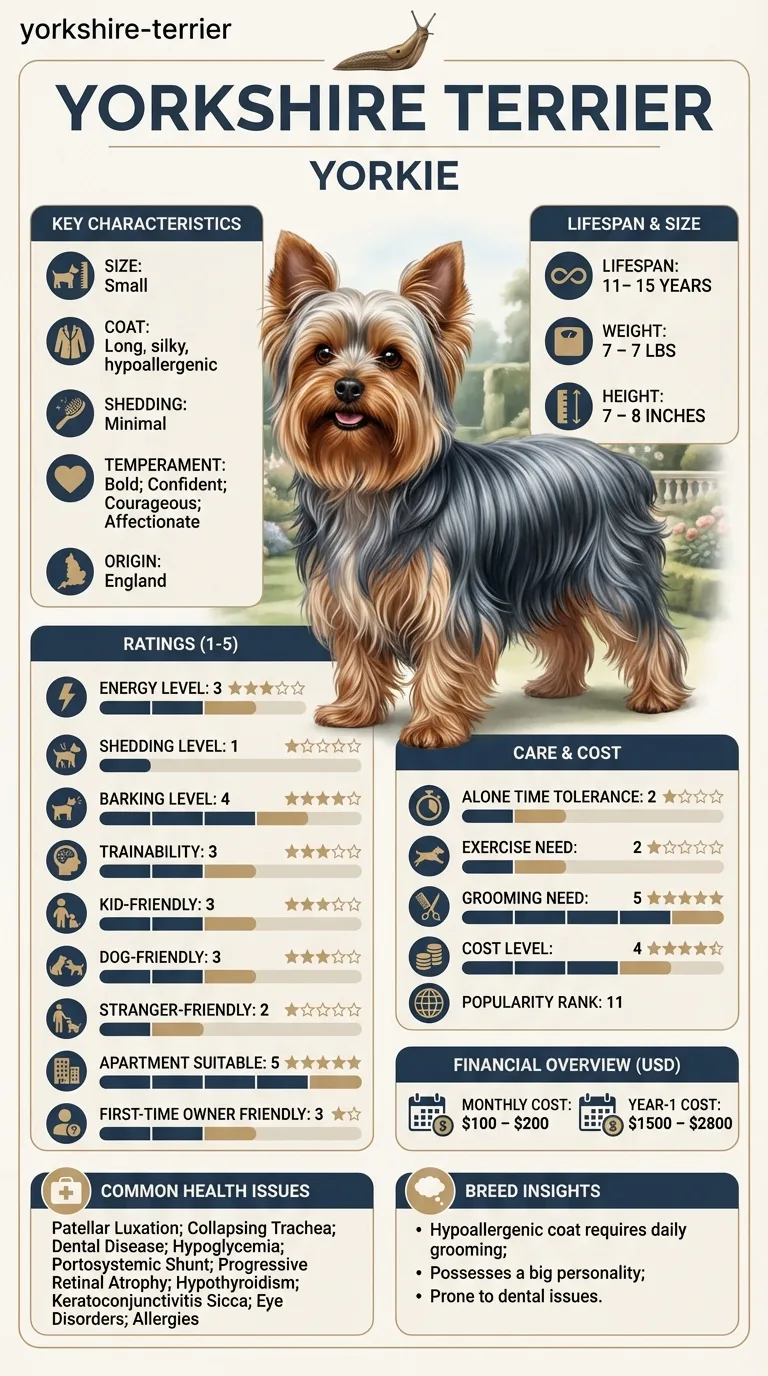
The Yorkshire Terrier rates 2/5 with strangers, exactly as the Akita does. Both are wary breeds that bond hard to a small number of people and view everyone else as a question. One of them weighs four pounds and barks about it at 4/5; the other weighs up to a hundred and thirty and says almost nothing.

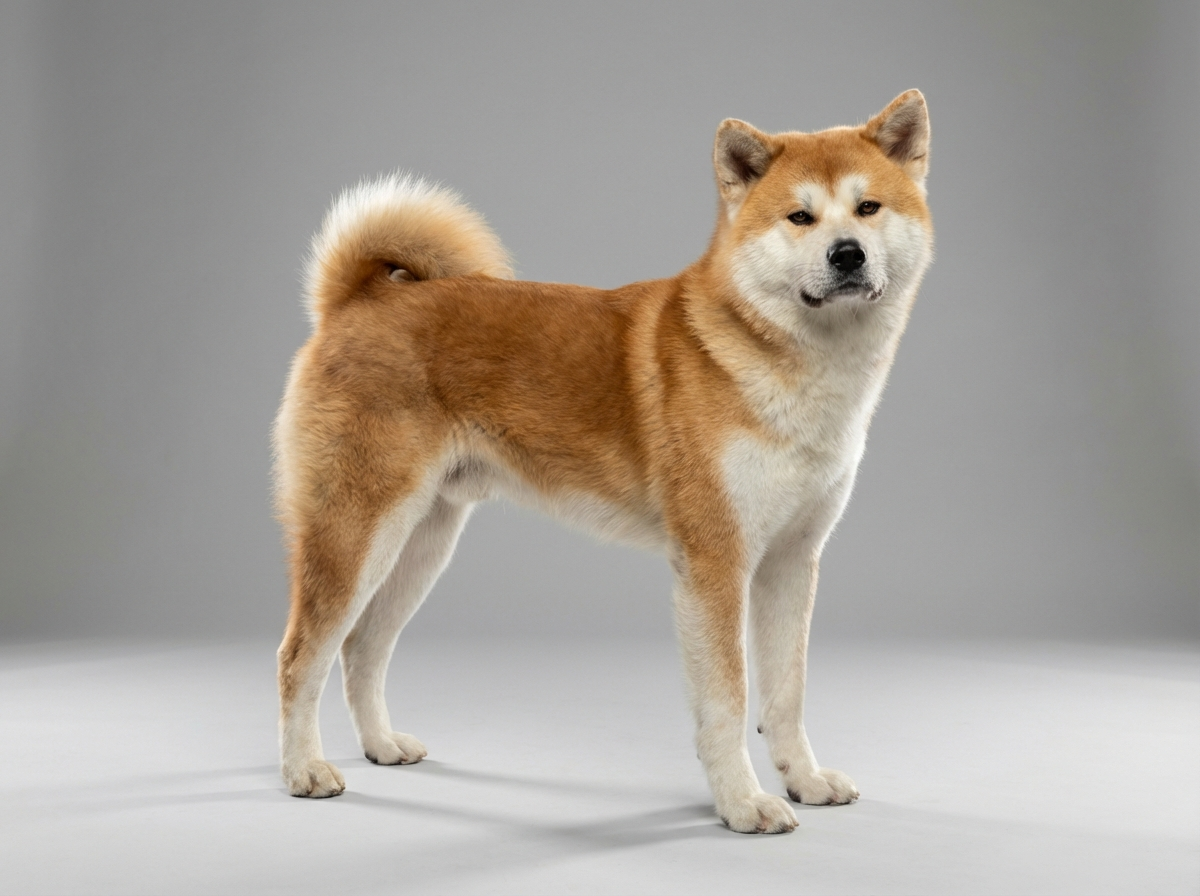
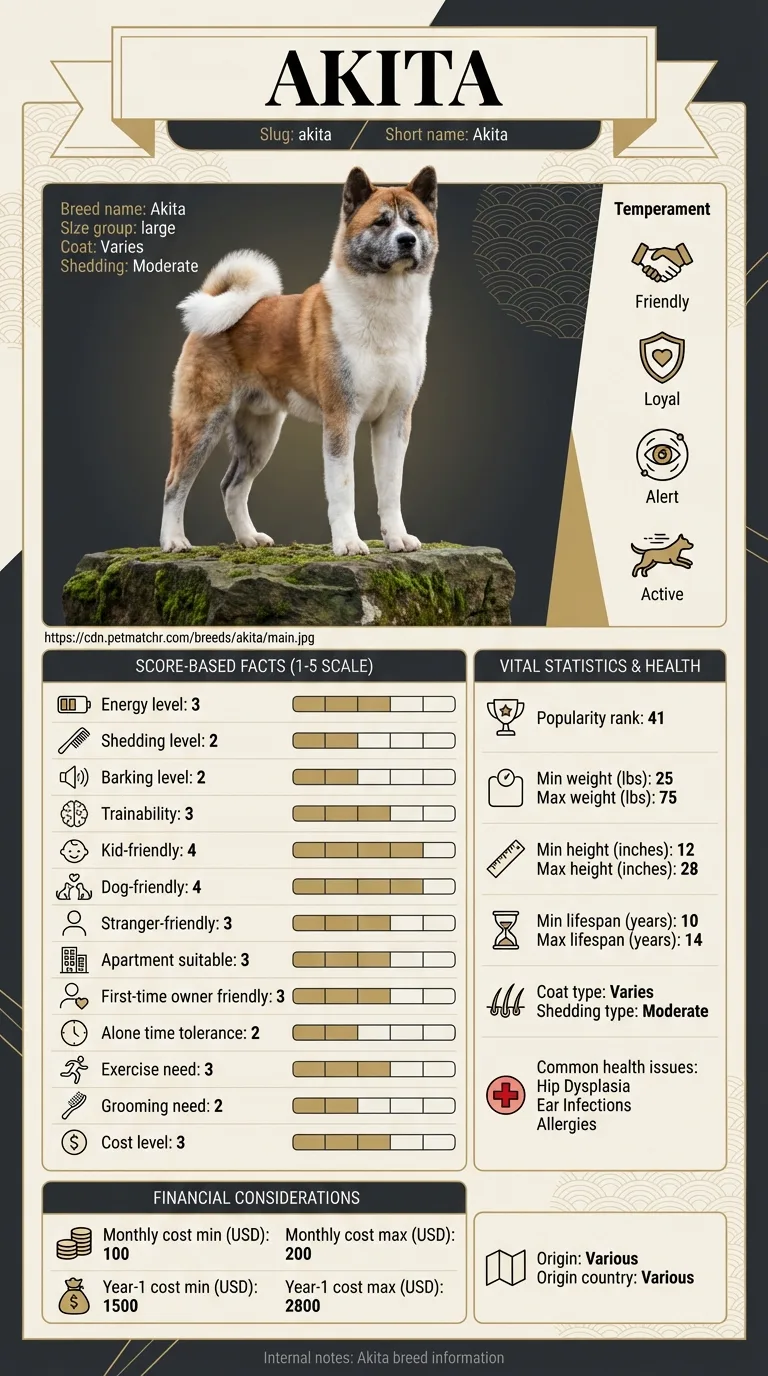
akita infographic
yorkshire terrier infographic

This page is for someone weighing a very small companion terrier against a large guardian. It covers the shared wariness, the coat commitment, three small-breed conditions that shape daily handling, barking, and what each costs to keep.

Quick verdict

The Yorkie gives you a terrier temperament in a body that fits anywhere, and the price is a 5/5 coat, a fragile frame and a great deal of noise.

Choose akita if...

Choose the Akita if you want quiet and low daily maintenance. It barks at 2/5 against the Yorkie's 4/5, grooms at 3/5 against 5/5, and tolerates being alone at 3/5 against 2/5. You are accepting 5/5 shedding against 1/5, 1/5 for first-time owners, 2/5 with other dogs, and a dog that needs space.

Choose yorkshire terrier if...

Choose the Yorkshire Terrier if you live in a flat and want a bold little companion you can take anywhere. It rates 5/5 for apartments, needs only 2/5 exercise, sheds at 1/5, lives 11 to 15 years and costs $100–$190 a month. You are accepting 4/5 barking, daily coat work, dental disease and a fragile windpipe.

Head-to-head comparison

Featureakitayorkshire terrierWinner
Weight70–130 lbs4–7 lbsEqual
Height24–28 in7–8 inEqual
Lifespan10–13 years11–15 yearsyorkshire terrier
CoatDense double coatLong and silkyEqual
Grooming needModerate (3/5)Very high (5/5)akita
SheddingVery high (5/5)Very low (1/5)yorkshire terrier
Energy levelModerate (3/5)Moderate (3/5)Equal
Exercise needModerate (3/5)Low (2/5)yorkshire terrier
TrainabilityModerate (3/5)Moderate (3/5)Equal
BarkingLow (2/5)High (4/5)akita
Good with kidsModerate (3/5)Moderate (3/5)Equal
Good with other dogsLow (2/5)Moderate (3/5)yorkshire terrier
Friendly to strangersLow (2/5)Low (2/5)Equal
Apartment suitabilityLow (2/5)Very high (5/5)yorkshire terrier
Good for first-time ownersVery low (1/5)Moderate (3/5)yorkshire terrier
Tolerates being aloneModerate (3/5)Low (2/5)akita
Typical monthly cost$110–$240$100–$190yorkshire terrier
Typical first-year cost$1,700–$3,200$1,400–$2,900yorkshire terrier

Deep dive

A 5/5 coat on a four-pound dog

The Yorkie's coat is long, fine, silky and effectively hair rather than fur — it grows continuously, sheds almost nothing at 1/5, and mats readily as a direct result.

Kept in full length it needs combing to the skin every day plus a topknot to keep hair out of the eyes, and that is genuinely a daily commitment rather than a weekly one.

The alternative is a short all-over trim, kept up by a groomer every six to eight weeks. Most pet Yorkies wear one, it is more comfortable for the dog, and it reduces the daily job to a quick comb. There is no reason to treat that as a compromise.

What does not work is a long coat brushed occasionally. That produces mats to the skin which cannot be combed out and have to be clipped off, sometimes revealing sore skin underneath.

Eye care comes with the coat, and it matters more in this breed than most, because dry eye is on its condition list — hair growing toward an already under-lubricated eye surface is a real irritant.

The Akita is the mirror image: no matting ever, no groomer, and a coat that comes out in handfuls twice a year at 5/5.

Windpipe, knees and blood sugar

Three items on the Yorkie's list change how the dog is handled every day.

Collapsing trachea is the most important. The cartilage rings supporting the windpipe soften and flatten, producing a honking cough that worsens with excitement, heat or pressure on the throat. A harness rather than a collar is not a preference in this breed — it is a rule for the dog's whole life.

Patellar luxation is the common orthopaedic problem: a kneecap that slips out of its groove, producing a momentary skipping step. Many cases are mild and some need surgery. Discouraging jumps down from furniture helps.

Hypoglycaemia is a puppy risk and a serious one at this size. A four-pound body has almost no glycogen reserve, so a missed meal or a stressful day can produce weakness, wobbling or collapse. Frequent small meals through the first months are standard, and a listless small-breed puppy needs seeing quickly.

A portosystemic shunt — a blood vessel bypassing the liver — is the fourth, showing as poor growth, excessive drinking and disorientation after meals. A bile acid blood test finds it.

The Akita has none of these. Its burden is autoimmune and endocrine, with hip dysplasia and bloat.

Terrier in a small package

The Yorkie's 4/5 barking is the trait most likely to cause difficulty in a flat. It is alert, territorial and vocal, and it will announce the corridor, the lift, the post and anything visible from a window.

Much of it responds to work — blocking window sightlines, teaching a settled behaviour, rewarding quiet — but the baseline is high and no amount of training produces a silent Yorkshire Terrier.

The subtler risk is one every tiny breed faces. A four-pound dog that growls at a visitor gets lifted away rather than trained, so the behaviour is rehearsed daily and never interrupted, and by three years old it is the dog's default. Treat a Yorkie like a dog: let it walk on pavements, socialise it from eight weeks with calm adult dogs and a range of people, and allow nothing you would not allow from a large breed.

At 3/5 trainability it is bright and stubborn in equal measure, and house-training is often slow.

The Akita's reserve is the same instinct with far greater consequences, and its adult opinion of other dogs arrives at social maturity around two years old.

What each costs, and the long tail

The Yorkie runs $100–$190 a month against the Akita's $110–$240, and $1,400–$2,900 against $1,700–$3,200 in the first year. On food it is barely a rounding error; the figure is grooming and medicine.

Grooming is the largest predictable line — every six to eight weeks for eleven to fifteen years unless you clip the dog yourself.

Dental disease is the second and it is close to a certainty. A full set of teeth in a very small jaw means crowding, rapid plaque accumulation and early extractions, and anaesthetic dentistry every couple of years is normal for the size. Daily brushing genuinely reduces how often it is needed.

Dry eye is the third recurring cost where it occurs, since keratoconjunctivitis sicca is managed with lifelong drops rather than cured.

The Akita's spending is food-dominated and flat, with autoimmune disease and bloat as the large uncertain risks.

On exercise the Yorkie needs 2/5 against 3/5 — two short walks and indoor play — and it rates 5/5 for apartments against 2/5.

Akita vs Yorkshire Terrier: four ties across a hundred pounds

Energy, trainability, children and strangers all tie — 3/5, 3/5, 3/5 and 2/5. That is a strange amount of agreement between a four-pound terrier and a guardian breed thirty times its weight.

The stranger rating is the meaningful one. Yorkies are not indiscriminately friendly little dogs; they are wary, opinionated and quick to announce an arrival. That is terrier heritage, not nervousness, and it is the same 2/5 the Akita carries for guardian reasons.

The children rating is 3/5 for both and means opposite things. A four-to-seven-pound dog with fine bones is genuinely at risk from a toddler; the Akita's caveat is size and supervision.

What separates them is noise, coat and space. 4/5 barking against 2/5. 5/5 grooming against 3/5, with 1/5 shedding against 5/5. And 5/5 for apartments against 2/5.

Frequently asked questions

Are Yorkshire Terriers friendly with strangers?

Less than most people expect — 2/5, the same rating as the Akita. Yorkies are wary, opinionated and quick to announce an arrival, which is terrier heritage rather than nervousness. Socialising one properly from eight weeks, and letting it walk rather than carrying it everywhere, keeps that reserve proportionate.

How much grooming does a Yorkie need?

5/5 in full coat — combing to the skin every day plus a topknot to keep hair out of the eyes. Most pet owners choose a short trim instead, maintained by a groomer every six to eight weeks, which cuts the daily job to a quick comb and is more comfortable for the dog.

Should a Yorkie wear a collar?

No — a harness, for life. Collapsing trachea is on the breed's condition list, and pressure on a windpipe with softening cartilage makes it worse. The characteristic sign is a honking cough that gets worse with excitement, heat or pulling on the lead.

Do Yorkies bark a lot?

Yes — 4/5, against the Akita's 2/5, and loud for the size. It will announce the corridor, the lift and anything visible from a window. Blocking sightlines and training a settled alternative reduces it considerably, but the baseline is high and it will not become a quiet dog.

Why do small puppies need frequent meals?

Because a four-pound body has almost no glycogen reserve, so a missed meal or a stressful day can drop blood sugar enough to cause weakness, wobbling or collapse. Frequent small meals through the first months are the standard precaution, and a listless small-breed puppy should be seen quickly rather than watched.

What is dry eye and why does it matter here?

Keratoconjunctivitis sicca — the eye does not produce enough tears, so the surface becomes inflamed and painful and can ulcerate. It appears on the Yorkie's list and is managed with lifelong drops rather than cured. It is also why keeping hair away from the eyes is health care rather than styling.

Which is cheaper to keep?

The Yorkie, at $100–$190 a month against the Akita's $110–$240, though the gap is much smaller than the size difference suggests. Grooming every six to eight weeks and anaesthetic dentistry every couple of years are both predictable costs across a fifteen-year life.

Quick answers

View more answers
Living

Akita vs Yorkshire Terrier: which should I choose?

The Yorkie if you live in a flat and want a bold little companion you can take anywhere, and will fund grooming. The Akita if you want quiet and low daily maintenance — it barks at 2/5 against the Yorkie's 4/5.

Costs

How much does each cost per month?

The Yorkie runs $100–$190 a month and the Akita $110–$240, with first-year totals of $1,400–$2,900 and $1,700–$3,200. Grooming and dentistry are the Yorkie's predictable extras.

Health

What is the single most useful daily habit?

Tooth brushing. Dental disease is close to a certainty in a jaw this small, and daily brushing reduces the number of anaesthetics the dog will need across eleven to fifteen years more than anything else you can do.

Living

Which needs less exercise?

The Yorkie at 2/5 against the Akita's 3/5 — two short walks and some indoor play cover the day. Both rate 3/5 for energy, so neither is a placid dog indoors.

Related DogBreedCompass guides

  • Akita breed guideThe Akita profile covers guardian temperament and the long socialisation window the breed needs.
  • Yorkshire Terrier breed guideThe Yorkshire Terrier profile covers coat options, dental care and small-breed health.
  • Akita vs MalteseThe Maltese is the small long-coated breed most often weighed against a Yorkie.
  • Akita vs ChihuahuaThe Chihuahua is the other tiny breed with similar tracheal and dental concerns.
  • Yorkshire Terrier eye problemsEye problems are a recurring issue in long-coated small breeds.
  • Akita autoimmune diseasesAutoimmune disease is the Akita's most distinctive burden and the first question for a breeder.

Related guides

Important reminder

Health information here is general and is not veterinary advice. If your dog shows pain, sudden behaviour change, or worsening symptoms, consult a licensed veterinarian.

Some links on this site are affiliate links. We may earn a commission at no extra cost to you, and we only suggest products we believe are helpful for dog owners.

Find Your Perfect Breed

Match your lifestyle to the right dog.

Take quiz

Find your match

Not sure which breed is right for you? Take our 2-minute quiz to find out.

Take the quiz