The Beagle for most family households — 5/5 with children and other dogs, 4/5 for first-time owners, cheaper and longer-lived. Choose the Akita if you want a quiet guardian and can handle up to 130 pounds plus years of socialisation work.
The Akita can outweigh the Beagle four times over and makes a fraction of the noise: 2/5 barking against 4/5. That inversion is the most useful thing on this page, because most people assume the big dog is the one the neighbours will hear.
This is for someone whose shortlist contains two dogs with nothing in common, which usually means the real question is what kind of household you have. It covers the size gap, the noise reality, sociability with children and other dogs, the scent-hound recall problem, obesity risk, and what each costs to keep.
Quick verdict
The Beagle is the family dog and the cheaper one; the Akita is the quiet one and the guardian, and it costs roughly twice as much to keep.
Choose akita if...
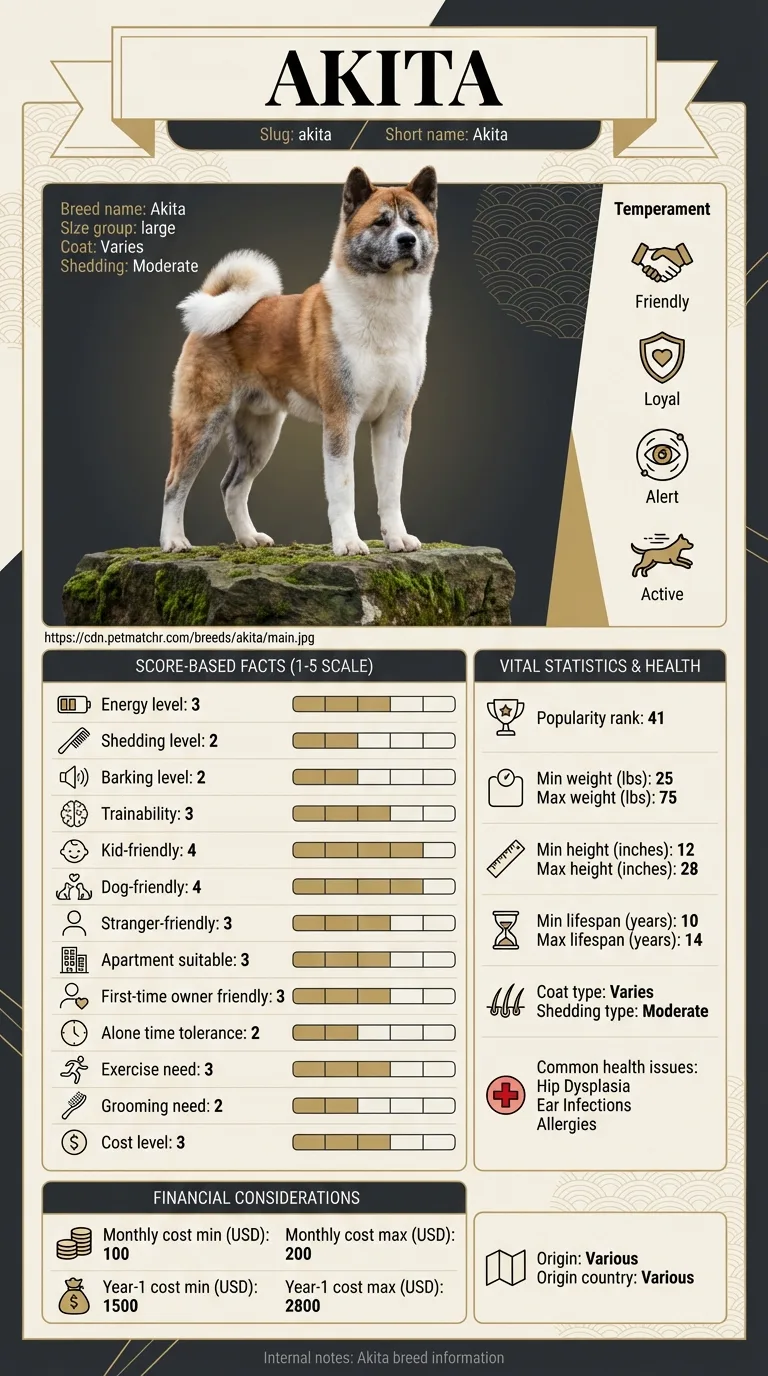
Choose the Akita if you want a genuinely quiet, dignified guardian that rates 2/5 for barking and 3/5 for time alone. You are accepting 1/5 first-time suitability, 2/5 with strangers and other dogs, a coat that sheds at 5/5, and up to 130 pounds of dog.
Choose beagle if...
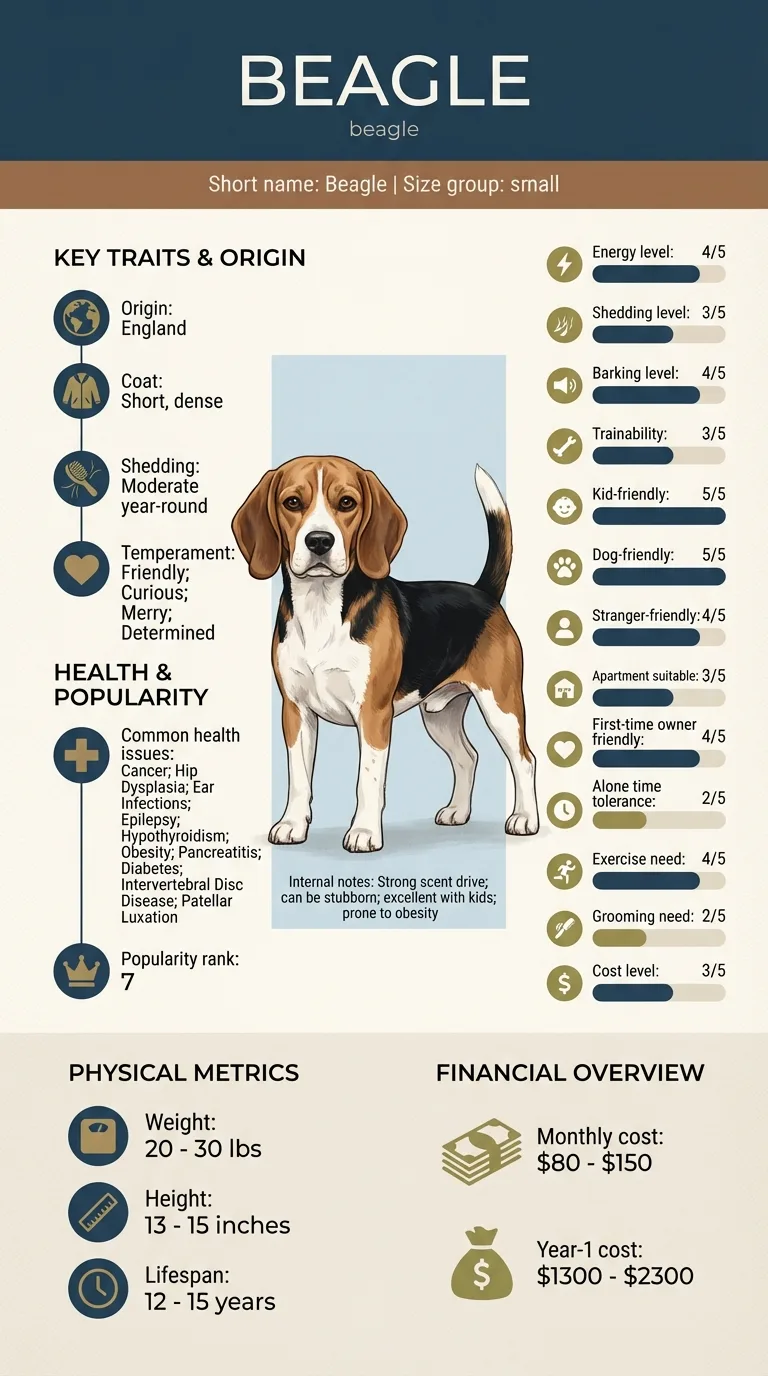
Choose the Beagle if you want an easy, sociable family dog: 5/5 with children, 5/5 with other dogs, 4/5 with strangers, 4/5 for first-time owners, 12–15 years of life and $80–$150 a month. Accept the barking at 4/5, a recall that a scent hound will abandon on any interesting smell, and a serious tendency to obesity.
Head-to-head comparison
Feature
akita
beagle
Winner
Weight
70–130 lbs
20–30 lbs
Equal
Height
24–28 in
13–15 in
Equal
Lifespan
10–13 years
12–15 years
beagle
Coat
Dense double coat
Short, dense
Equal
Grooming need
Moderate (3/5)
Low (2/5)
beagle
Shedding
Very high (5/5)
Moderate (3/5)
beagle
Energy level
Moderate (3/5)
High (4/5)
Equal
Exercise need
Moderate (3/5)
High (4/5)
akita
Trainability
Moderate (3/5)
Moderate (3/5)
Equal
Barking
Low (2/5)
High (4/5)
akita
Good with kids
Moderate (3/5)
Very high (5/5)
beagle
Good with other dogs
Low (2/5)
Very high (5/5)
beagle
Friendly to strangers
Low (2/5)
High (4/5)
beagle
Apartment suitability
Low (2/5)
Moderate (3/5)
beagle
Good for first-time owners
Very low (1/5)
High (4/5)
beagle
Tolerates being alone
Moderate (3/5)
Low (2/5)
akita
Typical monthly cost
$110–$240
$80–$150
beagle
Typical first-year cost
$1,700–$3,200
$1,300–$2,300
beagle
Deep dive
The Beagle's voice is the job, not a defect
Beagles were bred to trail rabbits in a pack and to tell the hunters where they were. The distinctive bay carries over long distances by design. Selecting against it would have made the dog useless.
What that means at home is a dog that is genuinely vocal: barking at the door, at passers-by, at other dogs, and baying when something interesting is in the air. It is trainable to a degree — teaching a solid quiet cue, managing the window view, and above all keeping the dog properly exercised all help — but you cannot train a Beagle into being a quiet breed, and anyone who tells you otherwise is selling a puppy.
The Akita at 2/5 is genuinely near-silent. Akita owners routinely describe a dog that barks a handful of times a year and means it. In a shared building that difference is worth more than any other row on this page.
Pack hound against guardian
The Beagle rates 5/5 with children and 5/5 with other dogs. Pack hunting selected hard against dogs that fought their kennelmates or distrusted the people handling them, and the result is a breed with almost no social suspicion. A Beagle meeting a strange dog usually wants to play with it.
The Akita rates 3/5 and 2/5. Its dog intolerance is a recognised breed trait, frequently same-sex, and it typically arrives at social maturity around two years old in a dog that was fine as a puppy. This catches people out. Deliberate, sustained socialisation makes the trait proportionate; it does not remove it.
If you already own a dog, particularly of the same sex, that row alone should probably settle this. If you have young children and their friends coming through the house, the same.
The nose problem, and what it costs you
Both rate 3/5 for trainability, which is fair, but the Beagle's limitation is specific and non-negotiable: it is one of the best scent animals on earth, and when the nose engages, everything else including you switches off.
The practical consequences are a recall that most owners never make reliable in an open space, a genuine talent for escaping under and through fences in pursuit of a smell, and a dog that will counter-surf and raid bins with real determination. Secure fencing is not optional and a long line is the honest solution for open ground.
The upside is that this same nose makes Beagles superb at scent games, and twenty minutes of hunting kibble around the house tires one out more than a mile of walking. For an owner willing to lean into it, that is the cheapest enrichment available.
The Akita's 3/5 is independence rather than distraction: it hears you, considers, and decides.
The Beagle's real health risk is the food bowl
Obesity sits on the Beagle's condition list and it is the most preventable thing on this page. Beagles are relentlessly food-motivated, will eat well past satiety, and are small enough that a couple of extra pounds is proportionally enormous.
An overweight Beagle gets the whole cascade — joint strain, worse skin, shorter life — and it happens gradually enough that owners do not notice. Measure the food, count treats inside the daily ration, and use the ribs rather than the scales as the test.
The breed also carries hip dysplasia, epilepsy, hypothyroidism and ear infections from its drop ears, and cancer sits at the top of its list. Beagles are among the longer-lived breeds at 12 to 15 years, so more of them live long enough to develop it.
The Akita's burden is different: autoimmune disease, hypothyroidism, progressive retinal atrophy, bloat, and a known anaesthesia sensitivity worth flagging to any unfamiliar vet.
Coat, cost and time alone
The Akita sheds at 5/5 and blows its double coat spectacularly twice a year; grooming rates 3/5, meaning an undercoat rake and real time during the moult. The Beagle sheds at 3/5 — short, constant, unremarkable — with grooming at 2/5. Its drop ears do need checking and cleaning, since ear infections are on the list.
On cost the Beagle is much cheaper: $80–$150 a month against $110–$240, and $1,300–$2,300 in year one against $1,700–$3,200.
On time alone the Akita takes it at 3/5 against 2/5. A Beagle left alone all day is a Beagle that bays, and the neighbours will find out. If the dog will be alone across a working day, that combination of 2/5 alone tolerance and 4/5 barking is the Beagle's worst-case scenario.
Which one actually fits a smaller home
On paper the Beagle takes apartments 3/5 against the Akita's 2/5, and the size difference makes that look obvious.
In practice it is closer than it looks. A Beagle in a flat is a 4/5 exercise requirement plus a 4/5 barker plus 2/5 tolerance for being alone — a combination that goes badly if the owner works out of the house. An Akita in a flat is a very large dog that is quiet, needs 3/5 exercise, and settles alone at 3/5.
The honest version: the Beagle suits a smaller home if someone is around and the dog is properly exercised, and the Akita suits it only if you can live with the sheer size.
Akita vs Beagle: the size and noise inversion
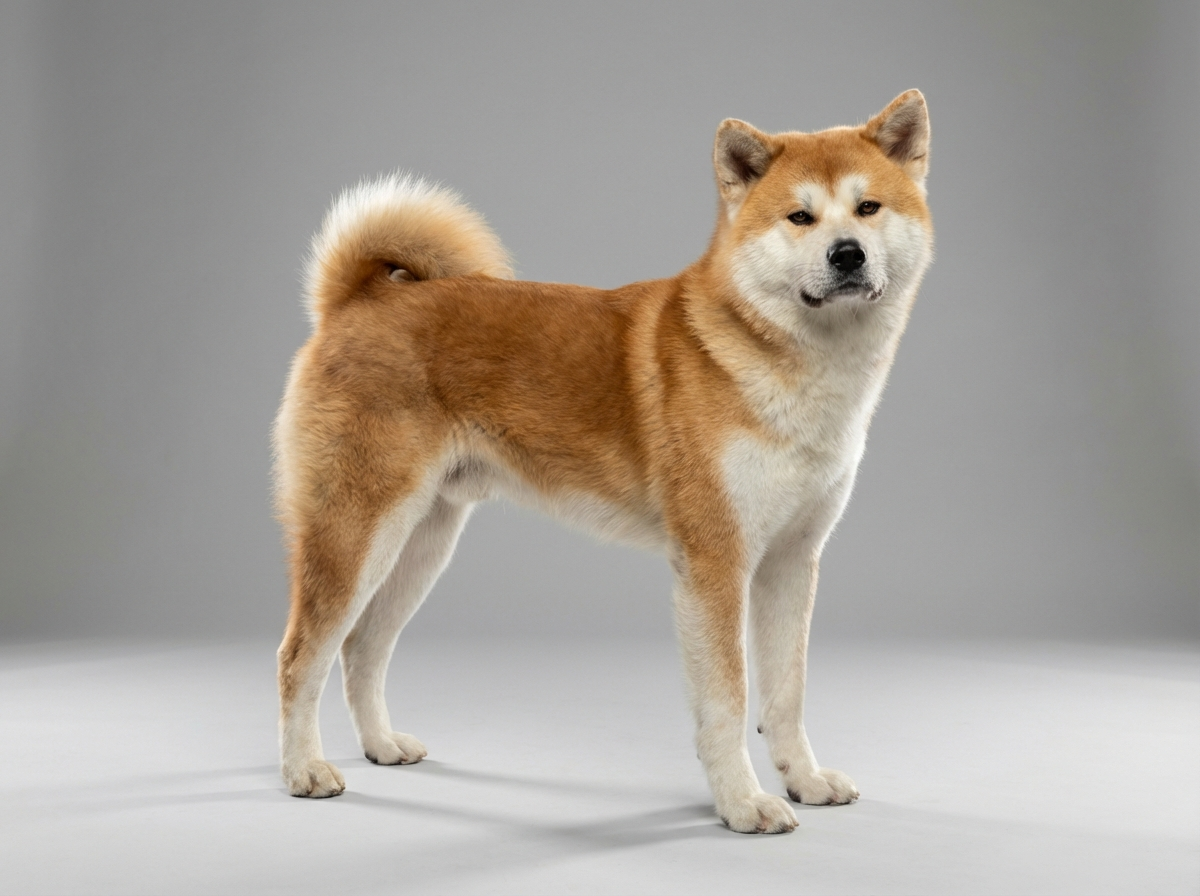
A Beagle weighs 20 to 30 pounds. An Akita weighs 70 to 130. At the extremes the Akita is more than four times the dog.
And yet the Beagle rates 4/5 for barking and the Akita 2/5. If you live in a terraced house or a flat with thin walls, that single row overturns the intuition that the big dog is the problem. The Beagle's voice is loud, carrying and — when it is on a scent — a full bay rather than a bark.
The Beagle also takes children 5/5, other dogs 5/5, strangers 4/5, first-time suitability 4/5, lifespan by two to three years, and cost on both measures. The Akita takes quiet, time alone, and the guardian temperament.
Akita or Beagle: Silent Giant or Noisy Optimist? - Akita vs Beagle: the size and noise inversion
Frequently asked questions
Which barks more, an Akita or a Beagle?
The Beagle, and by a wide margin — 4/5 against the Akita's 2/5, despite being a quarter of the size. Beagles were bred to trail rabbits in a pack and to bay so hunters could follow, so the voice is the job rather than a fault. Akitas are famously near-silent. In a flat or a terraced house this single row often decides the choice.
Which is better with children and other dogs?
The Beagle, at 5/5 on both, against the Akita's 3/5 with children and 2/5 with other dogs. Pack hunting selected against social suspicion. Akita dog intolerance is a breed trait, often same-sex, and typically appears at social maturity around two years old rather than in puppyhood.
Can a Beagle be let off the lead?
Usually not reliably. A Beagle's nose is among the best in dogs, and once it locks onto a trail the recall stops working. Most owners use a long line in open ground and rely on secure fencing at home, since Beagles will also work their way under and through fences after a smell. Scent games are the way to use that nose productively.
Which costs more to keep?
The Akita, at $110–$240 a month against the Beagle's $80–$150, with first-year totals of $1,700–$3,200 against $1,300–$2,300. Size accounts for nearly all of it — an Akita can be four times the Beagle's weight, and food, medication and boarding all scale accordingly.
Which lives longer?
The Beagle, typically 12 to 15 years against the Akita's 10 to 13. Smaller dogs generally live longer, and the Akita additionally carries a heavier autoimmune and endocrine disease burden.
What is the biggest health risk for a Beagle?
Obesity, and it is the most preventable item on this page. Beagles are relentlessly food-motivated, eat well past satiety, and are small enough that a few extra pounds is proportionally huge. Measure the food, count treats within the daily ration, and judge by ribs rather than the scales. Ear infections from the drop ears are the other routine job.
Is either suitable for a first-time owner?
The Beagle at 4/5, comfortably — it is forgiving, sociable and food-motivated enough to train easily, provided you accept the noise and the recall. The Akita rates 1/5 and is one of the least beginner-suited breeds on this site, because its guardian instinct sharpens with maturity and needs years of deliberate socialisation.
The Beagle for most family households — 5/5 with children and other dogs, 4/5 for first-time owners, cheaper and longer-lived. Choose the Akita if you want a quiet guardian and can handle up to 130 pounds plus years of socialisation work.
Behavior
Which is quieter?
The Akita, at 2/5 barking against the Beagle's 4/5, despite being up to four times heavier. Akitas typically bark a handful of times a year.
Costs
How much does each cost per month?
The Akita runs $110–$240 a month and the Beagle $80–$150, with first-year totals of $1,700–$3,200 and $1,300–$2,300.
Living
Which needs more exercise?
The Beagle at 4/5 against the Akita's 3/5, and it benefits enormously from scent work — twenty minutes of hunting kibble tires one more than a long walk.
Related DogBreedCompass guides
Akita breed guide – The Akita profile covers the guardian temperament and the socialisation the breed needs.
Beagle breed guide – The Beagle profile covers scent work, recall and weight management in more detail.
Basset Hound vs Beagle – The Basset is the other scent hound buyers weigh here, and it is far less energetic and less noisy.
Akita vs Alaskan Malamute – The Malamute is the large northern alternative to the Akita and is much more sociable.
Beagle obesity – Obesity is the most preventable health problem in the breed and the one owners miss.
Akita autoimmune diseases – Autoimmune disease is the Akita's most distinctive burden and the first question for a breeder.
Health information here is general and is not veterinary advice. If your dog shows pain, sudden behaviour change, or worsening symptoms, consult a licensed veterinarian.
Some links on this site are affiliate links. We may earn a commission at no extra cost to you, and we only suggest products we believe are helpful for dog owners.
We research and check what we publish, but we do not warrant that any figure, date, price, or statement is accurate, complete, or current, and we accept no liability for any loss, cost, injury, or other harm arising from the use of this site. Use it as one reference among several. You remain responsible for your own decisions and for your dog's care - confirm anything that matters with a licensed veterinarian or another qualified professional before you act on it. Full disclaimer.