Behavior
What are quick tips for managing Yorkshire Terrier anxiety?
Start with a consistent routine, provide a safe space, and use positive reinforcement. Gradually expose your Yorkie to their triggers while rewarding calm behavior.

Quick answer
What are quick tips for managing Yorkshire Terrier anxiety?
Start with a consistent routine, provide a safe space, and use positive reinforcement. Gradually expose your Yorkie to their triggers while rewarding calm behavior.
Yorkshire Terrier anxiety can be a challenging issue for many owners.
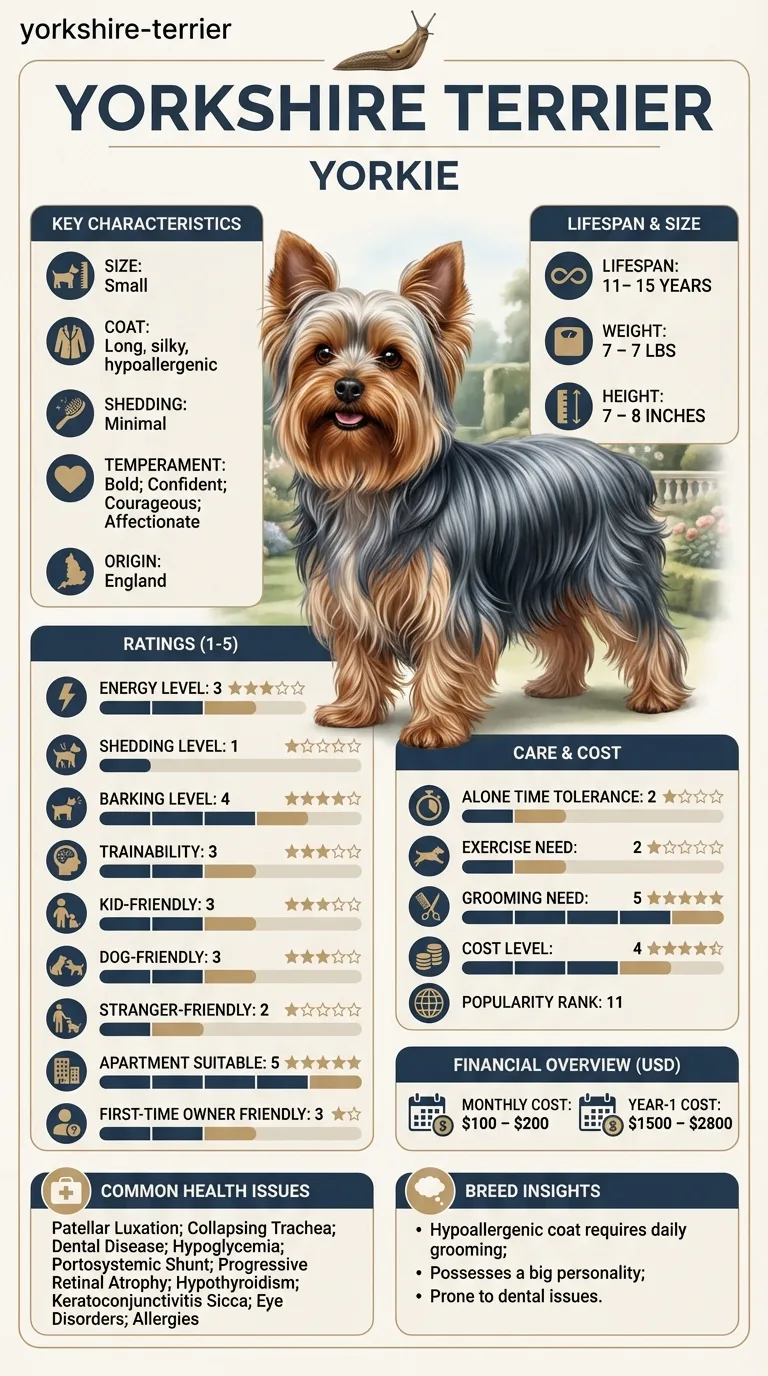
This guide is designed for Yorkshire Terrier owners dealing with anxiety-related behaviors in their dogs. Whether you're a first-time dog owner or have years of experience, you'll find valuable tips and strategies here.
Yorkshire Terrier anxiety often manifests as a constant state of unease. These small dogs may seem overly alert, with frequent barking or pacing. Owners might notice their Yorkie being clingy or having a hard time settling down, particularly in new or stressful environments.
If your Yorkshire Terrier anxiety persists despite your efforts, consider professional training. A qualified trainer can provide tailored techniques to help manage anxiety effectively.
Consult a vet or behaviorist if your dog shows severe anxiety symptoms, such as excessive barking, destructive behavior, or self-harm. They can recommend specific treatments or medications.
Various tools and products can help manage Yorkshire Terrier anxiety. These range from calming aids to training resources that promote a stress-free environment.
Adjusting your daily routine can significantly help reduce Yorkshire Terrier anxiety. Start by establishing a consistent schedule for feeding, walks, and playtime. This predictability helps your Yorkie feel more secure, knowing what to expect throughout the day.
Exercise is essential for managing anxiety. Aim for short, engaging walks and play sessions several times a day. Even fifteen minutes of active play can help burn off excess energy and reduce stress levels.
Incorporating puzzle toys or interactive games can also stimulate their minds.
Managing alone-time is crucial. Since Yorkies typically don't tolerate being alone well, consider gradually increasing their alone-time in small increments. This helps them adapt without feeling overwhelmed.
If you need to leave, try providing a cozy space with their favorite toys or a blanket that smells like you. This can provide comfort while you're away.
Establishing household routines can also minimize anxiety triggers. If your Yorkie is sensitive to loud noises, create a safe haven where they can retreat during storms or other disturbances. Using calming music or white noise can help drown out frightening sounds.
Overall, these lifestyle adjustments can make a significant difference in your Yorkshire Terrier's anxiety levels, leading to a happier, healthier pet.
When dealing with Yorkshire Terrier anxiety, recognizing progress can be crucial for both you and your pup. Start by celebrating small 'micro-wins.' These can include your Yorkie remaining calm during brief absences, showing curiosity towards new sounds, or even lowering their barking during stressful situations.
These signs indicate that your training methods, like desensitization, might be working.

It's important to note that setbacks are common in anxiety training. If your Yorkie suddenly becomes more clingy, starts barking excessively again, or shows signs of fear during activities they've previously enjoyed, these may be signs that your training plan needs adjustment. Consistency is key, so don’t get discouraged if you encounter bumps along the way.

If you notice that despite consistent training, your Yorkshire Terrier anxiety isn't improving, it may be time to escalate your approach. This could involve seeking help from a professional trainer who specializes in anxiety issues. Additionally, consulting your vet can provide insights into other methods, including behavioral therapies or medication.

When Sarah adopted Max, her Yorkshire Terrier, she quickly noticed his anxiety. Every time she left for work, Max would bark incessantly and chew on furniture. She tried leaving him with toys and treats, but nothing seemed to help. After a few weeks, Sarah realized she needed professional help. She enrolled Max in a training program focused on separation anxiety. The trainer taught her techniques like gradual desensitization and crate training. With patience and practice, Max learned to feel more secure when left alone. Now, he happily plays in his crate while Sarah is out, and their bond has strengthened.
Key takeaway: With the right training and support, Yorkshire Terrier anxiety can improve significantly. Patience and understanding are key.
Yorkshire Terrier anxiety can stem from several factors, including genetics, lack of socialization, or changes in their environment. These little dogs are sensitive and can become anxious when left alone or faced with new experiences. Understanding your Yorkie's triggers can help you manage their anxiety effectively.
Common signs of anxiety in Yorkshire Terriers include excessive barking, destructive behavior, and clinginess. They may also show signs like pacing, trembling, or hiding. Observing your dog closely can help you identify their specific anxiety triggers.
To manage Yorkshire Terrier anxiety, you can use positive reinforcement training, establish a consistent routine, and provide a safe space for your dog. Gradual desensitization to their triggers can also help. Patience and consistency are key in helping your dog feel more secure.
In some cases, medication might be necessary to help manage severe anxiety in Yorkshire Terriers. It's essential to consult with a veterinarian who can recommend the best course of action and monitor your dog's response to treatment. Medication is often most effective when combined with behavioral therapy.
Yes, anxiety is relatively common in Yorkshire Terriers. Their small size and sensitive nature make them more prone to anxiety-related issues. Proper training and socialization from a young age can help reduce the chances of developing anxiety.
To help your Yorkshire Terrier during stressful situations, create a calm environment with familiar toys and bedding. You can also use calming aids like pheromone diffusers or anxiety wraps. Regular exercise and mental stimulation can also improve their overall well-being.
Signs of Yorkshire Terrier anxiety can include excessive barking, destructive behavior, and hiding. You might also notice your Yorkie pacing, panting, or refusing to eat. These behaviors are often a response to stressors in their environment.
Yes, older Yorkshire Terriers can develop anxiety due to changes in their environment, health issues, or loss of a companion. As they age, they may experience increased sensitivity to stress. It's important to monitor their behavior and consult a vet if you notice changes.
To help your Yorkshire Terrier with travel anxiety, create a safe space in the car or use a comfortable crate. Bring familiar items like their blanket or toys to ease stress. Gradual exposure to car rides can also help them adjust over time.
Yes, Yorkshire Terriers are prone to separation anxiety, especially if they are closely bonded with their owners. This can lead to barking, whining, or destructive behavior when left alone. Training and gradual desensitization can help mitigate these issues.
If your Yorkshire Terrier shows anxiety around strangers, gradually socializing them can help. Start with controlled introductions in a calm environment. Positive reinforcement, like treats and praise, can also encourage them to feel more comfortable.
Start with a consistent routine, provide a safe space, and use positive reinforcement. Gradually expose your Yorkie to their triggers while rewarding calm behavior.
Signs of anxiety include barking, hiding, and destructive behaviors. Keep an eye out for changes in their usual behavior.
Yes, training is effective in managing anxiety. Focus on positive reinforcement and gradually introduce your Yorkie to new situations.
Yes, a balanced diet can impact your Yorkie's mood. Consult with your vet for dietary recommendations that promote overall health.
Anxiety and pain look alike from the outside. Get the prep sheet for this breed's separation-anxiety page and take it to the vet.
You get: Vet visit prep sheet
No spam. One-click unsubscribe. See our privacy policy.
Preview page 1 before you decide.

This guide is not medical advice. If your dog shows pain, sudden behavior change, or worsening symptoms, consult a licensed veterinarian.
Some links may be affiliate links. We may earn a commission at no extra cost to you. We only suggest products we believe are helpful for dog owners.
We research and check what we publish, but we do not warrant that any figure, date, price, or statement is accurate, complete, or current, and we accept no liability for any loss, cost, injury, or other harm arising from the use of this site. Use it as one reference among several. You remain responsible for your own decisions and for your dog's care - confirm anything that matters with a licensed veterinarian or another qualified professional before you act on it. Full disclaimer.
Not sure which breed is right for you? Take our 2-minute quiz to find out.
Take the quiz