Health
Is Schnauzer Comedo Syndrome relevant to Welsh Springer Spaniels?
No — it's a Miniature Schnauzer-specific follicular disorder that isn't documented in this breed.

Quick answer
Is Schnauzer Comedo Syndrome relevant to Welsh Springer Spaniels?
No — it's a Miniature Schnauzer-specific follicular disorder that isn't documented in this breed.
That row of odd bumps down your Welsh Springer's back probably isn't "Schnauzer bumps" — this follicular disorder has a name that gives away exactly which breed it belongs to.
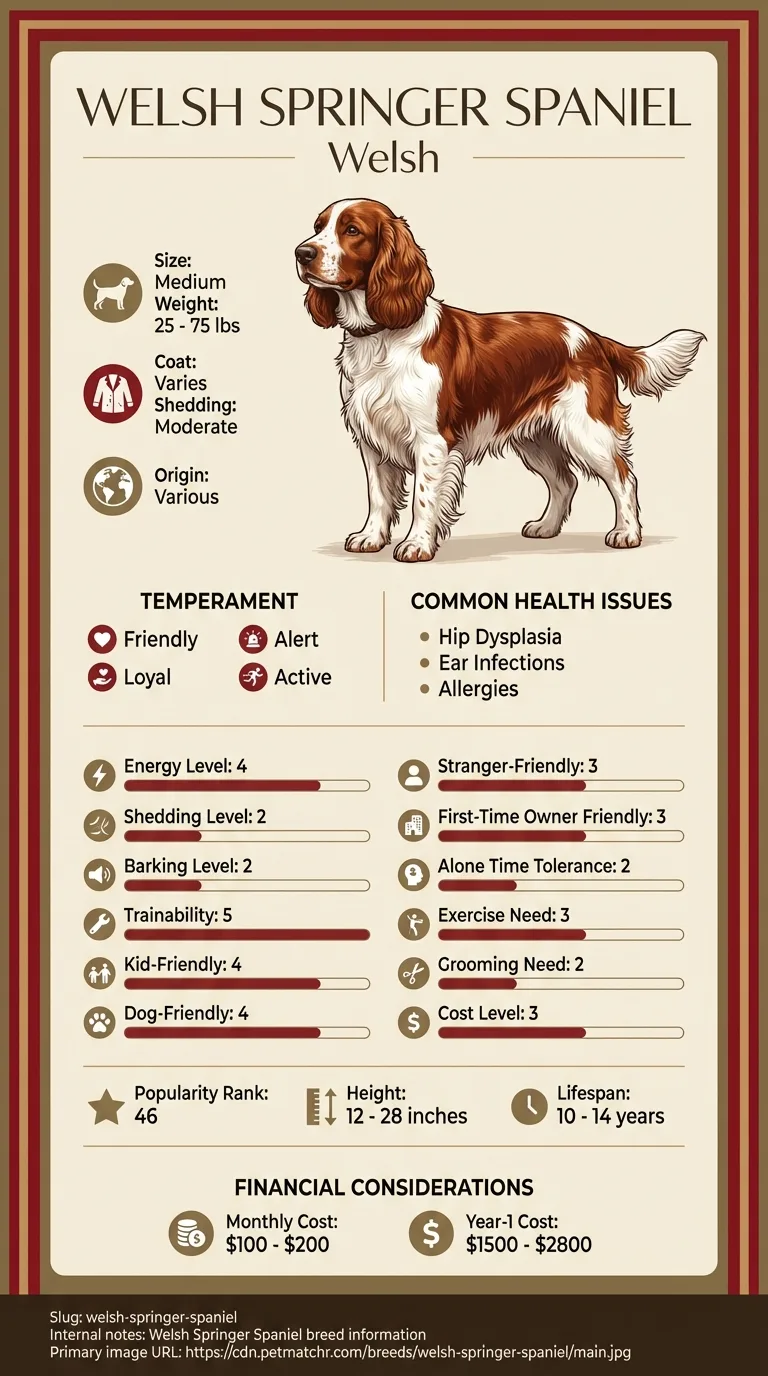
Owners who spotted a description of this condition in general dog skin-health content, or heard the term from a groomer, and want to know whether it applies to their Welsh Springer Spaniel are the audience here.
This guide is not medical advice. If your dog shows pain, sudden behavior change, or worsening symptoms, consult a licensed veterinarian.
Some links may be affiliate links. We may earn a commission at no extra cost to you. We only suggest products we believe are helpful for dog owners.
We research and check what we publish, but we do not warrant that any figure, date, price, or statement is accurate, complete, or current, and we accept no liability for any loss, cost, injury, or other harm arising from the use of this site. Use it as one reference among several. You remain responsible for your own decisions and for your dog's care - confirm anything that matters with a licensed veterinarian or another qualified professional before you act on it. Full disclaimer.
Schnauzer Comedo Syndrome is a hereditary follicular plugging disorder documented almost exclusively in Miniature Schnauzers, not established as occurring in Welsh Springer Spaniels. Back bumps in this breed are far more likely to trace back to folliculitis, allergies, or the breed's genuinely documented hypothyroidism.
Schnauzer Comedo Syndrome is uncommon even within Miniature Schnauzers, and it has no established occurrence in Welsh Springer Spaniels, making it essentially irrelevant to this breed compared with the skin-adjacent effects of the breed's documented hypothyroidism risk.
The follicular plugging behind comedo syndrome has been linked to a specific coat and skin trait in Schnauzer breeds, with no equivalent genetic pattern identified in Welsh Springer Spaniel lines. This breed's own documented skin-adjacent risk instead runs through hypothyroidism, which can alter coat quality and skin resistance to infection.
Because this specific disorder isn't relevant to Welsh Springer Spaniel genetics, there are no comedo-specific environmental triggers to manage in this breed. General skin health factors — flea control, allergen exposure, and coat hygiene around the ears — are the environmental variables actually worth managing here.
See a vet if a bump grows, drains, becomes painful, or is accompanied by hair loss, coat dulling, or lethargy — in a Welsh Springer Spaniel, that combination points toward a hypothyroidism workup rather than a Schnauzer-specific follicular disorder.
A named condition can sound authoritative even when it belongs to a different breed entirely. Watch for these mistakes.
See all Welsh Springer Spaniel health problems, which breeds are prone to schnauzer comedo syndrome, or the full Welsh Springer Spaniel breed guide for temperament, exercise needs and ownership costs.
Because Schnauzer Comedo Syndrome isn't relevant to this breed, there's no disease timeline to track for it here. A genuine skin issue in a Welsh Springer Spaniel typically resolves within one to three weeks of appropriate vet-directed treatment for its actual cause.
Success looks like ruling out a mismatched, breed-specific label quickly and directing attention toward the causes that are actually plausible in this breed — folliculitis, allergies, or hypothyroidism — with a clear vet-confirmed diagnosis.
Comedo syndrome is a follicular plugging disorder identified almost exclusively in Miniature Schnauzers, tied to that breed's specific coat and skin chemistry; it has not been established as occurring in Welsh Springer Spaniels.
In this breed, small bumps, crusts, or pustules along the back are far more likely to be folliculitis, a flea or contact allergy, or a skin change secondary to hypothyroidism — one of the five health issues genuinely documented in Welsh Springer Spaniels.
Because hypothyroidism can produce a dull, thinning coat with recurrent skin infections, a Welsh Springer showing unusual back bumps is a better candidate for a thyroid panel than for a Schnauzer-specific follicular workup.

A bump that's rapidly growing, draining, painful to the touch, or accompanied by hair loss in a spreading pattern warrants a veterinary visit regardless of what label a home search turned up.
For a Welsh Springer Spaniel specifically, it's worth mentioning the breed's known predisposition to hypothyroidism and chronic ear infections during that visit, since both can show up as skin or coat symptoms elsewhere on the body.
An occasional small bump that resolves on its own, without spreading or recurring, is a normal, low-concern finding, not a sign that a Schnauzer-specific disorder has appeared in an unrelated breed.

While brushing her Welsh Springer Spaniel one evening, Marisol in Tucson, Arizona noticed a handful of small, crusty bumps running along his lower back and searched online for an explanation before her next grooming appointment. A symptom search surfaced "Schnauzer Comedo Syndrome" as a close match, and she spent the evening worried her dog had a serious hereditary skin disease despite owning a spaniel, not a Schnauzer. Her vet examined the bumps, diagnosed mild folliculitis likely triggered by a recent flea season, and used the visit to also run a baseline thyroid panel given the breed's documented hypothyroidism risk; both issues turned out to be easily manageable.
Key takeaway: A skin condition named after and documented in a different breed isn't a realistic concern for a Welsh Springer Spaniel — folliculitis, allergies, and the breed's actual hypothyroidism risk are the genuinely useful things to rule out first.
It's a hereditary skin disorder in which keratin plugs block hair follicles along the back, creating blackhead-like bumps that can become infected. It's documented almost exclusively in Miniature Schnauzers.
It isn't established as occurring in Welsh Springer Spaniels — the condition is tied to a coat and follicle trait specific to Schnauzer breeds, not to spaniels. No case pattern of it has been documented in this breed.
Common causes in this breed include folliculitis, flea or contact allergies, and skin changes linked to hypothyroidism, which is a genuinely documented Welsh Springer Spaniel health issue. A vet exam is the fastest way to tell them apart.
Yes — hypothyroidism in Welsh Springer Spaniels can cause a dull or thinning coat and recurrent skin infections, which can superficially resemble other follicular disorders. It's worth mentioning to your vet alongside any new skin symptom.
It's more useful to describe exactly what you're seeing — location, size, and any drainage — and let your vet examine it directly. A Welsh Springer's back bumps are unlikely to be this Schnauzer-specific condition.
Yes — chronic ear infections are one of the breed's five documented health issues, and skin changes from hypothyroidism are another realistic concern to track. Neither is related to comedo syndrome.
It's primarily documented in Miniature Schnauzers, with occasional reports in Standard Schnauzers, reflecting a coat and follicle trait specific to that breed family. It has no established link to spaniel breeds like the Welsh Springer.
No — it's a Miniature Schnauzer-specific follicular disorder that isn't documented in this breed.
Folliculitis, allergic reactions, and hypothyroidism-related skin changes are far more likely explanations than a Schnauzer-specific disorder.
Yes — it's a documented Welsh Springer Spaniel health issue that can cause coat thinning and recurring skin infections.
No special comedo-focused grooming is needed since the condition isn't established in Welsh Springer Spaniels.
No — a routine thyroid blood panel is the more relevant and typically inexpensive test to budget for in this breed.
A one-page prep sheet for this condition: the signs, the questions to ask, what to get priced. Unlocks here.
You get: Vet visit prep sheet
No spam. One-click unsubscribe. See our privacy policy.
See a sample page before you decide.
Early access list
The free prep sheet covers the same-day warning signs, a symptom log and the questions to ask. We are considering a fuller kit that adds a cost worksheet for the usual tests and treatments (US price ranges with their sources) and a plain-English guide to ways of covering the bill. It is not built yet; this list tells us whether it is worth building.
One email, no spam, unsubscribe anytime. Information only, not veterinary advice.