Living
Which is heavier?
The Rottweiler, up to 135 lbs versus the Weimaraner's 90 lbs.

Quick answer
Which is heavier?
The Rottweiler, up to 135 lbs versus the Weimaraner's 90 lbs.
Rottweiler or Weimaraner? On paper they differ most on shedding, and on the scales Rottweiler is the heavier at 80–135 lbs. Here is how the two compare on everything that shapes an ordinary week.
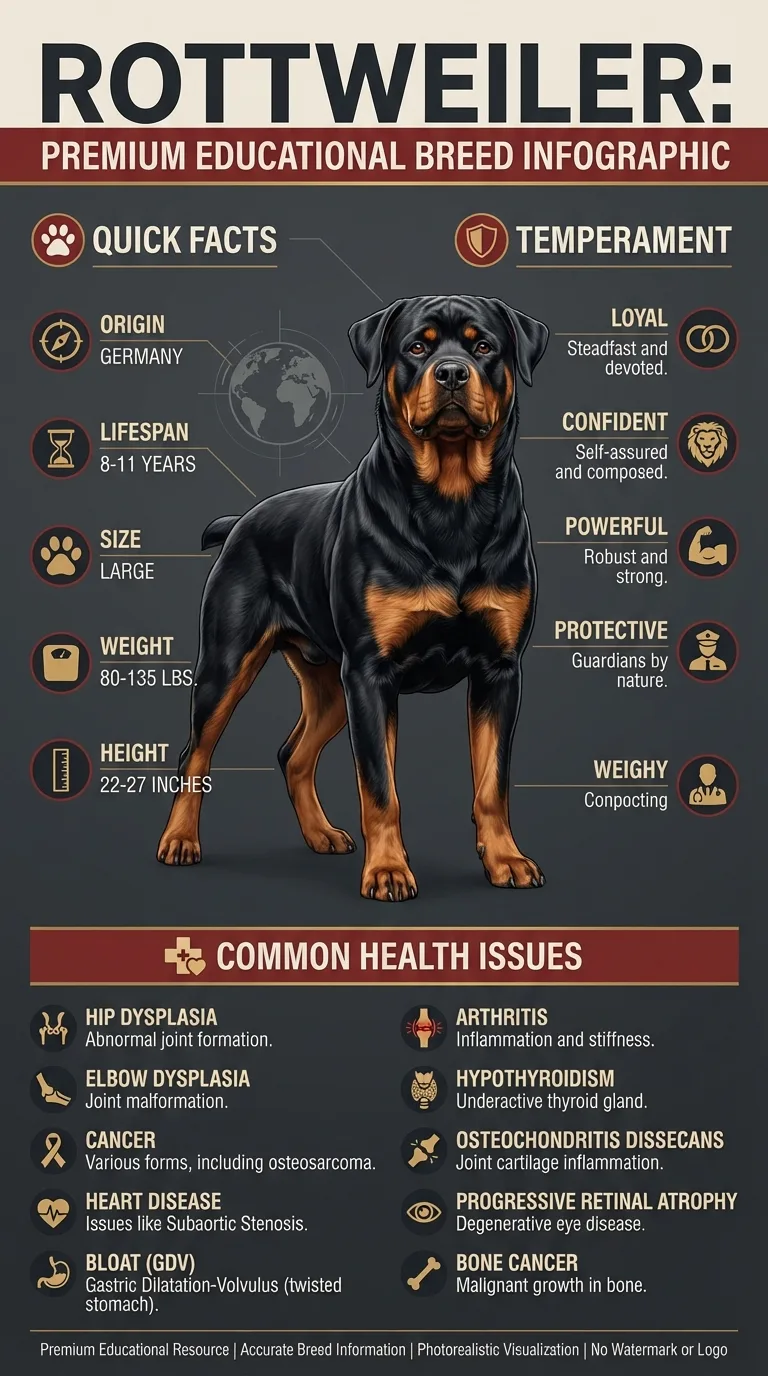
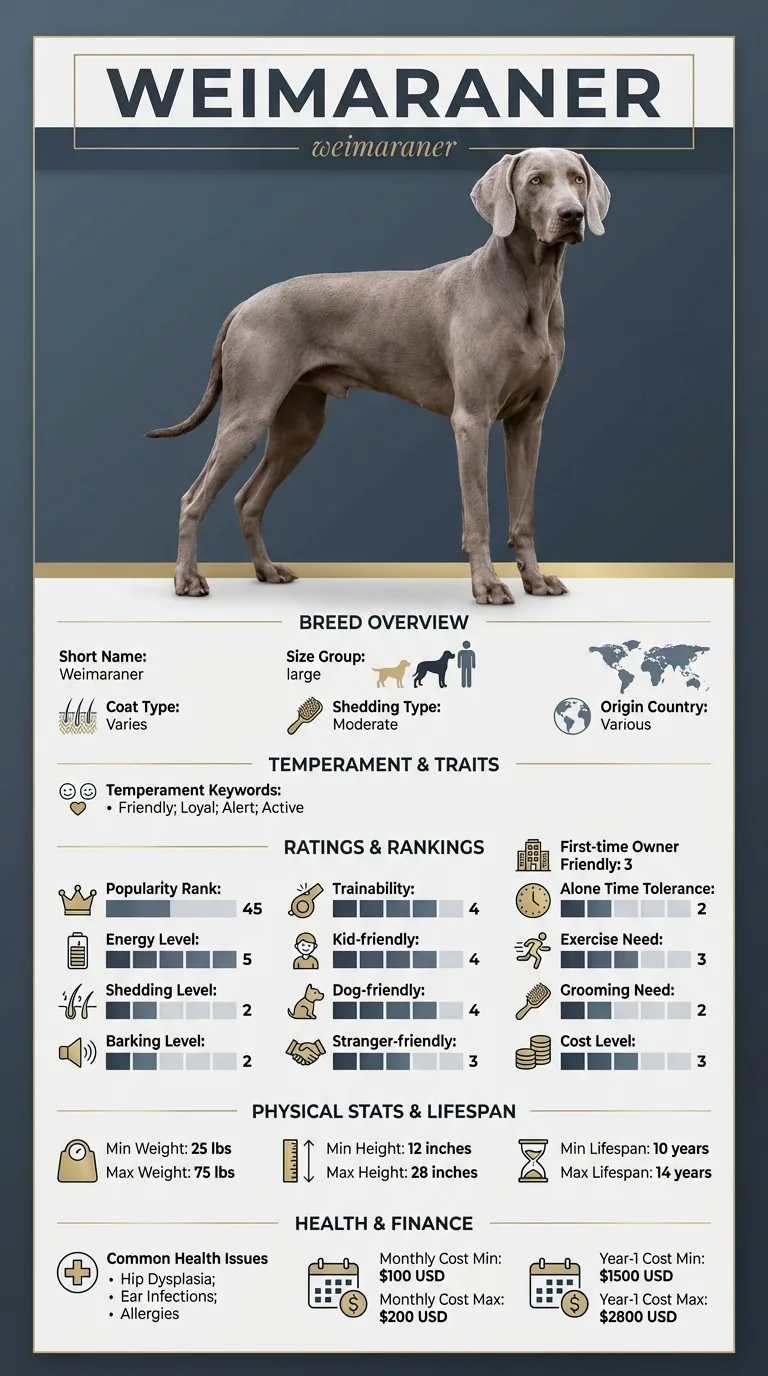
This is for someone already down to Rottweiler and Weimaraner and deciding between them. For this pair the decision usually turns on shedding, so those are covered first and in most detail. Anyone choosing from a flat has a clear answer here: Rottweiler rates 2/5 against 1/5. The focus throughout is on daily consequences rather than breed background.
Between Rottweiler and Weimaraner, shedding is what separates them, and Rottweiler is the lower-effort dog of the two to keep.
Choose Rottweiler if your walking routine is modest and you want a dog that is more watchful with visitors.
Choose Weimaraner if you do not want a standing grooming appointment, shedding is a problem in your house and a smaller dog suits your car, your home or your back.
| Feature | rottweiler | weimaraner | Winner |
|---|---|---|---|
| Size class | large | large | Equal |
| Weight | 80–135 lbs | 55–90 lbs | Equal |
| Height | 22–27 in | 23–27 in | Equal |
| Lifespan | 8–11 years | 10–13 years | weimaraner |
| Exercise need | High (4/5) | Very high (5/5) | rottweiler |
| Grooming need | Low (2/5) | Very low (1/5) | weimaraner |
| Shedding | High (4/5) | Low (2/5) | weimaraner |
| Energy level | High (4/5) | Very high (5/5) | Equal |
| Barking | Moderate (3/5) | Moderate (3/5) | Equal |
| Apartment suitability | Low (2/5) | Very low (1/5) | rottweiler |
| Good for first-time owners | Low (2/5) | Low (2/5) | Equal |
| Tolerates being alone | Low (2/5) | Very low (1/5) | rottweiler |
| Trainability | High (4/5) | High (4/5) | Equal |
| Good with kids | High (4/5) | High (4/5) | Equal |
| Good with other dogs | Moderate (3/5) | Moderate (3/5) | Equal |
| Friendly to strangers | Low (2/5) | Moderate (3/5) | weimaraner |
| Cost level | High (4/5) | Moderate (3/5) | weimaraner |
| Coat | Double coat, short | Short and sleek | Equal |
| Origin | Germany | Various | Equal |
| Typical monthly cost | $125–$250 | $110–$240 | Equal |
| Typical first-year cost | $2,000–$3,500 | $1,700–$3,200 | Equal |
Both breeds sit in the large class, but the Rottweiler carries more mass, 80–135 lbs against the Weimaraner's leaner 55–90 lbs, while standing at a similar height, 22–27 in versus 23–27 in. The Weimaraner's silver-grey, sleek-coated frame was built for pointing and running down game across long distances, giving it a visibly rangier build than the Rottweiler's dense, muscular one despite the overlapping height range. The Weimaraner's nickname, the Grey Ghost, reflects both its distinctive coat color and its tendency to stay close to its owner's side rather than wander independently.
The Weimaraner asks for even more than the already-demanding Rottweiler, Very high (5/5) exercise need against High (4/5), with energy level following suit. Weimaraners were bred as all-purpose hunting dogs expected to work full days in the field, and that drive persists in pet Weimaraners as a need for serious daily mileage; under-exercised dogs of this breed are prone to notoriously destructive boredom behavior. Pent-up energy in this breed often channels into chewing furniture or excessive digging in the yard when daily needs go unmet.
The Weimaraner needs less coat care, Very low (1/5) grooming against Low (2/5) for the Rottweiler, and sheds less too, Low (2/5) versus High (4/5) — its short, sleek coat is famously wash-and-go compared to the Rottweiler's heavier double coat. Households wanting the least fur possible from a large breed should note the Weimaraner's clear edge here. A quick weekly wipe-down is often enough to keep the Weimaraner's coat looking sleek, a stark contrast to the brushing routine a heavier-shedding breed demands.
Neither is suited to small spaces, but the Weimaraner rates worse — Very low (1/5) apartment suitability against Low (2/5) for the Rottweiler — and it tolerates being alone less well too, Very low (1/5) versus Low (2/5) for the Rottweiler, whose own health list even flags Separation Anxiety as a documented concern. Barking ties at Moderate (3/5) for both, so noise alone isn't the deciding factor here — space and companionship needs are. The Weimaraner's own health list flagging Separation Anxiety is a direct signal that this breed does poorly with long stretches of solo time, regardless of living space.
Trainability ties at High (4/5) for both breeds, and first-time-owner suitability also ties at Low (2/5), making this a genuinely close call on the training front despite very different temperament descriptions. The Weimaraner is described as Energetic, Devoted, Alert, and Headstrong, that last word a fair warning that its intelligence can translate into willful behavior, while the Rottweiler's Loyal, Confident, Powerful, Protective profile calls for firm, early socialization of its own kind. The Weimaraner's Headstrong streak often responds best to an owner who stays consistent and patient rather than escalating corrections when the dog tests boundaries.
The two tie with kids at High (4/5) and with other dogs at Moderate (3/5), a rare stretch of parity in this comparison. The Weimaraner is friendlier to strangers, Moderate (3/5) against Low (2/5) for the Rottweiler, reflecting its Devoted, Alert temperament rather than the Rottweiler's more guarded, Protective instinct around unfamiliar people. Both breeds sharing a High rating with kids suggests either can do well in a family setting, provided training and socialization start early.
The Weimaraner lives somewhat longer, 10–13 years against 8–11 for the Rottweiler, and carries a shorter, more targeted health list — Bloat (GDV), Hip Dysplasia, Hypertrophic Osteodystrophy, Von Willebrand Disease, and Separation Anxiety, five conditions against the Rottweiler's ten. Both share Bloat (GDV) and Hip Dysplasia risk, common to deep-chested large breeds, but the Rottweiler's list additionally carries Cancer, Heart Disease, and Bone Cancer, a heavier overall burden. Von Willebrand Disease on the Weimaraner's list is a clotting disorder worth flagging to a vet before any surgery, including routine spay or neuter procedures.
The Weimaraner costs less to keep, Moderate (3/5) against High (4/5) for the Rottweiler, with monthly costs of $110–$240 versus $125–$250 and first-year costs of $1,700–$3,200 against $2,000–$3,500 — a modest but consistent gap across every cost figure in the comparison. Because the Weimaraner's health list is comparatively short, some owners find veterinary costs trend toward the lower end of the estimated range over time.
Rottweiler weighs 80–135 lbs and lives 8–11 years; Weimaraner weighs 55–90 lbs and lives 10–13 years. The two diverge most on shedding. They are level on barking, good with other dogs and good for first-time owners, so those cannot decide it. The table below marks a winner only where one breed is genuinely easier for a typical owner; size and origin are facts rather than merits and stay level. Ratings come from one source applied to both breeds, so they are meaningful against each other rather than as absolute scores.

The Weimaraner, rated Very high (5/5) against High (4/5) for the Rottweiler — both are demanding, but the Weimaraner's hunting-dog stamina edges it out.
The Weimaraner, Low (2/5) versus High (4/5) for the Rottweiler, thanks to its short, sleek coat.
Its own health list flags Separation Anxiety directly, and its Very low (1/5) tolerance for being alone backs that up — a real consideration for households with long workdays.
They tie at High (4/5), though the Weimaraner's Headstrong streak can make consistency more important than raw trainability score suggests.
The Weimaraner, 10–13 years against 8–11 for the Rottweiler.
The Weimaraner, Moderate (3/5) versus Low (2/5) for the Rottweiler.
The Weimaraner, with five documented conditions against the Rottweiler's ten.
The Rottweiler, up to 135 lbs versus the Weimaraner's 90 lbs.
The Weimaraner, Very high (5/5) versus High (4/5) for the Rottweiler.
The Weimaraner, Low (2/5) versus High (4/5) for the Rottweiler.
The Weimaraner, $110–$240 versus $125–$250 for the Rottweiler.
Secure checkout on Stripe. We never see your card.
7-day money-back guarantee. Instant access.
Health information here is general and is not veterinary advice. If your dog shows pain, sudden behaviour change, or worsening symptoms, consult a licensed veterinarian.
Some links on this site are affiliate links. We may earn a commission at no extra cost to you, and we only suggest products we believe are helpful for dog owners.
We research and check what we publish, but we do not warrant that any figure, date, price, or statement is accurate, complete, or current, and we accept no liability for any loss, cost, injury, or other harm arising from the use of this site. Use it as one reference among several. You remain responsible for your own decisions and for your dog's care - confirm anything that matters with a licensed veterinarian or another qualified professional before you act on it. Full disclaimer.
Match your lifestyle to the right dog.
Take quizNot sure which breed is right for you? Take our 2-minute quiz to find out.
Take the quiz