DogBreedCompass
← Back to breed profile

Understanding Vizsla Exercise Intolerance

Vizsla exercise intolerance can be a concerning issue that leads to overheating and fatigue. This behavior is important to address to ensure your dog stays healthy and happy.

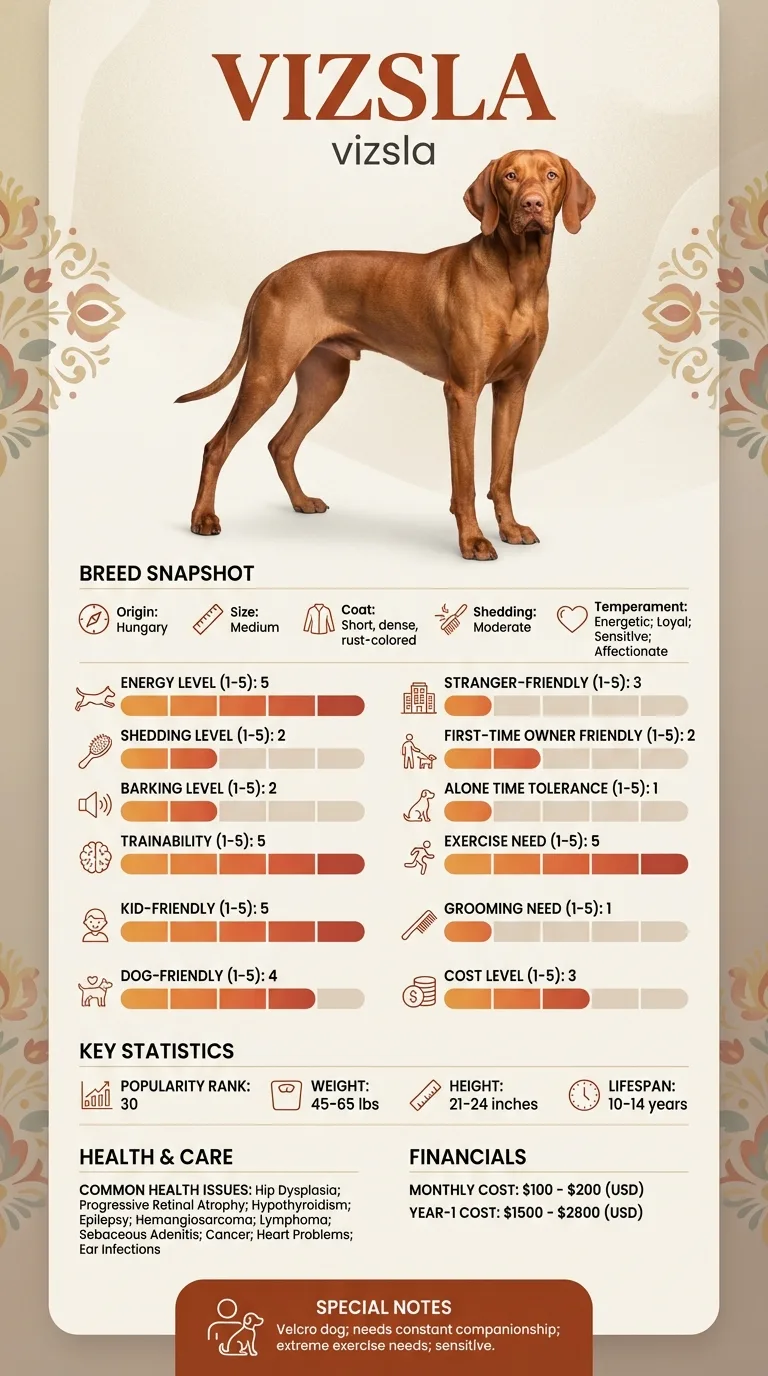
Understanding Vizsla Exercise Intolerance infographic

Owners of Vizslas, especially first-time dog owners or those living in warmer climates, often face challenges with exercise intolerance. They may find their dogs easily fatigued and unsure of how to manage their exercise needs.

Important reminder

This guide is not medical advice. If your dog shows pain, sudden behavior change, or worsening symptoms, consult a licensed veterinarian.

Some links may be affiliate links. We may earn a commission at no extra cost to you. We only suggest products we believe are helpful for dog owners.

What this problem looks like

Vizsla exercise intolerance can be a frustrating issue for dog owners. This problem often manifests as your furry friend tiring quickly during walks or playtime, leading to overheating or exhaustion. It’s crucial to recognize that while Vizslas are known for their high energy levels, some may struggle with prolonged exercise.

Common triggers

  • High temperatures or humid weather
  • Sudden increases in activity or exercise duration
  • Health issues like joint problems or heart conditions

Exercise intolerance is relatively common among Vizslas, especially as they age or if they have underlying health concerns. It's important to monitor their behavior closely and consult with a vet if you notice significant issues.

Why this happens

Breed factors

Vizslas are energetic dogs with a strong need for physical activity. However, some may develop exercise intolerance due to genetic factors or underlying health issues, like hip dysplasia or heart problems. These conditions can make it hard for them to keep up with their typical exercise routine.

Environment factors

Environmental factors like extreme heat, humidity, or inadequate hydration can exacerbate exercise intolerance. Stressful situations or a lack of adequate rest between activities can also lead to overheating and fatigue in Vizslas, affecting their ability to engage in physical activity.

What you can try

At-home strategies

  • Start with short, gentle walks to assess your Vizsla's tolerance. Gradually increase the distance and intensity based on their comfort level.
  • Create a cool, shaded area for breaks during outdoor play. Always provide fresh water to keep them hydrated.
  • Incorporate low-impact activities like swimming or fetching in cooler environments to reduce strain.
  • Monitor their energy levels closely. If your Vizsla seems to tire quickly or shows signs of distress, reduce the exercise intensity or duration.

When to consider a trainer

If your Vizsla's exercise intolerance persists despite adjustments, consider consulting a professional trainer. They can help you develop a tailored exercise plan that suits your dog's needs and limitations.

When to talk to your vet

If you notice significant changes in your Vizsla's ability to exercise, such as excessive panting, coughing, or lethargy, it's time to visit the vet. These symptoms can indicate underlying health issues that need attention.

Realistic expectations

Improvement may take 4 to 6 weeks of consistent training and monitoring.

Success means your Vizsla can enjoy moderate exercise without showing signs of fatigue or overheating.

Mistakes that make this worse

Avoiding these common mistakes can help improve your Vizsla's exercise intolerance. Here are some behaviors to steer clear of:

  • Ignoring signs of fatigue: Pushing your Vizsla to keep going when they show signs of tiredness can worsen their condition. Instead, watch for cues like heavy panting or reluctance to continue and allow for breaks.
  • Over-scheduling exercise: While Vizslas need plenty of activity, cramming too much into a single day can lead to exhaustion. Opt for shorter, more frequent sessions instead.
  • Exercising in extreme heat: Taking your Vizsla out during peak sun hours can lead to overheating. Plan walks or playtime in the cooler parts of the day, like early morning or late evening.
  • Skipping warm-ups and cool-downs: Not allowing your dog to gradually warm up or cool down can increase the risk of injury. Incorporate light activities, like walking or stretching, before and after exercise.
  • Failing to adjust exercise intensity: Each Vizsla is different, and some may need gentler activities to avoid overexertion. Tailor the intensity based on their individual tolerance and fitness level.
  • Neglecting hydration: A dehydrated dog is more susceptible to fatigue and heat-related issues. Always provide fresh water and encourage your Vizsla to drink before, during, and after exercise.
  • Not seeking veterinary advice: If your Vizsla consistently struggles with exercise, it's crucial to consult a vet. They can rule out health issues and provide tailored exercise recommendations.

When Vizsla Exercise Intolerance is an Emergency

Understanding when Vizsla exercise intolerance becomes an emergency is crucial for your dog's health. Certain signs indicate that immediate veterinary attention is necessary, while other symptoms can be monitored at home. If your Vizsla shows extreme lethargy, persistent panting, or difficulty breathing after exercise, these are red flags that warrant a vet visit right away.

Additionally, if your dog collapses, experiences seizures, or has a significantly increased heart rate while resting, you should call your vet immediately. These symptoms can indicate serious underlying health issues that need urgent care. On the other hand, mild cases of exercise intolerance, such as temporary fatigue or reluctance to engage in play, can often be managed at home. You can monitor your dog’s activity levels and adjust their exercise routine gradually.

It's essential to create a plan that includes short, low-intensity walks and plenty of rest. Keeping an eye on your Vizsla's overall behavior and energy can help you differentiate between mild fatigue and more severe issues. If you notice any escalating symptoms or if your dog seems unwell over time, don’t hesitate to consult your veterinarian for advice.

Understanding Vizsla Exercise Intolerance - When Vizsla Exercise Intolerance is an Emergency

Emily's Journey with Max the Vizsla

Emily, a busy nurse living in Chicago, adopted Max, a spirited Vizsla. She quickly noticed that he seemed to tire easily during their walks, often lying down after just a few blocks. Concerned, Emily researched Vizsla exercise intolerance and learned about the importance of pacing and hydration. Over the next month, she implemented a training plan that included shorter, more frequent walks, along with plenty of water breaks. Gradually, Max built up his stamina. By week six, Emily was thrilled to see him happily trotting alongside her, ready for longer outings without fatigue.

Key takeaway: With patience and a tailored approach, you can help your Vizsla overcome exercise intolerance and enjoy their active nature.

Frequently asked questions

Why does my Vizsla have exercise intolerance?

Vizsla exercise intolerance can be caused by overheating or overexertion. This breed is very active but can struggle with excessive heat or intense activity levels. Be sure to monitor your dog during exercise and provide plenty of water and rest breaks.

How can I improve my Vizsla's exercise tolerance?

To help improve your Vizsla's exercise tolerance, gradually increase their activity levels. Start with shorter walks or play sessions and slowly extend the duration as they build stamina. Always be cautious of the temperature and adjust exercise accordingly.

What are signs of exercise intolerance in Vizslas?

Signs of exercise intolerance in Vizslas include excessive panting, drooling, weakness, or reluctance to continue exercising. If your dog shows these signs, stop the activity immediately and allow them to rest and cool down. Regularly check their energy levels during activities.

Can a poor diet contribute to exercise intolerance in Vizslas?

Yes, a poor diet can affect your Vizsla's energy levels and overall health, contributing to exercise intolerance. Ensure your dog is on a balanced diet that meets their nutritional needs. Consult your vet for specific dietary recommendations.

When should I seek veterinary help for my Vizsla's exercise intolerance?

If your Vizsla consistently shows signs of exercise intolerance or if their condition worsens, consult your veterinarian. They can rule out underlying health issues, such as heart problems or joint issues, that may be affecting your dog's ability to exercise.

What causes exercise intolerance in my Vizsla?

Exercise intolerance in Vizslas can be caused by various factors, including health issues like hip dysplasia or heart problems. Additionally, overheating or lack of conditioning can also lead to these symptoms. It's essential to monitor their activity levels and consult a vet if you notice consistent issues.

How can I help my older Vizsla with exercise intolerance?

For older Vizslas, it's crucial to tailor their exercise routine to their energy levels and health condition. Shorter, more frequent walks can be beneficial, along with low-impact activities like swimming. Always check with your vet before starting a new exercise plan.

When should I see a vet for my Vizsla's exercise intolerance?

If your Vizsla shows signs of extreme fatigue, difficulty breathing, or persistent lethargy after minimal exercise, it’s time to consult a vet. These symptoms could indicate underlying health issues that need attention. Early intervention is key to ensuring their well-being.

Can training help reduce my Vizsla's exercise intolerance?

Yes, proper training can help your Vizsla gradually build stamina and reduce exercise intolerance. Start with short, low-intensity exercises and gradually increase the duration and intensity. Consistency is essential, but always prioritize their comfort and health.

What are some quick tips for managing Vizsla exercise intolerance?

To manage exercise intolerance in Vizslas, ensure they stay hydrated and take breaks during exercise. Monitor the weather to avoid overheating and adjust their activity level according to their health. Regular vet check-ups can also help identify and address any underlying issues.

Quick answers

View more answers
Behavior

What are quick tips for managing Vizsla exercise intolerance?

Monitor the weather and avoid exercising in extreme heat. Gradually increase activity levels and ensure your Vizsla stays hydrated. Regular vet check-ups can help prevent underlying health issues.

Living

How much exercise does a Vizsla need daily?

A Vizsla typically needs about 1 to 2 hours of exercise each day, including walks, playtime, and mental stimulation. Adjust the intensity based on your dog's energy levels.

Training

Can Vizsla exercise intolerance be trained out?

While you can't completely eliminate exercise intolerance, you can train your Vizsla to build stamina gradually. Start with shorter sessions and increase the duration as they adapt.

Related DogBreedCompass guides

Related guides