Living
Which is heavier?
The Rottweiler, up to 135 lbs versus the Vizsla's 65 lbs.

Quick answer
Which is heavier?
The Rottweiler, up to 135 lbs versus the Vizsla's 65 lbs.
Rottweiler or Vizsla? On paper they differ most on shedding, and on the scales Rottweiler is the heavier at 80–135 lbs. Here is how the two compare on everything that shapes an ordinary week.
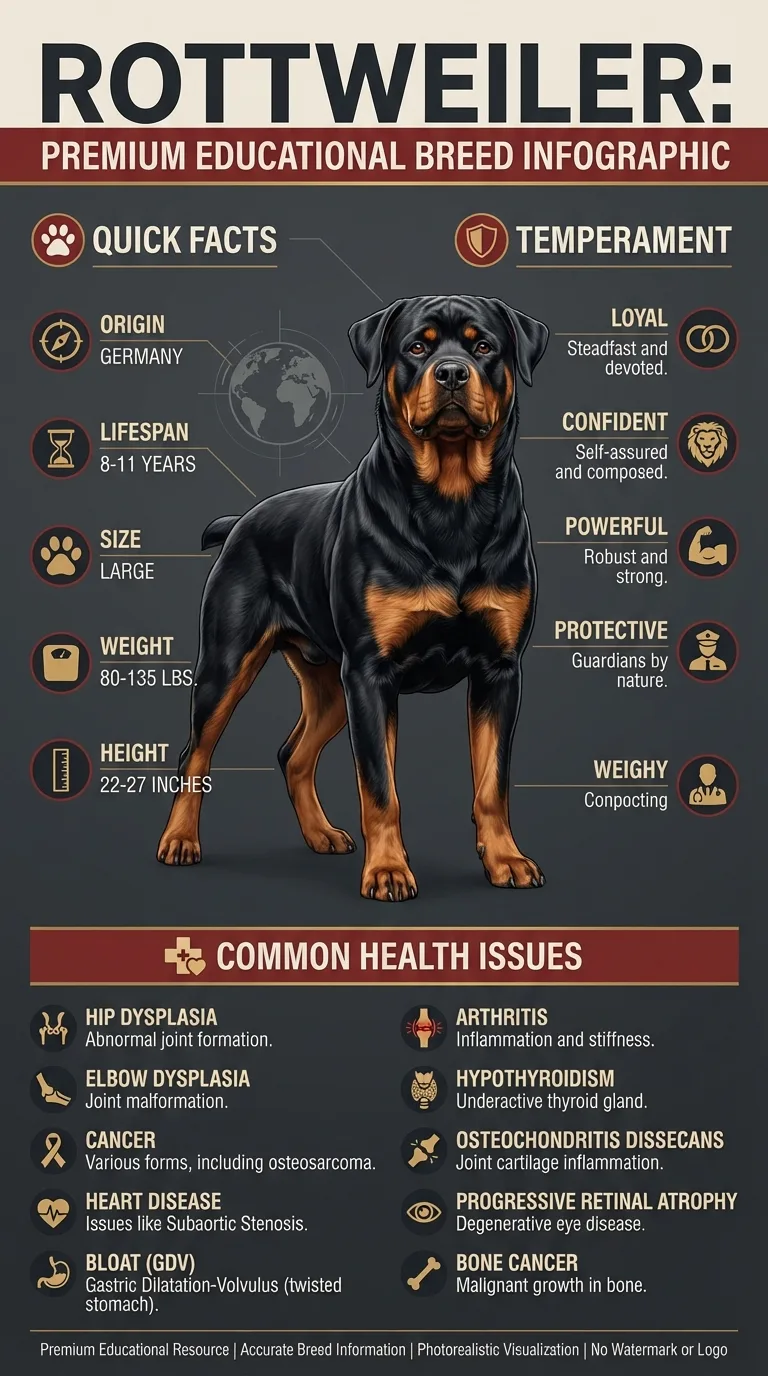
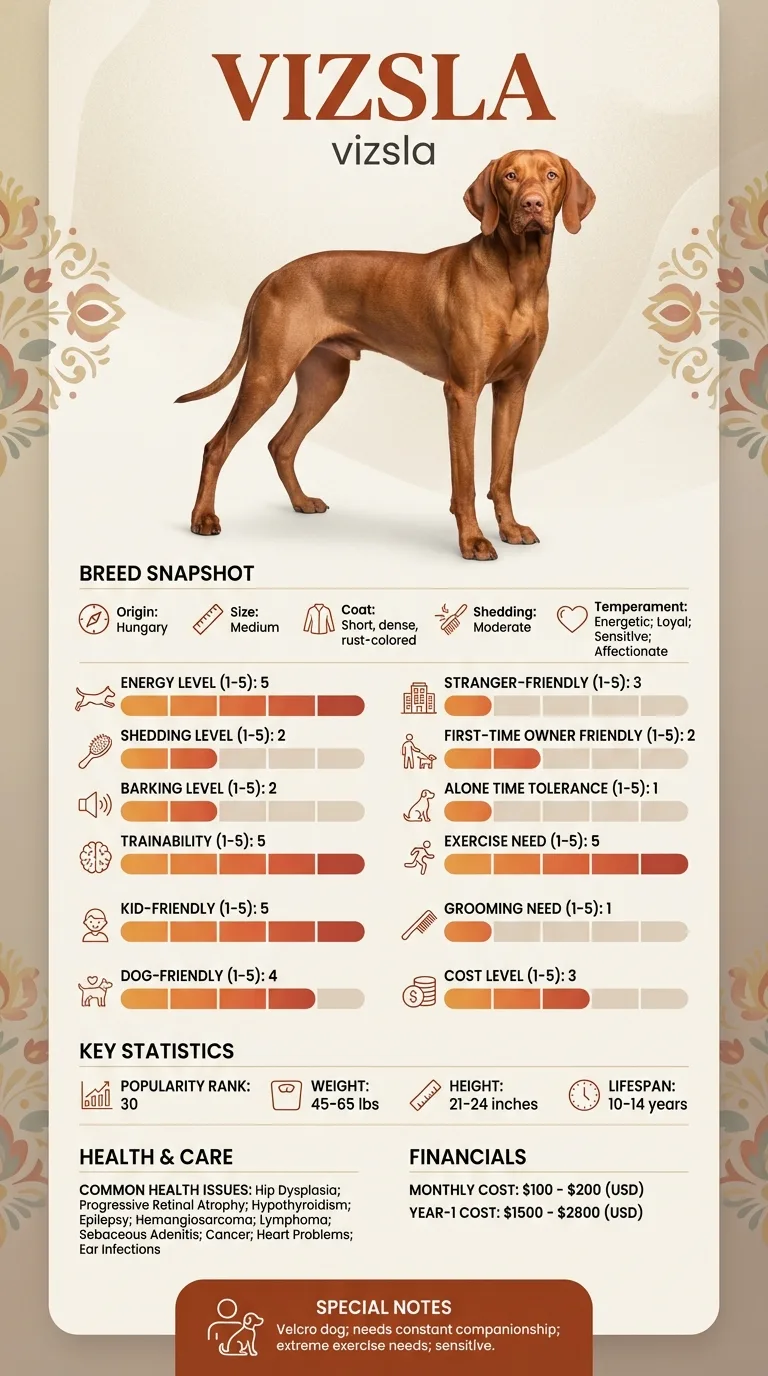
This is for someone already down to Rottweiler and Vizsla and deciding between them. For this pair the decision usually turns on shedding, so those are covered first and in most detail. Anyone choosing from a flat has a clear answer here: Rottweiler rates 2/5 against 1/5. The focus throughout is on daily consequences rather than breed background.
Between Rottweiler and Vizsla, shedding is what separates them, and Rottweiler is the lower-effort dog of the two to keep.
Choose Rottweiler if your walking routine is modest and you want a dog that is more watchful with visitors.
Choose Vizsla if you do not want a standing grooming appointment, shedding is a problem in your house and there are young children at home.
| Feature | rottweiler | vizsla | Winner |
|---|---|---|---|
| Size class | large | medium | Equal |
| Weight | 80–135 lbs | 45–65 lbs | Equal |
| Height | 22–27 in | 21–24 in | Equal |
| Lifespan | 8–11 years | 10–14 years | vizsla |
| Exercise need | High (4/5) | Very high (5/5) | rottweiler |
| Grooming need | Low (2/5) | Very low (1/5) | vizsla |
| Shedding | High (4/5) | Low (2/5) | vizsla |
| Energy level | High (4/5) | Very high (5/5) | Equal |
| Barking | Moderate (3/5) | Low (2/5) | vizsla |
| Apartment suitability | Low (2/5) | Very low (1/5) | rottweiler |
| Good for first-time owners | Low (2/5) | Low (2/5) | Equal |
| Tolerates being alone | Low (2/5) | Very low (1/5) | rottweiler |
| Trainability | High (4/5) | Very high (5/5) | vizsla |
| Good with kids | High (4/5) | Very high (5/5) | vizsla |
| Good with other dogs | Moderate (3/5) | High (4/5) | vizsla |
| Friendly to strangers | Low (2/5) | Moderate (3/5) | vizsla |
| Cost level | High (4/5) | Moderate (3/5) | vizsla |
| Coat | Double coat, short | Short, dense, rust-colored | Equal |
| Origin | Germany | Hungary | Equal |
| Typical monthly cost | $125–$250 | $100–$200 | Equal |
| Typical first-year cost | $2,000–$3,500 | $1,500–$2,800 | Equal |
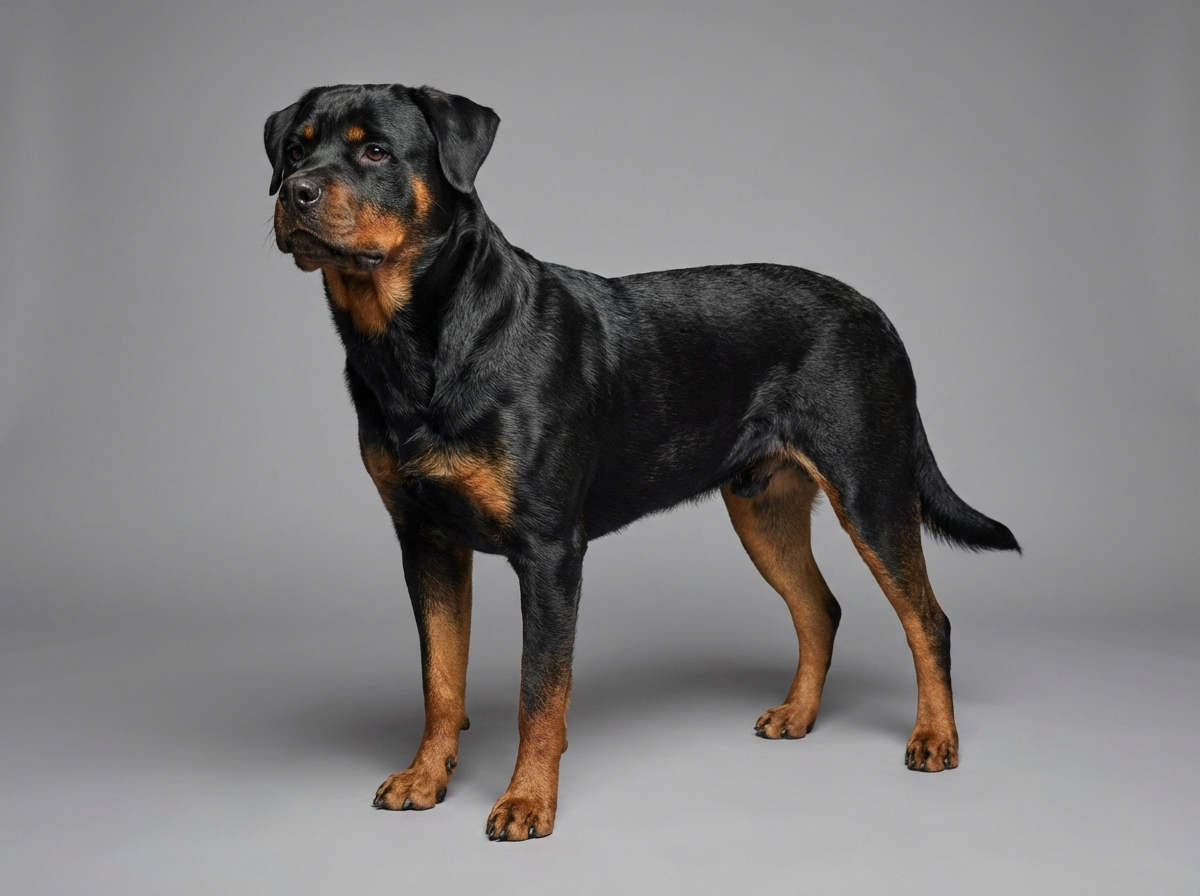
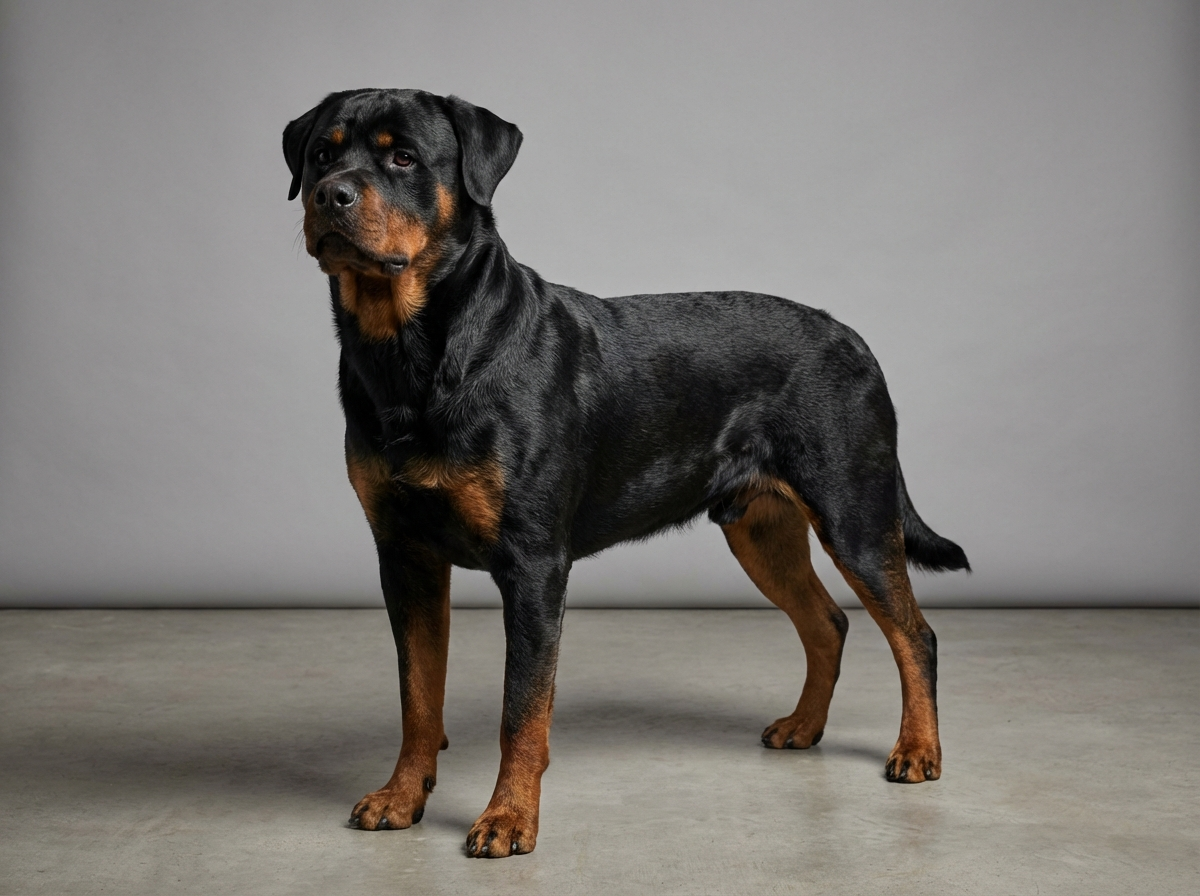
The Rottweiler outweighs the Vizsla substantially, 80–135 lbs against 45–65 lbs, though the height gap is narrower, 22–27 in versus 21–24 in — the Vizsla is a leaner, more athletically built medium-to-large dog rather than a small one. Both are muscular, but the Vizsla's silhouette is built for pointing and retrieving across open ground, a visibly different physique from the Rottweiler's blocky guardian build. The Vizsla's rust-colored coat also makes it a visibly different-looking dog from the black-and-tan, block-built Rottweiler, beyond the weight difference alone.
The Vizsla actually edges out the Rottweiler for raw activity demand, Very high (5/5) exercise need against High (4/5), with both tying at a high energy level once rounded. Vizslas are famously velcro dogs bred for all-day field work, and owners who can't deliver serious daily mileage often see anxiety and destructive behavior emerge — arguably an even higher bar to clear than the Rottweiler's own substantial needs. Vizslas are frequently used in dock diving and field trials, outlets that make good use of their Very high exercise need beyond simple daily walks.
The Vizsla is the lower-maintenance coat of the two, Very low (1/5) grooming against Low (2/5) for the Rottweiler, and it also sheds less, Low (2/5) versus High (4/5) — its short, dense, rust-colored coat is famously easy-care compared to the Rottweiler's heavier double coat. For households prioritizing minimal fur and brushing time, the Vizsla is the clear winner on this front. Its minimal grooming needs make it an appealing option for owners who want a large, athletic dog without investing much time in coat care at all.
Neither breed suits small-space or solo-heavy living, but the Vizsla scores worse on both counts that matter most — Very low (1/5) apartment suitability against Low (2/5) for the Rottweiler, and Very low (1/5) tolerance for being alone versus Low (2/5). Barking favors the Vizsla, Low (2/5) against Moderate (3/5) for the Rottweiler, but its intense need for human company can produce separation anxiety that barking scores alone don't capture. A Vizsla left alone regularly without enough companionship can develop anxious behaviors quickly, a risk the Very low alone-tolerance score reflects directly.
The Vizsla is more trainable on paper, Very high (5/5) against High (4/5) for the Rottweiler, reflecting its Sensitive, biddable hunting-dog heritage, though both tie at Low (2/5) for first-time-owner suitability. The Vizsla's Sensitive temperament word is a real caution flag — this is a breed that responds poorly to harsh correction, needing a gentler training approach than the Rottweiler's more traditionally firm-handling profile might suggest by comparison. Reward-based training tends to bring out the best in the Vizsla's Very high trainability score, while harsh methods can undermine that Sensitive streak fast.
The Vizsla edges ahead with kids, Very high (5/5) against High (4/5), and with other dogs, High (4/5) versus Moderate (3/5) for the Rottweiler, plus friendlier to strangers, Moderate (3/5) versus Low (2/5). Its Affectionate, Loyal temperament words point to a dog that actively seeks out closeness with the whole family rather than reserving affection selectively the way the Rottweiler's Protective instinct often does. That Affectionate nature often extends to actively seeking physical closeness with family members throughout the day.
The Vizsla lives somewhat longer, 10–14 years against 8–11 for the Rottweiler, though its ten-condition health list is just as extensive — Hemangiosarcoma, Lymphoma, Cancer, Sebaceous Adenitis, Epilepsy, and Heart Problems all appear alongside Hip Dysplasia and Hypothyroidism. Cancer risk shows up prominently on both breeds' lists, making regular screening a shared priority regardless of which dog a household chooses. Given how often cancer-related conditions appear on the Vizsla's list, many owners schedule more frequent wellness screenings as the dog ages.
The Vizsla costs less to keep, Moderate (3/5) against High (4/5) for the Rottweiler, with monthly costs of $100–$200 versus $125–$250 and first-year costs of $1,500–$2,800 against $2,000–$3,500. Given the Vizsla's extensive cancer-related health list, though, prospective owners should budget for the possibility that veterinary costs could run higher than the baseline estimate suggests. Insurance premiums for a breed with an extensive cancer-risk profile like the Vizsla's can also run higher than the base cost estimate suggests.
Rottweiler weighs 80–135 lbs and lives 8–11 years; Vizsla weighs 45–65 lbs and lives 10–14 years. The two diverge most on shedding. Almost every rated axis separates them at least slightly. The table below marks a winner only where one breed is genuinely easier for a typical owner; size and origin are facts rather than merits and stay level. Ratings come from one source applied to both breeds, so they are meaningful against each other rather than as absolute scores.

The Vizsla, rated Very high (5/5) against High (4/5) for the Rottweiler — Vizslas are known for needing near-constant activity and companionship.
The Vizsla, Low (2/5) versus High (4/5) for the Rottweiler, thanks to its short, dense coat.
Not well — the Vizsla scores Very low (1/5) for tolerating being alone, even lower than the Rottweiler's Low (2/5); both need real preparation for solo hours.
The Vizsla, Very high (5/5) versus High (4/5) for the Rottweiler, though its Sensitive temperament means training methods matter more than raw trainability score suggests.
The Vizsla, scoring Very high (5/5) with kids and High (4/5) with other dogs, both above the Rottweiler's High (4/5) and Moderate (3/5).
The Vizsla, 10–14 years against 8–11 for the Rottweiler.
The Vizsla, at $100–$200 versus $125–$250 for the Rottweiler.
The Rottweiler, up to 135 lbs versus the Vizsla's 65 lbs.
The Vizsla, rated Very high (5/5) versus High (4/5) for the Rottweiler.
The Vizsla, Low (2/5) versus High (4/5) for the Rottweiler.
The Vizsla, whose temperament list includes Affectionate and Sensitive, traits not listed for the Rottweiler.
Secure checkout on Stripe. We never see your card.
7-day money-back guarantee. Instant access.
Health information here is general and is not veterinary advice. If your dog shows pain, sudden behaviour change, or worsening symptoms, consult a licensed veterinarian.
Some links on this site are affiliate links. We may earn a commission at no extra cost to you, and we only suggest products we believe are helpful for dog owners.
We research and check what we publish, but we do not warrant that any figure, date, price, or statement is accurate, complete, or current, and we accept no liability for any loss, cost, injury, or other harm arising from the use of this site. Use it as one reference among several. You remain responsible for your own decisions and for your dog's care - confirm anything that matters with a licensed veterinarian or another qualified professional before you act on it. Full disclaimer.
Match your lifestyle to the right dog.
Take quizNot sure which breed is right for you? Take our 2-minute quiz to find out.
Take the quiz