Behavior
What are quick tips for managing Vizsla anxiety?
Provide regular exercise, use calming techniques, and create a safe space for your Vizsla. Staying consistent with training can also help alleviate their anxiety.

Quick answer
What are quick tips for managing Vizsla anxiety?
Provide regular exercise, use calming techniques, and create a safe space for your Vizsla. Staying consistent with training can also help alleviate their anxiety.
Vizsla anxiety can turn your affectionate companion into a bundle of nerves.
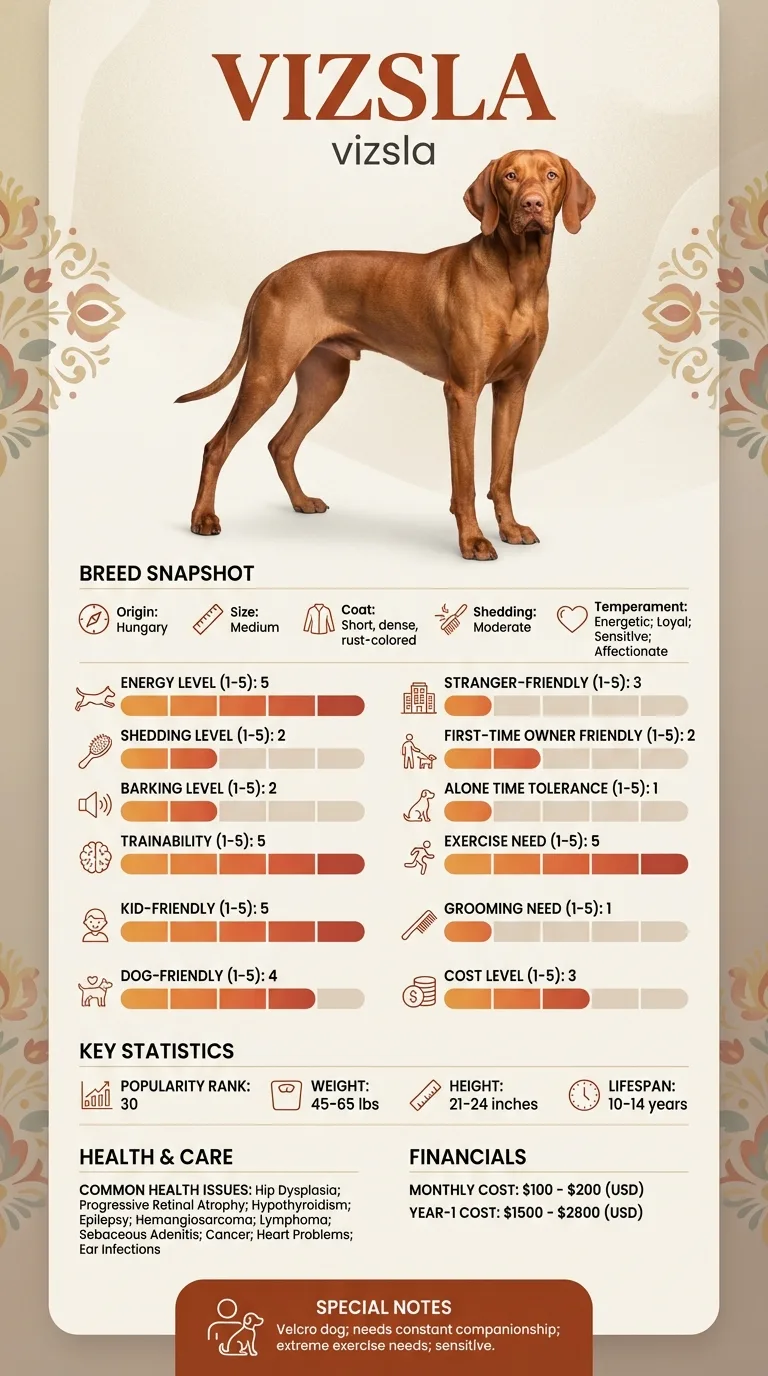
This guide is for Vizsla owners who are noticing signs of anxiety in their dogs and want to implement effective training strategies to help their furry friends feel more secure.
Vizsla anxiety often manifests as clinginess and restlessness. These dogs thrive on companionship, so when they're left alone or feel insecure, they may display anxious behaviors. This can lead to excessive barking, destructive chewing, or pacing around the house.
If your Vizsla's anxiety leads to destructive behavior or aggression, consider enrolling them in a professional training program. A qualified trainer can offer specialized strategies to manage their anxiety effectively.
Consult a veterinarian or a certified behaviorist if your Vizsla shows signs of severe anxiety, such as excessive barking, destructive behavior, or refusal to eat. They can help rule out any medical issues and recommend appropriate treatment options.
There are several tools and products that can help manage Vizsla anxiety. These items can aid in both prevention and training, making life easier for both you and your pup.
If you're dealing with Vizsla anxiety, making some lifestyle adjustments can help. These energetic dogs thrive on routine and companionship, so changes to your daily schedule can make a big difference. Start by establishing a consistent daily routine for feeding, walks, and playtime.
This gives your Vizsla a sense of security and helps reduce anxiety.
Exercise is crucial for your Vizsla's mental and physical health. Aim for at least an hour of vigorous exercise each day. This can include long walks, runs, or interactive play sessions in the yard.
A tired dog is a happy dog, and regular exercise can significantly lessen anxiety symptoms.
You should also consider how your Vizsla feels about alone time. If your dog struggles with separation anxiety, gradually increase the time you leave them alone. Start with short periods and slowly work your way up.
This helps your pup learn that being alone is okay. Additionally, providing engaging toys or puzzles can keep them occupied during these times.
Finally, assess your household routines. Create a calm environment by reducing loud noises and having a designated safe space, like a cozy crate or a quiet room. This can be a great retreat for your Vizsla when they feel overwhelmed.
Adjusting your lifestyle in these ways will not only help with your dog's anxiety but also strengthen your bond with them.
Setbacks are normal, so don't be discouraged. If your Vizsla suddenly regresses, it may be due to changes in their environment or routine. For instance, a new family member or moving to a different home can trigger anxiety.
Recognizing these patterns will help you adjust your approach and remain patient with your dog.
When your training plan is effective, you will notice consistent progress over a few weeks. If your Vizsla starts to seek comfort less often or engages in more playful behaviors, those are good signs. Keep a journal to log your dog's reactions during training sessions to visualize their growth.
If you find that progress stalls or your Vizsla's anxiety worsens, it might be time to escalate your plan. This could mean increasing training sessions, trying different techniques, or consulting a professional trainer who specializes in anxiety. Remember, it’s important to celebrate the small wins and be realistic about setbacks as part of the journey.

Meet the Johnsons, a busy family living in a small apartment with their energetic Vizsla, Max. From the moment they brought him home, they noticed he struggled with separation anxiety. Max would bark incessantly and even try to escape whenever they left him alone. The Johnsons tried leaving him with toys and treats, but nothing seemed to calm him. After a few months of sleepless nights and worried neighbors, they decided to seek help from a professional dog trainer. The trainer introduced them to gradual desensitization techniques. They started by leaving Max alone for just a few minutes, gradually increasing the time as he adjusted. Additionally, they practiced crate training to give him a safe space. They also learned to create a calm environment before leaving, using soothing music and puzzle toys to keep him occupied. Within weeks, they noticed a significant improvement. Max became more comfortable being alone, and the barking reduced considerably. Now, the Johnsons can leave home without worrying about their furry friend. Max still needs regular exercise and attention, but he's much happier and less anxious. The journey wasn't easy, but with patience and the right guidance, they turned Max into a more confident dog.
Key takeaway: If your Vizsla is struggling with anxiety, consider gradual desensitization techniques and professional help. With time and patience, you can help them feel secure.
Yes, Vizsla anxiety is relatively common due to their affectionate nature and need for companionship. Many owners experience some level of anxiety with their Vizsla, especially if they work long hours or travel frequently. With the right approach, you can help your dog feel more secure.
Managing Vizsla anxiety involves providing plenty of exercise and mental stimulation. Use training techniques to build their confidence and consider creating a safe space for them to retreat to when they feel overwhelmed. Consistency is key.
Absolutely! Vizsla anxiety training can significantly reduce symptoms. Positive reinforcement training can help them learn to cope with their anxiety and build confidence, making them feel more secure in their environment.
Common signs of Vizsla anxiety include excessive barking, destructive behavior, or hiding. You might also notice your dog pacing, chewing on furniture, or having accidents indoors. If your Vizsla is unusually clingy or restless, these could be signs of anxiety.
Yes, older Vizslas can show signs of anxiety that differ from younger dogs. They may become more sensitive to changes in their environment or routine, leading to increased stress. Regular veterinary check-ups can help address underlying health issues that might contribute to their anxiety.
To help a Vizsla with travel anxiety, start by acclimating them to their carrier or vehicle well in advance. Use calming aids like anxiety wraps or calming music, and take frequent breaks during long journeys. Keeping their favorite toys or blankets nearby can also provide comfort.
Yes, multiple Vizslas in the same household can experience anxiety, especially if one dog is anxious. This can create a cycle of stress among the dogs. It’s important to address each dog's anxiety individually, while also managing their interactions.
For Vizsla separation anxiety, it's essential to gradually increase the time your dog spends alone. Start with short periods and gradually extend them. Providing engaging toys or puzzles can also help keep them occupied while you are away.
Provide regular exercise, use calming techniques, and create a safe space for your Vizsla. Staying consistent with training can also help alleviate their anxiety.
Leaving a Vizsla alone for long periods is not ideal as they can develop severe anxiety. If you must leave them, gradually train them to be alone for short periods.
Vizslas require a lot of exercise, ideally around 1-2 hours daily. This helps release pent-up energy and can reduce anxiety levels.
Yes, calming collars, pheromone diffusers, and anxiety wraps can help soothe your Vizsla. Always consult with your vet before trying new products.
Anxiety and pain look alike from the outside. Get the prep sheet for this breed's separation-anxiety page and take it to the vet.
You get: Vet visit prep sheet
No spam. One-click unsubscribe. See our privacy policy.
Preview page 1 before you decide.

This guide is not medical advice. If your dog shows pain, sudden behavior change, or worsening symptoms, consult a licensed veterinarian.
Some links may be affiliate links. We may earn a commission at no extra cost to you. We only suggest products we believe are helpful for dog owners.
We research and check what we publish, but we do not warrant that any figure, date, price, or statement is accurate, complete, or current, and we accept no liability for any loss, cost, injury, or other harm arising from the use of this site. Use it as one reference among several. You remain responsible for your own decisions and for your dog's care - confirm anything that matters with a licensed veterinarian or another qualified professional before you act on it. Full disclaimer.
Not sure which breed is right for you? Take our 2-minute quiz to find out.
Take the quiz