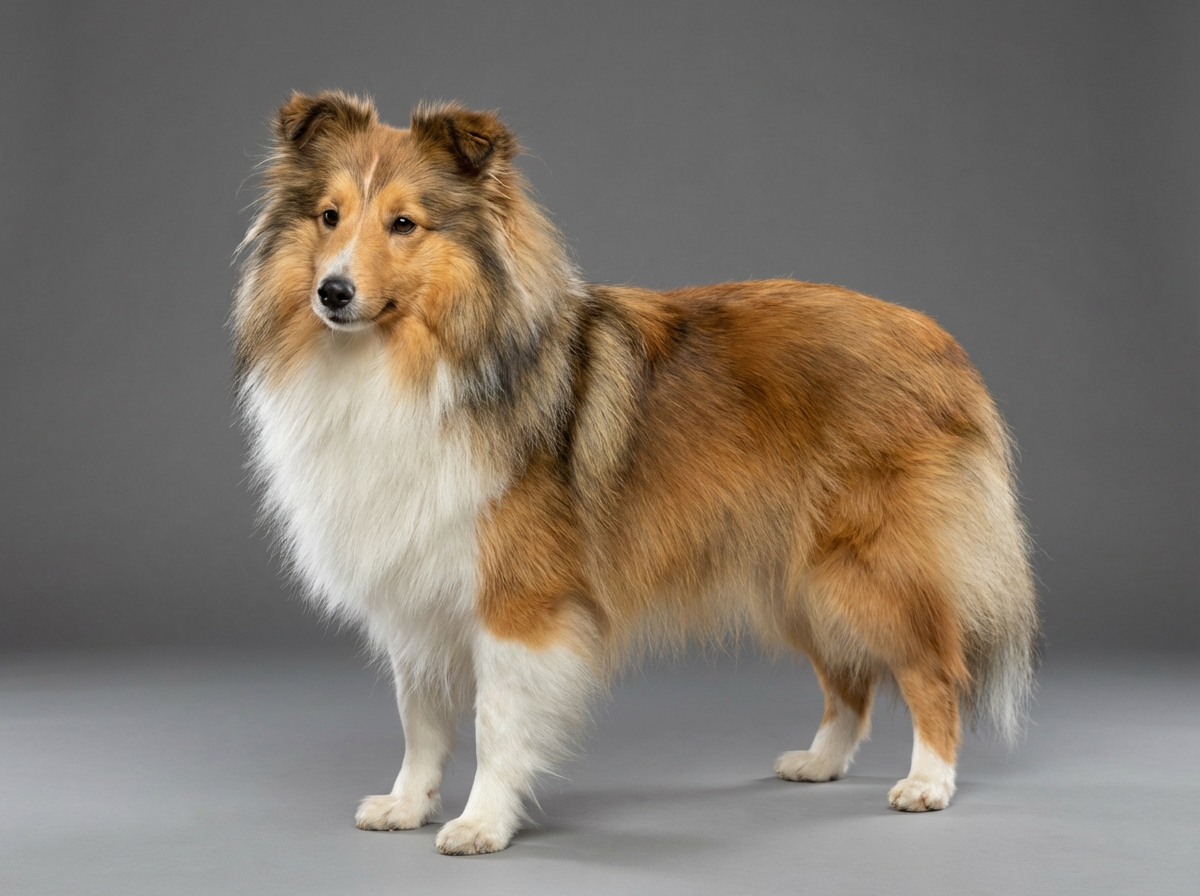
Behavior
Why do Shelties bark so much?
They were bred to use voice as a herding tool. The breed rates five out of five for barking, the highest score on its profile.

Quick answer
Why do Shelties bark so much?
They were bred to use voice as a herding tool. The breed rates five out of five for barking, the highest score on its profile.
Nobody buys this breed by accident and then discovers it barks. Shelties rate five out of five for barking, the highest of any trait on their profile. The realistic goal is management, not silence.

Owners with neighbours who have started to mention it. People whose dog erupts at every delivery van and takes ten minutes to settle. Anyone who has tried shouting, spray collars or ignoring it and found the barking got worse.
This guide is not medical advice. If your dog shows pain, sudden behavior change, or worsening symptoms, consult a licensed veterinarian.
Some links may be affiliate links. We may earn a commission at no extra cost to you. We only suggest products we believe are helpful for dog owners.
Barking is communication, and in this breed it is communication the dog was deliberately selected to do a lot of. It becomes a problem when it is disproportionate to the trigger, when it goes on long after the trigger has passed, or when it is driven by distress rather than information. Because different barks come from different emotional states, effective intervention starts with working out which type you are hearing rather than with any technique.
Close to universal in the breed to some degree. The Shetland Sheepdog scores five out of five for barking, the maximum on its trait profile and higher than its scores for energy, exercise need or grooming demand. Any owner should expect a vocal dog. Where it tips into a genuine problem is largely determined by household setup and training, not by the individual dog's temperament.
This is the clearest case of a behaviour problem being a working trait in the wrong context. The Shetland Sheepdog was bred to herd and to guard, and voice served both functions. The trait profile reads accordingly: barking five out of five, stranger-friendliness two out of five, alone-time tolerance two out of five, temperament described as bright, sensitive, vocal and devoted. A dog wired to notice change, to care about it and to alert a handler will do exactly that in a suburban house with a busy pavement outside. Trainability of five out of five is the redeeming factor, because it means the alternative behaviour can be taught quickly.
Layout matters more than most owners realise. A sofa under a front window, a glass front door, or a fence bordering a pavement all give a dog continuous access to triggers, and every bark at a passing pedestrian is rehearsal that strengthens the habit. Households with frequent deliveries generate multiple daily arousal spikes. Being left alone for long periods in a breed with low tolerance for it produces distress vocalisation. And an under-stimulated dog with a working brain will invent a job, which for a Sheltie usually means patrolling and announcing.
This is a problem where a good trainer earns their fee quickly. Look for someone qualified who works without aversive methods, since punishment-based approaches carry real risk with a breed rated two out of five for stranger confidence. The work is usually a combination of management, a trained alternative behaviour and a structured plan to reduce reactivity at distance. For barking specifically tied to being left alone, look for a behaviourist experienced in separation distress rather than a general obedience instructor, because the protocols are different and the timeline is longer.
Book a veterinary appointment if barking has changed suddenly rather than always been present, particularly in a middle-aged or older dog, since new vocalisation can reflect pain, hearing or vision loss, or cognitive change. Seek help promptly for a dog who barks continuously when left alone and who also paces, drools, destroys doorways or soils indoors, because that is separation distress rather than a training issue and often needs combined veterinary and behavioural input. Also raise it if a previously friendly dog has started barking aggressively at people or dogs, since escalating reactivity is easier to address early and is sometimes driven by discomfort that has not been identified.
See all Shetland Sheepdog health problems, which breeds are prone to excessive barking, or the full Shetland Sheepdog breed guide for temperament, exercise needs and ownership costs.
Management changes such as blocking window access reduce barking within days. Training a reliable check-in takes four to eight weeks of short daily sessions. Reducing genuine reactivity at distance is a three to six month project. Separation-related barking takes longest, often several months of graduated work.
A dog who alerts two or three times and then settles when asked, who can be redirected away from a window, and who is quiet when left. It is not a silent Sheltie, and an owner expecting one has chosen the wrong breed. Success is a dog whose barking is proportionate and interruptible.
Treating all barking as one problem is why most attempts fail. The emotional state behind a bark determines what will change it.
The instinct is to interrupt: shouting, a spray collar, a shake can. The problem is that most Sheltie barking is emotional rather than deliberate. A dog barking because a stranger is at the fence is aroused and uncertain, and adding an unpleasant experience at exactly that moment teaches her that strangers at the fence predict something bad. The barking often reduces briefly and the underlying feeling worsens, which is the worst possible trade in a breed rated two out of five for confidence with strangers.
What works is duller and more effective. First, management: remove the trigger's access. Frosted film on the window the dog patrols, a barrier keeping her away from the front door, curtains drawn at delivery time. A dog who cannot see the postman does not rehearse barking at the postman, and every rehearsal makes the habit stronger.
Second, teach an alternative that pays better. The single most useful behaviour is a trained check-in: the dog hears the trigger, turns to you, and gets something excellent. This gives her a job to do with the arousal rather than requiring her to feel nothing. A Shetland Sheepdog rated five out of five for trainability learns this quickly, which is the flip side of a breed that learns barking quickly too.
Third, meet the needs underneath. This breed has an exercise need rated four out of five and an energy level of four out of five, and it is a thinking dog. A Sheltie who has had a sniffing walk, ten minutes of shaping and a puzzle feeder barks measurably less than the same dog after a lap of the block. Mental work tires this breed more reliably than distance does.

Pibroch barked at everything that passed the front of the house, which on a suburban street was a great deal. His owner Nia had tried telling him off, which stopped him for about four seconds, and had tried ignoring it, which changed nothing at all. The neighbours had begun to mention it politely. Her trainer's first suggestion cost almost nothing: move the sofa he stood on and put frosted film across the bottom half of the window. Barking dropped by around two thirds in the first week, purely because he could no longer see the trigger. The remaining third came from the front door, which they addressed with a baby gate and a mat he was taught to go to when the bell rang. They also swapped his brisk twenty minute walk for a slower forty minute sniffing route. Six months on he alerts at the door and stops when told.
Key takeaway: Stop the rehearsal before you start the training. A dog who cannot see the trigger cannot practise barking at it.
No, and it would be an odd goal. This is a vocal breed by design. What is achievable is a dog who barks two or three times and then stops when asked, rather than one who barks for ten minutes at every passing car.
They may suppress the sound in the short term while leaving the emotion driving it untouched, and they risk making a sensitive dog more anxious about whatever she was barking at. Most modern behaviour professionals advise against them, and they are illegal in some jurisdictions.
No, and it should not be treated the same way. Barking when alone, especially with pacing, drooling or destruction, suggests separation distress. This breed rates two out of five for tolerating time alone. That needs a graduated behaviour plan and often veterinary input.
Rarely, and sometimes it doubles the noise. Two dogs bark at the same triggers and reinforce each other. Adding a dog to fix a behaviour problem is a large commitment with an uncertain return.
The breed rates four out of five for exercise need, but volume alone is not the answer. Mental work such as scentwork, trick training and puzzle feeding reduces barking more effectively than simply walking further.
Yes, if it changes suddenly. A previously settled dog who starts barking excessively, particularly an older one, may be in pain, losing hearing or sight, or developing cognitive decline. A sudden change in vocal behaviour is worth a veterinary check.
They were bred to use voice as a herding tool. The breed rates five out of five for barking, the highest score on its profile.
Block visual access to the trigger. A dog who cannot see the delivery van does not rehearse barking at it.
They suppress sound without addressing the emotion, and they can make a sensitive breed more anxious. Most behaviourists advise against them.
Less than mental work does. Scentwork, shaping and puzzle feeding tire this breed more reliably than extra distance.
The breed rates three out of five for apartment suitability, and barking is the main reason. It can work with real training investment.
Behaviour changes often start with pain. The prep sheet for this page covers what to rule out, and what to ask.
You get: Vet visit prep sheet
No spam. One-click unsubscribe. See our privacy policy.
Preview page 1 before you decide.