Health
Why do Saint Bernards have a high rate of eye disease?
Their loose facial skin often causes eyelid conformation issues like entropion that irritate the eye's surface.

Quick answer
Why do Saint Bernards have a high rate of eye disease?
Their loose facial skin often causes eyelid conformation issues like entropion that irritate the eye's surface.
Data has shown Saint Bernards facing a dramatically higher rate of ocular disease than the general dog population, and much of that gap comes down to conformation rather than bad luck.
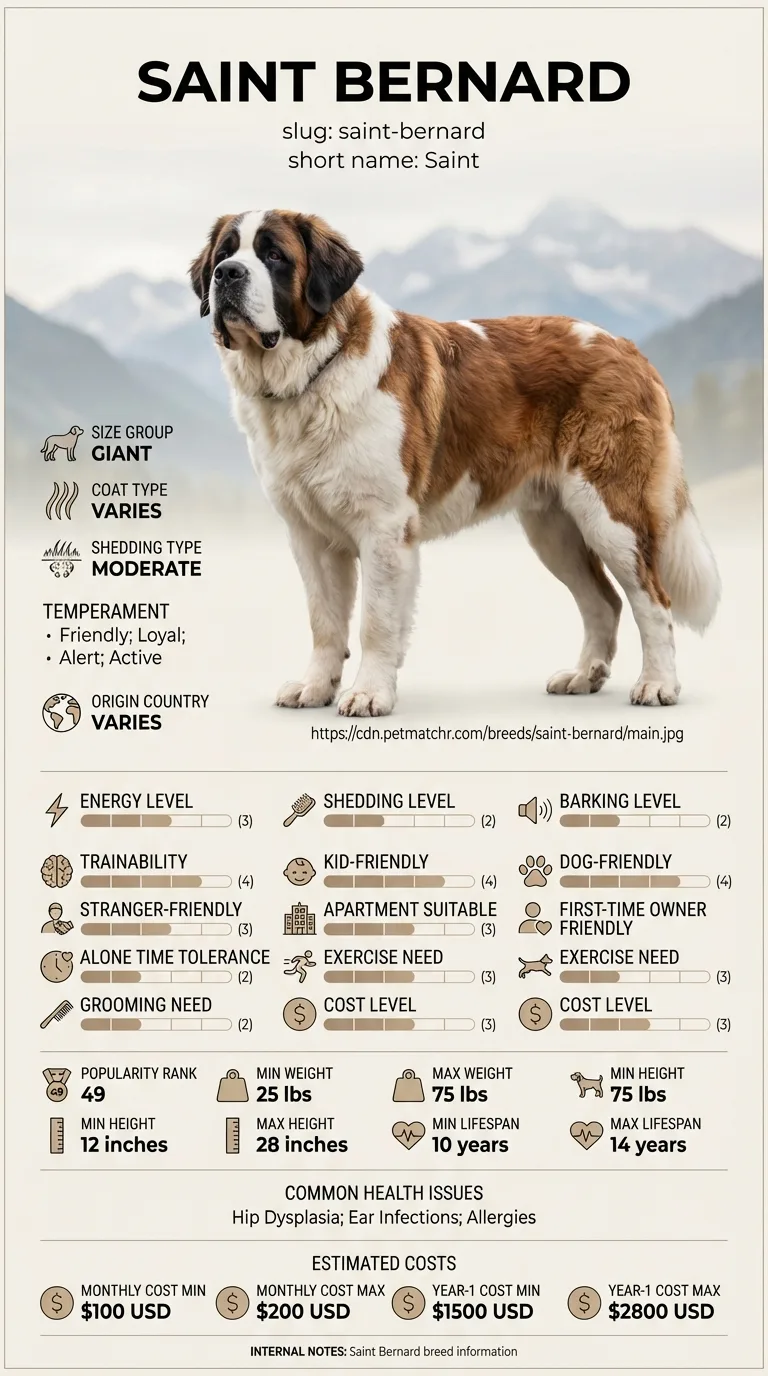
This affects most Saint Bernard owners at some point, since eyelid conformation issues like entropion, already documented as a common health issue in the breed, tend to show up early and can become a recurring concern without proactive management.
This guide is not medical advice. If your dog shows pain, sudden behavior change, or worsening symptoms, consult a licensed veterinarian.
Some links may be affiliate links. We may earn a commission at no extra cost to you. We only suggest products we believe are helpful for dog owners.
Check this first
Sudden, severe squinting, a visibly cloudy or bluish cornea, a bulging or protruding eye, or a dog pawing frantically at one eye are all signs of a potential ocular emergency and need same-day veterinary attention, since untreated corneal damage or acute glaucoma can progress to permanent vision loss within a short window.
Milder, chronic signs, like mild redness, occasional watery discharge, or intermittent squinting that comes and goes, are appointment-worthy rather than emergency-worthy, though they're still worth addressing rather than assuming they're just part of the breed's look.
The key distinction is pain and rate of change. A dog with a longstanding, stable mild redness that isn't bothering them is different from a dog suddenly pawing at an eye, keeping it fully closed, or showing visible cloudiness, which points toward acute pain or a rapidly progressing problem and needs urgent evaluation.
If any of these apply, call your vet or an emergency clinic now. The rest of this page is for the cases that are not an emergency.
Ocular disease in Saint Bernards is driven substantially by the breed's loose, heavy facial skin, which frequently causes the eyelids to sit in a less protective position than in tighter-faced breeds. Entropion, an inward-rolling eyelid documented as a common health issue in this breed, is the clearest example, but the same loose conformation also contributes to chronic irritation, debris buildup, and recurring conjunctivitis, adding up to a documented, substantially elevated overall risk for eye disease.
Ocular disease is documented as substantially more common in Saint Bernards than in the general dog population, making it one of the more consistently reported categories of health concern for this breed.
The Saint Bernard's characteristic loose, heavy facial skin, part of its recognized breed look, frequently causes the eyelid margins to sit incorrectly against the eye, most notably in entropion, where the lid rolls inward. This same loose skin creates folds where debris and moisture can accumulate near the eyes more easily than in tighter-faced breeds.
Dust, pollen, and general environmental debris are more likely to accumulate in this breed's loose facial folds and irritate an eye that may already have reduced protection from an eyelid conformation issue, and inconsistent cleaning around the eyes allows that irritation to build up over time.
Talk to your vet about any redness, discharge, squinting, or visible rubbing at the eyes. Sudden severe squinting, a cloudy or bluish cornea, a bulging eye, or frantic pawing at one eye are emergencies requiring same-day care.
Eye problems in this breed often start small and become genuinely damaging if certain habits go unchecked.
See all Saint Bernard health problems, which breeds are prone to ocular disease, or the full Saint Bernard breed guide for temperament, exercise needs and ownership costs.
Entropion is often identified in puppyhood or young adulthood, and surgical correction, when needed, typically resolves the structural issue in a single procedure with a recovery period of a couple of weeks.
Success means a comfortable, non-irritated eye through either surgical correction of a structural issue or consistent management of chronic irritation, rather than expecting a breed with this conformation to never need any ongoing eye care attention.
If you think your Saint has ocular disease, the plan is three steps: write down what you have seen and when it started, book a veterinary appointment rather than waiting for the next flare, and take video of the behaviour or symptom before you go — the thing you are worried about rarely happens in the consulting room. Screening in the parents covers hip dysplasia, elbow dysplasia, dilated cardiomyopathy.
What the vet visit should produce is a diagnosis and a written plan, not just reassurance: what is being ruled out, what the monitoring interval is, and which signs mean you come back sooner. Ask what the treatment costs across a year rather than per visit, because that is the number that decides whether you are managing this condition or reacting to it.
Between appointments, keep a short log — dates, what you saw, what changed. It is the single most useful thing an owner brings to a follow-up, and for ocular disease it is often what separates a clear pattern from a guess.
Tyler noticed his Saint Bernard puppy, Buddy, squinting slightly in one eye and tearing more than usual. His vet's exam found early entropion, the eyelid just beginning to roll inward enough to cause irritation but before any corneal damage had occurred. Buddy had a straightforward surgical correction at seven months old. Post-surgery, his squinting and tearing resolved completely, and follow-up exams have shown no lasting corneal damage or need for further intervention.
Key takeaway: Catching Buddy's entropion early, before the constant rubbing could damage his cornea, meant a single surgical correction fully resolved the issue rather than leaving him with chronic eye damage.
Their loose, heavy facial skin often doesn't hold the eyelids in an ideal position, contributing to conditions like entropion (an inward-rolling eyelid) that irritate the eye's surface, along with a general tendency toward more exposed, drier eyes than tighter-faced breeds.
Entropion is when the eyelid rolls inward, causing eyelashes and skin to rub against the cornea, and it's one of the health issues specifically documented in Saint Bernards. Left untreated, it can cause chronic irritation and corneal damage.
Mild cases are sometimes managed with lubricating eye drops, but a surgical correction to reposition the eyelid is the standard and most effective treatment for confirmed entropion, particularly when it's causing ongoing irritation.
Beyond entropion, dry eye, recurring conjunctivitis from debris trapped in facial folds, and general corneal irritation are commonly reported eye issues in Saint Bernards.
Watch for redness, excessive tearing or discharge, squinting, or visible rubbing or pawing at the face, all of which suggest discomfort worth having a vet examine.
Routine care like cleaning and lubricating drops is inexpensive, while surgical correction for entropion represents a more significant, though generally one-time, cost.
Conformational issues like entropion can't be fully prevented, but regular cleaning around the eyes, prompt attention to irritation, and early surgical correction when needed all reduce long-term damage.
Their loose facial skin often causes eyelid conformation issues like entropion that irritate the eye's surface.
An inward-rolling eyelid that causes eyelashes and skin to rub against the cornea, causing irritation and damage.
Surgical correction to reposition the eyelid is the standard, most effective treatment.
Squinting, redness, or excessive tearing all suggest discomfort worth a vet visit.
It represents a moderate, generally one-time surgical cost compared to other giant-breed procedures.
A one-page prep sheet for this condition: the signs, the questions to ask, what to get priced. Unlocks here.
You get: Vet visit prep sheet
No spam. One-click unsubscribe. See our privacy policy.
Preview page 1 before you decide.