Health
What's the anatomical reason for this breed's ear infections?
Heavy, pendulous ears restrict airflow into the canal, trapping heat and moisture that let yeast and bacteria overgrow.

Quick answer
What's the anatomical reason for this breed's ear infections?
Heavy, pendulous ears restrict airflow into the canal, trapping heat and moisture that let yeast and bacteria overgrow.
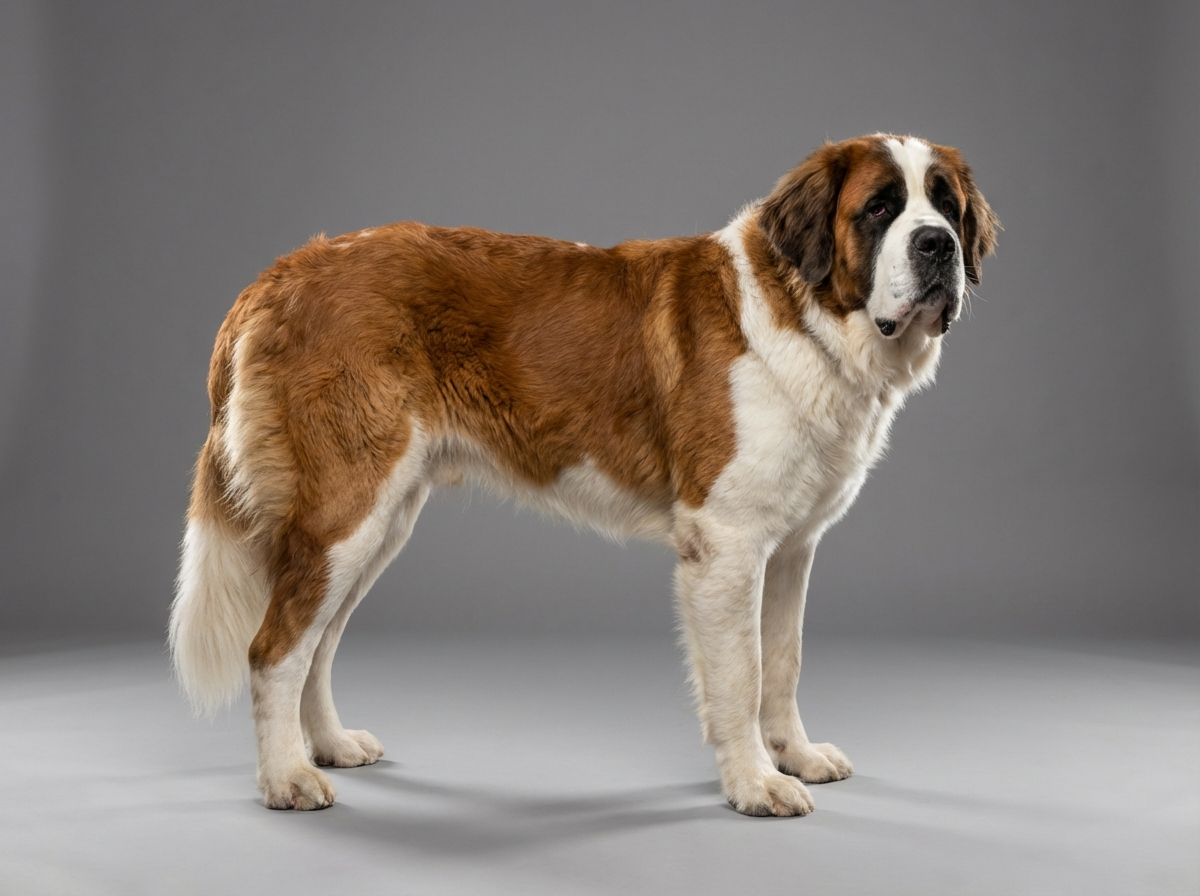
Take allergies out of the picture entirely, and a Saint Bernard's ear shape alone still stacks the odds toward infection. This is a structural problem as much as an immunological one, and the two causes call for somewhat different attention.
Owners who have ruled out or treated their dog's allergies and are frustrated that ear infections still recur, not realizing that ear shape itself is a separate, ongoing contributing factor that needs its own dedicated management.
This guide is not medical advice. If your dog shows pain, sudden behavior change, or worsening symptoms, consult a licensed veterinarian.
Some links may be affiliate links. We may earn a commission at no extra cost to you. We only suggest products we believe are helpful for dog owners.
We research and check what we publish, but we do not warrant that any figure, date, price, or statement is accurate, complete, or current, and we accept no liability for any loss, cost, injury, or other harm arising from the use of this site. Use it as one reference among several. You remain responsible for your own decisions and for your dog's care - confirm anything that matters with a licensed veterinarian or another qualified professional before you act on it. Full disclaimer.
Ear infections in Saint Bernards are driven significantly by the ear's own pendulous anatomy, which restricts airflow and traps heat and moisture in the canal, allowing normally harmless yeast and bacteria to overgrow. This anatomical risk exists independently of allergies, though the two factors frequently compound each other in this breed.
Chronic or recurring ear infections are one of the most commonly reported ongoing issues for this breed, reflecting both the structural anatomical risk and the frequent overlap with allergic skin disease.
The breed's heavy, pendulous ears lie close against the head, restricting the airflow that would otherwise help keep the canal dry and cool. This structural feature creates elevated infection risk independent of any allergic tendency, and it compounds significantly when allergies are also present.
Humid climates, frequent swimming or bathing without thorough drying, and inconsistent cleaning routines all increase moisture retention in an already airflow-restricted ear canal.
See a vet for any redness, odor, discharge, head-shaking or apparent ear discomfort that does not resolve with a routine cleaning. Treat as more urgent any head-tilting, apparent severe pain, or an ear that has been infected repeatedly without resolving between treatments, since these may need a more thorough workup.
See all Saint Bernard health problems, which breeds are prone to ear infections, or the full Saint Bernard breed guide for temperament, exercise needs and ownership costs.
A consistent cleaning and drying routine typically shows reduced infection frequency within a few months. The underlying anatomical risk does not go away, so ongoing routine care remains necessary for the dog's whole life.
Success is fewer infections and milder ones when they do occur, achieved through consistent structural management, not the complete elimination of risk, which the ear's anatomy makes unrealistic to expect entirely.
A dog's ear canal is naturally a warm, somewhat humid environment, home to a small, normally harmless population of yeast and bacteria kept in balance by regular air exchange and the ear's own self-cleaning mechanisms. A pendulous ear that lies close against the head restricts that air exchange considerably compared to an upright ear, letting heat and moisture build up and allowing the yeast and bacteria that are always present to multiply beyond their normal, harmless numbers.
This anatomical disadvantage exists independent of allergies, meaning even a Saint Bernard with no allergic tendency at all still faces elevated ear-infection risk simply from ear shape. When allergy-driven inflammation is added on top of that anatomical disadvantage, the two factors compound each other, which is why ear infections are such a persistent, recurring theme for this breed even with allergy management well underway.
This routine matters regardless of whether allergies are also part of the picture, since the ear shape itself is a standing, structural risk factor that benefits from consistent attention.

Copper, a six-year-old Saint Bernard, had his food allergy successfully identified and managed after months of work with his vet, and his skin issues improved dramatically. His owner was confused when ear infections kept recurring anyway, assuming the allergy fix should have solved everything. A follow-up conversation with his vet clarified that Copper's ear shape itself was contributing independently of his now-managed allergy. His owner added a weekly ear-check and thorough post-bath drying routine specifically targeting the anatomical risk, which cut his infection frequency down substantially over the following year, even with his allergies already well controlled.
Key takeaway: Fixing the allergy alone wasn't enough, because Copper's ear shape was always going to be a separate contributing factor — treating both causes, not just the more obvious one, was what actually solved the recurring problem.
No — the ear's own pendulous shape is an independent risk factor that restricts airflow and traps moisture regardless of whether a dog has allergies at all, though the two causes often compound each other.
This varies by individual dog, but many owners find a weekly check with cleaning as needed, following a vet-recommended solution and frequency, strikes the right balance without over-cleaning.
Pale pink skin, minimal wax, no strong odor, and no visible redness or discharge. Any deviation from this baseline is worth a closer look.
Not entirely, given the structural anatomy involved, but a consistent cleaning and drying routine meaningfully reduces frequency and severity compared to no preventive care at all.
Swimming itself isn't harmful, but ears should be thoroughly dried afterward, since trapped moisture is a major contributor to infection risk in this breed's ear shape.
A vet exam, sometimes with a sample viewed under a microscope, is the reliable way to distinguish yeast from bacterial infections, since treatment differs between the two.
For most dogs, no — surgery is reserved for severe, chronic cases with significant canal changes that no longer respond to medical management, and is uncommon for straightforward recurring infections.
Heavy, pendulous ears restrict airflow into the canal, trapping heat and moisture that let yeast and bacteria overgrow.
Yes — ear shape is an independent risk factor, though allergy-driven inflammation compounds it when both are present.
A weekly check is a reasonable routine, with cleaning frequency guided by your vet's recommendation for your specific dog.
Thoroughly drying ears after swimming or bathing, since trapped moisture is the main driver of this breed's anatomical risk.
No — it's reserved for severe, chronic cases with significant canal changes and is uncommon for typical recurring infections.
A one-page prep sheet for this condition: the signs, the questions to ask, what to get priced. Unlocks here.
You get: Vet visit prep sheet
No spam. One-click unsubscribe. See our privacy policy.
Preview page 1 before you decide.