Health
What's the classic early sign of diabetes?
Increased thirst and urination combined with weight loss despite normal or increased appetite.

Quick answer
What's the classic early sign of diabetes?
Increased thirst and urination combined with weight loss despite normal or increased appetite.
A dog drinking noticeably more water and losing weight despite eating normally is showing one of the more recognizable disease patterns in veterinary medicine — and it is worth taking seriously the first time you notice it, not the third.
Owners of an older, food-motivated dog who assume increased thirst and occasional weight changes are simply part of normal aging, missing the specific combination of signs that actually points toward diabetes.
This guide is not medical advice. If your dog shows pain, sudden behavior change, or worsening symptoms, consult a licensed veterinarian.
Some links may be affiliate links. We may earn a commission at no extra cost to you. We only suggest products we believe are helpful for dog owners.
We research and check what we publish, but we do not warrant that any figure, date, price, or statement is accurate, complete, or current, and we accept no liability for any loss, cost, injury, or other harm arising from the use of this site. Use it as one reference among several. You remain responsible for your own decisions and for your dog's care - confirm anything that matters with a licensed veterinarian or another qualified professional before you act on it. Full disclaimer.
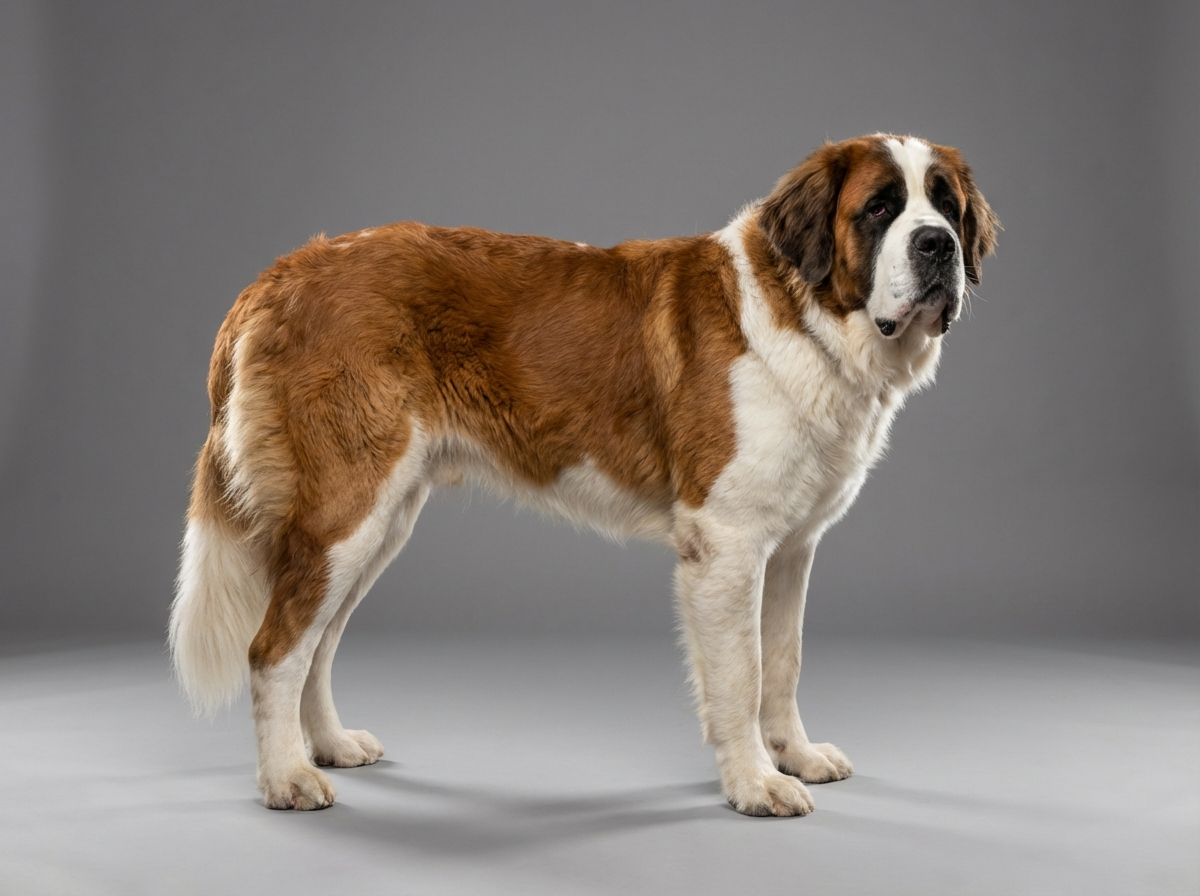
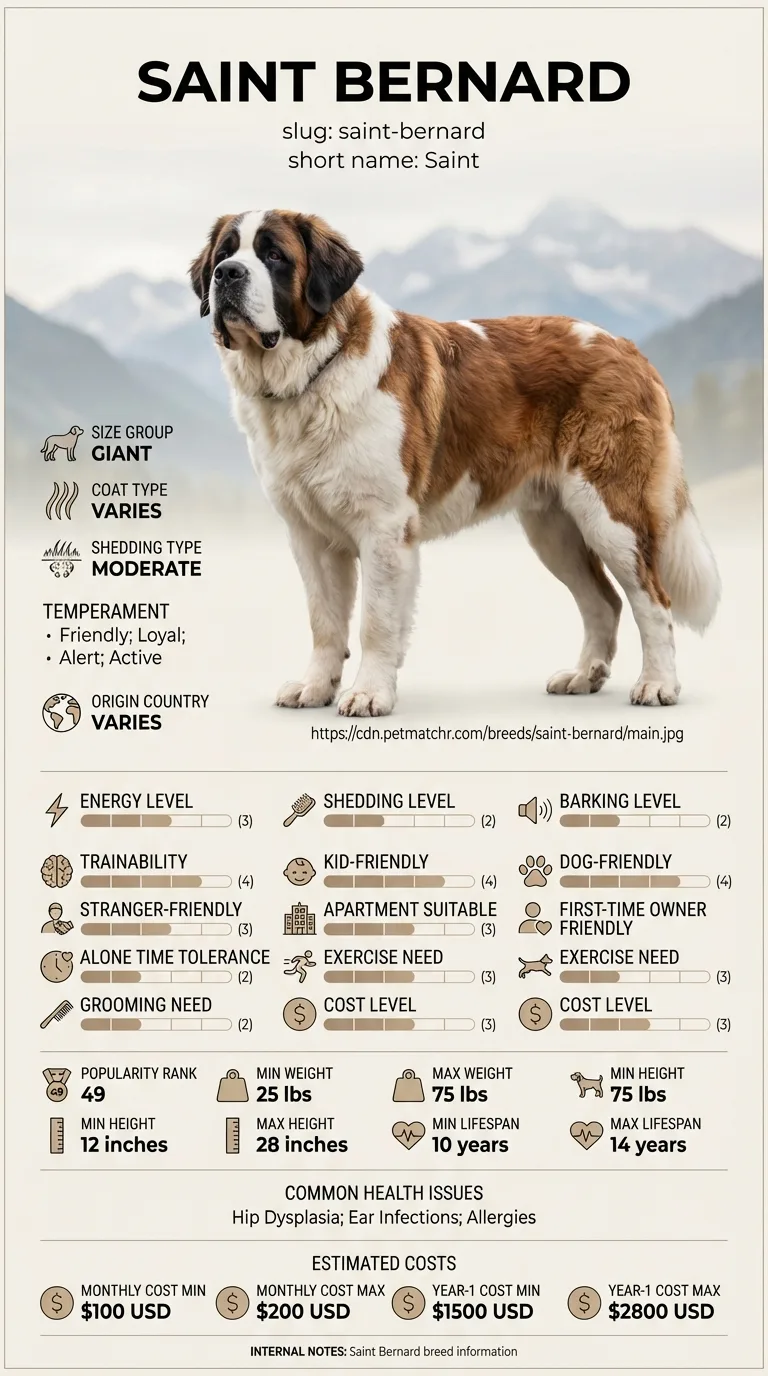
Diabetes mellitus is a condition where the body cannot properly regulate blood sugar, most often diagnosed in middle-aged to older dogs. It is not strongly documented as a Saint Bernard-specific risk, but this breed's lower exercise needs and food-motivated temperament can make excess weight, a recognized contributor to the condition, easier to accumulate without deliberate management.
Diabetes is a recognized condition across the general dog population rather than one with strong documented elevated prevalence in Saint Bernards specifically, though senior dogs of any breed carry a meaningful baseline risk worth watching for.
There is no strongly established Saint Bernard-specific genetic driver for diabetes. The main breed-relevant factor is indirect: lower documented exercise needs combined with a food-motivated temperament can make weight gain easier to accumulate, and excess weight is a recognized contributor to insulin resistance in dogs generally.
Overfeeding, inconsistent portion control, and reduced activity levels all contribute to the weight gain that raises diabetes risk. Concurrent illness or certain medications can also affect blood sugar regulation in some individual dogs.
See a vet for increased thirst and urination combined with weight loss despite normal appetite, or any of these signs individually if persistent. Treat as an emergency any sudden severe lethargy, vomiting, disorientation, or collapse, since these can indicate a dangerous complication requiring immediate treatment.
See all Saint Bernard health problems, which breeds are prone to diabetes, or the full Saint Bernard breed guide for temperament, exercise needs and ownership costs.
Reaching a stable, well-regulated insulin dose after diagnosis typically takes several weeks of monitoring and adjustment. Diabetes management is then a lifelong daily routine rather than a condition that resolves.
Success is stable blood sugar control, a dog maintaining good energy and appropriate weight, and avoiding dangerous highs or lows — achieved through consistent daily management rather than a cure, since diabetes in dogs does not go away once diagnosed.
The classic early presentation of diabetes is a specific combination: increased thirst, correspondingly increased urination, and weight loss despite a normal or even increased appetite. This pattern reflects the underlying problem directly — without adequate insulin function, the body cannot use glucose properly, so it appears in the urine and pulls extra water with it, while the body, unable to access the sugar circulating in the blood, begins breaking down its own fat and muscle for energy despite the dog eating normally.
This breed's lower documented exercise needs mean weight can accumulate more easily than in a more naturally active breed if food intake is not carefully managed, and excess weight is a recognized contributor to insulin resistance in dogs generally, similar to the pattern seen in some other health conditions. None of this means every Saint Bernard is destined toward diabetes, but the combination of a food-motivated temperament and lower activity level is worth being mindful of as a modifiable risk factor.
None of this is a one-time fix — diabetes management becomes a genuine daily routine that continues for the rest of the dog's life once diagnosed.

If you think your Saint has diabetes, the plan is three steps: write down what you have seen and when it started, book a veterinary appointment rather than waiting for the next flare, and take video of the behaviour or symptom before you go — the thing you are worried about rarely happens in the consulting room. Screening in the parents covers hip dysplasia, elbow dysplasia, dilated cardiomyopathy.
What the vet visit should produce is a diagnosis and a written plan, not just reassurance: what is being ruled out, what the monitoring interval is, and which signs mean you come back sooner. Ask what the treatment costs across a year rather than per visit, because that is the number that decides whether you are managing this condition or reacting to it.
Between appointments, keep a short log — dates, what you saw, what changed. It is the single most useful thing an owner brings to a follow-up, and for diabetes it is often what separates a clear pattern from a guess.
Juno, an eight-year-old Saint Bernard who had put on noticeable weight over a sedentary couple of years, started needing her water bowl refilled twice as often as usual. Her owner also noticed she seemed to be losing a little weight despite eating her normal amount, which seemed contradictory at first. Bloodwork at her vet visit confirmed diabetes. Juno started on daily insulin injections with a consistent feeding schedule, and her owner worked with the vet over several weeks to find a stable dose. A year into treatment, Juno's blood sugar has remained well controlled, and her weight has come down closer to an ideal range with careful portion control alongside her insulin routine.
Key takeaway: The two signs together — more thirst and less weight despite normal eating — were the combination that actually mattered, not either sign alone, and recognizing that pattern got Juno diagnosed and treated before a more dangerous complication could develop.
It is not documented as a strongly breed-specific risk the way hip dysplasia or cardiomyopathy are, but it remains a relevant senior-years concern for dogs of any breed, including this one.
Increased thirst and urination combined with weight loss despite a normal or increased appetite is the classic early pattern worth prompting a vet visit.
For most diagnosed dogs, daily insulin injections are the standard and necessary treatment. Diet and weight management support treatment but do not typically replace insulin once diabetes is confirmed.
Costs include insulin, syringes, periodic blood glucose monitoring, and regular vet visits, adding up to a genuine ongoing monthly expense worth discussing with your vet for a realistic estimate.
Excess weight is a recognized contributor to insulin resistance in dogs generally, and this breed's lower exercise needs can make weight gain easier to accumulate without deliberate portion control.
No — it is managed rather than cured, requiring lifelong daily treatment once diagnosed, similar to how diabetes is managed in people.
Untreated diabetes can progress to a life-threatening complication called diabetic ketoacidosis, making prompt diagnosis and treatment genuinely important once symptoms appear.
Increased thirst and urination combined with weight loss despite normal or increased appetite.
Not specifically documented as elevated, but it remains a relevant senior-years risk for any breed, this one included.
Daily insulin injections and a consistent feeding schedule timed around them.
A genuine ongoing monthly expense covering insulin, supplies and monitoring visits — ask your vet for a realistic estimate.
Yes — excess weight contributes to insulin resistance, and this breed's lower exercise needs can make weight gain easier without careful portion control.
A one-page prep sheet for this condition: the signs, the questions to ask, what to get priced. Unlocks here.
You get: Vet visit prep sheet
No spam. One-click unsubscribe. See our privacy policy.
Preview page 1 before you decide.