What are quick tips for managing Rottweiler Mix behavior?
Use positive reinforcement training and consistent routines to manage behavior. Regular exercise and mental stimulation are also crucial for keeping your Rottweiler Mix happy and healthy.
Choosing between a Rottweiler Mix purebred and a mixed breed can be tough. Each option comes with distinct traits and potential challenges. (Rottweiler Mix purebred vs. mixed breeds)

New dog owners or families may struggle with this decision, especially when trying to balance traits like trainability, health risks, and temperament. Those looking for a loyal companion that fits their lifestyle often find themselves weighing these important factors.
This guide is not medical advice. If your dog shows pain, sudden behavior change, or worsening symptoms, consult a licensed veterinarian.
Some links may be affiliate links. We may earn a commission at no extra cost to you. We only suggest products we believe are helpful for dog owners.
Rottweiler Mixes can face challenges when it comes to understanding their behavior and health. One common issue is the ongoing debate between purebred and mixed breed traits. Owners might find themselves puzzled about their dog's behavior, leading to frustration and anxiety, especially if they notice health issues or unpredictable temperament traits.
This problem is fairly common among Rottweiler Mixes. Many owners report struggles with behavior and health concerns, particularly when their dog shows mixed traits that differ from purebred characteristics. Understanding these complexities is crucial for effective training and care.
Rottweiler Mixes can inherit traits from both purebred and mixed breed parents. This can lead to a range of behaviors and temperaments. For example, some may be more prone to anxiety or aggressive tendencies based on their lineage.
The environment plays a crucial role in a dog's behavior. Factors like stress, lack of socialization, or inadequate training can exacerbate issues. A busy household or frequent changes in routine can also unsettle a Rottweiler Mix, leading to behavioral problems.
If you notice persistent behavior issues that don't improve with your efforts, consider hiring a professional trainer. They can provide tailored strategies and help address specific problems effectively.
If your Rottweiler Mix displays sudden changes in behavior, such as increased aggression or withdrawal, consult a vet. These changes could indicate underlying health issues that need attention.
You might see improvements in your Rottweiler Mix's behavior within a few weeks of consistent training, but lasting changes could take several months.
Success means having a well-adjusted dog that can comfortably interact with others and obey commands, reducing conflicts with other pets or people.
Avoiding these common mistakes can help improve your Rottweiler Mix's behavior and overall well-being.
If your Rottweiler Mix shows any of the following symptoms, it's time to call your vet immediately: 1. Difficulty breathing or rapid panting. 2. Uncontrolled vomiting or diarrhea, especially if it's bloody. 3. Signs of severe pain, such as whining or reluctance to move. 4. Seizures or unresponsiveness. 5. Swelling of the abdomen or any sudden change in behavior.
These signs can indicate serious conditions like bloat, poisoning, or severe infections. Don’t hesitate; your pet’s health could depend on your quick decision.
In less severe cases, you can monitor your Rottweiler Mix at home. If they’re acting a bit off but still eating and drinking, keep an eye on them for a day or two. Mild symptoms to watch include: - Occasional coughing. - Minor digestive issues without blood. - Slight lethargy or mood changes.
Create a plan to observe your dog’s behavior closely. If these symptoms persist or worsen, it’s best to consult your vet. Remember, it's always safer to err on the side of caution. Keeping a calm approach helps you decide whether it’s a watch-and-wait situation or an emergency that needs immediate attention.

Sarah, a busy nurse in Chicago, adopted Bella, a Rottweiler Mix. Initially, Bella's energy and stubbornness led to frequent outbursts, like barking at strangers and jumping on visitors. Sarah felt overwhelmed, unsure if she could manage Bella's behavior. After seeking advice, she began a structured training program focusing on positive reinforcement. Week by week, Bella learned to respond better to commands, and they practiced socialization at local parks. With patience and dedication, Sarah noticed significant improvements. Bella became calmer around guests and even made friends with other dogs.
Key takeaway: With commitment and the right training approach, even the most energetic Rottweiler Mix can learn to behave well in various situations.

Rottweiler Mixes can display a range of traits based on their genetics. If your dog shows characteristics of both purebred and mixed breeds, it's likely due to the diverse lineage. Understanding these traits can help you tailor training and care to meet their needs. This answer relates to Rottweiler Mix purebred vs. mixed breeds.
Start with consistent training using positive reinforcement techniques. Focus on obedience commands and socialization to address specific behavior issues. Regular training sessions can help reduce confusion and build a strong bond with your Rottweiler Mix.
Rottweiler Mixes may experience issues like separation anxiety, excessive barking, or aggression if not properly socialized. Early training and consistent routines can mitigate these problems. If issues persist, consider consulting a professional trainer.
To reduce excessive barking, first identify the triggers causing your dog to bark. Use distraction techniques or command training to redirect their focus. Consistency is key; reward quiet behavior to reinforce the desired action.
Signs of anxiety can include excessive barking or destructive behavior. Providing a calm environment, regular exercise, and mental stimulation can help. If anxiety persists, consult with a veterinarian for possible treatment options.
Rottweiler Mix purebreds may have a higher risk of genetic health issues, such as hip dysplasia and allergies. In contrast, mixed breeds often benefit from hybrid vigor, which can lead to fewer inherited health problems. However, it's essential to monitor both types for common ailments.
You can often tell by examining physical traits, like size and coat type, which may reflect the purebred parent. DNA tests can provide a clearer picture of your Rottweiler Mix's lineage. Keep in mind that behavior and temperament might also hint at their mixed breed background.
Training methods are generally similar for both Rottweiler Mix purebreds and mixed breeds. However, mixed breeds may have varied temperaments that could affect their responsiveness. It's crucial to adapt your training approach based on your dog's unique personality and background.
If your Rottweiler Mix shows signs of anxiety, consider consulting a trainer or behaviorist who understands breed-specific traits. Consistent training and socialization can help. Additionally, products like calming sprays or anxiety wraps can provide relief, but always consult your vet first.
As Rottweiler Mixes age, purebreds may experience more breed-specific health issues, while mixed breeds might enjoy a longer lifespan due to genetic diversity. Regular vet check-ups become even more critical for both types to address potential age-related problems early.
Use positive reinforcement training and consistent routines to manage behavior. Regular exercise and mental stimulation are also crucial for keeping your Rottweiler Mix happy and healthy.
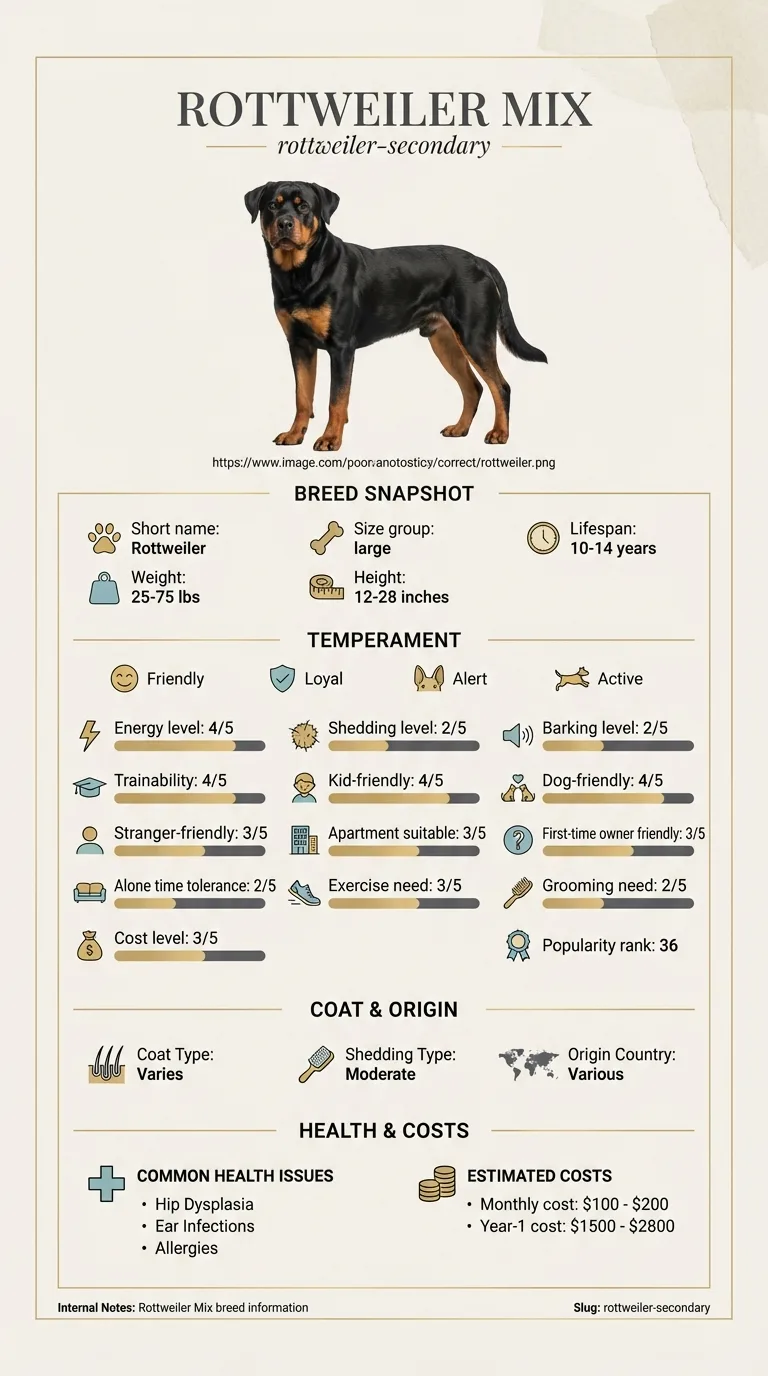
Expect monthly costs for a Rottweiler Mix to range from $100 to $200, considering food, grooming, and vet care. Initial costs in the first year can be between $1,500 and $2,800.
Common health issues include hip dysplasia, ear infections, and allergies. Regular vet check-ups can help catch these issues early.