Behavior
What are quick tips for Rottweiler Mix hip dysplasia prevalence?
Maintain a healthy weight and provide joint supplements. Regular, moderate exercise can also help manage symptoms.

Quick answer
What are quick tips for Rottweiler Mix hip dysplasia prevalence?
Maintain a healthy weight and provide joint supplements. Regular, moderate exercise can also help manage symptoms.
Hip dysplasia is a common issue for Rottweiler Mixes, affecting their mobility and quality of life. Understanding its prevalence is crucial for owners.
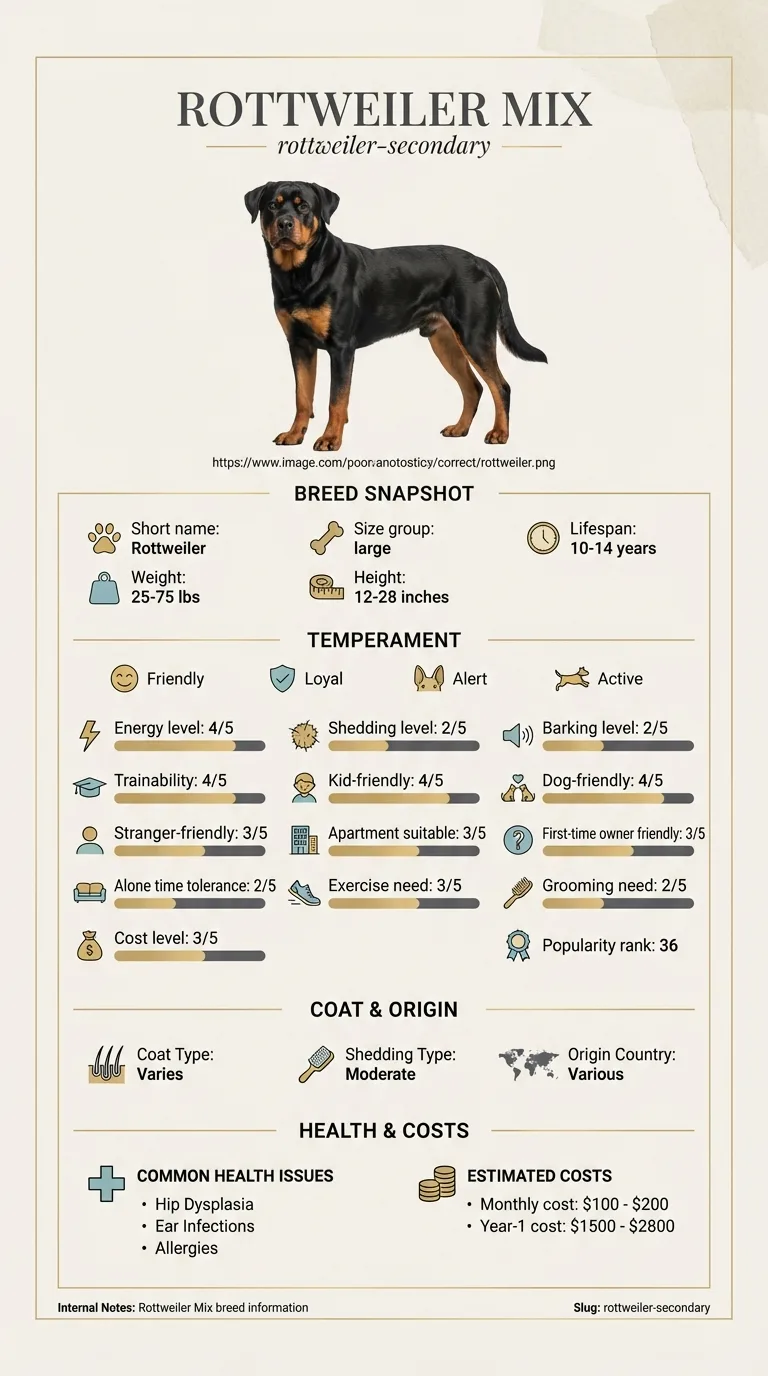
This issue often troubles first-time dog owners, families with active lifestyles, or those living in smaller spaces. Owners who might not recognize early signs of joint pain can also face challenges in managing their pet's health.
This guide is not medical advice. If your dog shows pain, sudden behavior change, or worsening symptoms, consult a licensed veterinarian.
Some links may be affiliate links. We may earn a commission at no extra cost to you. We only suggest products we believe are helpful for dog owners.
We research and check what we publish, but we do not warrant that any figure, date, price, or statement is accurate, complete, or current, and we accept no liability for any loss, cost, injury, or other harm arising from the use of this site. Use it as one reference among several. You remain responsible for your own decisions and for your dog's care - confirm anything that matters with a licensed veterinarian or another qualified professional before you act on it. Full disclaimer.
Check this first
Red-flag signs that signal an emergency include severe limping, inability to put weight on a leg, or sudden changes in behavior like excessive whining or aggression when touched. If your Rottweiler Mix is showing these symptoms, it's time to get to the vet ASAP.
On the other hand, if your dog is occasionally stiff after exercise or has a slight limp that improves with rest, these can be monitored. Mild cases can often be managed with a balanced exercise routine, weight management, and joint supplements. However, it's still wise to have a vet check-up to create a plan tailored to your dog’s needs.
If your Rottweiler Mix shows signs of discomfort or pain during normal activities, don’t ignore it. Early intervention can lead to better long-term outcomes. A proactive approach can make a difference in managing hip dysplasia and improving your dog's quality of life.
If any of these apply, call your vet or an emergency clinic now. The rest of this page is for the cases that are not an emergency.
Rottweiler Mix hip dysplasia prevalence is a common concern for many owners. This condition occurs when the hip joint doesn't fit properly into the hip socket, leading to pain and mobility issues. Daily life for a dog suffering from hip dysplasia may include difficulty getting up, limping, or reluctance to engage in activities like walking or playing.
Hip dysplasia is relatively common among Rottweiler Mixes, with studies showing a prevalence rate of about 20% to 30%. This makes it crucial for potential owners to be aware of this issue and consider preventive measures.
Rottweiler Mixes are prone to hip dysplasia due to their genetic background. Large breeds often have a higher likelihood of developing this condition. Additionally, if one or both parents had hip dysplasia, the risk increases significantly for their offspring.
Poor nutrition and lack of exercise can also contribute to hip dysplasia in Rottweiler Mixes. Excess weight puts extra strain on their joints. Furthermore, improper training or overexertion during their growth phase can increase the chances of developing this condition.
Consult your vet if you notice any persistent limping or difficulty in movement. They can recommend imaging tests to assess hip joint health. Early intervention is key in managing hip dysplasia effectively.
Avoiding certain behaviors can help manage Rottweiler Mix hip dysplasia prevalence. Here are common mistakes owners make that can exacerbate the issue.
Start here: Rottweiler Mix Genetic Disorders: What to Screen For
See all Rottweiler Secondary health problems, which breeds are prone to hip dysplasia prevalence, or the full Rottweiler Secondary breed guide for temperament, exercise needs and ownership costs.
Addressing Rottweiler Mix hip dysplasia prevalence typically takes several months of consistent care and management.
Success means your dog shows improved mobility, reduced discomfort, and a more active lifestyle.
When Sarah adopted Max, a Rottweiler Mix, she quickly noticed he struggled with stairs and often limped after long walks. After consulting with her vet, she learned about the risk of hip dysplasia in larger breeds. Sarah committed to a daily routine of gentle exercises, weight management, and joint supplements. Over time, Max became more active and playful, allowing him to enjoy his favorite activities without discomfort.
Key takeaway: With the right care and attention, you can significantly improve your Rottweiler Mix's quality of life despite hip dysplasia.
Hip dysplasia prevalence in Rottweiler Mixes often stems from genetics, poor nutrition, or rapid growth during puppyhood. It's important to choose a reputable breeder who screens for this condition. Regular vet check-ups can help catch any early signs.
Managing hip dysplasia involves maintaining a healthy weight, providing joint supplements, and ensuring moderate exercise. Avoid high-impact activities that could worsen the condition. Your vet can recommend a tailored exercise plan.
Common signs of hip dysplasia include limping, difficulty standing up, or reluctance to run or jump. If your dog shows these symptoms, it's crucial to consult your vet for diagnosis and treatment options.
Surgery may be necessary in severe cases of hip dysplasia, especially if pain management isn’t effective. Your vet will assess your dog's condition and determine the best course of action.
Preventing hip dysplasia begins with responsible breeding and proper nutrition. Ensure your Rottweiler Mix gets balanced meals and regular, moderate exercise to support healthy joint development.
If your Rottweiler Mix shows signs of hip dysplasia, such as limping or difficulty standing up, it's essential to consult your veterinarian. Early diagnosis can help manage the condition effectively through medication, weight management, or even surgery if necessary.
While you can't completely prevent hip dysplasia, you can reduce its risk by ensuring your Rottweiler Mix maintains a healthy weight and gets regular exercise. Additionally, choosing a reputable breeder who screens for hip health can also help.
Yes, hip dysplasia tends to become more noticeable as Rottweiler Mixes age. Older dogs may experience increased pain and mobility issues due to degenerative changes in the joints, making regular vet check-ups even more important.
To help your Rottweiler Mix feel more comfortable, provide them with a soft bed and avoid activities that put stress on their joints. Gentle exercises, like swimming or walking on soft surfaces, can also be beneficial.
Even with regular exercise, hip dysplasia prevalence can occur due to genetic factors, improper growth rates, or other underlying health issues. It's crucial to consult your vet for a thorough assessment and tailored advice.
Maintain a healthy weight and provide joint supplements. Regular, moderate exercise can also help manage symptoms.
Expect to budget between $100 to $200 monthly for ongoing care, including vet visits and medications.
Focus on gentle training that avoids stress on the joints, like basic obedience and leash training. Positive reinforcement is key.
A one-page prep sheet for this condition: the signs, the questions to ask, what to get priced. Unlocks here.
You get: Vet visit prep sheet
No spam. One-click unsubscribe. See our privacy policy.
Preview page 1 before you decide.