Health
What are quick tips for managing genetic disorders in Rottweiler Mixes?
Keep up with regular vet check-ups and screenings to catch potential issues early. Provide a healthy diet and consistent exercise to support overall well-being.

Quick answer
What are quick tips for managing genetic disorders in Rottweiler Mixes?
Keep up with regular vet check-ups and screenings to catch potential issues early. Provide a healthy diet and consistent exercise to support overall well-being.
Rottweiler Mixes can face serious health issues, including genetic disorders. Understanding these can help you provide better care.
This issue often affects first-time Rottweiler Mix owners or families who may not be aware of the potential health challenges. Busy individuals may also find it hard to keep up with necessary vet visits and treatment plans.
This guide is not medical advice. If your dog shows pain, sudden behavior change, or worsening symptoms, consult a licensed veterinarian.
Some links may be affiliate links. We may earn a commission at no extra cost to you. We only suggest products we believe are helpful for dog owners.
We research and check what we publish, but we do not warrant that any figure, date, price, or statement is accurate, complete, or current, and we accept no liability for any loss, cost, injury, or other harm arising from the use of this site. Use it as one reference among several. You remain responsible for your own decisions and for your dog's care - confirm anything that matters with a licensed veterinarian or another qualified professional before you act on it. Full disclaimer.
Check this first
For Rottweiler Mixes, recognizing when genetic disorders become an emergency is crucial. If you notice sudden lethargy, severe coughing, or difficulty breathing, these are red flags. These signs can indicate serious issues like dilated cardiomyopathy, which requires immediate veterinary attention.
Other alarming signs include swelling in the abdomen, inability to stand, or collapse. If your dog shows any of these symptoms, call your vet right away. Early intervention can make a significant difference in outcomes for severe conditions.
On the other hand, if your Rottweiler Mix has mild symptoms like occasional limping, low energy, or mild skin irritations, you can monitor these at home. Keep track of any changes and maintain a health log. If symptoms persist for more than a few days or worsen, it's time to consult your vet for further advice.
If any of these apply, call your vet or an emergency clinic now. The rest of this page is for the cases that are not an emergency.
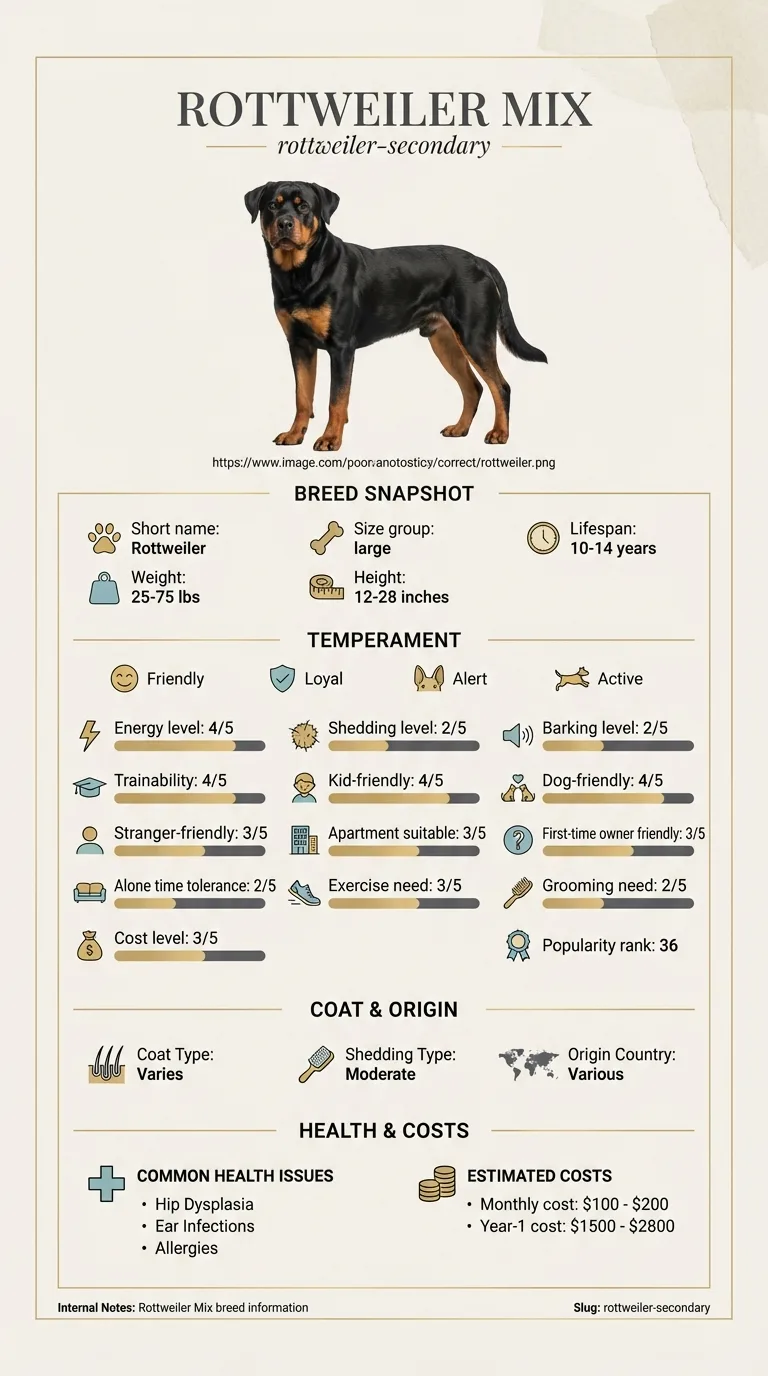
Rottweiler Mixes can face a range of genetic disorders that affect their health and behavior. Some of the most common issues include hip dysplasia, elbow dysplasia, and dilated cardiomyopathy. These disorders can manifest in day-to-day life through symptoms like limping, difficulty in movement, and breathing issues, often leading to a need for medical intervention.
Genetic disorders are fairly common in Rottweiler Mixes, particularly if they inherit traits from purebred parents. Regular check-ups and a healthy lifestyle can help manage and reduce risks.
Rottweiler Mixes can inherit genetic disorders from their Rottweiler lineage. Common issues include hip dysplasia, which is influenced by the breed's structure, and dilated cardiomyopathy, a heart condition prevalent in many large breeds. These traits can be exacerbated depending on the mix, especially if the other parent has a similar genetic background.
The environment plays a significant role in a dog's health. Poor nutrition, lack of exercise, and inadequate veterinary care can worsen existing genetic disorders. Stressful living conditions, such as loud noises or chaotic households, can also impact your Rottweiler Mix's overall well-being.
It's essential to consult your vet if you notice symptoms like limping, difficulty breathing, or sudden changes in appetite or energy levels. Regular check-ups are also crucial to catch any genetic disorders early on.
Here are some common mistakes owners make that can worsen genetic disorders in Rottweiler Mixes. Avoiding these can help improve your dog's health and quality of life.
See all Rottweiler Secondary health problems, which breeds are prone to most common genetic disorders, or the full Rottweiler Secondary breed guide for temperament, exercise needs and ownership costs.
You may start seeing improvements within a few weeks, but managing genetic disorders in your Rottweiler Mix is often a long-term commitment. Regular vet check-ups and consistent care are essential.
Success means your Rottweiler Mix leads a happy, healthy life, with fewer symptoms of genetic disorders. You're actively managing their health and adjusting their lifestyle as needed.
When Sarah adopted Max, her Rottweiler Mix, she quickly noticed he was limping. After a vet visit, she learned Max had hip dysplasia, a common genetic disorder in Rottweilers. Feeling overwhelmed, Sarah decided to take control. She researched hip dysplasia and learned about low-impact exercises and weight management. With her vet's guidance, she adjusted Max's diet and created a gentle exercise routine. Over time, Max became more active, and his limping decreased significantly. Sarah realized that with the right support and knowledge, she could help Max live a fulfilling life.
Key takeaway: Understanding and addressing genetic disorders in your Rottweiler Mix can lead to better health and quality of life for your dog. Don't hesitate to seek professional advice and make proactive changes.
Rottweiler Mixes can be prone to several genetic disorders, including hip dysplasia, elbow dysplasia, and dilated cardiomyopathy. Regular vet check-ups and screenings can help in early detection. This answer relates to Rottweiler Mix most common genetic disorders.
Common signs include limping, difficulty breathing, excessive shedding, or skin irritations. If you notice any unusual behavior or symptoms, it's important to consult your vet for a proper diagnosis.
While you can't completely prevent genetic disorders, choosing a responsible breeder who screens for health issues is key. Regular vet visits and maintaining a healthy lifestyle can also help.
If you notice symptoms like limping or difficulty breathing, consult your vet immediately. Early intervention can make a significant difference in treatment outcomes.
Mixed breeds, including Rottweiler Mixes, might have a lower chance of some genetic disorders than purebreds. However, they can still inherit health issues from both parent breeds.
Yes, Rottweiler Mixes are particularly at risk for hip dysplasia and cruciate ligament ruptures. Awareness and proactive care can help manage these risks.
Yes, genetic disorders can become more apparent as dogs age. Older Rottweiler Mixes may show signs of joint pain or heart issues, so regular vet check-ups are essential to monitor their health.
Preventive measures include regular vet visits, maintaining a healthy diet, and ensuring proper exercise. Additionally, consider genetic testing through your vet to identify potential risks early.
Genetic disorders often result from inherited traits from parent breeds, especially if they are purebred. Mixing breeds can sometimes reduce the risk of certain disorders, but it's still possible for Rottweiler Mixes to inherit these issues.
It's important to follow your vet's treatment plan, which might include medication, dietary changes, or physical therapy. Supportive care and regular check-ups will help manage your dog's condition effectively.
Keep up with regular vet check-ups and screenings to catch potential issues early. Provide a healthy diet and consistent exercise to support overall well-being.
Expect to spend around $100 to $200 per month on medical care, including potential treatments for genetic disorders. Yearly costs can range from $1,500 to $2,800.
Look for symptoms such as limping, difficulty climbing stairs, or unusual fatigue. If you observe any of these, consult your vet promptly.
Training can improve behavior and reduce stress for dogs with genetic disorders. It helps establish a routine and can make them feel more secure.
A one-page prep sheet for this condition: the signs, the questions to ask, what to get priced. Unlocks here.
You get: Vet visit prep sheet
No spam. One-click unsubscribe. See our privacy policy.
Preview page 1 before you decide.