Training
What are quick tips for Rottweiler Mix hip dysplasia?
Keep your Rottweiler Mix at a healthy weight and provide joint supplements. Limit high-impact activities and ensure regular vet check-ups to monitor their condition.

Quick answer
What are quick tips for Rottweiler Mix hip dysplasia?
Keep your Rottweiler Mix at a healthy weight and provide joint supplements. Limit high-impact activities and ensure regular vet check-ups to monitor their condition.
Rottweiler Mix hip dysplasia is a serious condition affecting many dogs, leading to pain and mobility challenges.
Owners of Rottweiler Mixes, especially those who enjoy active lifestyles or have young families, often face this issue. They may notice their dog limping, struggling to climb stairs, or hesitating to play, which can be distressing.
This guide is not medical advice. If your dog shows pain, sudden behavior change, or worsening symptoms, consult a licensed veterinarian.
Some links may be affiliate links. We may earn a commission at no extra cost to you. We only suggest products we believe are helpful for dog owners.
We research and check what we publish, but we do not warrant that any figure, date, price, or statement is accurate, complete, or current, and we accept no liability for any loss, cost, injury, or other harm arising from the use of this site. Use it as one reference among several. You remain responsible for your own decisions and for your dog's care - confirm anything that matters with a licensed veterinarian or another qualified professional before you act on it. Full disclaimer.
Check this first
Recognizing when Rottweiler Mix hip dysplasia becomes an emergency is crucial. Some symptoms indicate you should call your vet immediately, while others can be monitored over time. Red flags include sudden inability to walk, severe limping, or visible pain when moving. If your dog has difficulty standing or seems to be in distress, don’t wait—reach out to your veterinarian.
Mild cases of hip dysplasia can often be managed with a watchful eye. If your Rottweiler Mix shows occasional limping after exercise or seems stiff after resting, these could be signs of hip dysplasia that can be monitored. Keeping track of their symptoms and discussing them during routine vet visits can help manage the condition effectively. Regular exercise and weight management are also key to preventing worsening symptoms.
In summary, if your dog exhibits severe pain or mobility issues, it's time to call the vet. For milder cases, observe, keep a record of their behavior, and consult during regular check-ups to adjust their care plan as needed.
If any of these apply, call your vet or an emergency clinic now. The rest of this page is for the cases that are not an emergency.
Rottweiler Mix hip dysplasia is a common issue that can cause significant discomfort and mobility problems. It often manifests as difficulty getting up, limping, or reluctance to engage in physical activities. This condition arises from malformed hip joints, leading to arthritis and pain over time.
Hip dysplasia affects a significant number of Rottweiler Mixes, particularly as they age. It's estimated that around 20-30% of Rottweilers may experience this condition, making it a serious concern for owners.
Rottweiler Mixes are prone to hip dysplasia due to their genetic background. This condition is common in larger breeds, and the mix of genes can sometimes amplify the risk. Their growth rate and body structure can also contribute to the development of malformed hip joints.
Environmental factors like excessive weight, lack of exercise, and poor nutrition can worsen hip dysplasia. If a Rottweiler Mix leads a sedentary lifestyle or is overweight, the strain on their hips increases. Additionally, improper training methods or rough play can lead to joint stress.
If you notice your Rottweiler Mix limping, struggling to stand, or displaying signs of pain, consult your vet immediately. They can assess the severity of hip dysplasia and recommend treatment options. Regular check-ups are essential for monitoring joint health and adjusting care plans as needed.
Avoiding certain behaviors can help manage your Rottweiler Mix's hip dysplasia effectively. Here are some common mistakes to steer clear of:
Start here: Rottweiler Mix Genetic Disorders: What to Screen For
See all Rottweiler Secondary health problems, which breeds are prone to hip dysplasia, or the full Rottweiler Secondary breed guide for temperament, exercise needs and ownership costs.
It usually takes a few months of consistent care and follow-up with your vet to see improvements in a Rottweiler Mix with hip dysplasia.
Success looks like your dog moving more comfortably, showing increased energy, and having less pain during activities.
When Lisa adopted Max, her Rottweiler Mix, she quickly noticed he had trouble getting up after lying down. After a vet visit, she learned Max was diagnosed with hip dysplasia. Lisa felt overwhelmed but decided to follow a structured plan that included weight management, joint supplements, and gentle exercises. Over several months, she regularly took him for short, controlled walks and practiced low-impact activities like swimming. Gradually, Max became more active and playful, which brought Lisa immense joy.
Key takeaway: With dedication and the right approach, managing hip dysplasia in a Rottweiler Mix can lead to a significant improvement in their quality of life.
Rottweiler Mix hip dysplasia can be due to genetics, where one or both parents carry the trait. It can also be influenced by environmental factors like rapid growth, obesity, or high-impact exercise during puppyhood. Regular vet check-ups can help catch issues early.
To manage Rottweiler Mix hip dysplasia, focus on maintaining a healthy weight and avoid excessive exercise. Joint supplements, like glucosamine, can help support joint health. Consult your vet for a tailored exercise plan.
Not all cases of Rottweiler Mix hip dysplasia require surgery. Treatment can include weight management, medication, and physical therapy. Your vet will recommend the best course of action based on the severity.
Training can help manage Rottweiler Mix hip dysplasia by encouraging gentle exercises and obedience. Focus on low-impact activities like swimming or walking on soft surfaces. Always consult your vet before starting any new training regimen.
Yes, hip dysplasia can develop as your Rottweiler Mix ages, even if they appeared healthy earlier in life. Regular vet check-ups can help catch any developing issues and allow for early intervention.
Managing pain in a Rottweiler Mix with hip dysplasia can include a combination of weight management, physical therapy, and possibly medications prescribed by your vet. Always consult with your veterinarian before starting any new treatment plan.
Low-impact exercises, such as walking or swimming, can be beneficial for Rottweiler Mixes with hip dysplasia. Avoid high-impact activities to prevent further joint stress and always discuss exercise plans with your vet.
Diet plays a crucial role in managing hip dysplasia. A balanced diet that maintains a healthy weight can reduce stress on the joints, while supplements like omega-3 fatty acids may help with inflammation. Always consult your vet for specific dietary recommendations.
Keep your Rottweiler Mix at a healthy weight and provide joint supplements. Limit high-impact activities and ensure regular vet check-ups to monitor their condition.
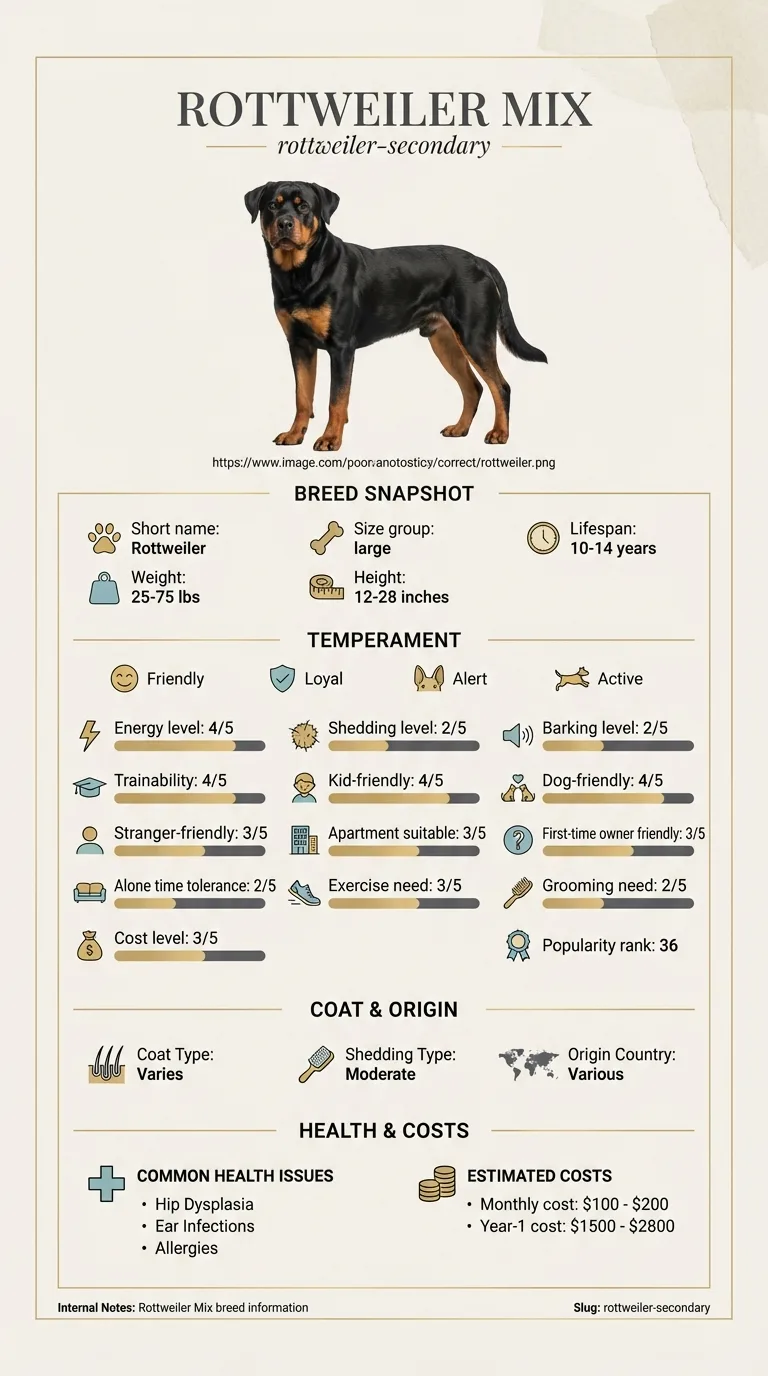
Treatment for Rottweiler Mix hip dysplasia can range from $100 to $200 monthly, depending on medications and supplements. Surgery could cost significantly more, so plan accordingly.
Common health issues for Rottweiler Mix dogs include hip dysplasia, ear infections, and allergies. Regular vet visits can help keep these problems in check.
A one-page prep sheet for this condition: the signs, the questions to ask, what to get priced. Unlocks here.
You get: Vet visit prep sheet
No spam. One-click unsubscribe. See our privacy policy.
Preview page 1 before you decide.