Behavior
What are Rottweiler Mix anxiety quick tips?
Introduce your Rottweiler Mix to new environments gradually and use positive reinforcement for calm behavior. Make sure they get plenty of exercise to help reduce anxiety.

Quick answer
What are Rottweiler Mix anxiety quick tips?
Introduce your Rottweiler Mix to new environments gradually and use positive reinforcement for calm behavior. Make sure they get plenty of exercise to help reduce anxiety.
Rottweiler Mix anxiety can create real challenges for both you and your dog.
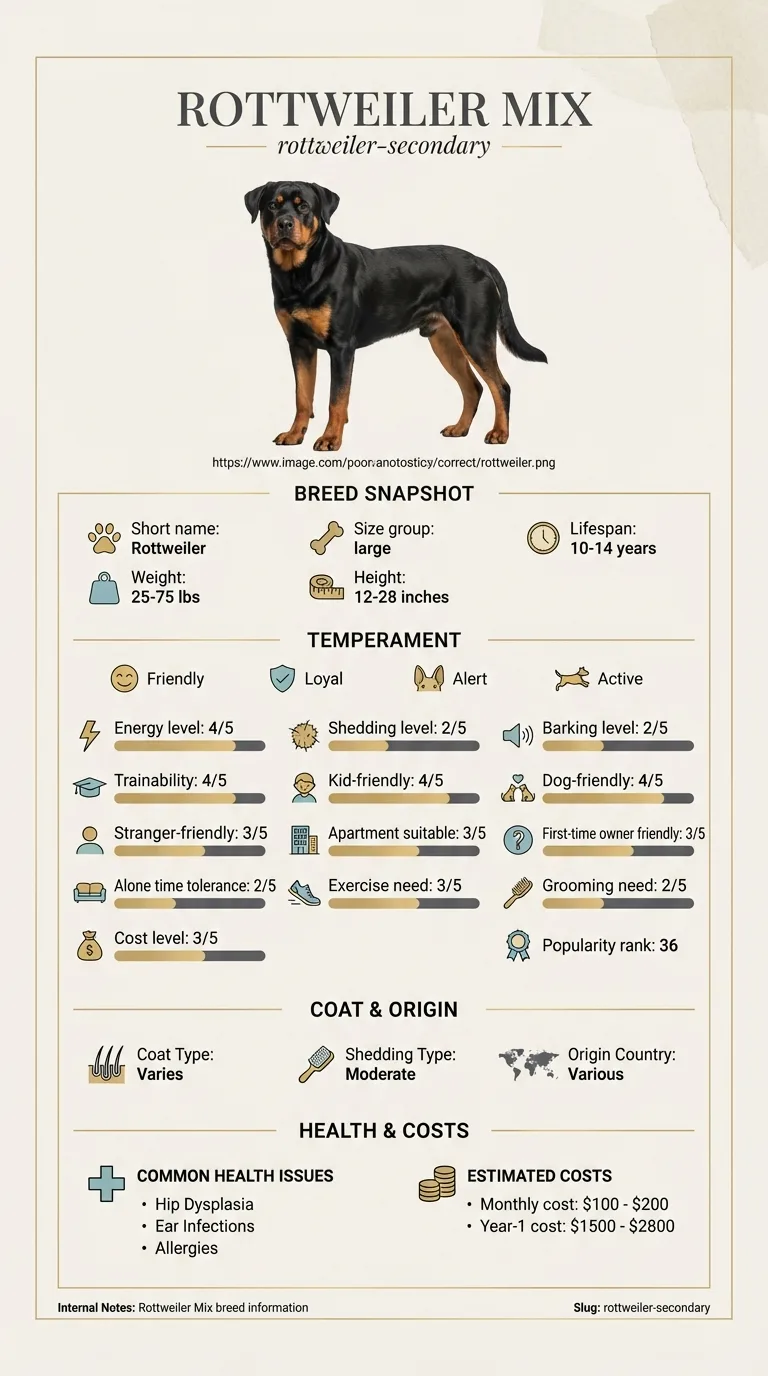
This guide is for Rottweiler Mix owners experiencing anxiety issues in their dogs, especially those feeling overwhelmed by their pet's behavior.
Rottweiler Mix anxiety can manifest as nervousness and distress in various situations. Owners may notice their dog becoming agitated or excessively clingy, especially when left alone or exposed to new environments. This anxiety can lead to unwanted behaviors like barking, pacing, or even destructive actions around the house.
If your Rottweiler Mix's anxiety persists despite your efforts, consider enrolling in a training program focused on anxiety management. A professional can provide tailored strategies that address your dog's specific needs.
If you notice severe anxiety symptoms, such as destructive behavior or excessive barking, consult a veterinarian or behaviorist. They can help identify underlying health issues or recommend medication if necessary.
Several tools and products can help manage Rottweiler Mix anxiety effectively, from calming aids to training resources.
Making lifestyle adjustments can significantly help reduce Rottweiler Mix anxiety. Start by establishing a consistent daily routine. Dogs thrive on predictability, so feeding, walking, and playtime at the same times each day can create a sense of security for your pet.
Regular exercise is essential for a Rottweiler Mix, which has a moderate energy level. Aim for at least an hour of physical activity daily. This can include walks, fetch, or even agility training.
A tired dog is often a calmer dog, which can help alleviate anxiety.
Consider gradually increasing the time your Rottweiler Mix spends alone. If your dog struggles with separation anxiety, begin by leaving them alone for short periods and gradually extend that time. Always provide engaging toys or puzzles to keep them occupied while you’re away.
Also, ensure your home environment is comfortable and safe, with a cozy space for them to relax.
Lastly, be mindful of household routines. If your home is busy and noisy, try to create a quiet zone for your dog. This could be a separate room or a designated area with their bed and toys.
Reducing stimuli can help them feel more at ease during stressful times.
Tracking the progress of your Rottweiler Mix's anxiety can feel daunting, but small signs of improvement, or 'micro-wins,' are key indicators. These could include reduced barking during stressful situations, a calmer demeanor when left alone, or even a more relaxed body posture around strangers. Celebrate these moments!
They show that your training efforts are starting to pay off.
However, setbacks are normal and can occur, especially during changes in routine or environment. If your Rottweiler Mix suddenly exhibits more anxiety after a successful period, don't panic. This may signify that they need additional support or a slight adjustment in your training plan.
Recognizing these patterns is crucial for effective management.
To determine if your plan is working, look for consistent behavior changes over a few weeks. If your dog is showing fewer signs of distress, such as reduced pacing or whining, that's a positive sign. Conversely, if anxiety levels spike or new behaviors emerge, it might be time to escalate your approach.
This could mean consulting a professional trainer or exploring new training techniques. Remember, gradual progress is still progress, and each dog is unique in their journey to feel secure and happy.

Meet Sarah, a busy nurse in a bustling city, who adopted Max, a Rottweiler Mix, from a local shelter. Max had severe anxiety, especially during thunderstorms and when left alone. At first, Sarah tried to manage his anxiety with calming music and creating a cozy space for him, but it only helped a little. Realizing she needed more support, she consulted a trainer specialized in Rottweiler Mix anxiety. Together, they worked on desensitization techniques, gradually exposing Max to the sounds of thunder while rewarding calm behavior. They also introduced a crate training routine, which provided Max with a safe space during stressful times. With consistent training and lots of love, Max learned to cope better with his anxiety. Now, he enjoys peaceful naps during storms and waits patiently when Sarah leaves for her shifts.
Key takeaway: Patience and professional guidance can significantly help a Rottweiler Mix deal with anxiety. Consistent training, combined with a supportive environment, can lead to positive outcomes.
Rottweiler Mix anxiety can stem from various factors, including genetics, lack of socialization, or changes in their environment. These dogs may feel stressed due to loud noises, being left alone, or unfamiliar situations. Understanding the triggers can help you manage their anxiety effectively.
Signs of anxiety in your Rottweiler Mix may include excessive barking, destructive behavior, pacing, or hiding. You might also notice changes in their eating habits or increased clinginess. Observing these behaviors can help you identify when they are feeling anxious.
Positive reinforcement training is a great way to help your Rottweiler Mix manage anxiety. Use treats and praise to encourage calm behavior, and gradually expose them to anxiety-inducing situations in a controlled way. Consistency is key to building their confidence.
There are various products designed to soothe anxious dogs, including anxiety wraps, calming sprays, and interactive toys. These can help provide comfort and distraction for your Rottweiler Mix. Always consult your vet before trying new products.
Improvement in your Rottweiler Mix's anxiety can vary depending on the severity and the methods used. With consistent training and support, you may start to see changes in a few weeks. However, it may take longer for some dogs, so patience is essential.
While you can't completely prevent anxiety, you can reduce the risk by providing early socialization, consistent training, and a stable environment. Engaging in regular exercise and mental stimulation can also help keep your Rottweiler Mix healthy and happy.
Rottweiler Mix anxiety can stem from various factors, including genetics, lack of socialization, or past trauma. Changes in environment or routine can also trigger anxiety in these dogs.
Older Rottweiler Mixes may experience anxiety due to aging or health issues. Providing a calm environment, regular routines, and gentle training can help ease their anxiety.
Yes, multiple Rottweiler Mixes can experience anxiety, especially if they are closely bonded. It's important to address each dog's anxiety individually while providing a supportive environment.
If your Rottweiler Mix shows anxiety during travel, try to acclimate them by taking short trips first. Consider using calming aids and ensuring they have a comfortable space to relax during longer journeys.
Yes, Rottweiler Mix anxiety training often includes positive reinforcement methods. Techniques like desensitization and counter-conditioning can help reduce anxiety over time.
Introduce your Rottweiler Mix to new environments gradually and use positive reinforcement for calm behavior. Make sure they get plenty of exercise to help reduce anxiety.
Start by leaving your Rottweiler Mix alone for short periods and gradually increase the time. Provide them with toys and treats to keep them occupied.
Look for signs like pacing, excessive barking, or destructive behavior. Changes in appetite or clinginess can also indicate anxiety.
Anxiety and pain look alike from the outside. Get the prep sheet for this breed's separation-anxiety page and take it to the vet.
You get: Vet visit prep sheet
No spam. One-click unsubscribe. See our privacy policy.
Preview page 1 before you decide.

This guide is not medical advice. If your dog shows pain, sudden behavior change, or worsening symptoms, consult a licensed veterinarian.
Some links may be affiliate links. We may earn a commission at no extra cost to you. We only suggest products we believe are helpful for dog owners.
We research and check what we publish, but we do not warrant that any figure, date, price, or statement is accurate, complete, or current, and we accept no liability for any loss, cost, injury, or other harm arising from the use of this site. Use it as one reference among several. You remain responsible for your own decisions and for your dog's care - confirm anything that matters with a licensed veterinarian or another qualified professional before you act on it. Full disclaimer.
Not sure which breed is right for you? Take our 2-minute quiz to find out.
Take the quiz