Health
What's the shared cause behind most Pug eye problems?
Shallow eye sockets that leave the eyes more prominent and less protected than in most other breeds.

Quick answer
What's the shared cause behind most Pug eye problems?
Shallow eye sockets that leave the eyes more prominent and less protected than in most other breeds.
A Pug's large, expressive eyes are part of what makes the breed's face so distinctive — and part of why this breed faces one of the highest overall eye disease rates of any dog.
Owners trying to understand why their Pug seems prone to so many different eye issues, and what actually connects conditions that otherwise sound unrelated.
This guide is not medical advice. If your dog shows pain, sudden behavior change, or worsening symptoms, consult a licensed veterinarian.
Some links may be affiliate links. We may earn a commission at no extra cost to you. We only suggest products we believe are helpful for dog owners.
We research and check what we publish, but we do not warrant that any figure, date, price, or statement is accurate, complete, or current, and we accept no liability for any loss, cost, injury, or other harm arising from the use of this site. Use it as one reference among several. You remain responsible for your own decisions and for your dog's care - confirm anything that matters with a licensed veterinarian or another qualified professional before you act on it. Full disclaimer.
Pugs face a dramatically elevated overall rate of eye disease, and nearly all of it traces back to shallow eye sockets that leave the eyes prominent and less protected than in breeds with deeper orbits. This single anatomical trait creates vulnerability across corneal, tear-film, eyelid, and socket-related conditions all at once.
Comparative research has documented brachycephalic breeds, Pugs included, at a substantially higher overall rate of eye disease than non-flat-faced breeds, making this one of the most consequential category-wide health risks for the breed.
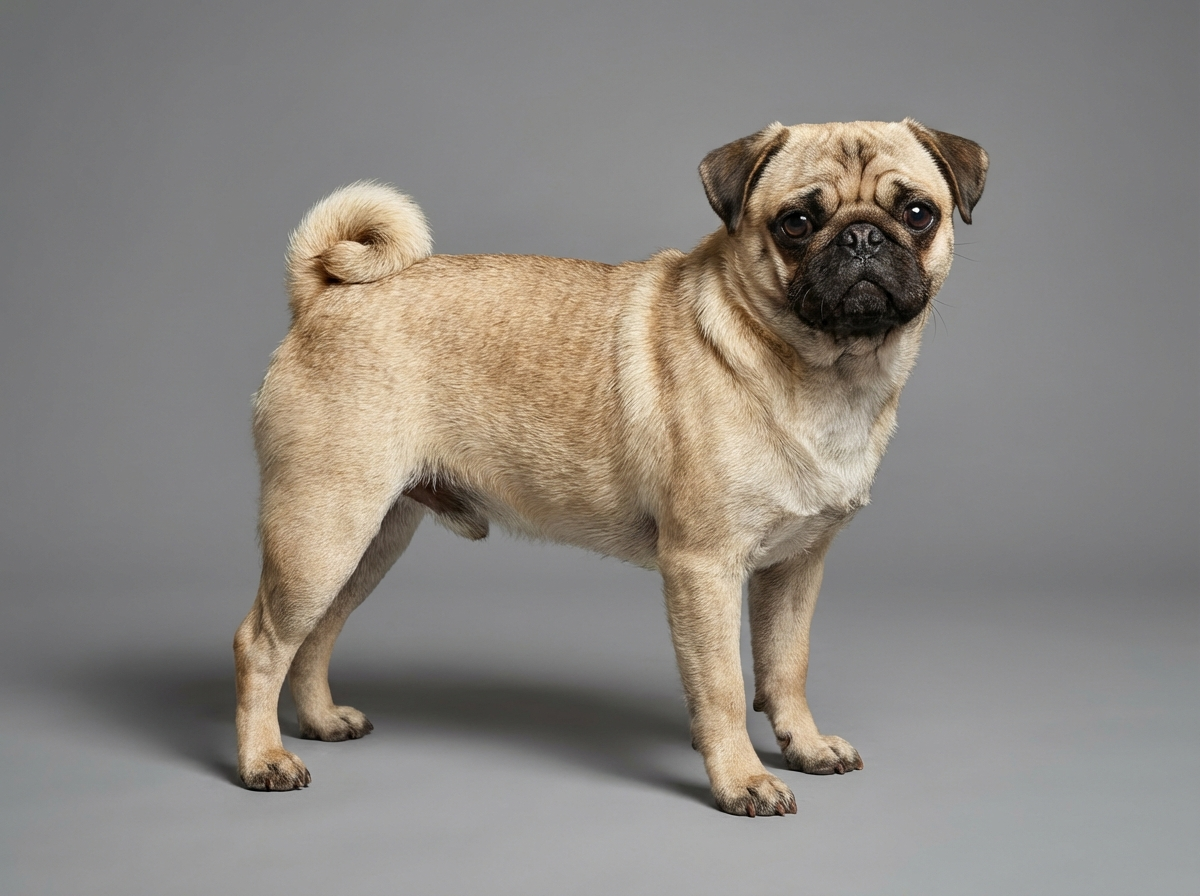
The Pug's shallow eye sockets and prominent eye placement are core, defining features of the breed's facial structure, and they leave the eyes with less natural protection than in breeds with deeper orbits. This single structural trait underlies most of the breed's elevated eye disease risk across several otherwise distinct conditions.
Dust, debris, dry air, and minor everyday trauma from play or exploring all pose a greater risk to a Pug's more exposed eyes than they would to a breed with deeper-set eyes and more natural corneal protection.
Seek same-day veterinary care for squinting, visible cloudiness, excessive tearing, pawing at the eye, or any suspected injury near the eye. Any eyeball displacement or visible bulging is an emergency requiring immediate veterinary attention, since minutes matter for saving the eye in proptosis cases.
Start here: Pug Most Common Genetic Disorders: What to Screen For
See all PUG health problems, which breeds are prone to ocular disease, or the full PUG breed guide for temperament, exercise needs and ownership costs.
Corneal ulcers often heal within one to two weeks with prompt, appropriate treatment. Chronic conditions like dry eye or pigmentary keratitis typically require ongoing, lifelong management rather than a one-time resolution.
Success is minimizing eye trauma and irritation through daily awareness and quick response to symptoms, keeping chronic conditions well controlled, and recognizing a true emergency immediately if one occurs — not eliminating this breed's underlying anatomical vulnerability, which isn't possible.
The Pug's characteristic shallow eye sockets mean the eyeballs sit more prominently and with less bony protection than in breeds with deeper orbits. That single structural trait creates vulnerability across several distinct conditions: corneas are more exposed to drying, debris, and trauma, increasing the risk of corneal ulcers. Eyelids don't always close fully over such prominent eyes, particularly during sleep, which can leave the surface chronically under-protected. In the most severe cases, the shallow socket allows the eyeball itself to actually pop forward out of the socket — a genuine emergency called proptosis — something that essentially doesn't happen in deep-set-eyed breeds.
This shared root cause is exactly why eye disease shows up as such an elevated category-wide risk rather than one single condition. A Pug might face corneal ulcers from minor trauma, chronic dryness from incomplete eyelid closure, pigmentary changes from ongoing surface irritation, and a heightened proptosis risk during any rough handling or restraint — different-looking problems that all trace back to the same shallow-socket anatomy defining the breed's face.
Some of these are manageable chronic conditions; others, particularly proptosis, are emergencies where minutes genuinely matter.

If you think your Pug has ocular disease, the plan is three steps: write down what you have seen and when it started, book a veterinary appointment rather than waiting for the next flare, and take video of the behaviour or symptom before you go — the thing you are worried about rarely happens in the consulting room. Screening in the parents covers brachycephalic airway syndrome (boas), pug dog encephalitis, corneal ulcers.
What the vet visit should produce is a diagnosis and a written plan, not just reassurance: what is being ruled out, what the monitoring interval is, and which signs mean you come back sooner. Ask what the treatment costs across a year rather than per visit, because that is the number that decides whether you are managing this condition or reacting to it.
Between appointments, keep a short log — dates, what you saw, what changed. It is the single most useful thing an owner brings to a follow-up, and for ocular disease it is often what separates a clear pattern from a guess.
During a boisterous play session with another dog, Yara's Pug, Milo, yelped and pawed frantically at one eye. Yara looked closely and saw the eye looked unmistakably more prominent than usual — clearly displaced forward from its socket. Recognizing this as an emergency rather than a scratch, Yara drove straight to an emergency vet without waiting. The veterinary team was able to carefully reposition the eye and stabilize it within the window that mattered most for saving vision in that eye. Milo recovered with vision intact, though his vet was direct that the outcome could have been very different with even a short additional delay. Yara now keeps play with larger, rougher dogs more closely supervised, having learned firsthand how quickly this specific emergency can happen.
Key takeaway: This breed's shallow eye sockets mean an eye emergency can happen during completely ordinary play — recognizing displacement immediately and acting without delay is what actually saves vision.
Nearly all of them trace back to one shared anatomical trait — shallow eye sockets that leave the eyes more prominent and less protected than in breeds with deeper orbits. That single structural feature creates vulnerability across corneal, tear-film, eyelid, and even socket-related conditions.
Proptosis is when the eyeball actually displaces forward out of its socket, which the Pug's naturally shallow orbit makes more possible than in breeds with deeper eye sockets. It requires immediate veterinary care, since delay significantly reduces the chance of saving the eye.
Squinting, excessive tearing, redness, pawing at the eye, or visible cloudiness on the eye's surface are common signs. Corneal ulcers can worsen quickly, so same-day veterinary evaluation is appropriate rather than waiting to see if it resolves.
Many owners do incorporate gentle daily wiping around the eyes to remove debris and monitor for early signs of irritation, given how exposed this breed's eyes are compared to others, though your vet can advise on what's appropriate for your specific dog.
Yes, if it progresses significantly — the pigment spreading across the cornea can eventually obscure enough of the surface to affect sight, which is why ongoing monitoring and addressing underlying irritation sources matters.
Often yes — reduced tear production frequently requires ongoing daily management with lubricating drops or medication for the rest of the dog's life, rather than a one-time treatment that resolves it.
Generally more urgent — because this breed's shallow eye sockets offer less natural protection, eye issues can progress faster and with more serious consequences than the same symptom might carry in a breed with more typical orbital depth.
Shallow eye sockets that leave the eyes more prominent and less protected than in most other breeds.
Proptosis — the eyeball displacing forward out of its socket — requires immediate veterinary care.
Treatment often runs from a modest amount for mild cases with medicated drops to a considerably higher cost if surgical repair becomes necessary.
Yes — given the elevated proptosis risk from this breed's shallow eye sockets, avoiding pressure or rough handling around the head and neck is a sensible precaution.
Most are manageable chronic conditions with proper care, though a subset — corneal ulcers and especially proptosis — can escalate quickly and need prompt attention.
A one-page prep sheet for this condition: the signs, the questions to ask, what to get priced. Unlocks here.
You get: Vet visit prep sheet
No spam. One-click unsubscribe. See our privacy policy.
Preview page 1 before you decide.