Costs
Pug cost in Virginia Beach
About $86–$163/month, $1,206–$2,522 for year one — at the national average, with beach days a managed outing rather than a free amenity for this breed.

See Pug price across all cities →
Quick answer
Pug cost in Virginia Beach
About $86–$163/month, $1,206–$2,522 for year one — at the national average, with beach days a managed outing rather than a free amenity for this breed.
A Pug in Virginia Beach runs about $86 to $163 a month, with the first year landing near $1,206 to $2,522, right at the national average. The oceanfront reads as a free amenity for dog owners, and for most breeds it is. For this one a beach afternoon stacks three separate problems at once: sand in the facial folds, sand against corneas that genuinely protrude beyond the skull line, and open exposure with no shade for a dog that cools poorly.
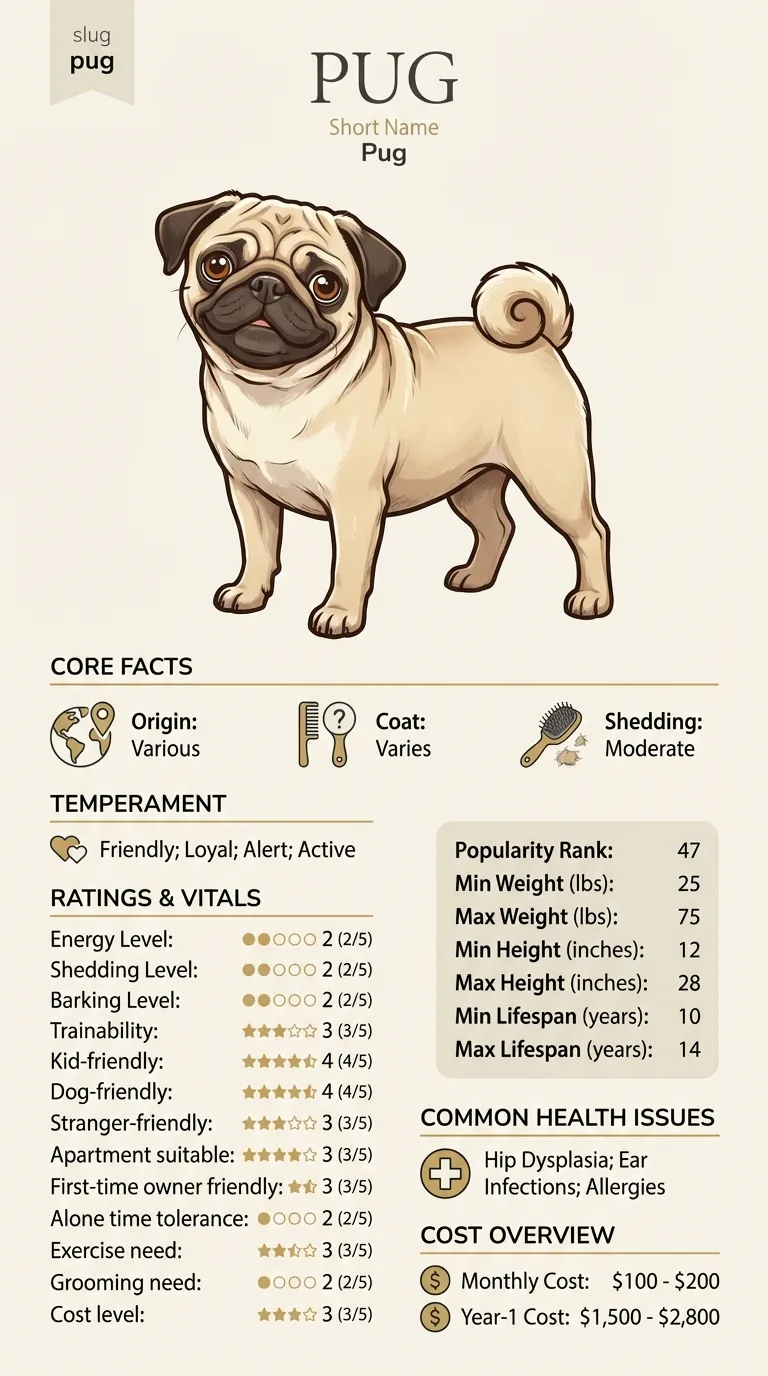
Brachycephalic Airway Syndrome (BOAS) and Pug Dog Encephalitis are this breed's more commonly documented health risks, alongside real, documented Corneal Ulcers and Hemivertebrae risk. This breed's low exercise needs make Obesity a real, common risk that itself worsens breathing effort, making weight management a genuine, ongoing cost.
These figures sit right at the national average, with a real note that the local amenity most owners treat as free requires a genuine care routine for this breed.
Estimate · source: estimation · confidence: medium · updated 2026-09-06 · not a quote
| Item | Cost range |
|---|---|
One-time setup (initial vet visit, spay/neuter, gear) Covers the first exam, vaccinations, spay/neuter if needed, and basic gear — priced at Virginia Beach's near-average rates. | $303 - $508 |
| Item | Cost range |
|---|---|
Food (weight-managed portions) Reflects this breed's genuine 14-to-18-pound size and documented Obesity risk, priced right at the national average. | $36 - $60 |
Fold and eye care supplies A real recurring cost given how readily sand packs into this breed's facial folds and abrades its protruding corneas. | $10 - $20 |
Each range starts from a national baseline for this breed's size class and is then adjusted for local cost of living and veterinary pricing. The baselines, and the source each one came from, are listed on our sources page (dataset 2026.09). Two inputs, the purchase price and the emergency reserve, have no published national figure we could verify, so we leave them to you rather than invent them.
These are planning estimates, not quotes. Your own numbers will move with the individual dog, your vet and your insurer. Build a budget with your own figures.
For a Pug in Virginia Beach, insurance is genuinely worth taking seriously given this breed's documented BOAS, Pug Dog Encephalitis and Corneal Ulcer risks, the last of which is directly relevant in a sandy coastal environment.
Given this breed's documented eye and airway risk profile, insurance purchased while the dog is young is worth pricing out seriously before anything is on record.
Owners who've built a genuinely solid emergency fund and are comfortable managing a procedure themselves can reasonably self-insure instead.
Virginia Beach sits at the national average on costs, and a rinse-and-dry routine at the car costs almost nothing while preventing the fold and eye problems that generate real vet bills.
A beach afternoon puts three of this breed's documented vulnerabilities in play simultaneously. Deep facial wrinkles trap dry sand against the skin, which is exactly how fold dermatitis starts. Shallow eye sockets leave the cornea protruding and exposed, and windblown sand is the abrasive that anatomy tolerates worst — the mechanism behind this breed's documented Corneal Ulcer risk. And an unshaded stretch of beach in coastal humidity taxes an airway that cools poorly to begin with.
The workable version is a managed outing: go early or late, bring shade, rinse the face and eyes with fresh water before leaving the parking lot rather than after getting home, and dry the folds thoroughly. That routine costs almost nothing and converts the outing from a risk into an ordinary afternoon.
Virginia Beach otherwise sits right at the national average on general costs, and coastal humidity keeps the parasite-prevention window running well past a single season.

A Virginia Beach Pug owner had an uneventful afternoon at the oceanfront and thought nothing more about it until the dog started squinting two days later and the folds beneath its eyes looked irritated. The vet found a minor corneal abrasion and early fold inflammation, both traced back to sand. A fresh-water rinse at the car became standard, and subsequent beach trips passed without incident.
Key takeaway: In Virginia Beach, the oceanfront is genuinely usable for this breed, but only with a rinse-and-dry routine that most owners of other breeds never need.
About $86–$163, right at the national average, consistent with Virginia Beach's roughly typical general cost of living.
Roughly $1,206–$2,522, including the initial vet exam, spay/neuter if needed, and gear on top of ongoing monthly costs.
Yes, as a managed outing — early or late, with shade, and with a fresh-water face and eye rinse before leaving rather than after getting home.
It packs into deep facial folds against the skin, and it abrades corneas that genuinely protrude beyond the skull line — both documented vulnerabilities in this breed.
Worth pricing out given this breed's documented BOAS and Corneal Ulcer risks, bought while the dog is young and before anything is on record.
Around $570 covers a typical significant vet visit in this market, reflecting Virginia Beach's near-average local pricing and this breed's real emergency-risk profile.
About $86–$163/month, $1,206–$2,522 for year one — at the national average, with beach days a managed outing rather than a free amenity for this breed.
This guide is not medical advice. If your dog shows pain, sudden behavior change, or worsening symptoms, consult a licensed veterinarian.
Some links may be affiliate links. We may earn a commission at no extra cost to you. We only suggest products we believe are helpful for dog owners.
We research and check what we publish, but we do not warrant that any figure, date, price, or statement is accurate, complete, or current, and we accept no liability for any loss, cost, injury, or other harm arising from the use of this site. Use it as one reference among several. You remain responsible for your own decisions and for your dog's care - confirm anything that matters with a licensed veterinarian or another qualified professional before you act on it. Full disclaimer.
One sheet with every line item, the emergency fund and when insurance pays off - unlocks on this page.
You get: 12-month budget sheet
No spam. One-click unsubscribe. See our privacy policy.
Preview page 1 before you decide.