Health
Why do Goldendoodles get so many ear infections?
Floppy ears limiting airflow, combined with hair growth inside the canal, trap warmth and moisture that yeast and bacteria thrive in.

Quick answer
Why do Goldendoodles get so many ear infections?
Floppy ears limiting airflow, combined with hair growth inside the canal, trap warmth and moisture that yeast and bacteria thrive in.
This breed's ear infection risk isn't bad luck — it's a specific, mechanical setup of floppy ears and canal hair growth, and that means a specific, targeted routine actually reduces how often it happens.
This affects nearly every Goldendoodle owner at some point, but especially owners of dogs that swim regularly or live in humid climates, since both add extra moisture directly into an already infection-prone ear structure.
This guide is not medical advice. If your dog shows pain, sudden behavior change, or worsening symptoms, consult a licensed veterinarian.
Some links may be affiliate links. We may earn a commission at no extra cost to you. We only suggest products we believe are helpful for dog owners.
Check this first
A head tilt, loss of balance, or eyes moving rapidly back and forth are signs an ear infection may have progressed to affect the inner ear or balance system, and this needs prompt veterinary attention, since it indicates a more serious, deeper infection than a typical outer ear case.
Intense pain when the ear is touched, significant swelling of the ear flap, or a strong foul odor with dark discharge suggests an infection that's progressed and needs same-day or next-day veterinary treatment rather than home management, since untreated deep infections can damage the eardrum.
Mild head shaking, slight redness, or a faint odor noticed early is common and can typically be addressed with a prompt but non-emergency vet visit for proper diagnosis and treatment, since identifying whether it's yeast, bacteria, or both determines the right medication.
If any of these apply, call your vet or an emergency clinic now. The rest of this page is for the cases that are not an emergency.
Ear infections are among this breed's most directly documented health issues, driven mechanically by floppy ears limiting airflow and hair growth inside the ear canal trapping warmth and moisture. A prevention routine built around drying, appropriate cleaning frequency, and early detection meaningfully reduces how often infections occur, even though the underlying anatomical setup can't be changed.
Ear infections are directly listed among this breed's documented common health issues, making them one of the more predictable and manageable recurring concerns owners should expect and plan for.
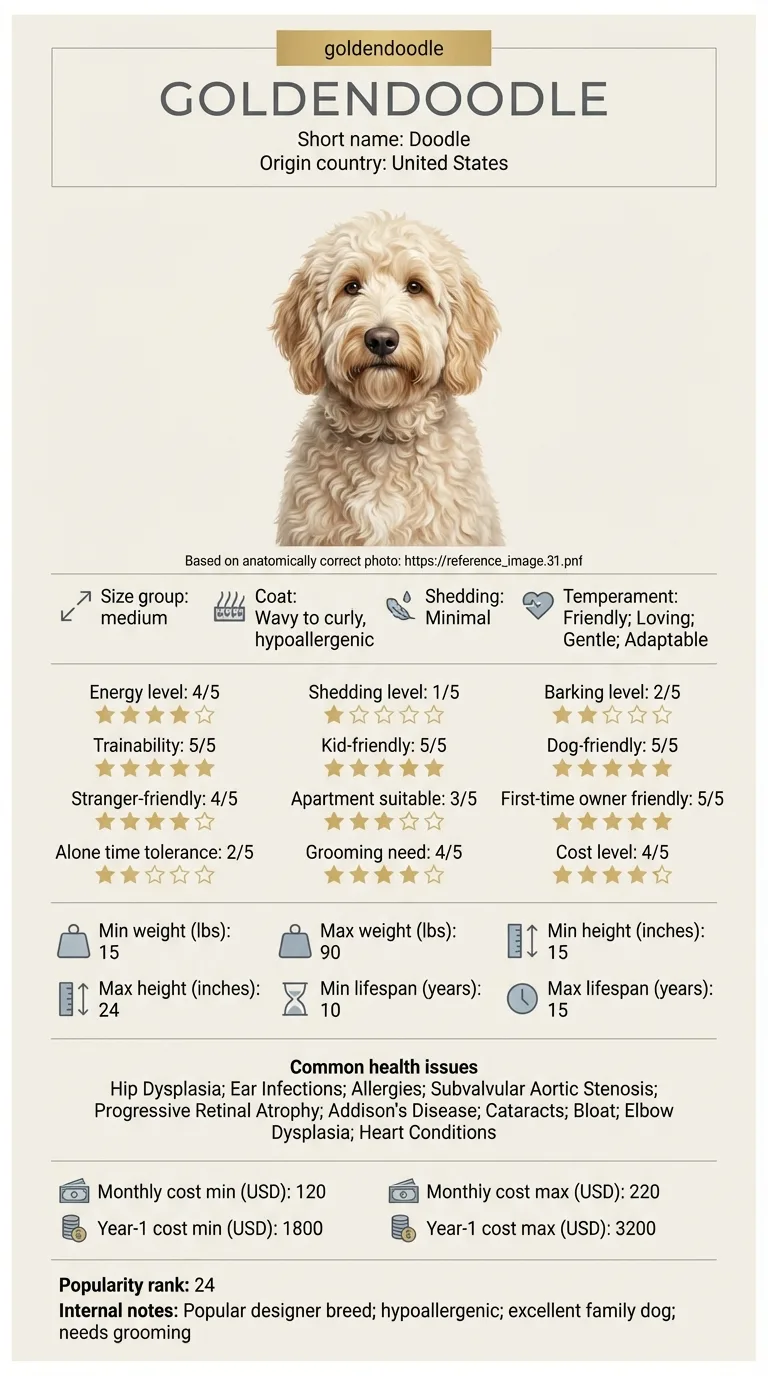
Ear infections are explicitly documented as a common health issue for this breed, driven by floppy ear conformation that reduces airflow into the canal, combined with the Poodle-derived coat's tendency to grow hair inside the ear canal itself, both trapping the warmth and moisture that yeast and bacteria need to overgrow.
Swimming, bathing, and humid climate conditions all add moisture directly into an ear structure already prone to trapping it, making environmental moisture management one of the most controllable prevention factors.
Talk to your vet about recurring ear infections, especially if they keep coming back shortly after treatment, since this often points to an underlying allergy needing its own diagnosis. Seek prompt care for a head tilt, loss of balance, intense ear pain, or significant swelling.
See all Goldendoodle health problems, which breeds are prone to ear infections, or the full Goldendoodle breed guide for temperament, exercise needs and ownership costs.
A straightforward ear infection typically resolves within one to two weeks of appropriate treatment, while a consistent prevention routine usually shows a noticeable reduction in frequency within a few months of starting it.
Success looks like meaningfully fewer infections per year and catching any that do occur early, before they become painful or deep — not the complete elimination of risk, since the underlying ear structure itself can't be changed.
Because the root cause is airflow and moisture, an effective routine targets exactly that.
For over a year, Sofia's Goldendoodle Bailey seemed to have an ear infection almost every month, each one treated with drops that worked temporarily. Frustrated, Sofia asked her vet for a more complete plan rather than repeating the same cycle. Her vet identified an underlying mild allergy contributing to the pattern and helped Sofia build a full routine: allergy management, a consistent bi-weekly ear cleaning schedule, and thorough drying after every bath. Over the following six months, Bailey went from monthly infections to just one mild flare, caught early and resolved quickly.
Key takeaway: Treating each infection individually without addressing the underlying moisture and allergy pattern just resets the cycle — a full routine targeting the actual mechanism is what breaks it.
Floppy ears reduce airflow into the canal, and hair growth inside the ear canal, common in this breed's coat type, further traps warmth and moisture — both create an environment yeast and bacteria thrive in.
This depends on your individual dog and activity level, but many vets recommend routine cleaning every one to two weeks, with additional cleaning after swimming or bathing, following your vet's specific product and frequency recommendation.
Veterinary opinion is genuinely split — some recommend plucking to improve airflow, while others believe it can cause irritation that increases infection risk. Ask your own vet what they recommend based on your dog's specific ear structure and history.
Head shaking, scratching at the ear, a faint odor, or slight redness inside the ear flap are usually the earliest noticeable signs, well before more severe symptoms develop.
A standard vet visit with ear cytology and medication commonly costs under two hundred dollars for an uncomplicated case, with recurring or deep infections costing more due to repeat visits or more intensive treatment.
Yes, allergies are also directly documented in this breed and frequently drive the underlying inflammation that makes ear infections recur, which is why chronic cases often need an allergy workup alongside ear treatment.
Swimming itself isn't harmful, but thorough ear drying afterward is essential given how much moisture gets trapped in this breed's ear structure during and after time in water.
Floppy ears limiting airflow, combined with hair growth inside the canal, trap warmth and moisture that yeast and bacteria thrive in.
Commonly every one to two weeks as routine maintenance, plus after every swim or bath, following your vet's specific guidance.
Usually under two hundred dollars for an uncomplicated case, with recurring infections costing more over time.
Yes, gradual, positive introduction to ear handling and cleaning makes the routine far less stressful for both dog and owner long-term.
It's one of the most common early signs and should prompt an ear check, though occasional shaking after water exposure without other symptoms can also be normal.
A one-page prep sheet for this condition: the signs, the questions to ask, what to get priced. Unlocks here.
You get: Vet visit prep sheet
No spam. One-click unsubscribe. See our privacy policy.
Preview page 1 before you decide.