Health
What's a classic sign of hypothyroidism?
Weight gain without a diet change, along with low energy and a dull or thinning coat.

Quick answer
What's a classic sign of hypothyroidism?
Weight gain without a diet change, along with low energy and a dull or thinning coat.
A dog that seems to be gaining weight despite no change in food, with a coat that's thinning or looking dull, may have a thyroid that's simply not keeping pace with the rest of the body.
Owners of middle-aged dogs are the ones who usually notice this, often after ruling out other explanations for gradual weight gain and low energy that don't seem to add up with the dog's actual diet and activity level.
This guide is not medical advice. If your dog shows pain, sudden behavior change, or worsening symptoms, consult a licensed veterinarian.
Some links may be affiliate links. We may earn a commission at no extra cost to you. We only suggest products we believe are helpful for dog owners.
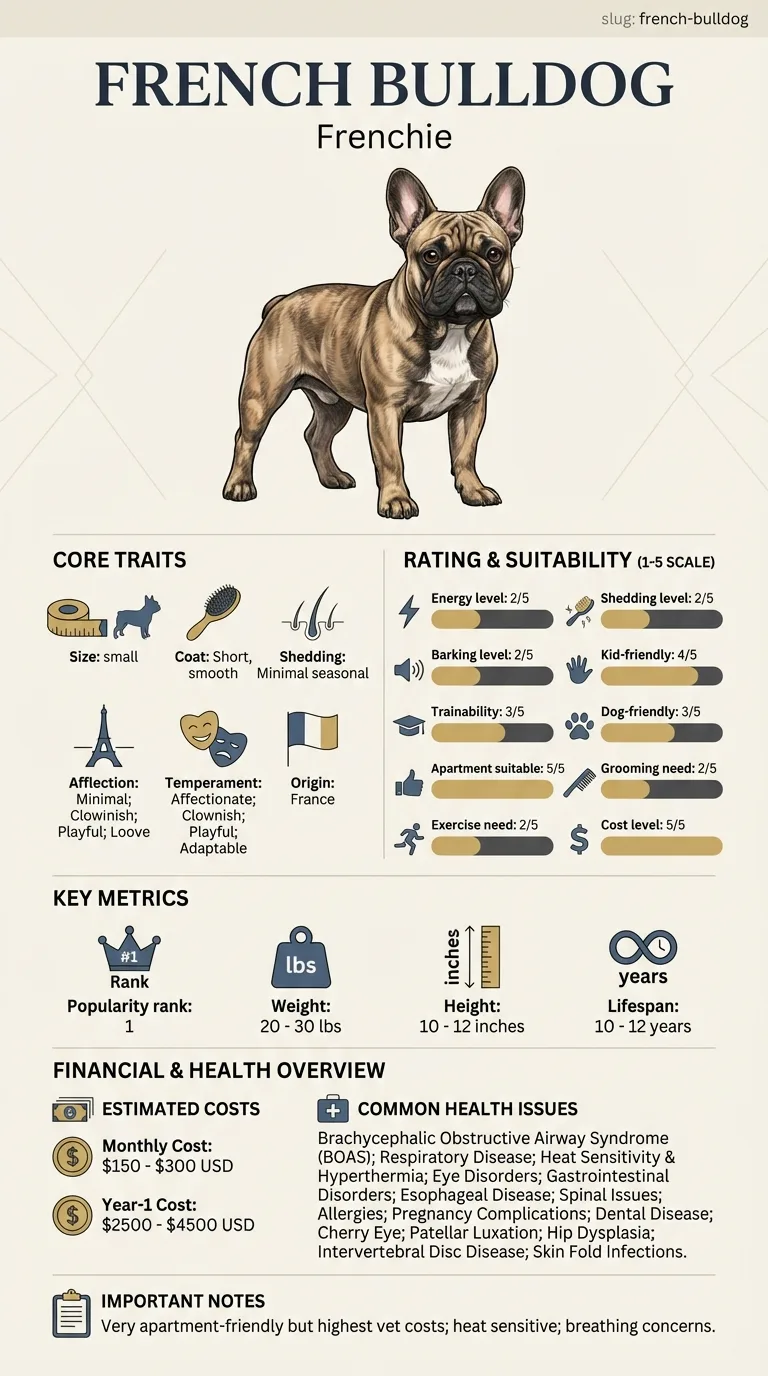
Hypothyroidism occurs when the thyroid gland doesn't produce enough hormone to properly regulate metabolism, causing weight gain, low energy, and coat changes, most commonly diagnosed in middle-aged dogs. In French Bulldogs, it can compound the breed's already elevated tendency toward weight gain, making diagnosis through a simple blood panel and daily hormone replacement treatment particularly relevant for maintaining overall health.
Hypothyroidism is one of the more commonly diagnosed endocrine conditions in middle-aged and senior dogs across breeds generally, and it's a recognized part of the broader endocrine health picture relevant to French Bulldogs given the breed's other documented metabolic tendencies.
Hypothyroidism in French Bulldogs most often stems from an autoimmune process where the body's immune system gradually damages thyroid tissue, a mechanism documented across many breeds rather than being uniquely tied to French Bulldog-specific anatomy, though it compounds the breed's already elevated weight management challenges.
There's limited direct environmental influence on the underlying thyroid gland dysfunction, though maintaining a healthy weight and diet supports overall metabolic health and can make the practical impact of reduced thyroid hormone somewhat easier to manage alongside appropriate medication.
Ask for a thyroid panel if you notice unexplained weight gain, persistent low energy, or a dull, thinning coat, particularly in a middle-aged or senior dog, since these signs are easy to attribute to other causes without bloodwork.
Because symptoms overlap with other common issues, a few natural assumptions can delay the bloodwork that actually confirms this condition.
See all French Bulldog health problems, which breeds are prone to hypothyroidism, or the full French Bulldog breed guide for temperament, exercise needs and ownership costs.
Most dogs show noticeable improvement in energy and coat quality within four to eight weeks of starting appropriate medication, with weight normalizing over a somewhat longer period alongside proper diet management.
Success means restored energy, a healthy coat, and stable weight maintained through consistent daily medication — a very manageable long-term outcome once the right dose is established.
Hypothyroidism is treated with a daily synthetic thyroid hormone replacement pill, typically given once or twice a day depending on the specific medication and dosing schedule your vet establishes. It's generally inexpensive and straightforward to administer compared to many other chronic condition treatments.
Follow-up bloodwork, usually done a few weeks after starting medication and periodically afterward, checks whether the hormone level has normalized and whether the dose needs adjustment, since getting the dose right can take one or two rounds of fine-tuning.
Once a stable dose is established, most dogs show noticeable improvement in energy level, weight, and coat quality within a couple of months, and ongoing management typically just means the daily medication and periodic rechecks rather than any complicated day-to-day routine.

If you think your Frenchie has hypothyroidism, the plan is three steps: write down what you have seen and when it started, book a veterinary appointment rather than waiting for the next flare, and take video of the behaviour or symptom before you go — the thing you are worried about rarely happens in the consulting room. Screening in the parents covers brachycephalic obstructive airway syndrome (boas), respiratory disease, heat sensitivity & hyperthermia.
What the vet visit should produce is a diagnosis and a written plan, not just reassurance: what is being ruled out, what the monitoring interval is, and which signs mean you come back sooner. Ask what the treatment costs across a year rather than per visit, because that is the number that decides whether you are managing this condition or reacting to it.
Between appointments, keep a short log — dates, what you saw, what changed. It is the single most useful thing an owner brings to a follow-up, and for hypothyroidism it is often what separates a clear pattern from a guess.
Colin, a six-year-old Frenchie, had been gaining weight steadily for months despite no change in his food portions, and his once-glossy coat had become noticeably dull and thin in patches. His family had assumed it was simply middle-age slowdown until a vet suggested a thyroid panel. Bloodwork confirmed hypothyroidism, and Colin started daily medication. Within two months, his coat had visibly improved, his energy picked back up on walks, and with a consistent diet alongside his new medication, his weight gradually returned to a healthier range over the following several months.
Key takeaway: Weight gain that didn't match Colin's actual food intake was the clue that led to a simple blood test and a straightforward, effective daily treatment.
Weight gain without a change in diet, low energy, a dull or thinning coat, and sometimes skin changes or increased susceptibility to skin infections are the classic combination of signs.
A blood panel measuring thyroid hormone levels confirms the diagnosis, sometimes requiring more than one test if initial results are borderline or need to rule out other factors affecting thyroid values.
Yes, it's treated effectively with a daily synthetic thyroid hormone replacement medication, and most dogs show significant improvement in symptoms within a couple of months of starting appropriate treatment.
It's generally one of the more affordable chronic condition treatments, commonly costing a modest monthly amount depending on the dog's size and specific medication dose.
No, it's typically a lifelong condition requiring daily medication indefinitely, though it's very manageable and doesn't significantly limit quality of life once properly treated.
Typically a recheck a few weeks after starting or adjusting medication, then roughly every six to twelve months once a stable dose is established.
Yes, since the breed already has a documented tendency toward weight gain, an underactive thyroid can compound that risk, making proper diagnosis and treatment particularly relevant for maintaining a healthy weight.
Weight gain without a diet change, along with low energy and a dull or thinning coat.
A blood panel measuring thyroid hormone levels.
Yes, with a daily, generally affordable thyroid hormone replacement medication.
No, it's a lifelong condition managed with daily medication.
Every six to twelve months once a stable dose is established, more often initially.
A one-page prep sheet for this condition: the signs, the questions to ask, what to get priced. Unlocks here.
You get: Vet visit prep sheet
No spam. One-click unsubscribe. See our privacy policy.
Preview page 1 before you decide.