Health
What is DCM in simple terms?
A disease where the heart muscle weakens and the chambers stretch out, reducing how effectively the heart pumps blood.

Quick answer
What is DCM in simple terms?
A disease where the heart muscle weakens and the chambers stretch out, reducing how effectively the heart pumps blood.
A dog with DCM can look completely fine for a long stretch, then suddenly tire on a walk it used to breeze through, or in the worst cases, collapse with no clear warning at all.
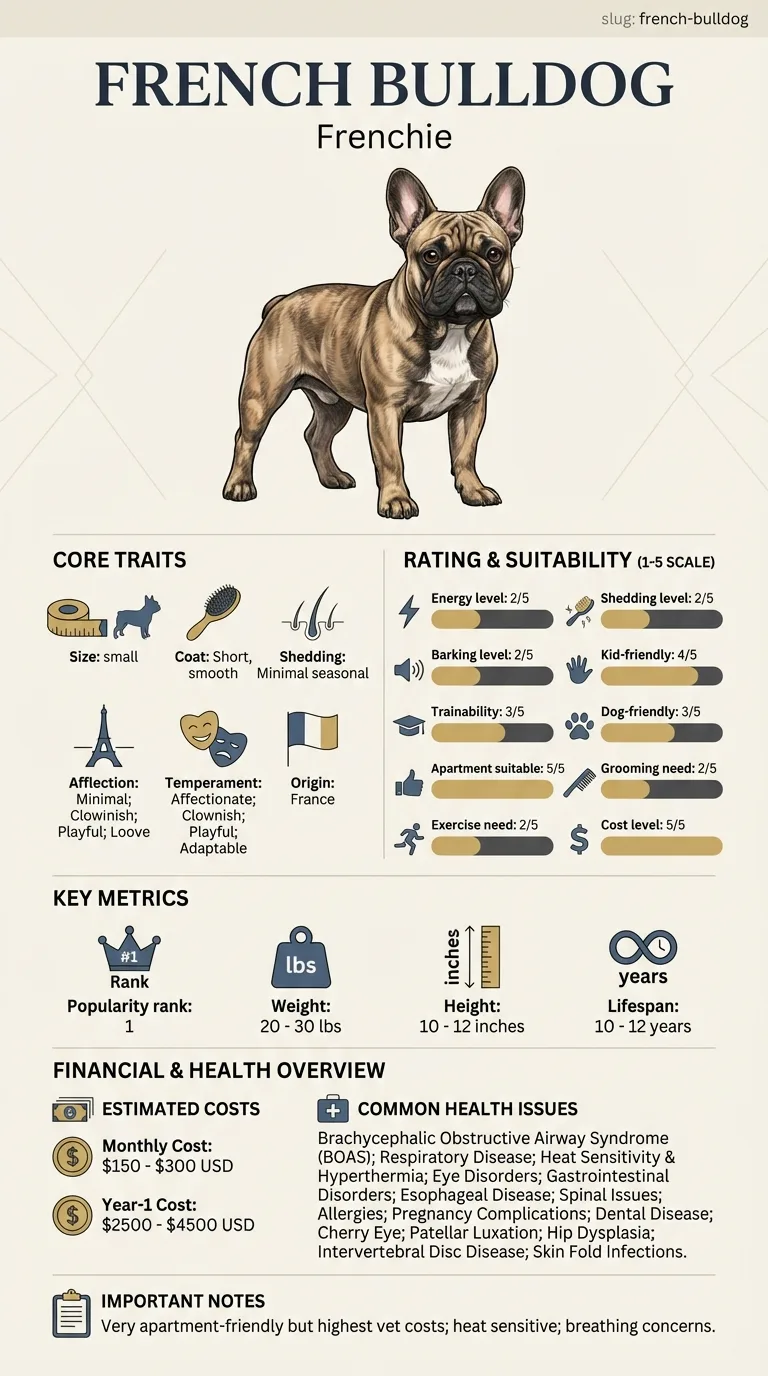
This weighs heaviest on owners of middle-aged Frenchies, the age range where DCM most often becomes clinically apparent, often after a routine exam picks up a subtle murmur or irregular rhythm that leads to further cardiac workup.
This guide is not medical advice. If your dog shows pain, sudden behavior change, or worsening symptoms, consult a licensed veterinarian.
Some links may be affiliate links. We may earn a commission at no extra cost to you. We only suggest products we believe are helpful for dog owners.
We research and check what we publish, but we do not warrant that any figure, date, price, or statement is accurate, complete, or current, and we accept no liability for any loss, cost, injury, or other harm arising from the use of this site. Use it as one reference among several. You remain responsible for your own decisions and for your dog's care - confirm anything that matters with a licensed veterinarian or another qualified professional before you act on it. Full disclaimer.
Check this first
Sudden collapse, fainting (even briefly), pale or bluish gums, labored breathing at rest, or a dramatically swollen abdomen are all signs that need immediate emergency veterinary care — DCM carries a real risk of sudden cardiac death from dangerous arrhythmias, and any of these signs should never wait until morning.
More gradual signs — reduced exercise tolerance, a persistent cough, faster resting breathing rate than usual — still deserve a prompt vet visit, but represent a different level of urgency than sudden collapse.
Owners of a dog already diagnosed with DCM should have a clear, vet-provided plan for what to do if an emergency sign appears, since this is a condition where the difference between an urgent and a routine visit can genuinely matter.
If any of these apply, call your vet or an emergency clinic now. The rest of this page is for the cases that are not an emergency.
Dilated cardiomyopathy (DCM) is a disease of the heart muscle in which the walls weaken and the chambers enlarge, reducing the heart's pumping efficiency over time. It's documented as the most serious cardiac disease in French Bulldogs, carrying genuine risk of heart failure and sudden cardiac death from associated arrhythmias, which sets it apart from more benign valve-related murmurs.
DCM is described in veterinary sources as the most common and most serious cardiac disease documented in French Bulldogs, though it's diagnosed less frequently overall than milder valve-related murmurs, and its silent early course means real prevalence may be underdetected without proactive screening.
A genetic predisposition is suspected in French Bulldog lines given how consistently DCM is documented in the breed, though the precise genetic mechanism isn't mapped with the same clarity as in some breeds more extensively studied for this specific disease, such as Dobermans.
Environmental influence on DCM onset is less clearly established than for many other conditions in this breed; ongoing veterinary research into diet-related cardiac disease in dogs generally makes balanced, vet-guided nutrition a reasonable precaution, though it isn't considered the primary driver in genetically predisposed lines.
Seek emergency care immediately for collapse, fainting, pale or bluish gums, or labored breathing at rest. Schedule a prompt but non-emergency visit for reduced exercise tolerance, a new cough, or a faster-than-normal resting breathing rate.
Because early DCM can be silent, several understandable assumptions delay the screening and treatment that matter most.
See all French Bulldog health problems, which breeds are prone to dilated cardiomyopathy dcm, or the full French Bulldog breed guide for temperament, exercise needs and ownership costs.
DCM often progresses silently for a significant period before symptoms appear, which is why screening matters. Once diagnosed and medicated, response is typically assessed over weeks to months with periodic rechecks.
Success means slowing disease progression and managing arrhythmia risk through consistent medication and monitoring — for many dogs this means real extended quality time, even though DCM itself isn't reversible.
Zoe, a six-year-old Frenchie, showed no obvious symptoms at all when her vet heard a subtle irregularity during a routine annual exam and recommended an echocardiogram as a precaution, given the breed's documented DCM risk. The scan revealed early-stage chamber enlargement consistent with DCM, well before Zoe's family had noticed any change in her energy or breathing at home. Starting medication at that early stage, along with a schedule of periodic rechecks, has kept Zoe stable for the two years since diagnosis, with only mild, gradual changes on her follow-up scans.
Key takeaway: DCM's silent early course means a routine exam catching a subtle irregularity, rather than waiting for obvious symptoms, gave Zoe's family a meaningfully earlier and more treatable starting point.
A disease of the heart muscle itself, where the walls weaken and the chambers stretch and enlarge, reducing the heart's ability to pump blood effectively. It's considered the most serious cardiac disease documented in French Bulldogs.
Early DCM can be silent, detected only through screening. As it progresses, signs include reduced exercise tolerance, coughing, faster resting breathing rate, and occasionally fainting episodes from associated arrhythmias.
An echocardiogram (cardiac ultrasound) is the primary diagnostic tool, showing the enlarged heart chambers and reduced pumping function characteristic of the disease, often alongside an ECG to check for arrhythmias.
There's no cure, but medications can support heart function and manage arrhythmias, often meaningfully extending both quality and length of life, especially when started early.
A genetic component is suspected given how it's documented in certain breed lines, though the specific inheritance pattern isn't as clearly mapped in French Bulldogs as in some other breeds studied more extensively for DCM.
Discuss a screening schedule with your vet based on family history and age; many vets recommend periodic cardiac auscultation at routine visits with echocardiogram referral if anything unusual is heard.
It varies significantly by how advanced the disease is at diagnosis and how well it responds to medication; some dogs live well-managed lives for years, while advanced cases carry a more guarded prognosis.
A disease where the heart muscle weakens and the chambers stretch out, reducing how effectively the heart pumps blood.
Reduced stamina on walks that used to be easy, sometimes with a cough or faster resting breathing rate.
No, but medication can slow progression and manage symptoms, often extending quality of life meaningfully.
Yes, it can signal a dangerous arrhythmia and needs immediate veterinary attention.
Primarily through an echocardiogram, often alongside an ECG to check heart rhythm.
A one-page prep sheet for this condition: the signs, the questions to ask, what to get priced. Unlocks here.
You get: Vet visit prep sheet
No spam. One-click unsubscribe. See our privacy policy.
Preview page 1 before you decide.
