Health
Why do French Bulldogs get eye injuries so easily?
Prominent, forward-facing eyes and reduced eyelid coverage leave the cornea more exposed than in deeper-set-eyed breeds.

Quick answer
Why do French Bulldogs get eye injuries so easily?
Prominent, forward-facing eyes and reduced eyelid coverage leave the cornea more exposed than in deeper-set-eyed breeds.
A scratched cornea from bumping into a low branch, an eyelash rubbing the wrong way, or simple overexposure to dry air can all turn into a real eye problem faster in this breed than in most others.
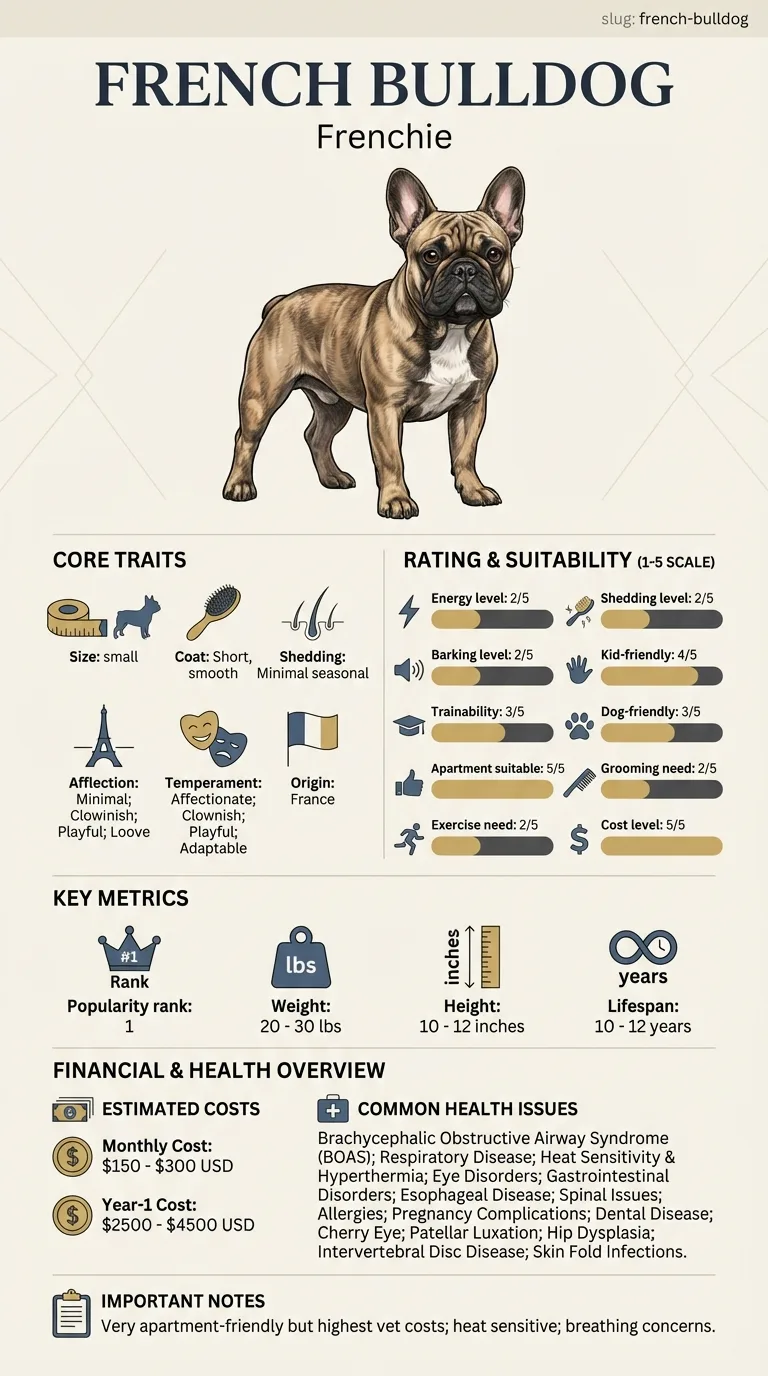
Owners of playful, curious Frenchies who enjoy rough play or off-leash exploring are the ones who encounter this most, often after an ordinary play session leaves a dog squinting or pawing at one eye.
This guide is not medical advice. If your dog shows pain, sudden behavior change, or worsening symptoms, consult a licensed veterinarian.
Some links may be affiliate links. We may earn a commission at no extra cost to you. We only suggest products we believe are helpful for dog owners.
We research and check what we publish, but we do not warrant that any figure, date, price, or statement is accurate, complete, or current, and we accept no liability for any loss, cost, injury, or other harm arising from the use of this site. Use it as one reference among several. You remain responsible for your own decisions and for your dog's care - confirm anything that matters with a licensed veterinarian or another qualified professional before you act on it. Full disclaimer.
Check this first
A visibly cloudy or bluish cornea, a bulging or protruding eye, sudden severe swelling, or an eye that won't stay open at all are all signs of a potentially serious injury requiring same-day veterinary attention — corneal ulcers, in particular, can worsen rapidly and even risk rupture if left untreated.
Milder signs — occasional squinting, mild redness, a bit of discharge — still deserve a prompt vet visit, generally within a day, since even a minor-looking scratch can be more significant than it appears on casual inspection.
Because this breed's eyes have less natural protection than most, the general rule of thumb is to treat any new eye symptom with a bit more urgency than you might for a longer-muzzled breed, rather than waiting to see if it resolves on its own.
If any of these apply, call your vet or an emergency clinic now. The rest of this page is for the cases that are not an emergency.
French Bulldogs face an elevated risk of everyday eye injury — corneal scratches, ulcers, and irritation from foreign material or misplaced eyelashes — stemming from their prominent, forward-facing eyes and reduced eyelid coverage. What would be a minor, self-resolving bump in a longer-muzzled breed can become a genuine injury requiring treatment in this breed, making prompt attention to new eye symptoms particularly important.
Minor eye injuries and irritation are commonly reported in French Bulldogs given the breed's exposed eye anatomy, making this one of the more frequently addressed everyday eye concerns alongside the breed's other, more structurally specific eye conditions.
The breed's shallow eye socket and prominent eye position mean less of the eye is shielded by surrounding bone and eyelid tissue compared to a longer-muzzled dog, and reduced blink coverage means the protective tear film and debris-clearing function of blinking is somewhat less complete, leaving the surface more vulnerable to injury and irritation.
The physical environment a dog moves through directly determines how often this vulnerability actually results in injury: low furniture, brush, dusty conditions, and rough physical play all raise the practical risk, meaning environmental awareness meaningfully reduces incident frequency even though it can't change the underlying anatomy.
See a vet promptly, generally within a day, for any new squinting, redness, or discharge, and seek same-day care for visible corneal cloudiness, a bulging eye, or an eye that won't stay open.
Because this breed's eyes are more exposed, a few common reactions to minor irritation can let a small issue become a more serious one.
See all French Bulldog health problems, which breeds are prone to eye problems, or the full French Bulldog breed guide for temperament, exercise needs and ownership costs.
Minor eye injuries treated promptly often resolve within a week to ten days with appropriate drops and protection. More significant ulcers can take longer and sometimes require surgical intervention.
Success means catching and treating minor injuries before they progress to something more serious — most eye injuries in this breed, treated early, resolve fully without lasting effect on vision.
Ziggy, an energetic two-year-old Frenchie, came in from an off-leash walk through some overgrown trail brush squinting and pawing at one eye. His owner initially assumed it was just dust and rinsed it with water, but the squinting continued into the evening. A same-day vet visit found a small corneal scratch, treated with antibiotic drops and an e-collar to prevent further rubbing. It healed fully within about ten days, and Ziggy's family now sticks to clearer, well-maintained trails specifically because of how exposed his eyes are.
Key takeaway: What looked like ordinary dust turned out to be a real scratch — treating persistent squinting as worth a same-day check, rather than waiting it out, kept a minor injury from becoming a bigger one.
Their prominent, forward-facing eyes and reduced eyelid coverage leave the cornea more exposed to everyday bumps, debris, and dryness than in breeds with deeper-set eyes and fuller blink coverage.
Squinting, redness, excessive tearing, pawing at the eye, and sometimes a visible cloudy or bluish tint to the cornea are common signs, ranging from mild irritation to a more serious ulcer.
Vet-prescribed antibiotic or protective eye drops, sometimes with an e-collar to prevent further rubbing, are standard for minor injuries, with more significant ulcers sometimes needing surgical intervention.
Not without checking with a vet first — some human products aren't appropriate for dogs or for the specific type of injury present, and using the wrong one can worsen the problem.
An abnormal eyelash growing in a position where it rubs against the eye's surface, causing chronic irritation; it's treated by having the abnormal eyelash removed if it's causing ongoing problems.
Being mindful of low furniture, brush, and rough tumbling play, along with prompt attention to any squinting or redness, are the most practical everyday protective steps.
It can be — untreated ulcers can deepen and, in severe cases, risk the eye's structural integrity, which is why prompt veterinary attention for any squinting or visible corneal cloudiness matters.
Prominent, forward-facing eyes and reduced eyelid coverage leave the cornea more exposed than in deeper-set-eyed breeds.
Squinting, redness, excessive tearing, and pawing at the eye.
Not without checking with a vet first, since not all products are appropriate for the specific injury.
Yes, it can indicate a worsening ulcer and needs same-day veterinary attention.
Being mindful of low furniture and brush during play, and prompt attention to any early irritation.
A one-page prep sheet for this condition: the signs, the questions to ask, what to get priced. Unlocks here.
You get: Vet visit prep sheet
No spam. One-click unsubscribe. See our privacy policy.
Preview page 1 before you decide.