Health
What does cherry eye look like in a French Bulldog?
A round, smooth, reddish-pink lump sitting in the inner corner of the eye, usually appearing suddenly.

Quick answer
What does cherry eye look like in a French Bulldog?
A round, smooth, reddish-pink lump sitting in the inner corner of the eye, usually appearing suddenly.
One day the eye looks normal. The next, there's a smooth pink lump sitting in the inner corner like a small piece of raw meat. It looks alarming, and it should get attention, but it's rarely an emergency in the way it looks.
This shows up disproportionately in Frenchies under two years old, and it catches first-time brachycephalic owners off guard the most — the lump can appear overnight with no warning, and the instinct to 'just push it back in' is common and understandably wrong.
This guide is not medical advice. If your dog shows pain, sudden behavior change, or worsening symptoms, consult a licensed veterinarian.
Some links may be affiliate links. We may earn a commission at no extra cost to you. We only suggest products we believe are helpful for dog owners.
We research and check what we publish, but we do not warrant that any figure, date, price, or statement is accurate, complete, or current, and we accept no liability for any loss, cost, injury, or other harm arising from the use of this site. Use it as one reference among several. You remain responsible for your own decisions and for your dog's care - confirm anything that matters with a licensed veterinarian or another qualified professional before you act on it. Full disclaimer.
Cherry eye is the common name for a prolapsed gland of the third eyelid — a tear-producing structure that normally sits tucked out of sight in the inner corner of the eye. When the small ligament anchoring it loosens, the gland flips outward and becomes visible as a smooth, rounded pink or red mass. It's a mechanical displacement, not an infection, tumor, or allergic reaction, even though it can look alarming at first glance.
Cherry eye is one of the more frequently diagnosed eyelid conditions in young French Bulldogs, and it's well recognized as a breed tendency rather than a rare fluke. Many cases are unilateral at first presentation, with a real chance the second eye follows later.
French Bulldogs, like many brachycephalic breeds, tend to have looser connective tissue anchoring the gland of the third eyelid than longer-muzzled breeds. The shallow eye socket and prominent globe common to the breed may add extra mechanical stress on that attachment. None of this is something an owner did — it's structural, inherited anatomy.
There's no strong environmental trigger the way there is with, say, allergies. Rough play, face-rubbing against furniture or bedding, and general activity level can occasionally be the final nudge that pops an already-loose gland, but the underlying cause sits in the connective tissue itself, not in anything happening around the dog.
Call within a day or two of noticing the lump, and sooner if the eye looks red, swollen, painful, or the dog is squinting and pawing at it persistently — that can mean the gland is drying out or the cornea underneath is being irritated.
The lump looks dramatic, and that drama leads to some understandable but unhelpful reactions.
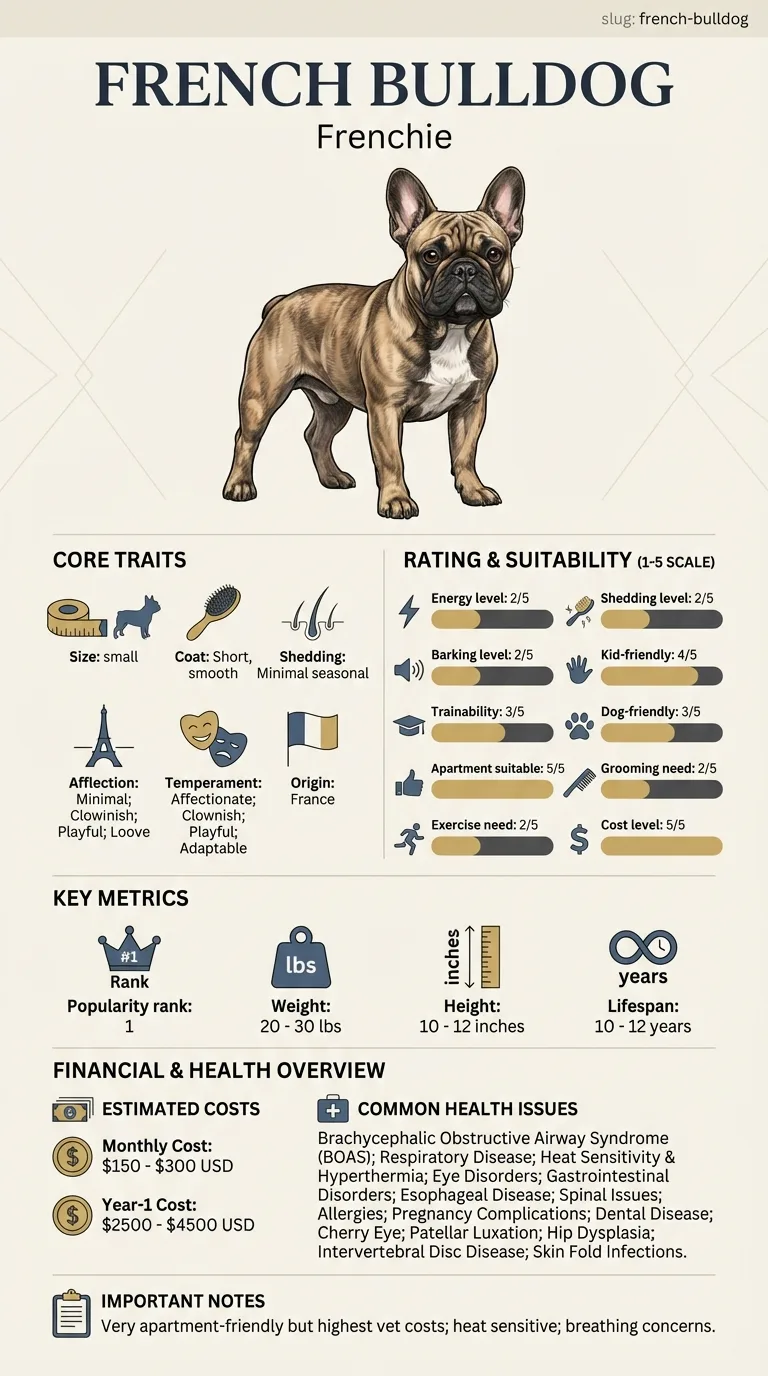
See all French Bulldog health problems, which breeds are prone to cherry eye, or the full French Bulldog breed guide for temperament, exercise needs and ownership costs.
Surgical repair is typically a same-day outpatient procedure, with the eye looking noticeably better within a week and fully settled within about three to four weeks.
Success means the gland stays tucked in place, tear production remains normal, and the eye looks and functions like the unaffected one. A well-repaired cherry eye rarely causes further issues.
If your Frenchie has prolapsed in one eye, there's a meaningfully increased chance the other side will follow, sometimes within weeks and sometimes years later. This isn't because the first surgery failed — it's because the same loose connective tissue that let one gland flip is present on both sides of the face.
Some vets will discuss doing a preventive tacking procedure on the unaffected eye at the same time as repairing the first, particularly in a breed where bilateral cases are well documented, though this is a case-by-case decision rather than a default.
Owners sometimes read a second-eye prolapse as a sign something went wrong the first time. In most cases it's simply the same underlying anatomy playing out twice, and it's treated the same way the first one was.
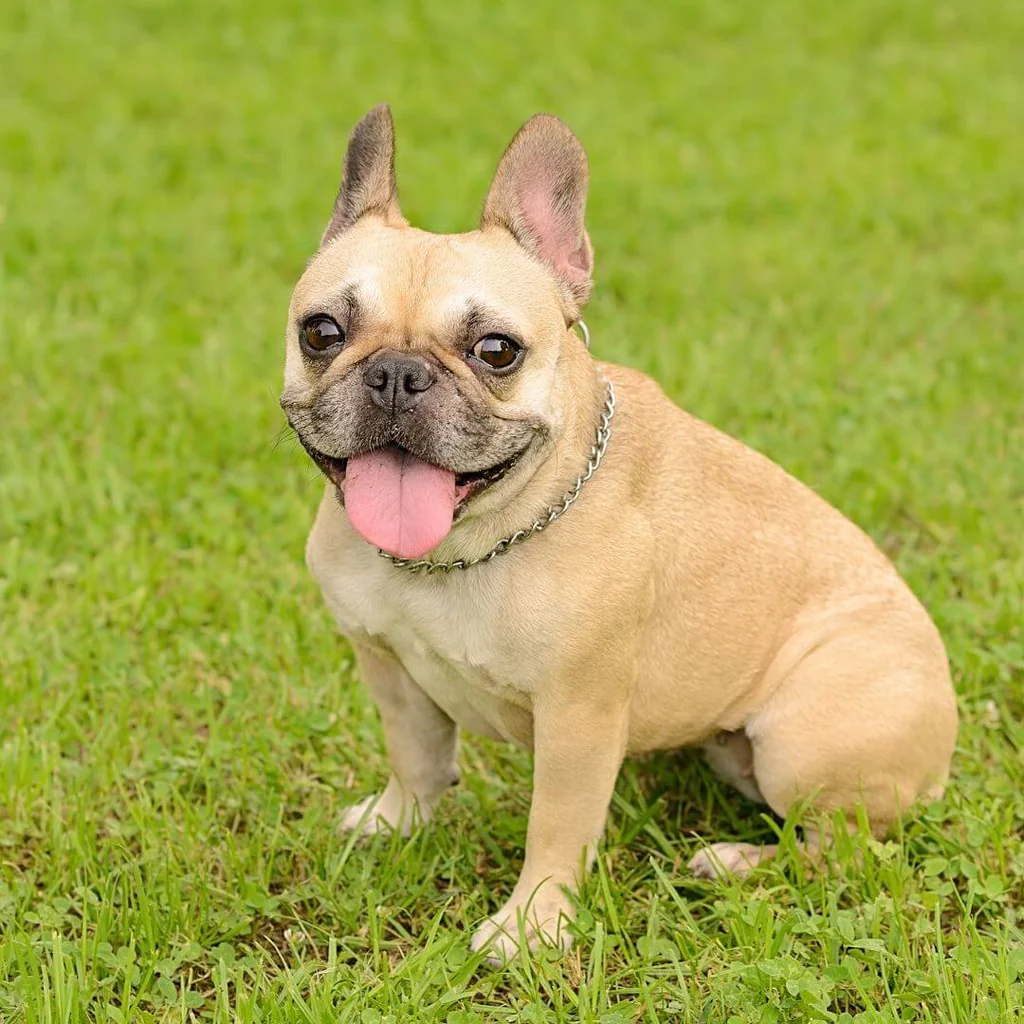
If you think your Frenchie has cherry eye, the plan is three steps: write down what you have seen and when it started, book a veterinary appointment rather than waiting for the next flare, and take video of the behaviour or symptom before you go — the thing you are worried about rarely happens in the consulting room. Screening in the parents covers brachycephalic obstructive airway syndrome (boas), respiratory disease, heat sensitivity & hyperthermia.
What the vet visit should produce is a diagnosis and a written plan, not just reassurance: what is being ruled out, what the monitoring interval is, and which signs mean you come back sooner. Ask what the treatment costs across a year rather than per visit, because that is the number that decides whether you are managing this condition or reacting to it.
Between appointments, keep a short log — dates, what you saw, what changed. It is the single most useful thing an owner brings to a follow-up, and for cherry eye it is often what separates a clear pattern from a guess.
Nola was eight months old when her owner woke up to find a pink lump in the corner of her right eye that hadn't been there the night before. Panic set in, and a well-meaning attempt to gently push it back with a clean finger didn't hold — it popped back out within minutes. A same-day vet visit confirmed a classic prolapsed third eyelid gland, and the vet scheduled a reattachment surgery for later that week rather than removal, given Nola's age and the goal of preserving long-term tear production. The procedure took under thirty minutes, and Nola wore a cone for ten days. Fourteen months later, the same gland has stayed in place, though her owner keeps a close eye on the left side just in case.
Key takeaway: Resisting the urge to fix it yourself and getting to a vet quickly gives the gland the best odds of a clean surgical repair.
It's usually more irritating than acutely painful — dogs may paw at the eye or rub their face on furniture, and the exposed gland can dry out and become inflamed if left alone, which does then become uncomfortable.
Occasionally in young puppies it reduces on its own or with vet-guided massage, but in most Frenchies past a few months old, surgical repositioning is what actually resolves it.
Typical repair costs range from about $300 to $800 per eye at a general practice, more if referred to a veterinary ophthalmologist or if both eyes need correction.
Most dogs look essentially normal afterward, with the third eyelid sitting flush again. A small number have mild residual swelling or a slightly visible surgical line that fades over weeks.
It can, particularly if the gland was removed rather than reattached, since that gland supplies a real portion of the eye's tears. This is why most veterinary ophthalmologists now favor tacking the gland back down over removing it.
Not typically, but you shouldn't wait indefinitely either. See a vet within a few days — sooner if the eye looks red, painful, or the dog is squinting and pawing at it constantly.
There's no reliable way to prevent it since it stems from inherited connective tissue laxity, though gentle handling around the face and prompt vet attention at the first sign of a bulge can prevent it from worsening before treatment.
A round, smooth, reddish-pink lump sitting in the inner corner of the eye, usually appearing suddenly.
No, but it warrants a vet visit within a few days rather than a wait-and-see approach at home.
Roughly $300–$800 per eye, more if both eyes are affected or a specialist is needed.
The same eye rarely relapses after a proper repair, but the other eye can prolapse separately later.
Reattachment is now generally preferred over removal, since the gland contributes real tear production the eye needs long-term.
A one-page prep sheet for this condition: the signs, the questions to ask, what to get priced. Unlocks here.
You get: Vet visit prep sheet
No spam. One-click unsubscribe. See our privacy policy.
Preview page 1 before you decide.