Health
What's the key sign of esophageal disease?
Regurgitation — effortless bringing up of undigested food, often soon after eating, distinct from vomiting.

Quick answer
What's the key sign of esophageal disease?
Regurgitation — effortless bringing up of undigested food, often soon after eating, distinct from vomiting.
Regurgitation — food coming back up effortlessly, undigested, often soon after eating — looks similar to vomiting but points to a completely different part of the digestive tract.
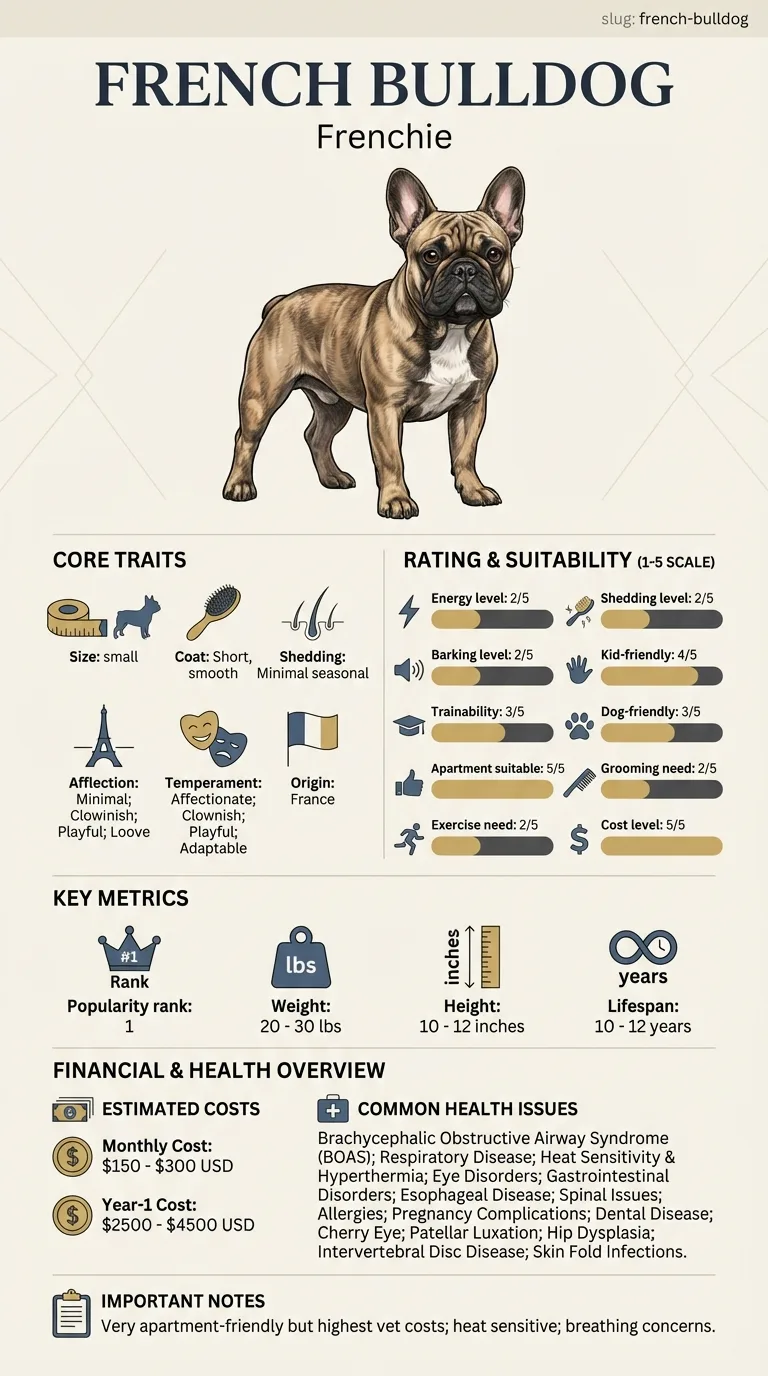
Owners who've noticed their Frenchie bringing food back up in a tube-shaped, undigested clump shortly after meals are often dealing with this specific issue, sometimes for months before realizing it's distinct from ordinary vomiting.
This guide is not medical advice. If your dog shows pain, sudden behavior change, or worsening symptoms, consult a licensed veterinarian.
Some links may be affiliate links. We may earn a commission at no extra cost to you. We only suggest products we believe are helpful for dog owners.
We research and check what we publish, but we do not warrant that any figure, date, price, or statement is accurate, complete, or current, and we accept no liability for any loss, cost, injury, or other harm arising from the use of this site. Use it as one reference among several. You remain responsible for your own decisions and for your dog's care - confirm anything that matters with a licensed veterinarian or another qualified professional before you act on it. Full disclaimer.
Check this first
Coughing, labored breathing, fever, or lethargy following an episode of regurgitation can indicate aspiration pneumonia — food or liquid has entered the airway rather than the stomach — and this combination needs prompt veterinary attention, as it can escalate into a serious respiratory infection.
Frequent, ongoing regurgitation without these additional signs is not typically an acute emergency but does warrant a scheduled vet visit for proper diagnosis, since chronic untreated esophageal disease carries an accumulating risk of exactly this kind of complication over time.
A dog with diagnosed esophageal disease benefits from a clear feeding plan (often smaller meals, sometimes with an elevated bowl or an upright post-meal position) established with a vet, since consistent management meaningfully reduces both the frequency of regurgitation and the associated aspiration risk.
If any of these apply, call your vet or an emergency clinic now. The rest of this page is for the cases that are not an emergency.
Esophageal disease in French Bulldogs covers a range of conditions affecting the muscular tube that moves food from the throat to the stomach, most commonly presenting as regurgitation of undigested food shortly after eating. The breed's documented 265% higher risk compared to non-brachycephalic breeds is closely tied to the same chest pressure dynamics from labored breathing that contribute to related conditions like hiatal hernia and reflux.
Esophageal disease is documented in French Bulldogs at a substantially elevated rate compared to non-brachycephalic breeds, consistent with the breed's broader pattern of airway-pressure-related digestive conditions.
The same negative pressure generated in the chest by labored breathing against a narrowed airway that contributes to hiatal hernia in this breed can also affect esophageal structure and function over time, making esophageal disease part of a connected cluster of airway-pressure-related digestive conditions rather than an isolated issue.
Feeding practices meaningfully affect symptom frequency: rapid eating, large meals, and exercise soon after eating can all worsen regurgitation episodes in a dog with underlying esophageal dysfunction, making mealtime management one of the most directly controllable factors.
See a vet for frequent or persistent regurgitation, and seek prompt care immediately if regurgitation is followed by coughing, labored breathing, fever, or lethargy, which can indicate aspiration pneumonia.
Because regurgitation can look like ordinary vomiting, a few common mix-ups delay recognizing what's actually happening and how to manage it.
See all French Bulldog health problems, which breeds are prone to esophageal disease, or the full French Bulldog breed guide for temperament, exercise needs and ownership costs.
Diagnosis typically involves imaging done within one or two vet visits. Management, once a feeding plan is established, is usually an ongoing, daily routine rather than a short-term fix, especially for motility-related esophageal issues.
Success means meaningfully reduced regurgitation frequency and no episodes of aspiration pneumonia, achieved through consistent feeding management tailored to the specific esophageal issue identified.
Cletus, a four-year-old Frenchie, had been bringing up an undigested, tube-shaped clump of food within minutes of finishing dinner for weeks, something his family initially assumed was just fast eating. When it happened almost every night, they brought it up at his next vet visit. Contrast X-rays revealed mild esophageal motility issues linked to his previously diagnosed airway narrowing. Switching to smaller, more frequent meals fed from a slightly elevated bowl, with a calm twenty-minute upright period afterward, dramatically reduced his regurgitation episodes within a couple of weeks.
Key takeaway: What looked like a fast-eating quirk turned out to be a specific, manageable esophageal issue — a small mealtime routine change made a bigger difference than anyone expected.
It's linked to the same negative chest pressure generated by the breed's labored, airway-limited breathing that contributes to hiatal hernia and reflux, both of which can affect esophageal function and structure over time.
Regurgitation is passive and effortless, typically bringing up undigested food soon after eating with no retching; vomiting is an active process usually involving digested stomach contents and preceded by nausea signs like drooling or retching.
X-rays, sometimes with a contrast material to highlight the esophagus, or endoscopy are used to identify specific issues like megaesophagus, stricture, or motility problems.
Management depends on the specific condition, but often includes elevated or upright feeding positions, smaller and more frequent meals, and in some cases medication for related reflux; certain structural issues may require surgical correction.
It can be, primarily due to the risk of aspiration pneumonia if food or liquid enters the airway during a regurgitation episode, making proper management and prompt attention to respiratory symptoms important.
For some conditions, particularly those affecting esophageal motility, feeding from an elevated position and keeping the dog upright for a period after eating can help gravity assist food into the stomach and reduce regurgitation.
It's documented at a substantially elevated rate compared to non-brachycephalic breeds, reflecting the connection between the breed's airway pressure dynamics and esophageal and related digestive structures.
Regurgitation — effortless bringing up of undigested food, often soon after eating, distinct from vomiting.
It's linked to the same chest pressure dynamics from labored breathing that contribute to hiatal hernia and reflux.
It can lead to aspiration pneumonia if food or liquid enters the airway, making proper management important.
Yes, elevated feeding and staying upright after meals can help some esophageal conditions.
X-rays (sometimes with contrast) or endoscopy to identify the specific underlying esophageal issue.
A one-page prep sheet for this condition: the signs, the questions to ask, what to get priced. Unlocks here.
You get: Vet visit prep sheet
No spam. One-click unsubscribe. See our privacy policy.
Preview page 1 before you decide.
