Living
Which is taller?
The French Spaniel, standing 21-24 inches versus the Shar-Pei's 18-20 inches.

Quick answer
Which is taller?
The French Spaniel, standing 21-24 inches versus the Shar-Pei's 18-20 inches.
Chinese Shar-Pei or French Spaniel? On paper they differ most on exercise need, and on the scales Chinese Shar-Pei is the heavier at 45–60 lbs. Here is how the two compare on everything that shapes an ordinary week.

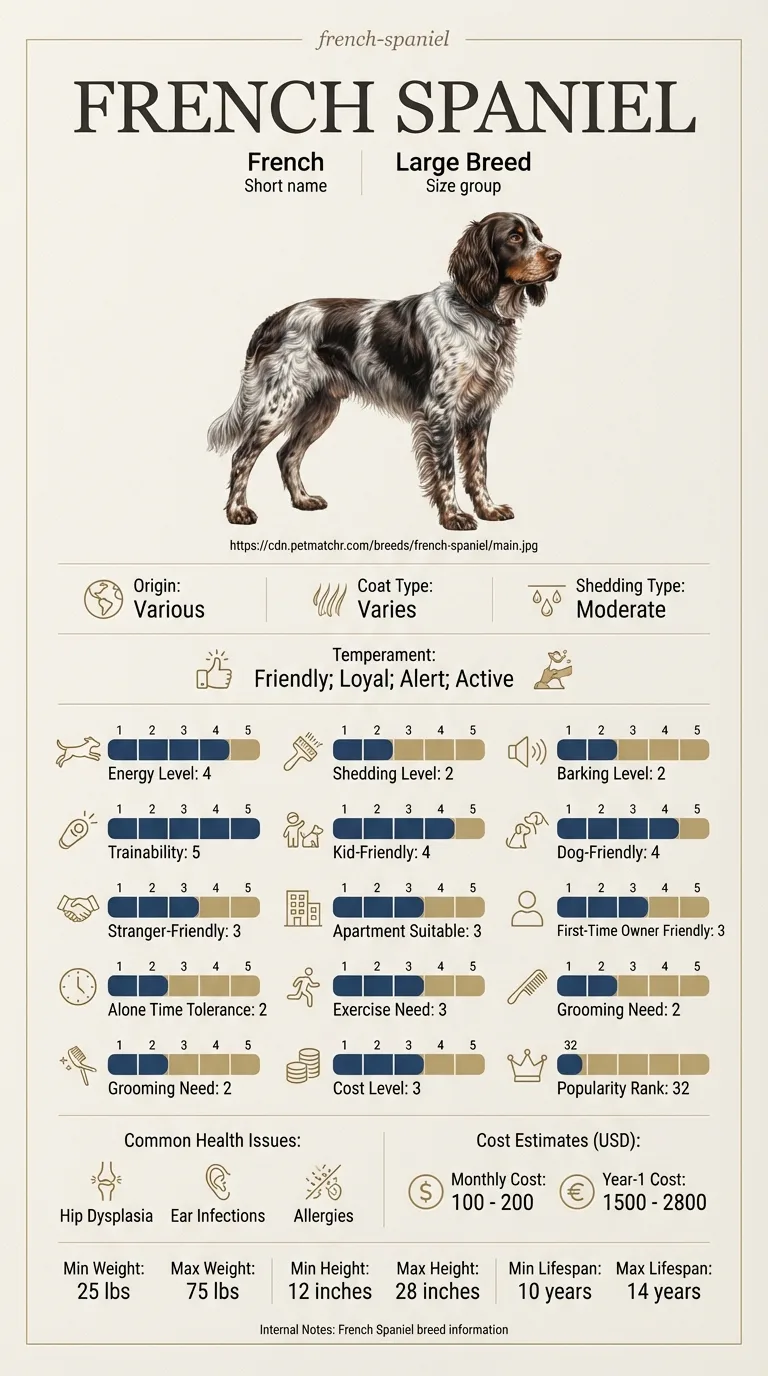
This is for someone already down to Chinese Shar-Pei and French Spaniel and deciding between them. For this pair the decision usually turns on exercise need and energy level, so those are covered first and in most detail. Anyone choosing from a flat has a clear answer here: Chinese Shar-Pei rates 4/5 against 2/5. There is no origin story here — only what changes about your week.
Between Chinese Shar-Pei and French Spaniel, exercise need is what separates them, and Chinese Shar-Pei is the lower-effort dog of the two to keep.
Choose Chinese Shar-Pei if you are in a flat or a smaller home, you do not want a standing grooming appointment and shedding is a problem in your house.
Choose French Spaniel if this is your first dog, there are young children at home and you already have another dog.
| Feature | chinese shar pei | french spaniel | Winner |
|---|---|---|---|
| Size class | medium | medium | Equal |
| Weight | 45–60 lbs | 45–60 lbs | Equal |
| Height | 18–20 in | 21–24 in | Equal |
| Lifespan | 8–12 years | 10–12 years | french spaniel |
| Exercise need | Low (2/5) | Very high (5/5) | chinese shar pei |
| Grooming need | Low (2/5) | Moderate (3/5) | chinese shar pei |
| Shedding | Low (2/5) | Moderate (3/5) | chinese shar pei |
| Energy level | Low (2/5) | High (4/5) | Equal |
| Barking | Low (2/5) | Low (2/5) | Equal |
| Apartment suitability | High (4/5) | Low (2/5) | chinese shar pei |
| Good for first-time owners | Low (2/5) | Moderate (3/5) | french spaniel |
| Tolerates being alone | Moderate (3/5) | Low (2/5) | chinese shar pei |
| Trainability | Low (2/5) | High (4/5) | french spaniel |
| Good with kids | Moderate (3/5) | High (4/5) | french spaniel |
| Good with other dogs | Low (2/5) | High (4/5) | french spaniel |
| Friendly to strangers | Low (2/5) | High (4/5) | french spaniel |
| Cost level | High (4/5) | Moderate (3/5) | french spaniel |
| Coat | Short and harsh | Medium, flat and feathered | Equal |
| Origin | Various | Various | Equal |
| Typical monthly cost | $100–$200 | $100–$200 | Equal |
| Typical first-year cost | $1,400–$2,900 | $1,400–$2,900 | Equal |
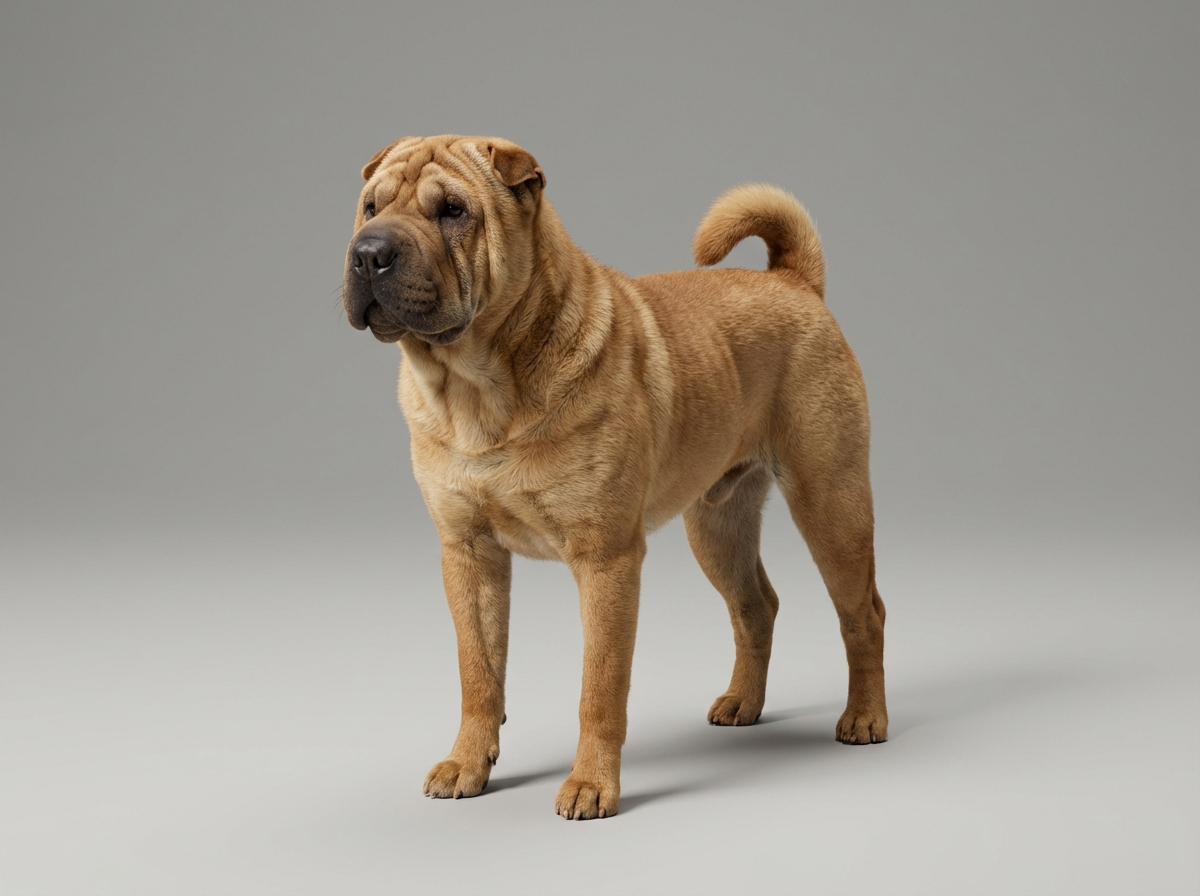
Weight is nearly a wash between these two — the Chinese Shar-Pei's 45-to-60-pound frame matches the French Spaniel's identical 45-to-60-pound range almost pound for pound — but height tells a different story, with the French Spaniel standing 21 to 24 inches against the Shar-Pei's 18 to 20 inches. That extra height gives the French Spaniel a leggier, more classically sporting-dog silhouette, while the Shar-Pei's frame reads lower and denser thanks to its compact build and loose, wrinkled skin. Two dogs of similar weight can still look quite different standing side by side, and this pairing is a good example of why height matters as much as the scale.
The French Spaniel rates very high (5/5) for exercise need and high (4/5) for energy, among the more demanding profiles paired with the Chinese Shar-Pei's low (2/5) on both counts anywhere on this site. As a versatile hunting breed described as energetic yet calm indoors, the French Spaniel wants real outdoor activity — long walks, retrieving work, or open-field time — to balance out its indoor composure, a combination that can catch new owners off guard if they only notice the calm half of that description. The Shar-Pei's modest needs sit at the opposite end entirely, making this one of the widest exercise gaps in this batch of comparisons.
The French Spaniel's medium, flat, feathered coat pushes grooming need to moderate (3/5) and shedding to moderate (3/5), a step up from the Chinese Shar-Pei's low (2/5) on both. That feathering around the ears and legs benefits from regular brushing to prevent tangling, particularly after outdoor activity given the breed's sporting background. The Shar-Pei's short, harsh coat, by comparison, needs only occasional attention. Neither breed reaches the highest grooming tier seen elsewhere on this site, but owners comparing week-to-week maintenance should expect the French Spaniel to require noticeably more brushing time than the wash-and-go Shar-Pei.
The Chinese Shar-Pei is the better apartment choice by a wide margin, rating high (4/5) for apartment suitability against the French Spaniel's low (2/5), a gap driven by the French Spaniel's very high exercise needs rather than noise — both breeds actually tie at low (2/5) for barking. Alone-time tolerance also favors the Shar-Pei, moderate (3/5) versus the French Spaniel's low (2/5). A French Spaniel confined to a small space without adequate daily exercise is likely to struggle regardless of how quiet it naturally is, making it a better match for a house with outdoor access than a city apartment.
The French Spaniel rates high (4/5) for trainability and moderate (3/5) for first-time-owner suitability, benefiting from a gentle, sociable temperament that responds well to structured training even if its energy level demands a confident handler. The Chinese Shar-Pei rates low (2/5) on both measures, its independent, reserved nature making for a slower training process regardless of owner experience. A first-time owner willing to commit to daily exercise alongside training will likely find the French Spaniel a cooperative partner, while a Shar-Pei owner should expect to invest more patience and possibly professional support to reach comparable results.
The French Spaniel rates high (4/5) with kids, high (4/5) with other dogs, and high (4/5) with strangers, a consistently social profile reflecting its gentle, sociable temperament. The Chinese Shar-Pei trails across the board — moderate (3/5) with kids, low (2/5) with other dogs, low (2/5) with strangers — in line with its reserved, independent character. Active families with children, other dogs, or frequent guests will generally find the French Spaniel the more accommodating household fit, provided they can meet its considerable exercise needs, while the Shar-Pei suits a quieter household not looking for an instantly outgoing companion.
Lifespans sit close, 10 to 12 years for the French Spaniel against 8 to 12 for the Chinese Shar-Pei. The French Spaniel's five flagged conditions — hip dysplasia, ear infections, epilepsy, acral mutilation syndrome, and eye conditions — include acral mutilation syndrome, a rare inherited neurological condition worth discussing directly with a breeder. The Shar-Pei's own five-item list — skin fold dermatitis, entropion, familial Shar-Pei fever, hypothyroidism, and ear infections, a condition both breeds share — centers on its wrinkled skin instead. Both lists are relatively short compared to some breeds on this site, but French Spaniel owners should specifically ask about genetic testing for acral mutilation syndrome given how rare and breed-specific it is.
Cost figures land nearly identically: the Chinese Shar-Pei carries a high (4/5) cost rating against the French Spaniel's moderate (3/5), yet both run the same $100 to $200 monthly and $1,400 to $2,900 in year one. Given the French Spaniel's higher exercise needs and moderate grooming demands, that dollar parity suggests its spending leans toward activity-related costs and coat care, while the Shar-Pei's budget likely reflects general upkeep tied to its higher overall cost-level rating and skin-fold maintenance. Either way, prospective owners should expect a broadly similar annual budget between the two breeds.
Chinese Shar-Pei weighs 45–60 lbs and lives 8–12 years; French Spaniel weighs 45–60 lbs and lives 10–12 years. The two diverge most on exercise need, energy level and apartment suitability and 3 other rated axes. Almost every rated axis separates them at least slightly. Where the table declares a winner it means less work for the owner, nothing more; descriptive rows are left as ties on purpose. The value here is in the differences between the two columns; treat any single score as approximate.

The French Spaniel, rated very high (5/5) for exercise need versus the Shar-Pei's low (2/5).
Not really — it rates low (2/5) for apartment suitability due to its high exercise needs, while the Shar-Pei rates high (4/5).
The French Spaniel, rated high (4/5) versus the Shar-Pei's low (2/5).
Acral mutilation syndrome, a rare inherited neurological condition, appears on its list alongside hip dysplasia, ear infections, epilepsy, and eye conditions.
Neither stands out — both rate low (2/5) for barking.
The French Spaniel, rated high (4/5) versus the Shar-Pei's low (2/5).
Nearly identically — both run $100-$200 monthly and $1,400-$2,900 in year one, despite the Shar-Pei's higher overall cost rating.
The French Spaniel, standing 21-24 inches versus the Shar-Pei's 18-20 inches.
The French Spaniel, described as gentle and sociable versus the Shar-Pei's reserved, independent temperament.
The Chinese Shar-Pei, rated low (2/5) versus the French Spaniel's moderate (3/5).
The French Spaniel, rated high (4/5) versus the Shar-Pei's moderate (3/5).
Secure checkout on Stripe. We never see your card.
7-day money-back guarantee. Instant access.
Health information here is general and is not veterinary advice. If your dog shows pain, sudden behaviour change, or worsening symptoms, consult a licensed veterinarian.
Some links on this site are affiliate links. We may earn a commission at no extra cost to you, and we only suggest products we believe are helpful for dog owners.
We research and check what we publish, but we do not warrant that any figure, date, price, or statement is accurate, complete, or current, and we accept no liability for any loss, cost, injury, or other harm arising from the use of this site. Use it as one reference among several. You remain responsible for your own decisions and for your dog's care - confirm anything that matters with a licensed veterinarian or another qualified professional before you act on it. Full disclaimer.
Match your lifestyle to the right dog.
Take quizNot sure which breed is right for you? Take our 2-minute quiz to find out.
Take the quiz