Health
What does 'rcd' stand for in PRA genetics?
Rod-cone dysplasia, a category of specific genetic mutations identified as one cause of progressive retinal atrophy.

Quick answer
What does 'rcd' stand for in PRA genetics?
Rod-cone dysplasia, a category of specific genetic mutations identified as one cause of progressive retinal atrophy.
Two dogs, two different breeds, can both be diagnosed with 'PRA' by their vets, while actually carrying entirely different mutations at the DNA level — which is exactly why a genetic panel, not just a clinical diagnosis, matters for breeding decisions.
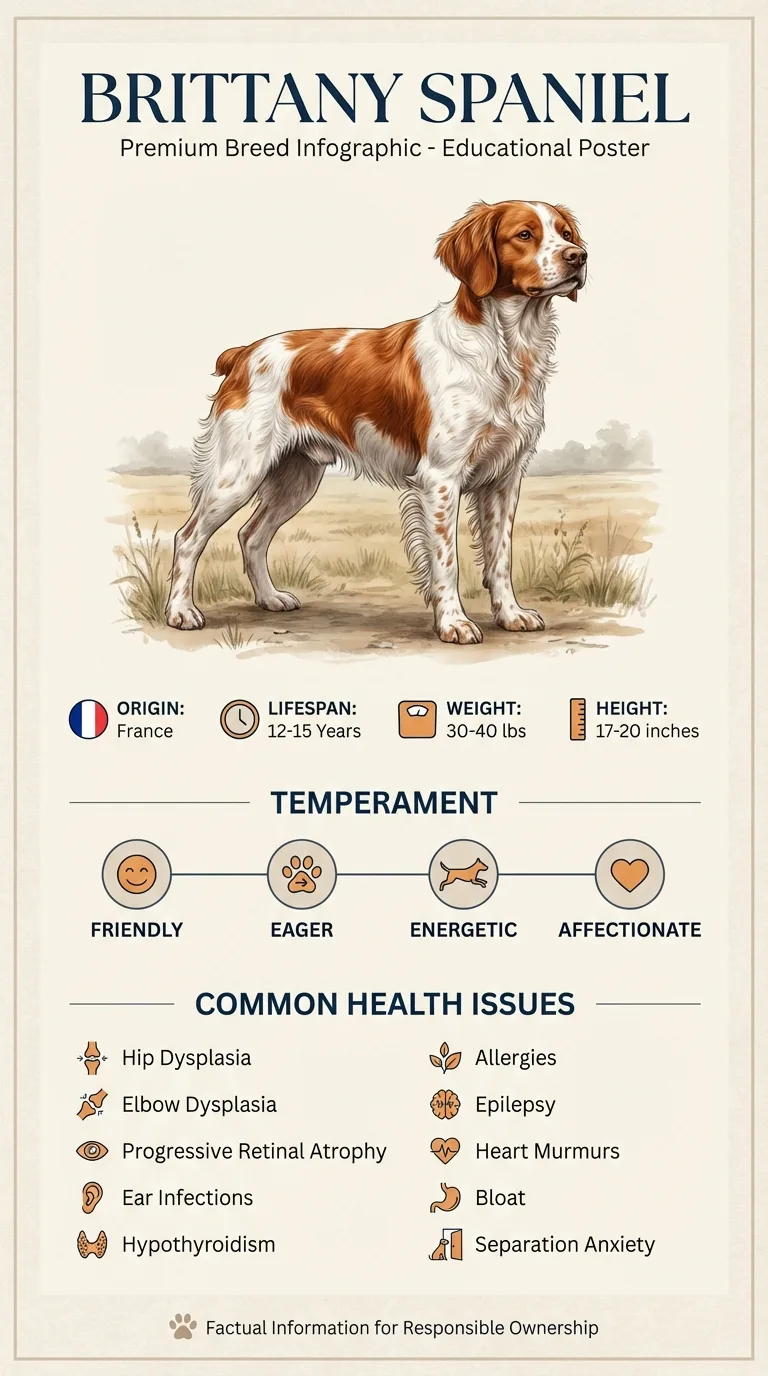
Breeders and serious buyers researching PRA genetics face the most confusion here, since mutation names, breed associations, and testing panels can be genuinely hard to untangle without a clear explanation of how the naming and testing system actually works.
This guide is not medical advice. If your dog shows pain, sudden behavior change, or worsening symptoms, consult a licensed veterinarian.
Some links may be affiliate links. We may earn a commission at no extra cost to you. We only suggest products we believe are helpful for dog owners.
We research and check what we publish, but we do not warrant that any figure, date, price, or statement is accurate, complete, or current, and we accept no liability for any loss, cost, injury, or other harm arising from the use of this site. Use it as one reference among several. You remain responsible for your own decisions and for your dog's care - confirm anything that matters with a licensed veterinarian or another qualified professional before you act on it. Full disclaimer.
Progressive retinal atrophy, documented as a health concern in Brittanys, actually encompasses multiple distinct genetic mutations rather than a single uniform cause. Mutations are often labeled with names like rcd (rod-cone dysplasia) followed by a number, reflecting the specific gene and research history behind each variant, and only a targeted genetic panel test can confirm which specific mutation, if any known one, a given dog actually carries.
Because PRA broadly is documented as a concern in this breed, genetic testing for known PRA mutations has become an increasingly standard part of responsible breeding programs, even though the exact prevalence of any single named mutation within the Brittany population specifically isn't something this guide can state with certainty.
PRA broadly is documented in Brittanys, which is why breed-conscious breeders increasingly pursue genetic panel testing to identify which specific mutations, among the several known across dog breeds generally, may be relevant to their breeding lines.
As a purely genetic condition, environmental factors don't influence which mutations exist in a given dog's DNA. What environment does influence is whether that information gets acted on, through breeder testing practices and buyer awareness.
Discuss genetic panel testing options with your vet if you're considering breeding your Brittany, or if a clinical PRA diagnosis has been made and you want to understand the specific underlying genetic cause for family planning or informational purposes.
See all Brittany health problems, which breeds are prone to progressive retinal atrophy pra rcd3, or the full Brittany breed guide for temperament, exercise needs and ownership costs.
Genetic panel results are typically available within a few weeks of sample submission, usually collected through a simple cheek swab. This is a one-time test rather than something requiring repeat testing over a dog's life, unlike ongoing clinical eye exams.
Success looks like breeding decisions and buyer research grounded in specific, accurate genetic information rather than a general and sometimes ambiguous clinical label alone.
As researchers identified the specific genetic mutations behind PRA in various breeds over the decades, each newly discovered variant was often given a working name tied to the breed or research context where it was first characterized, such as rcd1, rcd2, rcd3, prcd, and others. Some of these mutations have since been found in multiple breeds beyond where they were first discovered, while others remain more narrowly confined to their original breed population.
What this means practically is that a mutation name isn't a strict promise about which breeds carry it — it's a label tied to a specific piece of DNA that happened to be identified first in a particular breed's research population. The only way to know which specific mutation, if any, a given Brittany carries is through an actual genetic panel test designed to screen for the mutations known to occur across multiple breeds, rather than assuming based on a mutation's original discovery breed.
A dog can test clear for one specific known mutation and still develop PRA from a different, perhaps not-yet-identified genetic cause, which is why a clear panel result is reassuring but not an absolute guarantee against all forms of PRA.

If you think your Brittany has progressive retinal atrophy (pra-rcd3), the plan is three steps: write down what you have seen and when it started, book a veterinary appointment rather than waiting for the next flare, and take video of the behaviour or symptom before you go — the thing you are worried about rarely happens in the consulting room. Screening in the parents covers hip dysplasia, elbow dysplasia, progressive retinal atrophy.
What the vet visit should produce is a diagnosis and a written plan, not just reassurance: what is being ruled out, what the monitoring interval is, and which signs mean you come back sooner. Ask what the treatment costs across a year rather than per visit, because that is the number that decides whether you are managing this condition or reacting to it.
Between appointments, keep a short log — dates, what you saw, what changed. It is the single most useful thing an owner brings to a follow-up, and for progressive retinal atrophy (pra-rcd3) it is often what separates a clear pattern from a guess.
A Brittany breeder had two adult dogs both clinically diagnosed with PRA by their regular vet based on retinal appearance during routine exams. Curious about the underlying cause, she sent samples from both to a veterinary genetics lab offering a multi-mutation PRA panel. The results showed one dog carried a well-documented mutation also found in several other breeds, while the second dog's results came back clear for every mutation on the panel, meaning her PRA was likely caused by a variant not yet included in available testing. This distinction mattered directly for her breeding program: she could now make an informed decision about the first dog's specific genetic risk to future litters, while recognizing the second dog's situation required ongoing clinical monitoring rather than a definitive genetic answer.
Key takeaway: A shared clinical diagnosis doesn't mean a shared genetic cause — actual panel testing is what reveals the specific mutation, or its absence, behind an individual dog's PRA.
Not necessarily — a clinical PRA diagnosis alone doesn't specify which genetic mutation is responsible. Only a genetic panel test can confirm whether a specific named mutation like rcd3 is actually present.
These names typically reflect where a mutation was first identified and characterized by researchers, not necessarily an exclusive breed-only occurrence, since some mutations are later found across multiple breeds.
It's particularly worthwhile if you're considering breeding, since it gives concrete information about specific known mutations rather than relying on a general clinical PRA diagnosis alone.
Yes, since PRA can result from various genetic causes, some not yet identified or included in current testing panels, a clear result for one specific tested mutation doesn't guarantee against every possible form.
Ask specifically which genetic panel was used and what mutations it screens for, along with the actual results for the parent dogs, rather than accepting a general statement like 'PRA tested clear' without detail.
A carrier typically won't develop the disease itself, but breeding two carriers together risks producing affected puppies, so pairing a carrier with a clear-tested mate is the standard responsible approach.
Rod-cone dysplasia, a category of specific genetic mutations identified as one cause of progressive retinal atrophy.
No, a mutation's name often reflects its discovery breed, but some of these variants have since been found in other breeds too.
Typically a modest fee, often in the range of a hundred dollars or so, depending on the lab and how many mutations are included in the panel.
Yes, it's a reasonable and increasingly standard request when researching a breeder, particularly for a breed with PRA documented on its health list.
They serve different purposes — genetic testing identifies specific known mutations, while a clinical eye exam detects actual retinal changes regardless of the underlying genetic cause, so both have value.
A one-page prep sheet for this condition: the signs, the questions to ask, what to get priced. Unlocks here.
You get: Vet visit prep sheet
No spam. One-click unsubscribe. See our privacy policy.
Preview page 1 before you decide.