Kidney Stones and Urinary Blockage in Bernese Mountain Dogs
A male dog straining in the garden and producing nothing is not constipated. Assume the urinary tract until a vet says otherwise.
What you can try
- Add water to meals or feed part of the diet as wet food, which is usually the easiest way to increase total fluid intake.
- Offer at least three toilet opportunities a day, and more for a dog with any urinary history, so urine is not held for long periods.
- Learn what your dog's normal urination looks like, so that a change in frequency or volume is obvious rather than debatable.
- If a stone is removed, ask explicitly for it to be sent for analysis and get the result in writing.
- Stick to any prescribed therapeutic diet exactly, including treats, since a single non-compliant food source can undo the urinary chemistry the diet is managing.
Why a blocked male dog is a genuine emergency
The male canine urethra narrows as it passes into the penis, and a stone that travelled comfortably down from the bladder can wedge at that point. Once it does, urine cannot leave. The bladder distends, pressure backs up into the kidneys, and waste products the kidneys should be excreting accumulate in the blood instead.
Within roughly a day this produces dangerous potassium levels that affect the heart rhythm, and the bladder itself can rupture. Dogs die from this, and they die from it having looked merely uncomfortable a few hours earlier.
The signs are specific and worth memorising. Repeated squatting or lifting the leg with little or nothing produced. Straining that an owner mistakes for constipation. Frequent small attempts rather than one long stream. Licking at the genitals. Restlessness, pacing and an inability to settle. Later, a hard tense abdomen, vomiting, and collapse.
Female dogs have a shorter, wider urethra and block far less often, which means straining in a female is more likely to be infection or bladder inflammation. It still needs seeing, but the clock is less brutal.
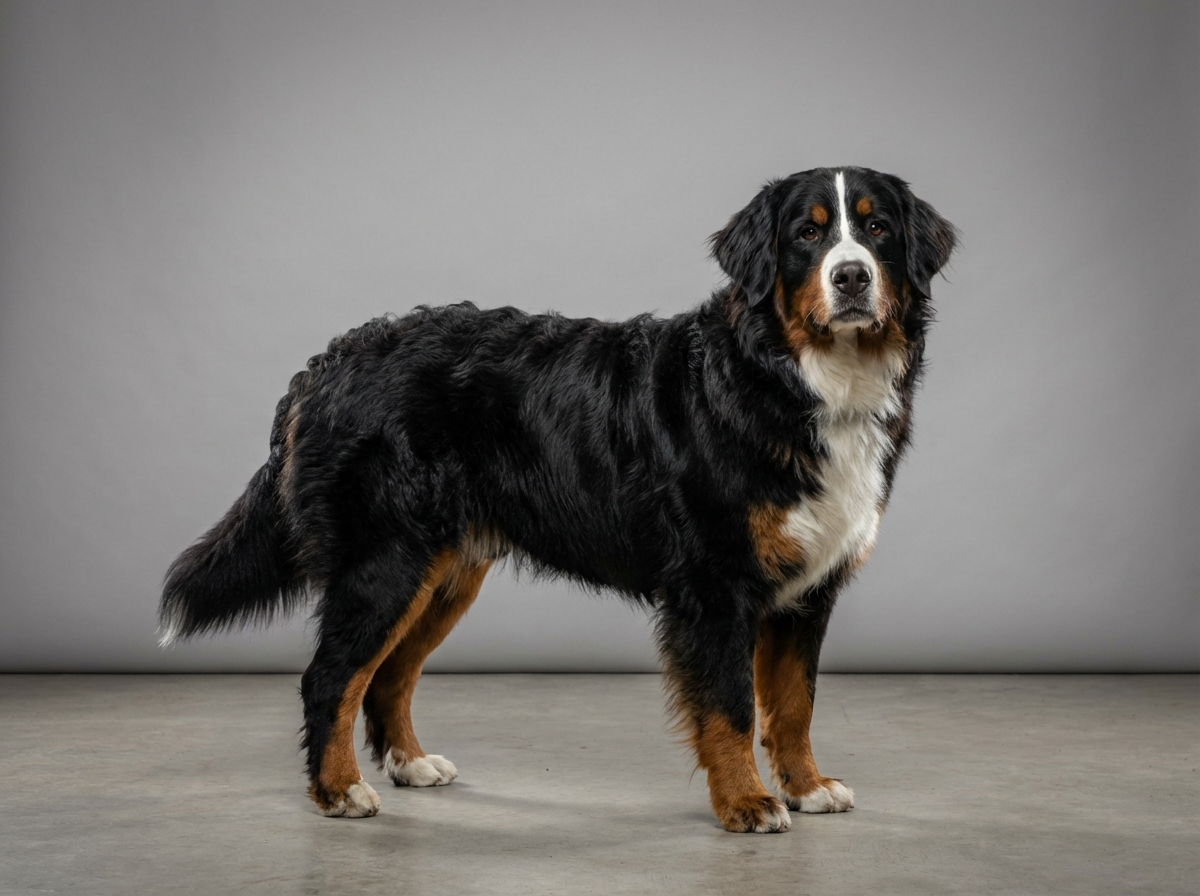
One complication specific to a breed of this size: a hundred pound dog with a painfully distended bladder is difficult to lift and will resent being handled around the abdomen. Plan to support him under the chest and hindquarters rather than around the middle, and warn the clinic what is coming so they are ready at the door.
Why the stone type changes the plan
Every stone looks similar on an x-ray and completely different under analysis. Sending a retrieved stone to a laboratory is what turns a one-off surgery into a prevention strategy.

- Struvite stones often form alongside urinary infection and can sometimes be dissolved with a prescription diet rather than removed surgically.
- Calcium oxalate stones cannot be dissolved. They must be removed, and prevention focuses on diet and on keeping urine dilute.
- Urate stones are associated with liver shunts in some dogs, which is why a stone diagnosis sometimes leads to a liver investigation.
- Cystine stones arise from an inherited defect in kidney transport and are one of the few types with a clear genetic basis.
- Analysis of a retrieved stone is not an optional extra. It is the single piece of information that determines the prevention plan.
- Crystals seen on a urine test are not the same as stones and do not always require treatment. Ask your vet which you are dealing with.
Frequently asked questions
Are Bernese Mountain Dogs prone to urinary stones?
Urolithiasis is not listed among this breed's documented common health issues, which centre on cancer, joint disease, bloat, degenerative myelopathy, retinal atrophy, histiocytosis, von Willebrand's disease, allergies and arthritis. Stones occur in Bernese Mountain Dogs as they do in most breeds, but the breed does not carry the marked predisposition that some others do.
How do I tell urinary straining from constipation?
Watch the posture and what is produced. A dog straining to urinate typically makes many short attempts and produces drops or nothing, and often licks himself afterwards. Because getting this wrong can be fatal in a male dog, the safe rule is to treat any repeated unproductive straining as urinary until a veterinarian has checked the bladder.
Can diet dissolve my dog's stones?
Some struvite stones can be dissolved with a prescription therapeutic diet, often alongside treatment of an underlying infection. Calcium oxalate stones cannot be dissolved and require removal. This is exactly why stone analysis matters: without it, a diet may be prescribed that cannot work.
How do I keep urine dilute in a large dog?
The most effective single measure is increasing water intake, and for many dogs the easiest way is switching part of the diet to wet food or adding water to meals. Multiple water bowls around the house help, as does emptying and refilling rather than topping up. Never restrict water in a dog with any urinary history.
Will stones come back after surgery?
Recurrence is common without a prevention plan and much less common with one. That plan is built from the stone analysis, follow-up urine testing at intervals, and in some cases a lifelong prescription diet. Owners who stop the diet once the dog seems well are the ones who most often return with a second episode.
Are blood in the urine and frequent urination always stones?
No. Bladder infection, inflammation and in older dogs bladder tumours produce the same picture. In a breed with an elevated cancer risk, persistent urinary signs in an older Bernese that do not resolve with treatment deserve imaging rather than another course of the same medication.
Related guides