Health
Is the Akita brachycephalic?
No — it's classified as mesocephalic, with a moderate, proportionate muzzle length.

Quick answer
Is the Akita brachycephalic?
No — it's classified as mesocephalic, with a moderate, proportionate muzzle length.
A broad, imposing head is one of the Akita's most recognizable features, but broad doesn't mean flat-faced — and the distinction matters a great deal for understanding this breed's real health profile.
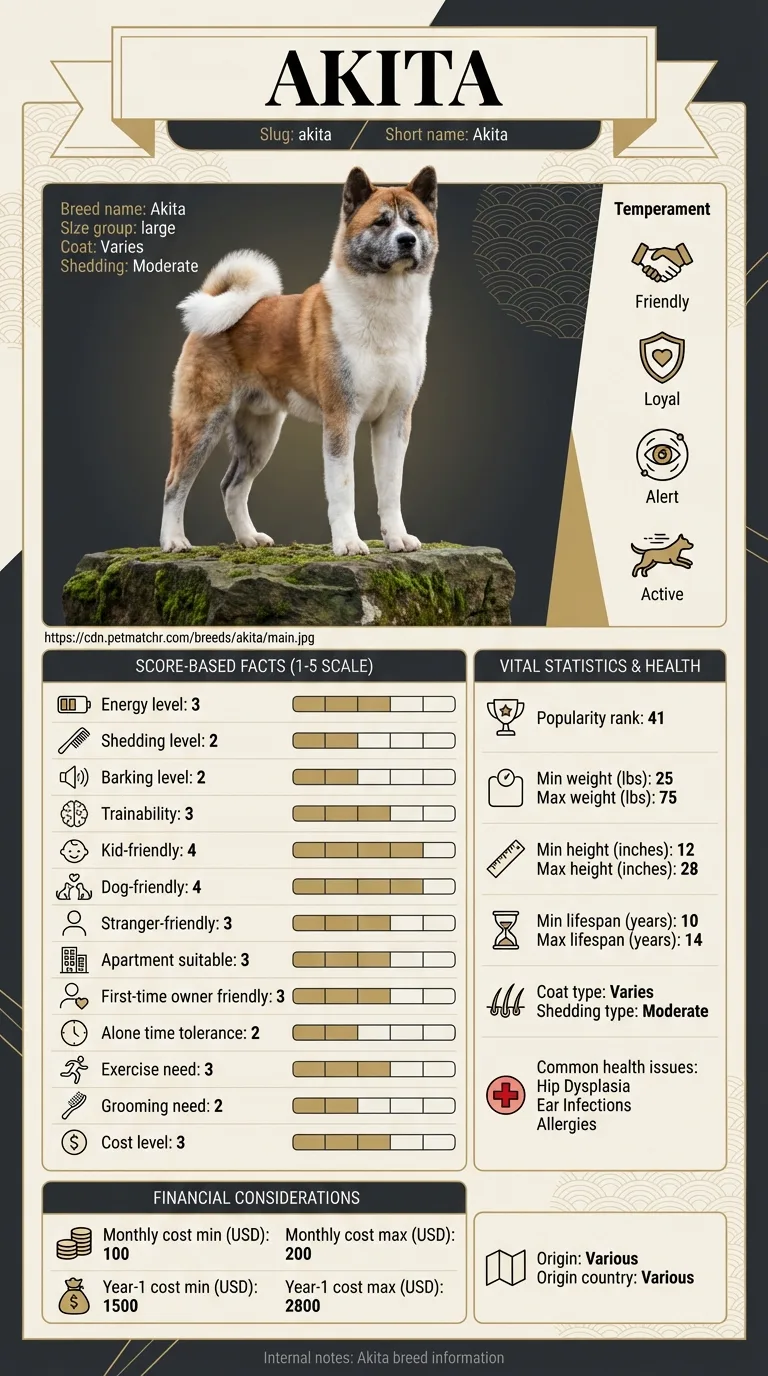
Prospective owners researching the breed's head shape and health implications before getting an Akita are the primary audience, often trying to sort out accurate information from generic large-breed content.
This guide is not medical advice. If your dog shows pain, sudden behavior change, or worsening symptoms, consult a licensed veterinarian.
Some links may be affiliate links. We may earn a commission at no extra cost to you. We only suggest products we believe are helpful for dog owners.
Check this first
Regardless of whether a dog's head shape is brachycephalic, mesocephalic, or dolichocephalic (long-nosed), labored breathing, blue-tinged gums, collapse, or extreme heat distress always warrant same-day emergency veterinary care. Head shape affects which conditions are more or less likely, not whether concerning symptoms deserve urgent attention.
For the Akita specifically, given its moderate, proportionate muzzle, heat-related distress from its dense coat is a more statistically likely explanation for breathing difficulty than airway obstruction, but a vet exam is still the way to confirm the actual cause in any individual dog.
The practical point is that head-shape categories inform what to expect statistically, but they don't replace an actual veterinary evaluation of any dog showing genuine respiratory distress.
If any of these apply, call your vet or an emergency clinic now. The rest of this page is for the cases that are not an emergency.
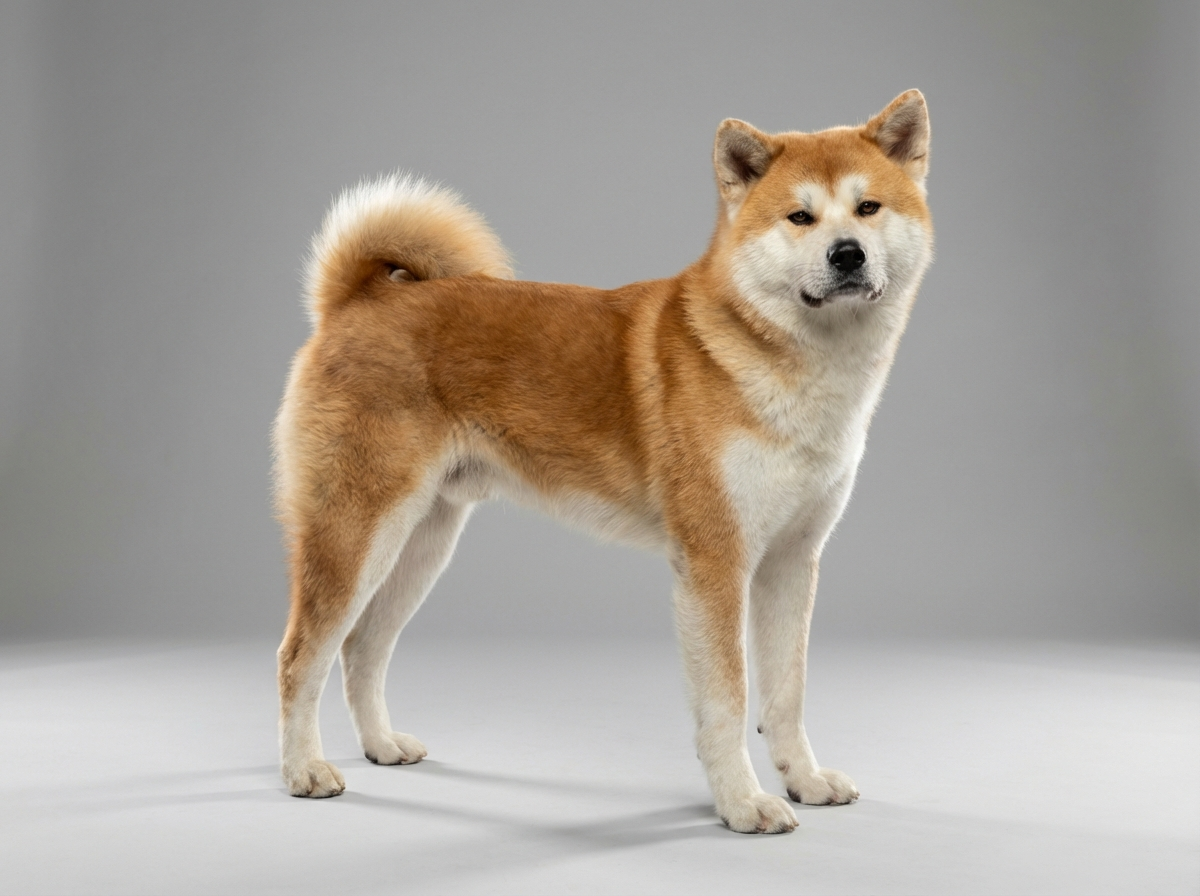
The Akita is classified as mesocephalic, meaning it has a moderate, well-proportioned muzzle relative to its broad skull — a fundamentally different conformation from the brachycephalic (short-headed) breeds like Bulldogs and Pugs that face documented muzzle-related airway problems. This breed's powerful, broad-headed appearance sometimes creates a visual impression of brachycephaly that doesn't hold up against actual measured proportions.
This is more a matter of accurate classification than prevalence — the Akita is consistently classified as mesocephalic in veterinary and cynological references, distinct from the well-documented brachycephalic breed category.
The Akita's breed standard calls for a broad skull paired with a full-length, proportionate muzzle, a combination that places it solidly in the mesocephalic category. This is a defining, standard-specified trait of the breed rather than something that varies significantly by individual or bloodline.
Because this is a matter of inherent conformation rather than an acquired condition, environment doesn't play a role in whether an individual Akita is or isn't brachycephalic. The breed's genuinely environment-influenced conformation-adjacent concern is heat tolerance, which relates to coat density rather than head shape.
This is primarily an informational question rather than one requiring routine veterinary visits, but any dog showing labored breathing, blue-tinged gums, collapse, or heat distress needs same-day emergency care regardless of head shape classification.
Head shape terminology gets used loosely in general content, leading to some common misunderstandings. Avoid these.
Start here: Akita Most Common Genetic Disorders: What to Screen For
See all Akita health problems, which breeds are prone to brachycephalic features, or the full Akita breed guide for temperament, exercise needs and ownership costs.
This is a fixed, standard-specified trait of the breed rather than something that changes over time or needs monitoring.
Success is having an accurate understanding of the Akita's actual head conformation, which helps focus health vigilance on the conditions genuinely relevant to this breed rather than ones associated with a different conformation category.
If you think your Akita has brachycephalic features, the plan is three steps: write down what you have seen and when it started, book a veterinary appointment rather than waiting for the next flare, and take video of the behaviour or symptom before you go — the thing you are worried about rarely happens in the consulting room. Screening in the parents covers hip dysplasia, progressive retinal atrophy, hypothyroidism.
What the vet visit should produce is a diagnosis and a written plan, not just reassurance: what is being ruled out, what the monitoring interval is, and which signs mean you come back sooner. Ask what the treatment costs across a year rather than per visit, because that is the number that decides whether you are managing this condition or reacting to it.
Between appointments, keep a short log — dates, what you saw, what changed. It is the single most useful thing an owner brings to a follow-up, and for brachycephalic features it is often what separates a clear pattern from a guess.
Before adopting an Akita, Cesar in Albuquerque had read conflicting information online about whether the breed was brachycephalic. He decided to look up the official AKC breed standard directly, which specifically described a broad skull with a full, well-proportioned muzzle. He also spoke with his vet, who confirmed that Akitas are classified as mesocephalic and don't carry the muzzle-related airway risks associated with truly brachycephalic breeds. This gave Cesar a clearer, more accurate picture of what to actually watch for health-wise once he brought his Akita puppy home.
Key takeaway: Checking the actual breed standard and consulting a vet directly resolves head-shape confusion far more reliably than general online impressions.
It literally translates to 'short-headed' and refers to breeds with a muzzle dramatically shortened relative to skull width, like Bulldogs, Pugs, and Boxers — not simply breeds with large or broad heads.
The Akita is considered mesocephalic, meaning it has a moderate, balanced proportion between skull width and muzzle length, distinct from both the shortened muzzle of brachycephalic breeds and the elongated muzzle of dolichocephalic breeds like Greyhounds.
Head breadth alone isn't associated with the airway problems seen in brachycephalic breeds; those issues specifically stem from muzzle shortness relative to the airway structures that have to fit within it, which isn't the Akita's conformation.
The breed's substantial, powerful-looking head can visually suggest a 'flat-faced' impression to some observers, even though the actual muzzle length remains proportionate to the skull, unlike a true brachycephalic breed.
The breed's documented health concerns relate to size (orthopedic conditions), coat (heat sensitivity), and certain eye and autoimmune conditions — not muzzle-related airway issues.
Veterinary and breed-standard assessments typically compare muzzle length to overall skull length, giving a cephalic index that objectively places a breed into brachycephalic, mesocephalic, or dolichocephalic categories.
If your dog shows any genuine respiratory symptoms, yes — a vet exam evaluates the individual animal directly, which is always more informative than a general breed classification.
No — it's classified as mesocephalic, with a moderate, proportionate muzzle length.
No — brachycephaly specifically refers to muzzle shortness relative to skull width, not overall head size.
Their powerful, broad-headed appearance can create a visual impression that doesn't match the breed's actual proportionate muzzle length.
Heat sensitivity from their dense double coat, not muzzle-related airway obstruction.
Yes, if any respiratory symptoms appear — an individual vet exam is always more informative than a breed generalization.
A one-page prep sheet for this condition: the signs, the questions to ask, what to get priced. Unlocks here.
You get: Vet visit prep sheet
No spam. One-click unsubscribe. See our privacy policy.
Preview page 1 before you decide.