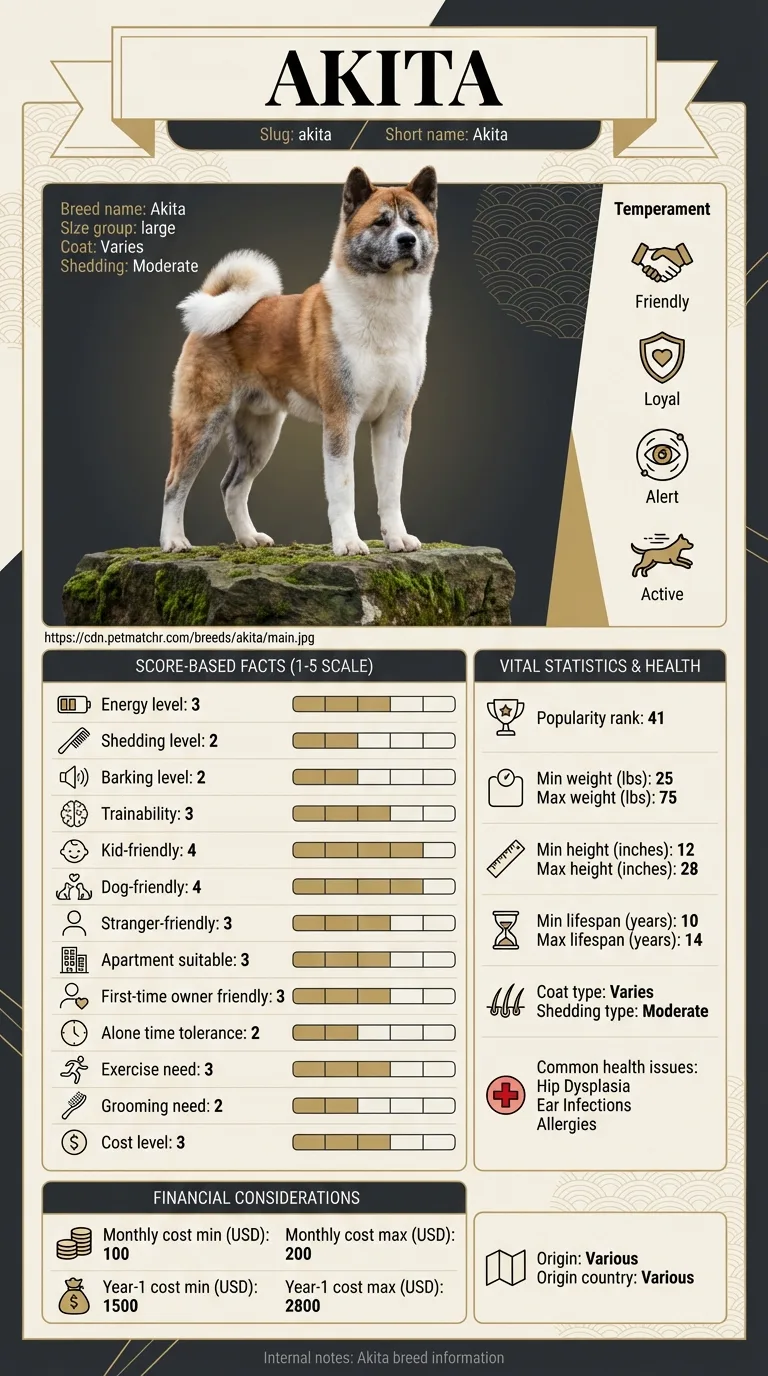
What are genetic disorders in Akitas?
A genetic disorder is a condition influenced by inherited traits. It may also be shaped by development, age, injury, environment, and other health factors. A breed name alone cannot tell you whether an individual Akita has a disorder.
What are the most common genetic disorders discussed for Akitas?
We document 5 conditions for the Akita. Prevalence figures vary by registry and by decade, so the useful answer is the list itself — hip dysplasia, progressive retinal atrophy, hypothyroidism, autoimmune disorders — plus the screening each one has.
How do I stop Akita most common genetic disorders from getting worse?
We document 5 conditions for the Akita. Prevalence figures vary by registry and by decade, so the useful answer is the list itself — hip dysplasia, progressive retinal atrophy, hypothyroidism, autoimmune disorders — plus the screening each one has.
Can Akita most common genetic disorders training help?
We document 5 conditions for the Akita. Prevalence figures vary by registry and by decade, so the useful answer is the list itself — hip dysplasia, progressive retinal atrophy, hypothyroidism, autoimmune disorders — plus the screening each one has.
What signs should I watch for in my Akita?
Signs vary with the condition. Contact a veterinarian for a recurring limp, stiffness, reluctance to move, reduced exercise tolerance, coughing, fainting, weakness, or a sudden change in behavior. These signs are not specific to genetic disease and need professional evaluation.
What is elbow dysplasia in dogs?
Elbow dysplasia involves abnormal development of the elbow joint and can cause forelimb lameness or discomfort. Similar signs can come from injury or other joint problems, so a veterinarian may use an examination and imaging to investigate the cause.
What is dilated cardiomyopathy?
Dilated cardiomyopathy is a disease of the heart muscle that can affect how efficiently the heart pumps. Signs can be subtle or absent early and may overlap with other illnesses. A veterinary examination is needed if you are concerned about your Akita's heart or stamina.
Is cruciate ligament rupture an Akita genetic disorder?
No. The source information notes cruciate ligament rupture as more common in mixed-breed dogs, not as proof of an inherited Akita condition. A sudden limp or inability to bear weight still needs veterinary attention regardless of breed.
What should I ask about an Akita's family health history?
Ask for any available health and family-history information and discuss it with your veterinarian. A responsible conversation is more useful than assuming a guarantee: inherited risk can be complex, and available records may be incomplete.
When should I take my Akita to the vet?
Seek urgent help for collapse, fainting, breathing difficulty, sudden severe weakness, inability to stand, or obvious severe pain. For persistent lameness, stiffness, coughing, reduced stamina, or a quieter-than-usual dog, arrange a prompt veterinary appointment.
What should I expect after a genetic health concern is found?
There is no one-size-fits-all timeline. It depends on whether your Akita has a diagnosed condition, the severity, the treatment plan, and how they respond. Your veterinarian can explain what monitoring and daily adjustments are appropriate for your dog.