Living
Bulldog or German Shorthaired Pointer, which fits my situation?
The Bulldog suits apartment living and low activity; the GSP needs space, serious daily exercise, and ideally an experienced owner.

Quick answer
Bulldog or German Shorthaired Pointer, which fits my situation?
The Bulldog suits apartment living and low activity; the GSP needs space, serious daily exercise, and ideally an experienced owner.
Choosing between a Bulldog (English) and a German Shorthaired Pointer can be tough. Each breed has its unique traits, energy levels, and compatibility with families. Let's break down what sets them apart so you can make an informed decision. (Bulldog (English) vs German Shorthaired Pointer)
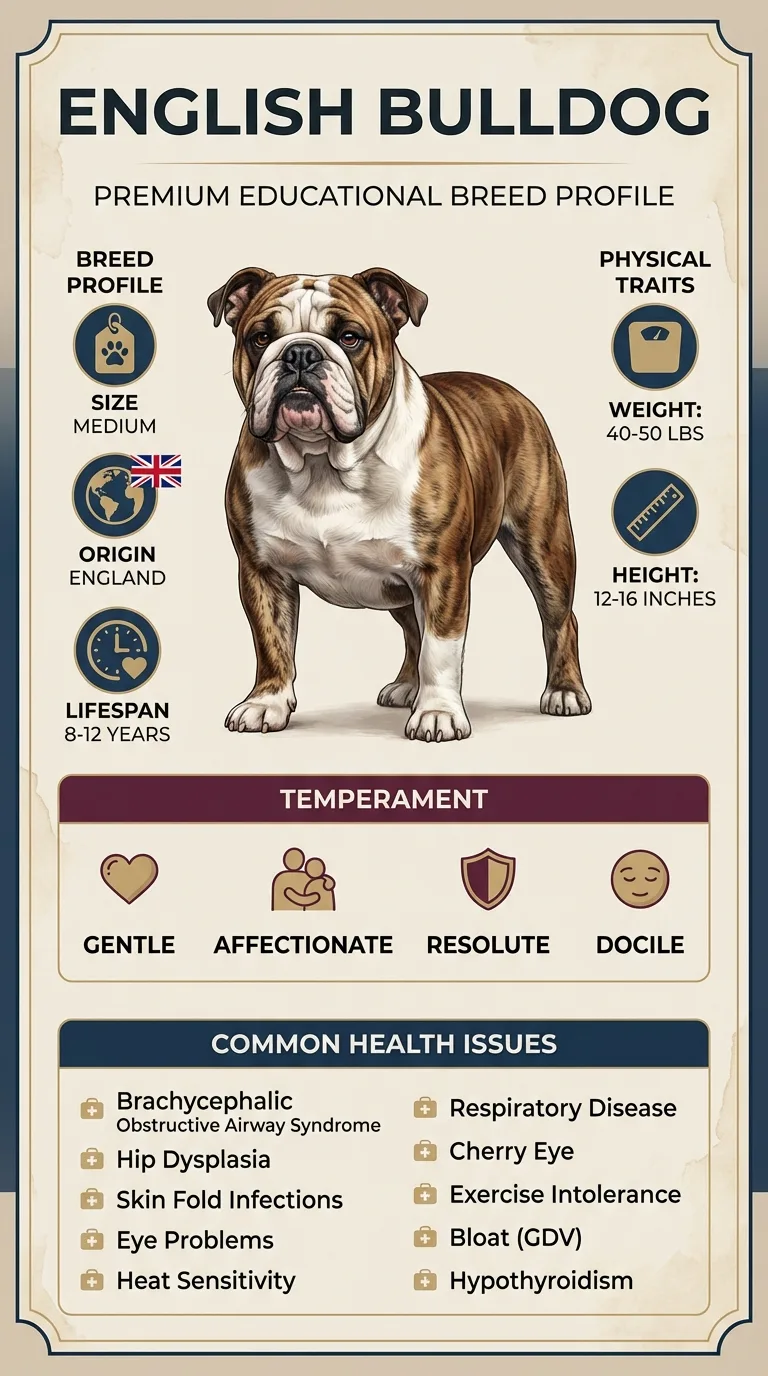
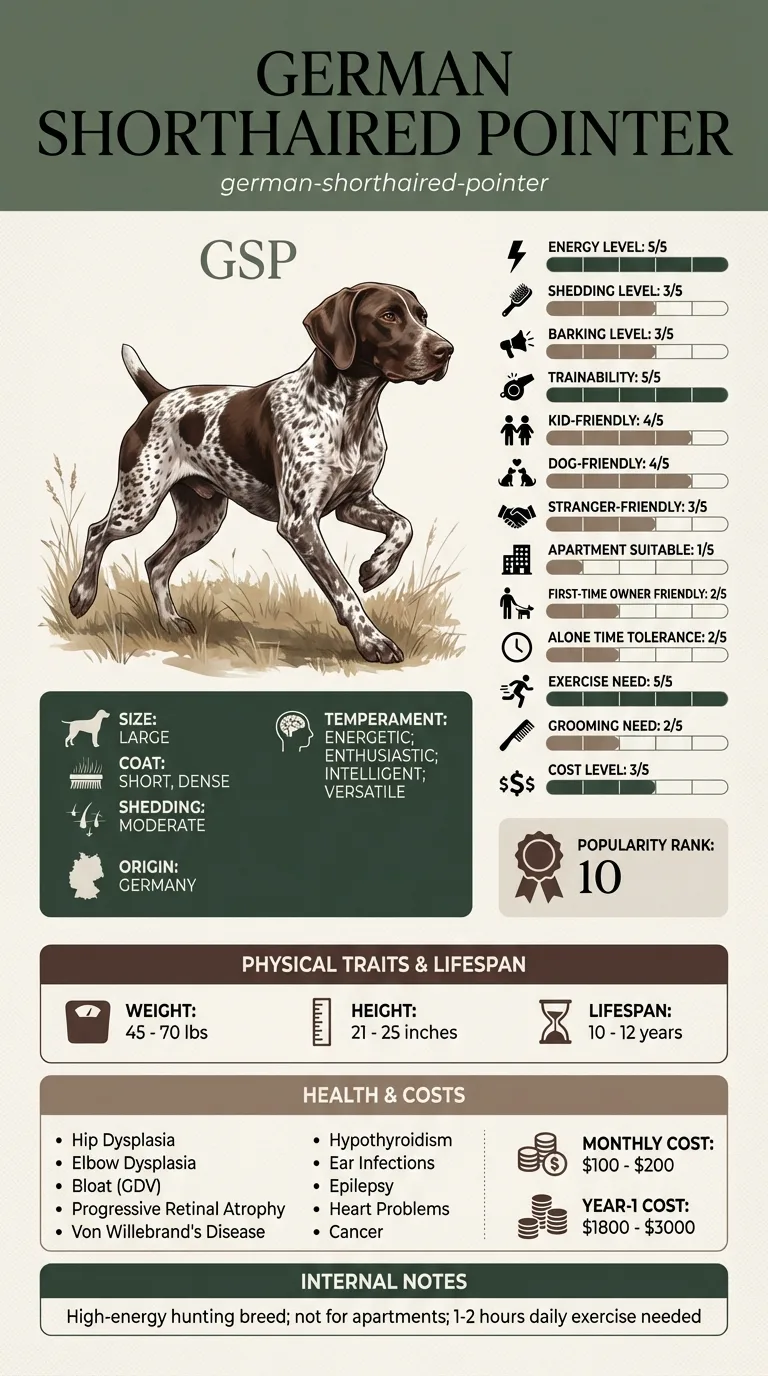
This comparison is perfect for dog lovers considering a new pet. You might be a busy family looking for a kid-friendly companion, or perhaps you're living in an apartment and need to know which breed fits your lifestyle best. Whether you're concerned about shedding, exercise needs, or training, understanding the differences between the Bulldog (English) and German Shorthaired Pointer is essential for making the right choice.
If you're looking for a low-energy, apartment-friendly dog, the Bulldog (English) is your best bet, while the German Shorthaired Pointer is ideal for active families with lots of outdoor space.
Choose the Bulldog (English) if you want a gentle, affectionate companion that thrives in smaller living spaces and has moderate exercise needs.
Opt for the German Shorthaired Pointer if you lead an active lifestyle and can commit to providing ample exercise and mental stimulation for this energetic breed.
| Feature | bulldog | german shorthaired pointer | Winner |
|---|---|---|---|
| Size class | medium | large | Equal |
| Weight | 40–50 lbs | 45–70 lbs | Equal |
| Height | 12–16 in | 21–25 in | Equal |
| Lifespan | 8–12 years | 10–12 years | german shorthaired pointer |
| Exercise need | Low (2/5) | Very high (5/5) | bulldog |
| Grooming need | Moderate (3/5) | Low (2/5) | german shorthaired pointer |
| Shedding | Moderate (3/5) | Moderate (3/5) | Equal |
| Energy level | Low (2/5) | Very high (5/5) | Equal |
| Barking | Low (2/5) | Moderate (3/5) | bulldog |
| Apartment suitability | Very high (5/5) | Very low (1/5) | bulldog |
| Good for first-time owners | Moderate (3/5) | Low (2/5) | bulldog |
| Tolerates being alone | Moderate (3/5) | Low (2/5) | bulldog |
| Trainability | Moderate (3/5) | Very high (5/5) | german shorthaired pointer |
| Good with kids | Very high (5/5) | High (4/5) | bulldog |
| Good with other dogs | High (4/5) | High (4/5) | Equal |
| Friendly to strangers | High (4/5) | Moderate (3/5) | bulldog |
| Cost level | Very high (5/5) | Moderate (3/5) | german shorthaired pointer |
| Coat | Short, smooth | Short, dense | Equal |
| Origin | England | Germany | Equal |
| Typical monthly cost | $150–$350 | $100–$200 | Equal |
| Typical first-year cost | $2,500–$5,000 | $1,800–$3,000 | Equal |
The German Shorthaired Pointer is a big dog, 45-70 lbs and 21-25 inches at the shoulder, landing it in the large size class, well above the Bulldog's medium 40-50 lbs and 12-16 inches. This isn't a subtle size gap; a full-grown GSP can outweigh a Bulldog by twenty pounds and tower over it by nearly a foot. If you want a dog with real physical presence, that's the Pointer.
The GSP rates a full 5/5 for exercise need, this is a working gun dog bred to run all day in the field, against the Bulldog's low 2/5. This isn't a breed you can substitute a walk around the block for; GSPs are known to develop destructive habits without serious daily exercise, ideally an hour or more of real activity. The Bulldog, by contrast, is actively better off with less.
This is one of the rare categories where the Pointer comes out ahead: its short, dense coat rates a low 2/5 for grooming, against the Bulldog's moderate 3/5, which includes wiping down facial folds regularly. Shedding ties at moderate (3/5) for both. So while the GSP wins on brushing time, don't expect a fur-free house, both breeds shed at the same rate.
The gap here is about as wide as this comparison gets: the Bulldog rates 5/5 for apartment suitability, the GSP a bottom-of-scale 1/5. Add in a 2/5 tolerance for being alone (versus the Bulldog's 3/5) and a moderate 3/5 barking rate (versus the Bulldog's 2/5), and the picture is clear, a GSP in a small apartment, home alone for long stretches, is a genuinely poor match for the breed.
The GSP is highly trainable, rating 5/5 versus the Bulldog's 3/5, but it's rated lower for first-time owners, 2/5 against the Bulldog's 3/5, because that intelligence and drive need experienced handling to channel well. A GSP that isn't given a job or consistent structure can become a handful in ways a first-time owner may not be prepared for.
The Bulldog edges ahead with kids (5/5 versus 4/5) and with strangers (high, 4/5, versus the GSP's moderate 3/5), the Pointer tends to be more reserved with unfamiliar people, consistent with its watchful, working-dog temperament. Good with other dogs ties at high (4/5) for both. Families that host frequently or have young kids may find the Bulldog the steadier social fit.
The GSP carries an unusually long ten-condition list, including hip and elbow dysplasia, bloat, Von Willebrand's disease, heart problems, and cancer, a broader spread than most breeds on this site. The Bulldog's own ten-condition list concentrates on its brachycephalic structure. Hip dysplasia, bloat, and hypothyroidism appear on both lists. Lifespans are close, 10-12 years for the GSP against 8-12 for the Bulldog.
The Bulldog costs more monthly ($150-350 versus $100-200) and in year one ($2,500-5,000 versus $1,800-3,000), though the GSP's own first-year range runs higher than most breeds on this list, a reflection of its size and the food and vet costs that come with a large, active dog. Even so, the Bulldog remains the pricier of the two overall.


Substantially, the GSP runs 45-70 lbs and 21-25 inches, versus the Bulldog's 40-50 lbs and 12-16 inches.
The Bulldog, at moderate (3/5) versus the GSP's low (2/5), one of the few categories where the Pointer's coat is the easier one.
Not especially, it rates 2/5 for first-time owners against the Bulldog's 3/5, largely because its intelligence and exercise needs require experienced handling.
The Bulldog, decisively, 5/5 versus the GSP's 1/5, the lowest apartment rating in this comparison.
Yes, hip dysplasia, bloat, and hypothyroidism appear on both lists, though the GSP's list also includes heart problems and cancer.
The Bulldog, at $150-350 monthly versus the GSP's $100-200, despite the GSP's own costs running higher than many medium breeds.
They're close, the GSP runs 10-12 years, the Bulldog 8-12.
The Bulldog suits apartment living and low activity; the GSP needs space, serious daily exercise, and ideally an experienced owner.
The Bulldog runs $150-350; the GSP runs $100-200, despite being the larger dog.
A great deal, it rates 5/5, versus the Bulldog's 2/5, and needs real daily activity to stay well-behaved.
They're close, the GSP averages 10-12 years, the Bulldog 8-12.
Secure checkout on Stripe. We never see your card.
7-day money-back guarantee. Instant access.
This guide is not medical advice. If your dog shows pain, sudden behavior change, or worsening symptoms, consult a licensed veterinarian.
Some links may be affiliate links. We may earn a commission at no extra cost to you. We only suggest products we believe are helpful for dog owners.
We research and check what we publish, but we do not warrant that any figure, date, price, or statement is accurate, complete, or current, and we accept no liability for any loss, cost, injury, or other harm arising from the use of this site. Use it as one reference among several. You remain responsible for your own decisions and for your dog's care - confirm anything that matters with a licensed veterinarian or another qualified professional before you act on it. Full disclaimer.
Match your lifestyle to the right dog.
Take quizNot sure which breed is right for you? Take our 2-minute quiz to find out.
Take the quiz