Belgian Malinois vs Bichon Frise: Which Suits Your Home?
Quick answer
Malinois or Bichon Frise — which should you get?
For nearly any household, the Bichon — smaller, cheaper, friendlier, and far better suited to apartments and first-time owners. The Malinois is a serious commitment for an experienced, active handler only.
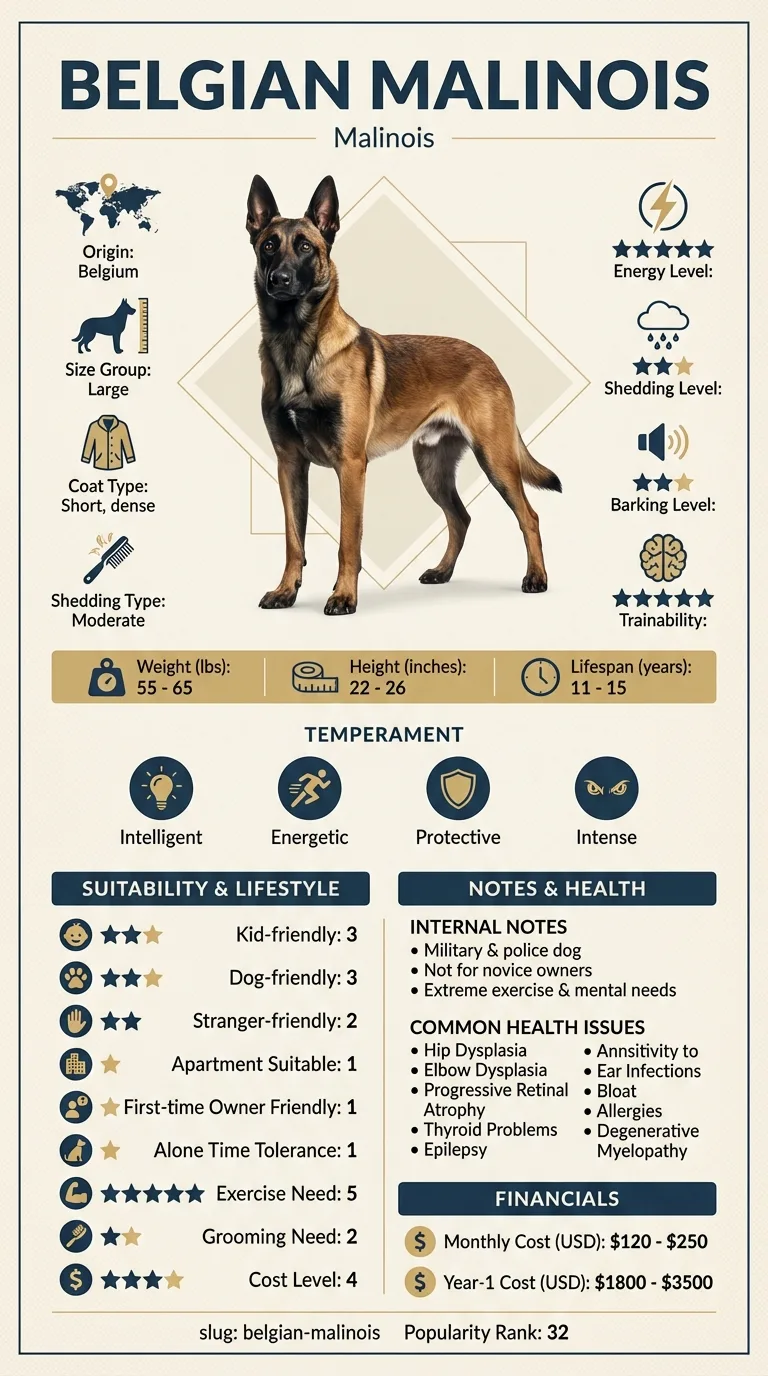
Belgian Malinois or Bichon Frise? On paper they differ most on apartment suitability, and on the scales Belgian Malinois is the heavier at 55–65 lbs. Here is how the two compare on everything that shapes an ordinary week.
This is for someone already down to Belgian Malinois and Bichon Frise and deciding between them. For this pair the decision usually turns on apartment suitability and exercise need, so those are covered first and in most detail. Anyone choosing from a flat has a clear answer here: Bichon Frise rates 5/5 against 1/5. The focus throughout is on daily consequences rather than breed background.
Quick verdict
Between Belgian Malinois and Bichon Frise, apartment suitability is what separates them, and Bichon Frise is the lower-effort dog of the two to keep.
Choose belgian malinois if...
Choose Belgian Malinois if you do not want a standing grooming appointment, you want a dog that picks up training quickly and you want a dog that can keep up with an active routine.
Choose bichon frise if...
Choose Bichon Frise if you are in a flat or a smaller home, this is your first dog and shedding is a problem in your house.
Head-to-head comparison
Feature
belgian malinois
bichon frise
Winner
Size class
large
small
Equal
Weight
55–65 lbs
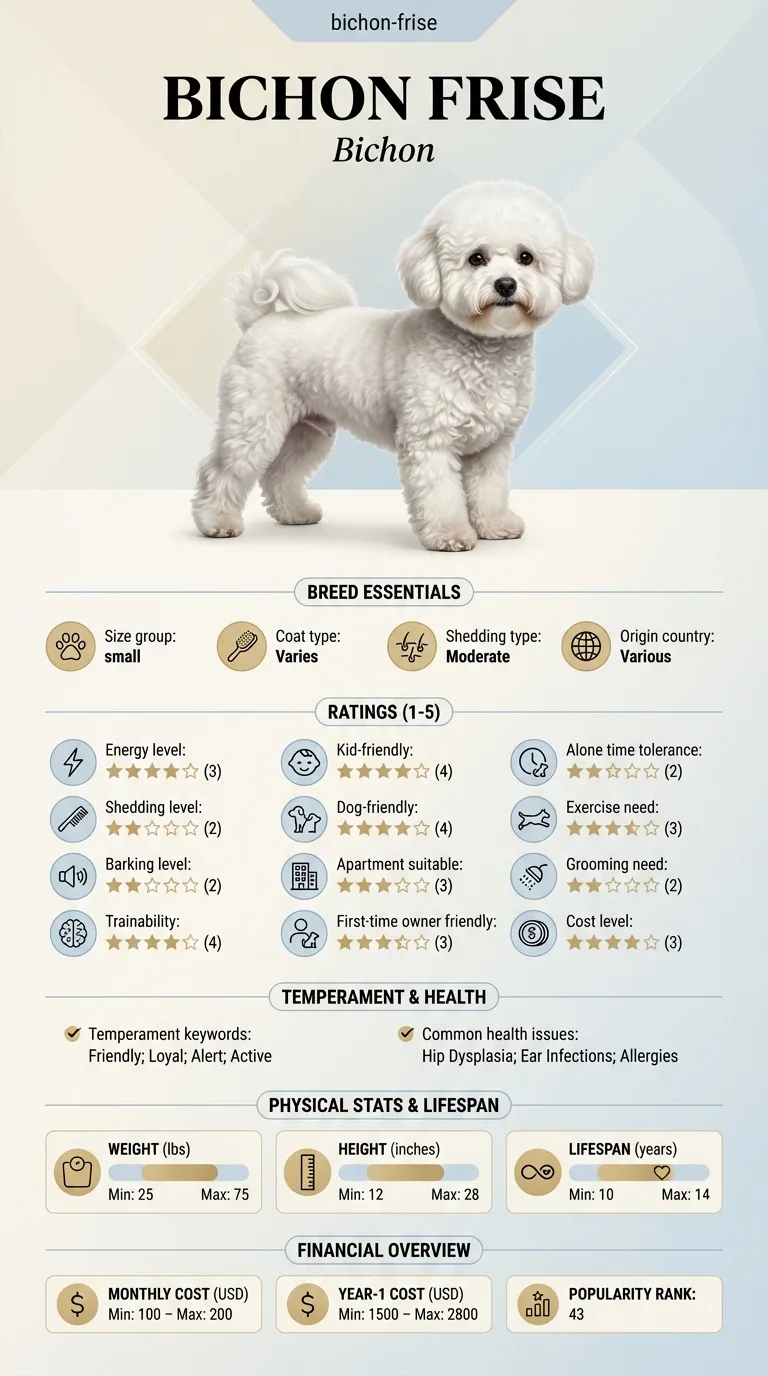
12–18 lbs
Equal
Height
22–26 in
9–12 in
Equal
Lifespan
11–15 years
14–15 years
bichon frise
Exercise need
Very high (5/5)
Low (2/5)
bichon frise
Grooming need
Low (2/5)
Very high (5/5)
belgian malinois
Shedding
Moderate (3/5)
Very low (1/5)
bichon frise
Energy level
Very high (5/5)
Moderate (3/5)
Equal
Barking
Moderate (3/5)
Moderate (3/5)
Equal
Apartment suitability
Very low (1/5)
Very high (5/5)
bichon frise
Good for first-time owners
Very low (1/5)
High (4/5)
bichon frise
Tolerates being alone
Very low (1/5)
Low (2/5)
bichon frise
Trainability
Very high (5/5)
Moderate (3/5)
belgian malinois
Good with kids
Moderate (3/5)
High (4/5)
bichon frise
Good with other dogs
Moderate (3/5)
High (4/5)
bichon frise
Friendly to strangers
Low (2/5)
High (4/5)
bichon frise
Cost level
High (4/5)
Moderate (3/5)
bichon frise
Coat
Short, dense
Curly, dense double coat
Equal
Origin
Belgium
Various
Equal
Typical monthly cost
$120–$250
$80–$150
Equal
Typical first-year cost
$1,800–$3,500
$1,100–$2,300
Equal
Deep dive
Size and build
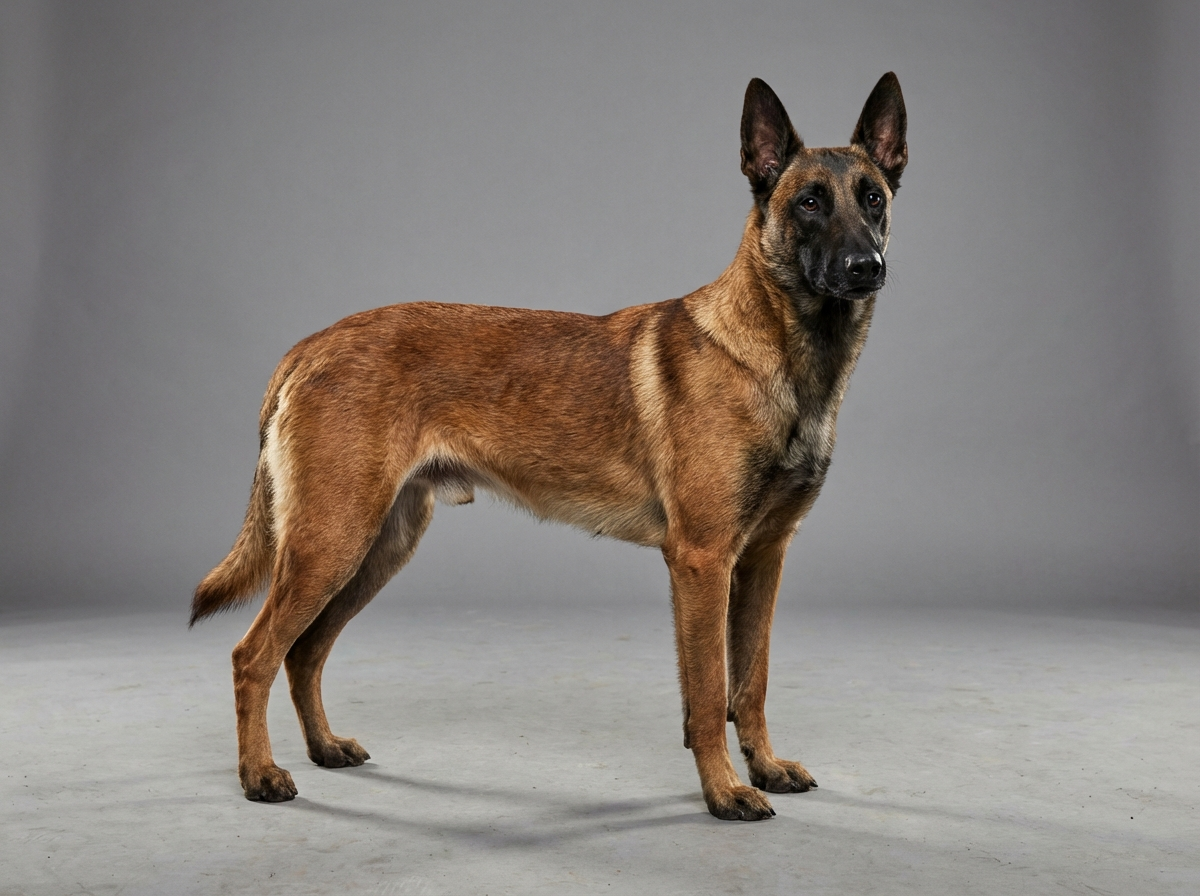
There's no subtlety to this size gap: a 55-to-65-pound Belgian Malinois against a 12-to-18-pound Bichon Frise, roughly a foot shorter at the shoulder. This isn't really two dogs of the same category being compared — it's a mid-size working breed against a small companion breed, and that difference drives almost every other number in this comparison, from exercise needs to apartment fit.
Energy and exercise
The gap here is enormous: very high (5/5) exercise need for the Malinois against low (2/5) for the Bichon. The Malinois wants serious daily work — running, structured training, a job to do — while a couple of short walks and some indoor play genuinely satisfies a Bichon. Trying to give a Bichon a Malinois's exercise routine would be pointless; trying to get away with a Bichon's routine for a Malinois would be a disaster.
Grooming and shedding
This is the one category where the small dog demands more work. The Bichon rates very high (5/5) for grooming — that curly coat needs brushing every few days and regular trims to avoid matting — against the Malinois's low (2/5). Shedding flips the other way: the Bichon barely sheds at very low (1/5), while the Malinois sheds moderate (3/5). Low-shedding coats and low-grooming coats aren't the same thing, and this pair is the clearest proof of it.
Apartment living, noise and time alone
The Bichon is about as apartment-suited as dogs get, rating very high (5/5), while the Malinois rates very low (1/5) — the bottom of the scale. Both bark at a moderate (3/5) clip, so noise isn't the differentiator; it's space and exercise needs. A Malinois in a small unit without serious daily outlets is a recipe for destructive behavior, where a Bichon can genuinely thrive there.
Training and owner experience
The Malinois is the more trainable of the two on paper, very high (5/5) against the Bichon's moderate (3/5), but that's almost beside the point for a first-time owner: the Malinois rates very low (1/5) for beginners while the Bichon rates high (4/5). A Bichon's occasional stubbornness is a minor training hurdle; a Malinois's drive without proper outlets and experienced handling becomes a real behavioral problem.
Kids, other dogs and visitors
The Bichon is friendlier across the board — high (4/5) with kids and other dogs, high (4/5) with strangers, against the Malinois's moderate (3/5) with kids and other dogs and low (2/5) with strangers. Bichons were bred purely as companion dogs for centuries; Malinois were bred to guard and work, and that protective instinct doesn't translate to easy warmth with everyone the household encounters.
Health and lifespan
The Bichon lives longer, 14 to 15 years against the Malinois's 11 to 15, and the two breeds' health risks barely overlap. The Malinois's list is dominated by orthopedic and working-dog issues — hip and elbow dysplasia, degenerative myelopathy, anesthesia sensitivity — while the Bichon's risks run toward smaller-dog problems like patellar luxation, bladder stones, and dental disease. Skin allergies show up for both, but under different names and likely different triggers.
Cost to keep
The Bichon is the cheaper dog to keep — moderate (3/5) cost overall against the Malinois's high (4/5), with monthly costs of $80 to $150 versus $120 to $250 and first-year totals of $1,100 to $2,300 versus $1,800 to $3,500. Some of that gap narrows in practice, since the Bichon's grooming needs (professional trims every few weeks) aren't fully captured in these baseline ranges.
Belgian Malinois vs Bichon Frise at a glance
Belgian Malinois weighs 55–65 lbs and lives 11–15 years; Bichon Frise weighs 12–18 lbs and lives 14–15 years. The two diverge most on apartment suitability, exercise need and grooming need and 5 other rated axes. Almost every rated axis separates them at least slightly. The table below marks a winner only where one breed is genuinely easier for a typical owner; size and origin are facts rather than merits and stay level. Ratings come from one source applied to both breeds, so they are meaningful against each other rather than as absolute scores.
Belgian Malinois vs Bichon Frise: Which Suits Your Home? - Belgian Malinois vs Bichon Frise at a glance
Frequently asked questions
How much bigger is a Belgian Malinois than a Bichon Frise?
By a lot — 55 to 65 pounds versus 12 to 18 pounds, and about a foot taller at the shoulder. These are essentially different size classes of dog.
Which sheds less, Malinois or Bichon?
The Bichon, rated very low (1/5) versus the Malinois's moderate (3/5). Its curly coat traps loose hair instead of dropping it, which is why regular brushing matters so much.
Is a Bichon Frise a good first dog?
Yes — it rates high (4/5) for first-time owners. The Malinois rates very low (1/5) and is genuinely a poor choice for someone without prior working-breed experience.
Can a Malinois live in an apartment?
Not well — it rates very low (1/5), the bottom of the scale, driven by its exercise needs and intolerance for being alone. The Bichon rates very high (5/5) and is built for exactly this kind of living situation.
Which is cheaper, Malinois or Bichon?
The Bichon, clearly — roughly $700 to $1,200 less in the first year, and a lower cost rating overall (moderate versus high).
Do Malinois and Bichon Frise share health risks?
Barely — their listed conditions don't really overlap. The Malinois's risks are mostly orthopedic and working-dog related; the Bichon's run toward smaller-dog issues like bladder stones and dental disease. Allergies appear on both lists in some form.
Why is a Bichon Frise's grooming rated so high if it barely sheds?
Because low shedding and low grooming aren't the same thing — the Bichon's curly coat traps the hair it does lose, which means it mats without frequent brushing and regular trims, even though little of it ends up on your floor.
For nearly any household, the Bichon — smaller, cheaper, friendlier, and far better suited to apartments and first-time owners. The Malinois is a serious commitment for an experienced, active handler only.
Costs
What's the monthly cost?
$80 to $150 for the Bichon versus $120 to $250 for the Malinois.
Living
Which needs more exercise?
The Malinois, dramatically — very high (5/5) versus the Bichon's low (2/5).
Health
Which breed lives longer?
The Bichon Frise, typically 14 to 15 years versus the Malinois's 11 to 15.
Related DogBreedCompass guides
Belgian Malinois breed guide – Readers comparing the two usually want the full profile of Belgian Malinois before deciding.
Bichon Frise breed guide – The same for Bichon Frise, so the comparison can be checked against the detail.
Belgian Malinois vs German Shorthaired Pointer – German Shorthaired Pointer is the closest breed to Belgian Malinois on the measured axes, so it is the natural next comparison.
Bichon Frise vs Maltese – Maltese sits closest to Bichon Frise, which makes it the alternative worth ruling out.
Health information here is general and is not veterinary advice. If your dog shows pain, sudden behaviour change, or worsening symptoms, consult a licensed veterinarian.
Some links on this site are affiliate links. We may earn a commission at no extra cost to you, and we only suggest products we believe are helpful for dog owners.
We research and check what we publish, but we do not warrant that any figure, date, price, or statement is accurate, complete, or current, and we accept no liability for any loss, cost, injury, or other harm arising from the use of this site. Use it as one reference among several. You remain responsible for your own decisions and for your dog's care - confirm anything that matters with a licensed veterinarian or another qualified professional before you act on it. Full disclaimer.