Belgian Malinois vs Bernese Mountain Dog: Which Suits Your Home?
Quick answer
Malinois or Bernese Mountain Dog — which is the better family dog?
The Bernese, for most families — calmer, better with kids and strangers, and a realistic first dog. The Malinois needs an experienced owner who can meet its exercise and drive.
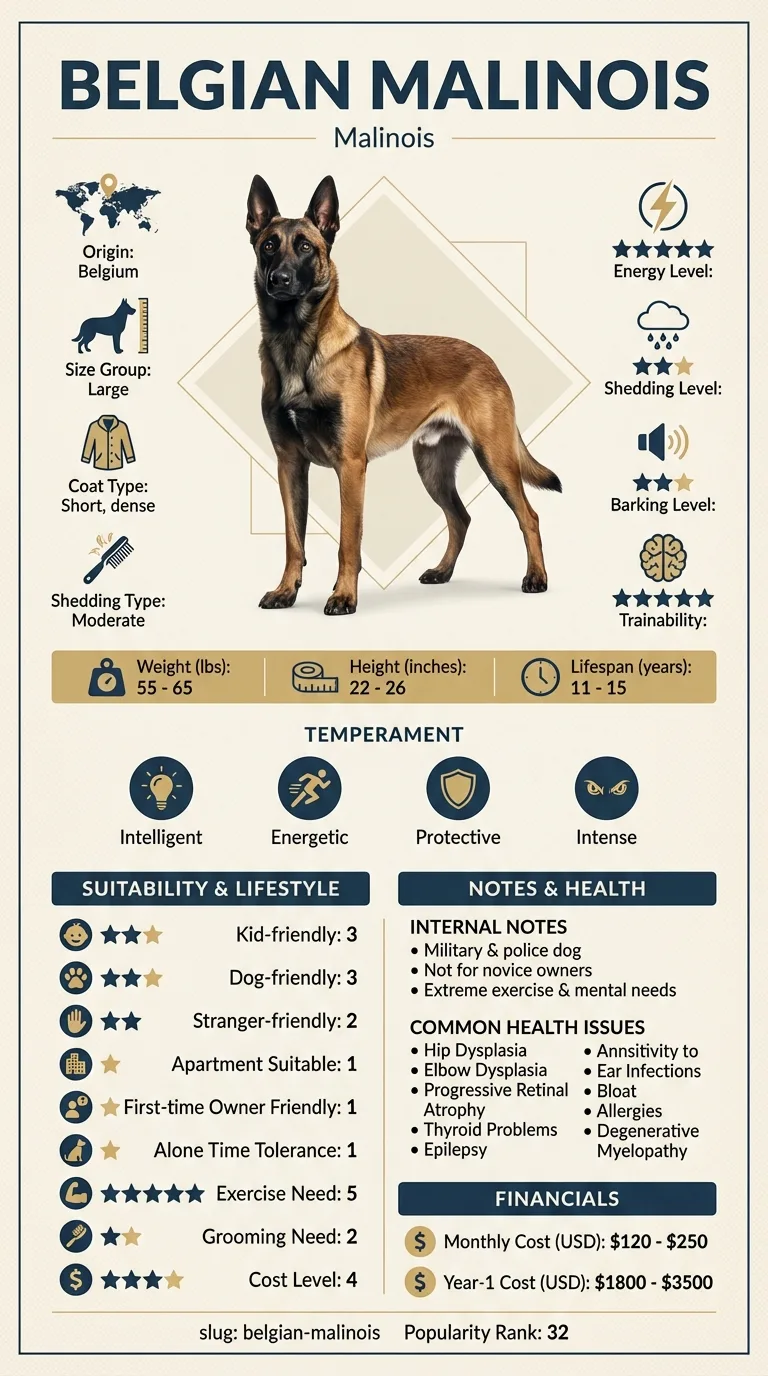
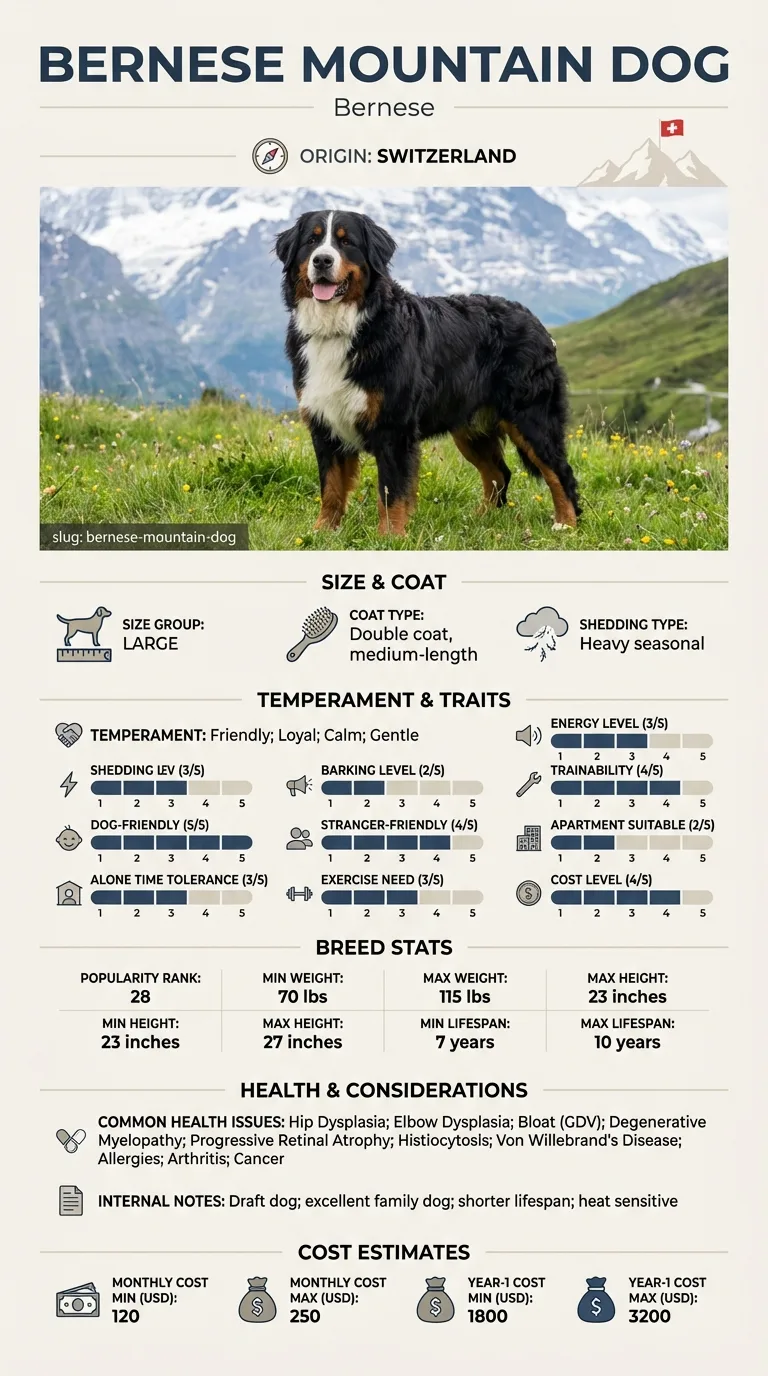
Belgian Malinois or Bernese Mountain Dog? On paper they differ most on good for first-time owners, and on the scales Bernese Mountain Dog is the heavier at 70–115 lbs. Here is how the two compare on everything that shapes an ordinary week.
This is for someone already down to Belgian Malinois and Bernese Mountain Dog and deciding between them. For this pair the decision usually turns on good for first-time owners and exercise need, so those are covered first and in most detail. Anyone choosing from a flat has a clear answer here: Bernese Mountain Dog rates 2/5 against 1/5. There is no origin story here — only what changes about your week.
Quick verdict
Between Belgian Malinois and Bernese Mountain Dog, good for first-time owners is what separates them, and Bernese Mountain Dog is the lower-effort dog of the two to keep.
Choose belgian malinois if...
Choose Belgian Malinois if you do not want a standing grooming appointment, shedding is a problem in your house and you want a dog that picks up training quickly.
Choose bernese mountain dog if...
Choose Bernese Mountain Dog if this is your first dog, your walking routine is modest and the dog will be alone during the working day.
Head-to-head comparison
Feature
belgian malinois
bernese mountain dog
Winner
Size class
large
large
Equal
Weight
55–65 lbs
70–115 lbs
Equal
Height
22–26 in
23–27 in
Equal
Lifespan
11–15 years
7–10 years
belgian malinois
Exercise need
Very high (5/5)
Moderate (3/5)
bernese mountain dog
Grooming need
Low (2/5)
Moderate (3/5)
belgian malinois
Shedding
Moderate (3/5)
High (4/5)
belgian malinois
Energy level
Very high (5/5)
Moderate (3/5)
Equal
Barking
Moderate (3/5)
Low (2/5)
bernese mountain dog
Apartment suitability
Very low (1/5)
Low (2/5)
bernese mountain dog
Good for first-time owners
Very low (1/5)
High (4/5)
bernese mountain dog
Tolerates being alone
Very low (1/5)
Moderate (3/5)
bernese mountain dog
Trainability
Very high (5/5)
High (4/5)
belgian malinois
Good with kids
Moderate (3/5)
Very high (5/5)
bernese mountain dog
Good with other dogs
Moderate (3/5)
Very high (5/5)
bernese mountain dog
Friendly to strangers
Low (2/5)
High (4/5)
bernese mountain dog
Cost level
High (4/5)
High (4/5)
Equal
Coat
Short, dense
Double coat, medium-length
Equal
Origin
Belgium
Switzerland
Equal
Typical monthly cost
$120–$250
$120–$250
Equal
Typical first-year cost
$1,800–$3,500
$1,800–$3,200
Equal
Deep dive
Size and build
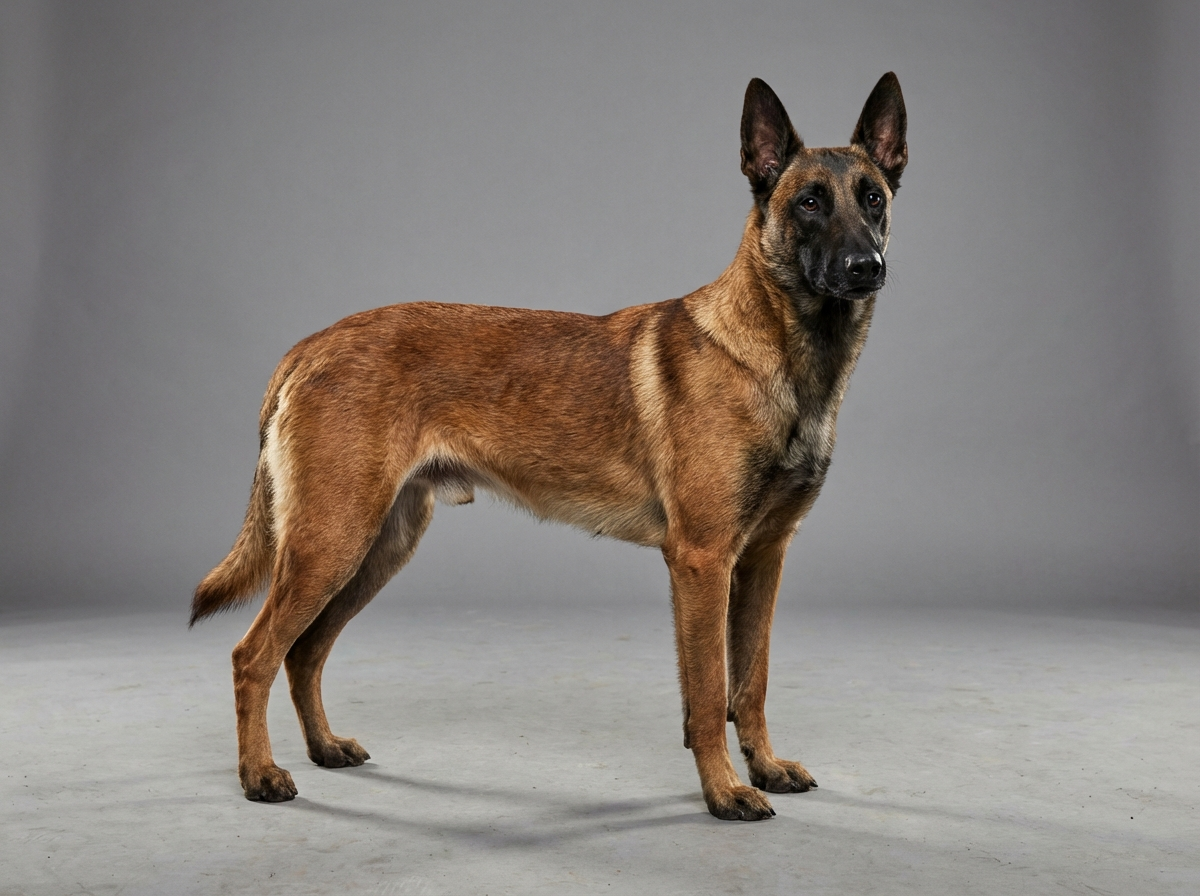
Both breeds are classified large, but they carry their weight differently. The Malinois is 55 to 65 pounds of lean, athletic muscle at 22 to 26 inches; the Bernese Mountain Dog is a heavier-boned 70 to 115 pounds at 23 to 27 inches, built for pulling carts through the Swiss Alps rather than sprinting after a suspect. Expect the Bernese to need a bigger crate, a sturdier car ramp, and more floor space to stretch out.
Energy and exercise
This is one of the sharpest contrasts in the comparison: the Malinois rates very high (5/5) for exercise need, while the Bernese sits at moderate (3/5) — a couple of daily walks and some yard time is genuinely enough. If your idea of exercising a dog is a 20-minute stroll, the Malinois will make you regret it. The Bernese was bred for steady working stamina, not explosive drive, and its exercise appetite reflects that.
Grooming and shedding
The Malinois is easier to maintain on both counts — low (2/5) grooming and moderate (3/5) shedding, against the Bernese's moderate (3/5) grooming and high (4/5) shedding. That thick double coat blows seasonally and needs regular brushing to manage, so budget for a lint roller collection if you go with the Bernese.
Apartment living, noise and time alone
Neither breed suits an apartment well, but the Bernese is marginally better positioned — low (2/5) versus the Malinois's very low (1/5) — mostly because it tolerates being alone at a moderate (3/5) rate against the Malinois's very low (1/5). Barking favors the Bernese too, low (2/5) versus moderate (3/5) for the Malinois. Realistically, both dogs want a house with a yard rather than a unit with shared walls.
Training and owner experience
The Malinois trains at the top of the scale, very high (5/5), and the Bernese isn't far behind at high (4/5) — both are smart, biddable breeds. Where they split is beginner suitability: the Bernese rates high (4/5) for first-time owners, gentle and eager to please, while the Malinois rates very low (1/5). That intelligence needs direction from someone who's handled a working breed before, or it turns into a management problem.
Kids, other dogs and visitors
The Bernese is the clear pick for a house full of people and other pets — very high (5/5) with both kids and other dogs, and high (4/5) with strangers, against the Malinois's moderate (3/5) with kids and other dogs and low (2/5) with strangers. The Malinois's protective, intense temperament suits a single-handler working relationship better than a busy household with a lot of unfamiliar faces coming through.
Health and lifespan
This is the biggest lifespan gap in the comparison: the Malinois typically lives 11 to 15 years, the Bernese only 7 to 10, largely due to a well-documented high cancer rate in the breed. The two do share six conditions — hip and elbow dysplasia, bloat, degenerative myelopathy, progressive retinal atrophy, and allergies — but the Bernese's added risks (histiocytosis, cancer, arthritis) point toward a breed that ages harder and shorter than its size alone would suggest.
Cost to keep
Costs run almost identical: both rate high (4/5) overall, with monthly costs matching at $120 to $250 and first-year costs close — $1,800 to $3,500 for the Malinois versus $1,800 to $3,200 for the Bernese. The real cost difference isn't in these numbers so much as in the Bernese's shorter lifespan meaning you're likely to face major vet bills, including cancer treatment, sooner in the dog's life.
Belgian Malinois vs Bernese Mountain Dog at a glance
Belgian Malinois weighs 55–65 lbs and lives 11–15 years; Bernese Mountain Dog weighs 70–115 lbs and lives 7–10 years. The two diverge most on good for first-time owners, exercise need and energy level and 4 other rated axes. Almost every rated axis separates them at least slightly. Where the table declares a winner it means less work for the owner, nothing more; descriptive rows are left as ties on purpose. The value here is in the differences between the two columns; treat any single score as approximate.
Belgian Malinois vs Bernese Mountain Dog: Which Suits Your Home? - Belgian Malinois vs Bernese Mountain Dog at a glance
Frequently asked questions
Which is bigger, the Malinois or the Bernese Mountain Dog?
The Bernese, considerably — 70 to 115 pounds versus the Malinois's 55 to 65. Both stand around 22 to 27 inches tall, but the Bernese carries much more bulk.
Which sheds more?
The Bernese Mountain Dog, rated high (4/5) against the Malinois's moderate (3/5). Its thick double coat blows out seasonally and needs regular brushing.
Is a Bernese Mountain Dog a good first dog?
Yes — it rates high (4/5) for first-time owners, gentle and eager to please. The Malinois rates very low (1/5) and needs an experienced handler.
Can either breed live in an apartment?
Poorly, though the Bernese is somewhat more workable at low (2/5) versus the Malinois's very low (1/5). Both really need a house with outdoor space.
Which costs more to keep?
They're nearly identical on paper, both rated high (4/5) overall — but the Bernese's short lifespan means major health costs, including cancer treatment, tend to arrive earlier.
Do these breeds share health problems?
Yes, six of ten listed conditions overlap: hip and elbow dysplasia, bloat, degenerative myelopathy, progressive retinal atrophy, and allergies. The Bernese's added cancer risk is the key difference.
Why does the Bernese Mountain Dog have such a short lifespan?
At 7 to 10 years, it's notably shorter than the Malinois's 11 to 15 — the breed has a well-documented high rate of cancer, including histiocytosis, which shows up directly on its health risk list.
Malinois or Bernese Mountain Dog — which is the better family dog?
The Bernese, for most families — calmer, better with kids and strangers, and a realistic first dog. The Malinois needs an experienced owner who can meet its exercise and drive.
Costs
What's the monthly cost?
The same range for both — $120 to $250 a month.
Living
Which needs more exercise?
The Malinois by a wide margin — very high (5/5) versus the Bernese's moderate (3/5).
Health
Which breed lives longer?
The Malinois, typically 11 to 15 years, well ahead of the Bernese's 7 to 10 years.
Related DogBreedCompass guides
Belgian Malinois breed guide – Readers comparing the two usually want the full profile of Belgian Malinois before deciding.
Belgian Malinois vs German Shorthaired Pointer – German Shorthaired Pointer is the closest breed to Belgian Malinois on the measured axes, so it is the natural next comparison.
Bernese Mountain Dog vs Collie (Rough Collie) – Collie (Rough Collie) sits closest to Bernese Mountain Dog, which makes it the alternative worth ruling out.
Health information here is general and is not veterinary advice. If your dog shows pain, sudden behaviour change, or worsening symptoms, consult a licensed veterinarian.
Some links on this site are affiliate links. We may earn a commission at no extra cost to you, and we only suggest products we believe are helpful for dog owners.
We research and check what we publish, but we do not warrant that any figure, date, price, or statement is accurate, complete, or current, and we accept no liability for any loss, cost, injury, or other harm arising from the use of this site. Use it as one reference among several. You remain responsible for your own decisions and for your dog's care - confirm anything that matters with a licensed veterinarian or another qualified professional before you act on it. Full disclaimer.