Behavior
What are quick tips for managing Belgian Malinois neurologic disease?
Ensure regular vet visits and monitor for any symptoms like seizures or disorientation. A consistent routine and a safe environment are also important.

Quick answer
What are quick tips for managing Belgian Malinois neurologic disease?
Ensure regular vet visits and monitor for any symptoms like seizures or disorientation. A consistent routine and a safe environment are also important.
Belgian Malinois neurologic disease can affect your dog's health significantly. Understanding this condition is crucial for every owner.
Owners of Belgian Malinois, especially first-time dog parents, may struggle with diagnosing and managing these complex health issues. Many are often surprised by the extent of care needed for their active companions.
This guide is not medical advice. If your dog shows pain, sudden behavior change, or worsening symptoms, consult a licensed veterinarian.
Some links may be affiliate links. We may earn a commission at no extra cost to you. We only suggest products we believe are helpful for dog owners.
We research and check what we publish, but we do not warrant that any figure, date, price, or statement is accurate, complete, or current, and we accept no liability for any loss, cost, injury, or other harm arising from the use of this site. Use it as one reference among several. You remain responsible for your own decisions and for your dog's care - confirm anything that matters with a licensed veterinarian or another qualified professional before you act on it. Full disclaimer.
Check this first
Red flags that mean you should seek emergency care include sudden loss of balance, seizures, or noticeable changes in consciousness. If your dog is experiencing extreme disorientation or has difficulty standing, these could be signs of a severe neurologic issue. Additionally, if your Malinois exhibits unusual aggression or lethargy, do not wait to get help.
On the other hand, mild symptoms that can be watched include occasional stumbling or slight disorientation. If your dog seems a bit off but is still eating, drinking, and playing normally, you might choose to monitor the situation closely. Keeping a log of any changes in behavior or physical activity can help you and your vet assess the situation more effectively.
In summary, err on the side of caution with your Belgian Malinois. If you’re in doubt, it’s better to seek veterinary advice. Your dog's health and well-being depend on timely intervention when serious symptoms arise.
If any of these apply, call your vet or an emergency clinic now. The rest of this page is for the cases that are not an emergency.
Belgian Malinois neurologic disease can manifest in various ways, including seizures, coordination issues, and behavioral changes. Owners may notice their Malinois struggling with movement or showing signs of confusion and disorientation. This condition can significantly impact their quality of life and requires prompt attention.
Neurologic disease is relatively rare but concerning, with certain genetic lines of Belgian Malinois showing a 291% higher risk. This breed's intelligence and energy levels can sometimes mask symptoms, making early detection crucial.
Belgian Malinois are known for their intelligence and high energy. These traits can sometimes lead to increased stress and anxiety, which may contribute to neurologic issues. Certain genetic predispositions within the breed can also heighten the risk of specific neurologic diseases.
An environment lacking mental stimulation or physical activity can exacerbate neurologic problems. If a Malinois is left alone for long periods or not given enough exercise, stress levels can rise, potentially leading to health issues. Additionally, exposure to toxins or poor nutrition can impact their neurological health.
If you notice unusual behavior, such as seizures, disorientation, or significant changes in appetite, it’s crucial to speak with a veterinarian. Early intervention can make a significant difference in managing neurologic diseases. Regular check-ups are essential to monitor your dog’s health.
Avoiding common mistakes is crucial for managing Belgian Malinois neurologic disease. Here are some errors to steer clear of, along with safer alternatives.
Start here: Belgian Malinois Most Common Genetic Disorders: Screening
See all Belgian Malinois health problems, which breeds are prone to neurologic disease, or the full Belgian Malinois breed guide for temperament, exercise needs and ownership costs.
Managing Belgian Malinois neurologic disease can take several months to see significant changes. Consistent care and veterinary support are essential for progress.
Success means your Malinois shows improved coordination and responsiveness to commands. Their overall quality of life should enhance, making daily activities more manageable.
When Sarah adopted Max, her Belgian Malinois, she quickly noticed his unusual behavior. He struggled to walk straight and sometimes seemed disoriented. After consulting her vet, Sarah learned Max had neurologic disease, which was alarming. Determined to help him, she started a tailored training program focused on his specific needs. With patience and the right exercises, Max began to show improvement within three months. He could navigate the yard more confidently and respond better to her commands, bringing joy back to their daily routines.
Key takeaway: Patience and targeted training can significantly improve the quality of life for dogs with neurologic disease. Consulting professionals and staying consistent in care is crucial.
Belgian Malinois can develop neurologic disease due to genetic factors, autoimmune disorders, or environmental influences. Regular vet check-ups can help identify early signs and manage potential risks. This answer relates to Belgian Malinois neurologic disease.
Symptoms may include weakness, seizures, disorientation, or changes in behavior. Pay attention to any unusual movements or reactions, and consult your vet if you notice these signs.
Treatment options vary based on the specific condition but may include medication, physical therapy, or dietary changes. Always discuss with your veterinarian to find the best approach for your dog.
Yes, many dogs can lead fulfilling lives with proper care and management. Early diagnosis and consistent treatment are key to maintaining their well-being.
Creating a safe environment is crucial. Keep furniture and obstacles out of the way, and establish a routine to help them feel secure. Engage them with gentle activities to keep their mind stimulated.
Signs of neurologic disease in a Belgian Malinois can include unsteady gait, tremors, seizures, and unusual behavior. If you notice these symptoms, it's crucial to consult a veterinarian as soon as possible for a proper diagnosis.
Yes, older Belgian Malinois may be at a higher risk for neurologic diseases due to age-related changes in the brain and nervous system. Regular vet check-ups become increasingly important as your dog ages to catch any potential issues early.
Supporting a Belgian Malinois with neurologic disease involves creating a safe environment and maintaining a consistent routine. Training and mental stimulation can also help keep their brain engaged, but always follow your vet's recommendations on exercise and activities.
While anxiety itself is not a direct cause of neurologic disease, stress and anxiety can exacerbate existing conditions. It's essential to address any behavioral issues, such as anxiety, to improve your dog's overall well-being and quality of life.
If your Belgian Malinois has a seizure, stay calm and ensure they are in a safe space. Do not attempt to restrain them, and time the duration of the seizure. Afterward, contact your veterinarian for advice and potential next steps.
Ensure regular vet visits and monitor for any symptoms like seizures or disorientation. A consistent routine and a safe environment are also important.
Gentle, positive reinforcement training can be effective. Focus on basic commands and short sessions to avoid overwhelming your dog.
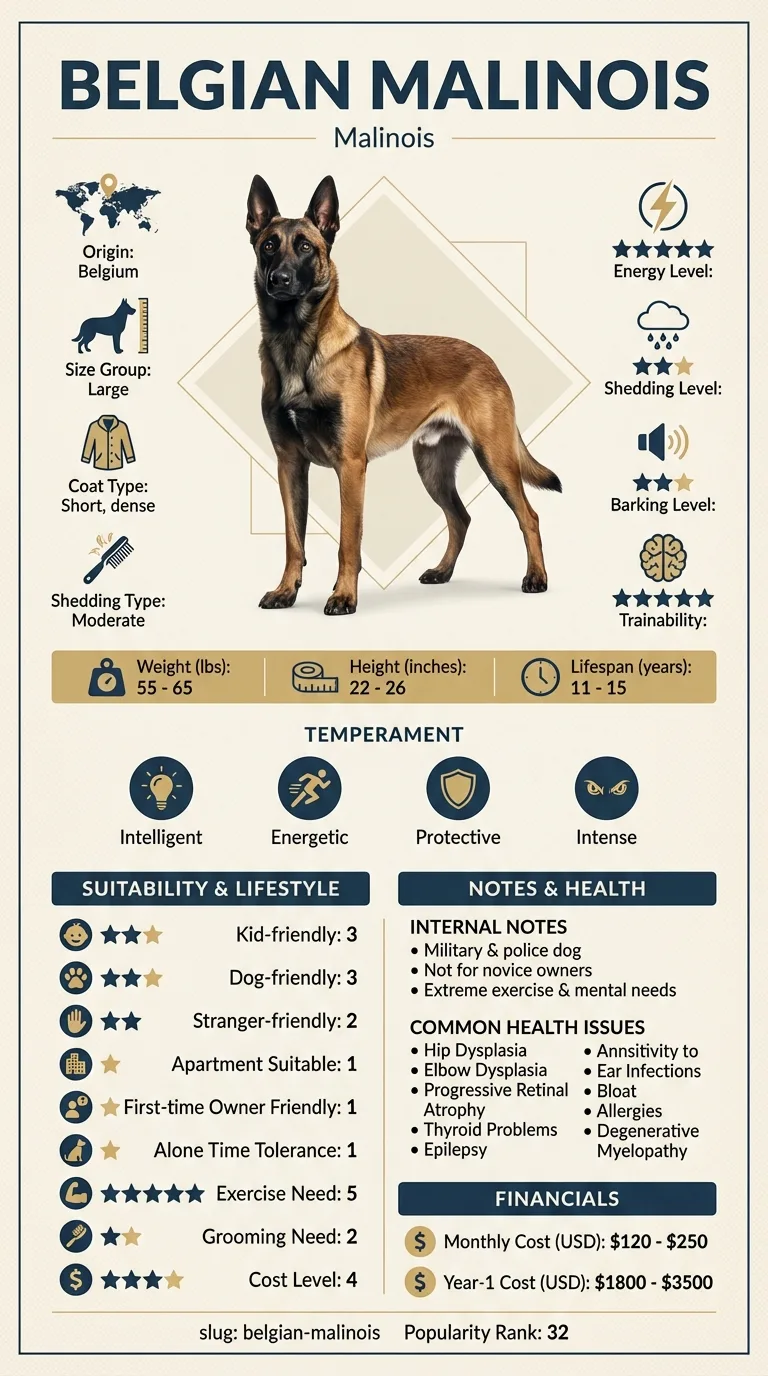
Costs can vary widely, typically ranging from $120 to $250 per month, depending on treatments and veterinary care needed.
A balanced diet that supports brain health can be beneficial. Consult your vet for specific dietary recommendations tailored to your dog's needs.
Spend quality time with your dog, providing comfort and companionship. Engaging in gentle activities can help them feel secure and loved.
A one-page prep sheet for this condition: the signs, the questions to ask, what to get priced. Unlocks here.
You get: Vet visit prep sheet
No spam. One-click unsubscribe. See our privacy policy.
Preview page 1 before you decide.