What are quick tips for handling small nostrils (stenotic nares) in Belgian Malinois?
Keep your Belgian Malinois calm, avoid strenuous activities, and ensure they stay hydrated. Regular vet check-ups are crucial for monitoring their condition.
Belgian Malinois small nostrils, or stenotic nares, can cause breathing issues that affect your dog's quality of life. (Belgian Malinois small nostrils (stenotic nares))

This problem often affects owners of Belgian Malinois who may not be prepared for their dog's unique health needs. First-time owners or those unfamiliar with the breed's traits may struggle to identify and manage this issue effectively.
This guide is not medical advice. If your dog shows pain, sudden behavior change, or worsening symptoms, consult a licensed veterinarian.
Some links may be affiliate links. We may earn a commission at no extra cost to you. We only suggest products we believe are helpful for dog owners.
Belgian Malinois small nostrils, also known as stenotic nares, can cause significant breathing difficulties. This condition restricts airflow, leading to noisy breathing and potential exercise intolerance. Owners may notice their dog struggling during physical activities, which can be concerning and frustrating.
Stenotic nares are relatively common in Belgian Malinois and similar breeds. While not every Malinois will have this issue, a significant portion of them may experience breathing difficulties due to their conformation, especially during intense activities.
Belgian Malinois are prone to small nostrils, also known as stenotic nares, due to their genetics. This breed was developed for intense work, leading to physical traits that can include narrower air passages. These small nostrils can cause breathing difficulties, especially during exercise or warm weather.
Environmental factors can also play a role in exacerbating breathing issues. High temperatures, humidity, and allergens can irritate the airways of a Belgian Malinois with stenotic nares. Additionally, factors like obesity can worsen breathing problems, making it essential to maintain a healthy weight.
If your Belgian Malinois shows severe breathing issues or struggles with training due to anxiety, consider consulting a professional dog trainer. They can provide techniques tailored to your dog's needs and help manage their behavior effectively.
Contact your veterinarian if your Malinois exhibits persistent breathing difficulties, excessive snoring, or shows signs of distress. A vet can assess whether surgical options or other treatments are necessary to improve their quality of life.
You can expect to see improvements in your Belgian Malinois's breathing within 4 to 8 weeks after implementing training and care strategies.
Success means your dog breathes more comfortably, shows less anxiety during exercise, and has increased stamina during activities.
Certain common mistakes can unintentionally make your Belgian Malinois's small nostrils (stenotic nares) issue worse. Here are some key pitfalls to avoid, along with better alternatives.
Recognizing when your Belgian Malinois's small nostrils (stenotic nares) become an emergency is crucial. Look for signs such as labored breathing, bluish gums, or excessive panting. If your dog is struggling to breathe or is in distress, call your vet immediately.
On the other hand, mild cases can be monitored at home. If your dog is only experiencing occasional snorting or snuffling without severe distress, you can create a management plan. Keep an eye on their breathing patterns, especially during exercise or in warm weather.
In summary, serious symptoms like respiratory distress, lethargy, or fainting warrant an urgent vet visit. Meanwhile, minor discomfort can often be watched with care and a strategy to manage their breathing. Always err on the side of caution when it comes to your dog’s health.

Sara, a busy vet tech in Texas, noticed her Belgian Malinois, Max, struggled to breathe during walks. After consulting with a vet, she learned that Max had small nostrils, known as stenotic nares. Determined to help, Sara started a training regimen that included gradual exposure to exercise and specific breathing exercises. Over the course of a few weeks, she noticed he became more energetic and less distressed on their walks. With patience and dedication, Max was soon trotting along happily, breathing easier and enjoying his outdoor adventures.
Key takeaway: With proper training and care, owners can significantly improve their Belgian Malinois's breathing issues, allowing them to lead happier, more active lives.

Small nostrils, or stenotic nares, can occur in Belgian Malinois due to their genetics. This condition can lead to breathing difficulties and is often seen in breeds with a more brachycephalic structure. If your dog is showing signs of distress while breathing, it's essential to consult a vet. This answer relates to Belgian Malinois small nostrils (stenotic nares).
To help your Belgian Malinois, ensure they have a comfortable environment with minimal stress. Regular vet check-ups are crucial, as surgical options may be necessary for severe cases. Additionally, keep your dog cool and avoid strenuous exercise during hot weather.
Symptoms can include noisy breathing, difficulty exercising, and excessive panting. Your dog may also show signs of fatigue during walks or play. If you notice these symptoms, it's important to seek veterinary advice.
While training can help improve your dog's overall behavior and comfort, it won't fix physical issues like stenotic nares. Focus on positive reinforcement techniques to keep your dog calm and relaxed, especially during vet visits.
Consider surgery if your dog experiences frequent breathing issues or shows signs of distress. A vet will evaluate the severity of the condition and can recommend the best course of action. Early intervention can lead to better outcomes.
Yes, keep your dog in a cool environment, avoid excessive exercise, and monitor their weight. Maintaining a healthy weight can reduce strain on their respiratory system. Regular vet visits are also essential to manage their health.
Signs of small nostrils in a Belgian Malinois can include noisy breathing, snoring, or excessive panting, especially after exercise. If you notice your dog struggling to catch their breath or frequently coughing, it’s essential to consult a vet.
Yes, older dogs may experience more severe symptoms due to age-related health issues. It's crucial to monitor their breathing and activity levels closely and seek veterinary advice to manage their condition effectively.
In hot weather, keep your Belgian Malinois indoors in air conditioning or a cool area. Provide plenty of water and avoid strenuous exercise during peak heat times to prevent breathing difficulties.
While training cannot change the physical structure, it can help manage any anxiety related to breathing difficulties. Using positive reinforcement to create a calm environment can be beneficial for your dog.
Surgery may be an option if your dog's breathing problems significantly affect their quality of life. Consult your veterinarian to discuss the potential benefits and risks based on your dog's health and lifestyle.
Keep your Belgian Malinois calm, avoid strenuous activities, and ensure they stay hydrated. Regular vet check-ups are crucial for monitoring their condition.
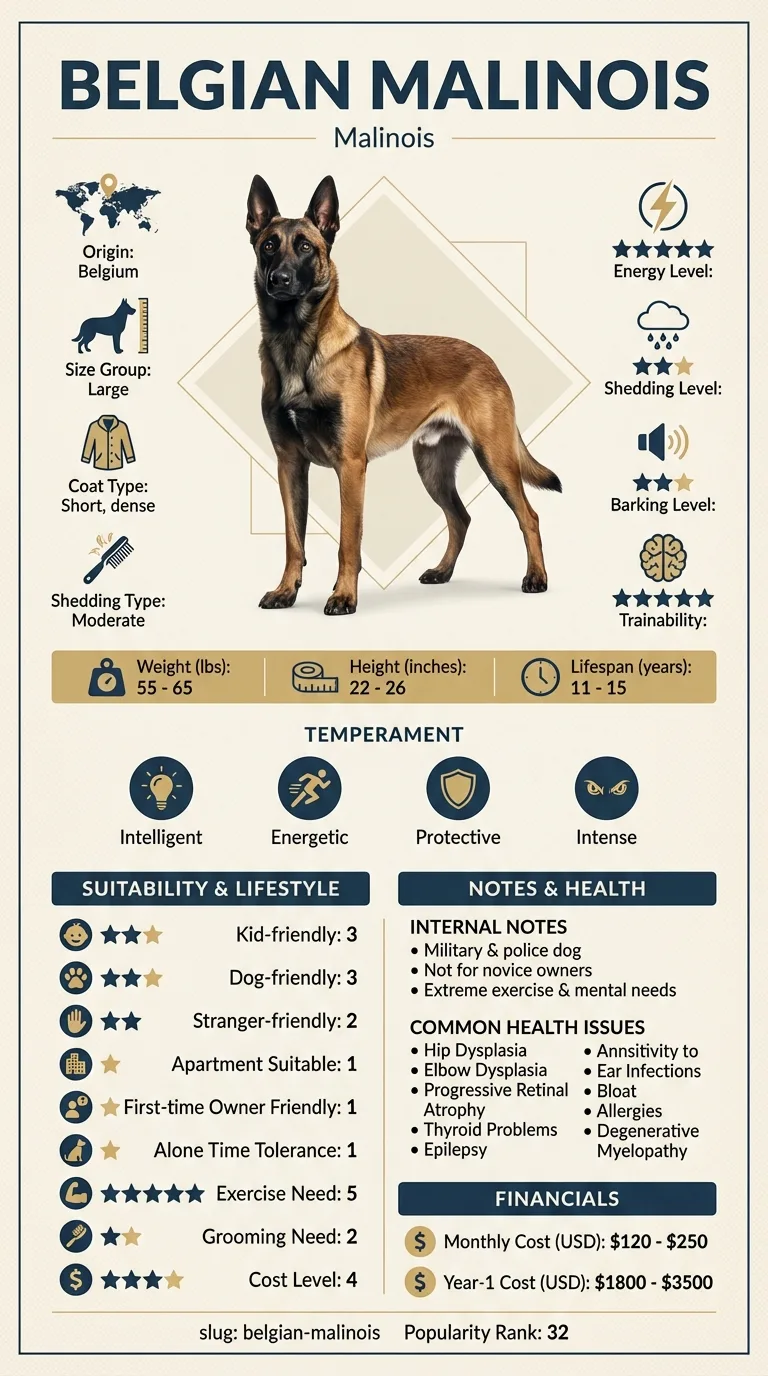
Treatment costs can range from $1,800 to $3,500 in the first year, depending on the severity of the condition and any necessary procedures.
Look for noisy breathing, excessive panting, and fatigue during play. If these symptoms occur, consult your vet promptly.