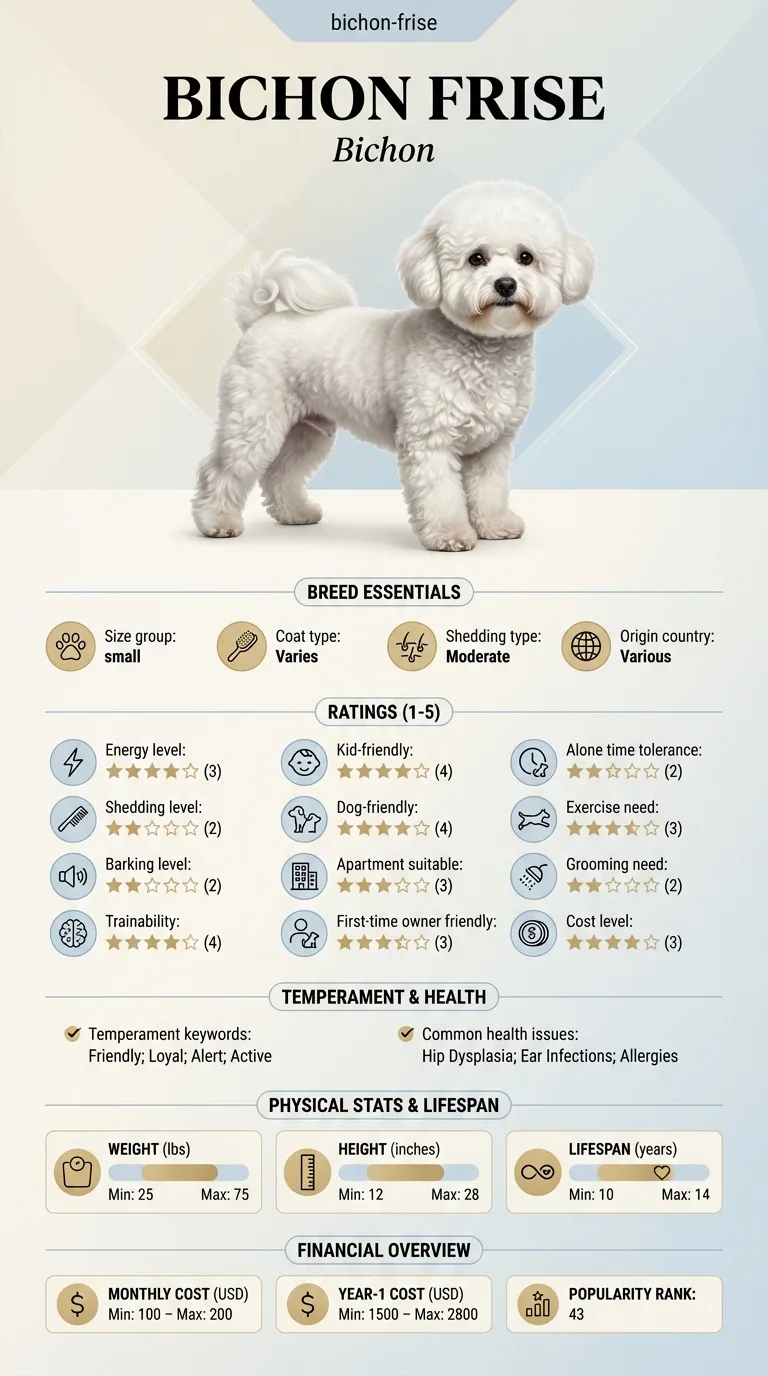
The Bichon's temperament keywords are playful, curious, cheerful and affectionate, and the ratings support them: 4/5 with children, 4/5 with other dogs, 4/5 with strangers, 4/5 for first-time owners, 5/5 for apartments.
It is a genuine companion breed with no working drive to manage — no herding, no prey drive worth naming, no guarding. It wants to be with people, it enjoys visitors, and it gets on with other dogs easily. At 2/5 exercise it needs twenty to thirty minutes of walking plus indoor play, which is why it suits small homes, older owners and anyone with limited mobility.
Its 3/5 trainability is honest. Bichons are bright but not driven to work for a handler, and house-training in particular often takes longer than owners expect. Short, cheerful, well-paid sessions work; drilling does not.
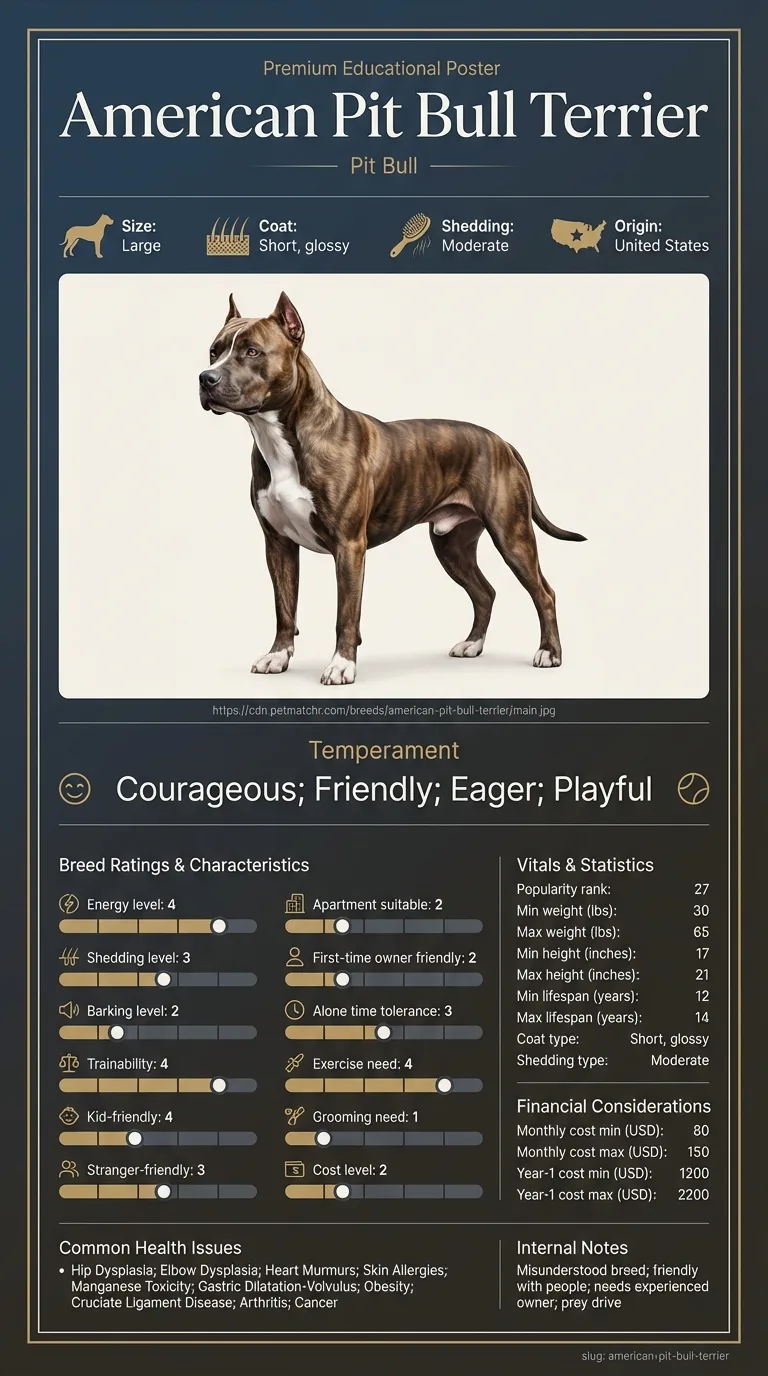
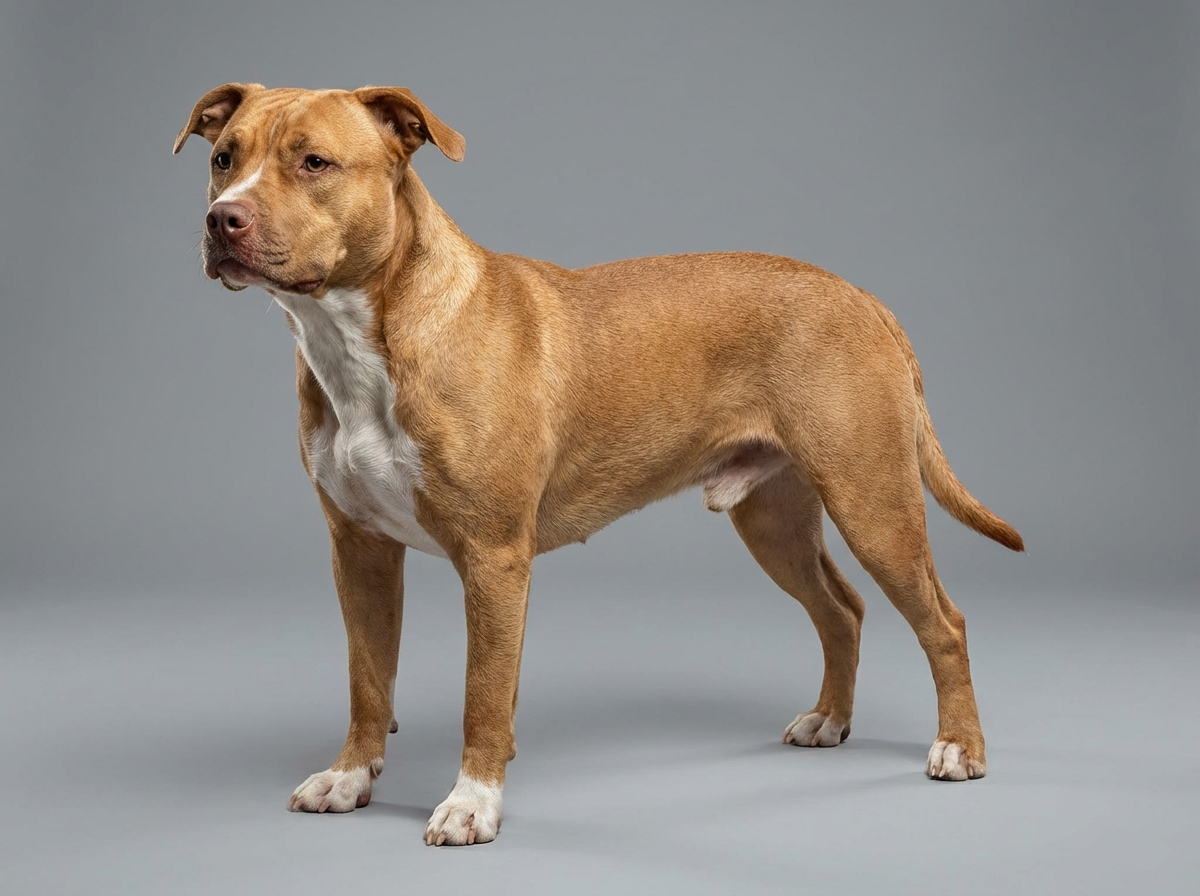
The Pit Bull is warm with people too — 4/5 with children, 3/5 with strangers, described as courageous, friendly, eager and playful — and considerably more trainable at 4/5. Its 2/5 with other dogs is the defining management task: no dog parks, no on-lead greetings with unknown dogs, careful neutral-ground introductions, and awareness that tolerance can decline at social maturity.
On solitude the Pit Bull leads 3/5 to 2/5. Bichons are companion dogs and cope poorly with an empty house, often vocally, which in a flat is a compounding problem.
With children the ratings tie at 4/5, with opposite cautions: a Pit Bull can knock a small child over in play, while a 15 pound Bichon can be hurt by one.
And one administrative note that applies only to the Pit Bull: tenancy agreements, housing rules and insurance policies frequently restrict bully-type dogs. Check yours in writing before committing.