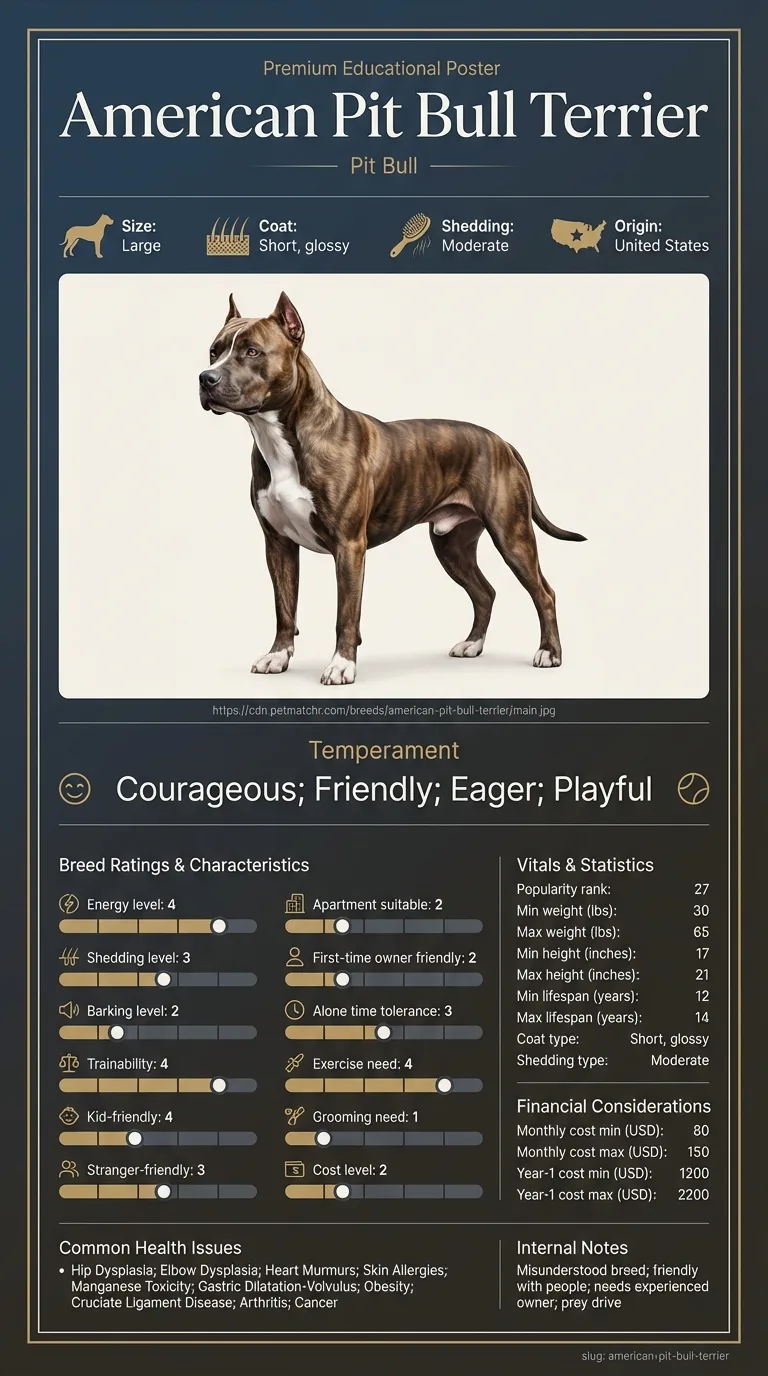
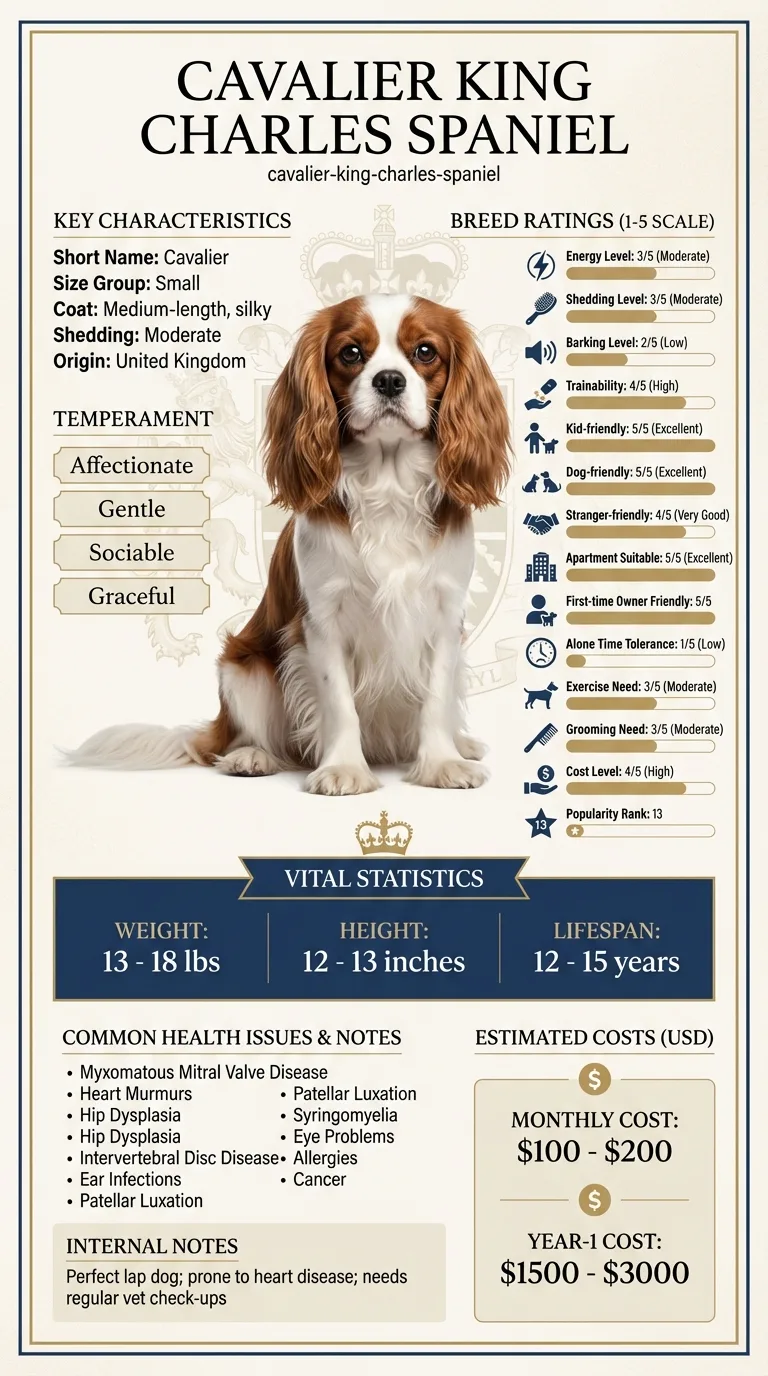
The Cavalier runs $100–200 a month at cost level 4/5, with a first year of $1,500–3,000. The Pit Bull is $80–150 at 2/5, with $1,200–2,200.
For a 15 pound dog, a 4/5 cost rating is unusual and it is entirely medical. Cardiac monitoring, and eventually cardiac medication, is a realistic expectation rather than a risk. Dogs in the later stages of mitral valve disease may be on several drugs, with periodic echocardiograms and blood tests, and that is a recurring monthly cost for years. Add ear treatment, and the possibility of MRI investigation if neurological signs appear.
Insurance matters more here than in most breeds, and timing matters most of all. A murmur detected once is a pre-existing condition, and cover taken out afterwards will exclude it. Insuring a Cavalier puppy before its first check is one of the few genuinely consequential financial decisions in dog ownership.
The Pit Bull's insurance problem is different: availability rather than exclusion, since bully-type breeds are frequently declined or surcharged outright.
Lifespan slightly favours the Cavalier at 12 to 15 years against 12 to 14, and where an individual lands depends heavily on the heart.
The honest summary is that the Cavalier is a delightful dog with a serious, well-documented, largely predictable health problem, and that a buyer's leverage over that problem is almost entirely exercised before the puppy comes home. Choose the breeder on cardiac certificates rather than on photographs, insure immediately, learn to count sleeping breaths, and the breed can be an excellent companion for twelve to fifteen years.
And if nobody will be home during the day, choose the other dog.