DogBreedCompass

Pit Bull or Cocker Spaniel: Where a Neglected Ear Ends Up

Ear infections head the Cocker Spaniel's health list, and in this breed that is not a minor entry. Chronic untreated ear disease is one of the few conditions on this site that can end in the surgical removal of the ear canal.

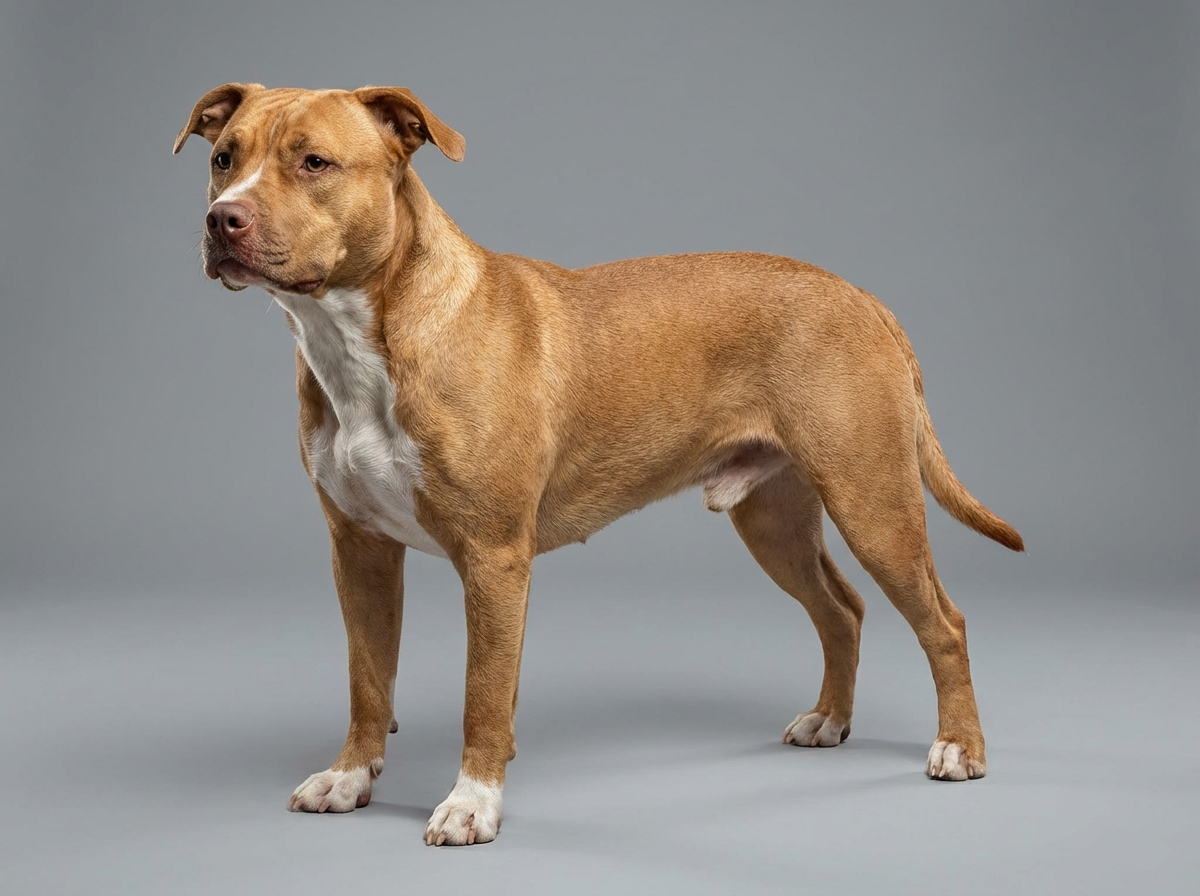
american pit bull terrier infographic
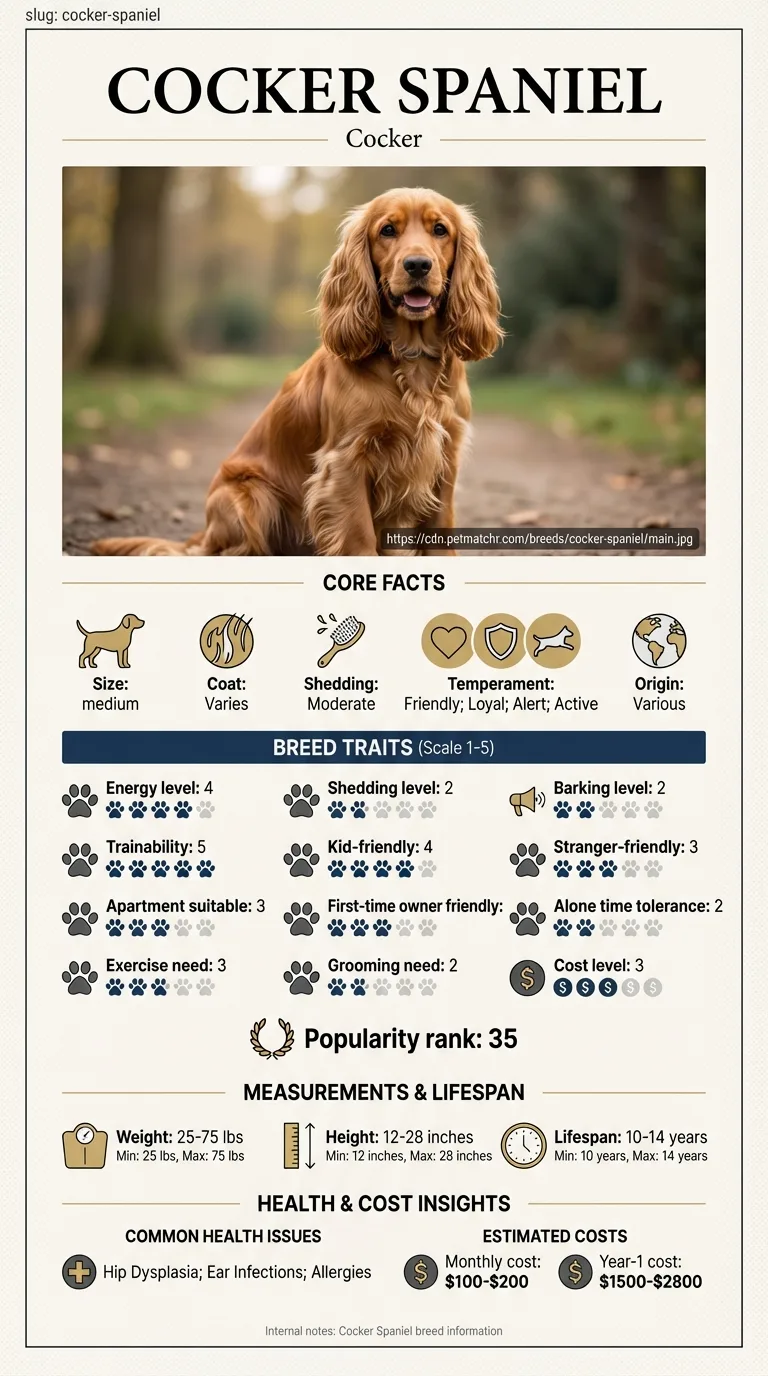
cocker spaniel infographic

This page is for someone weighing an easy, sociable family spaniel against an athletic low-maintenance dog, and wanting to know what the coat and the ears actually cost over a decade.

Quick verdict

The Cocker is the easier dog socially and by a wide margin the harder one to maintain, and its ears are a genuine long-term commitment rather than an occasional nuisance.

Choose american pit bull terrier if...

Choose the American Pit Bull Terrier if you want an athletic, low-maintenance dog with essentially no grooming bill, and you can supply an hour a day and manage careful introductions to other dogs.

Choose cocker spaniel if...

Choose the Cocker Spaniel if you want a gentle, sociable family dog that gets on with everyone, someone is home much of the day, and you will do weekly ear care and keep a grooming appointment for its whole life.

Head-to-head comparison

Featureamerican pit bull terriercocker spanielWinner
Weight30–65 lbs20–30 lbsEqual
Height17–21 in13–16 inEqual
Lifespan12–14 years10–14 yearsamerican pit bull terrier
CoatShort, glossySilky and featheredamerican pit bull terrier
Grooming need1/55/5american pit bull terrier
Shedding3/5 — moderate3/5 — moderateEqual
Energy level4/53/5cocker spaniel
Exercise need4/53/5cocker spaniel
Trainability4/54/5Equal
Barking2/53/5american pit bull terrier
Good with kids4/55/5cocker spaniel
Good with other dogs2/54/5cocker spaniel
Friendly to strangers3/54/5cocker spaniel
Apartment suitability2/54/5cocker spaniel
Good for first-time owners2/54/5cocker spaniel
Tolerates being alone3/52/5american pit bull terrier
Typical monthly cost$80–150$80–150Equal
Typical first-year cost$1,200–2,200$1,100–2,300Equal

Deep dive

How a Cocker's ear infection escalates, and where it can end

Ear infections sit at the top of the Cocker's health list, and the breed is probably the most affected of any on this site. The reasons stack up: long heavy ears that seal the canal and stop airflow, hair growing inside the canal itself, a coat that holds moisture, and a genuine tendency toward allergic skin disease that inflames the ear lining from the inside.

The escalation matters more than the first infection. An acute infection treated properly resolves. An infection treated late, or treated repeatedly without addressing the underlying allergy, becomes chronic. Chronic inflammation thickens the canal lining, narrows the canal, and eventually causes the cartilage to calcify. At that point drops cannot reach the affected tissue, the canal no longer drains, and the dog is in constant pain. The end point of that road is total ear canal ablation — surgical removal of the canal — which is a major, expensive procedure that leaves the dog deaf on that side but usually pain-free for the first time in years.

That is not an inevitable outcome and it is largely preventable, which is exactly why it belongs on this page. The prevention is unglamorous: check both ears weekly, clean with a veterinary ear cleaner as directed rather than improvising, dry the ears thoroughly after swimming or a wet walk, keep the hair around and inside the canal opening trimmed, and — the part most often missed — treat the underlying allergy rather than only the infection when infections keep coming back.

Head shaking, scratching at an ear, a smell, a discharge, or a dog that flinches when its head is touched all mean an appointment rather than another round of home cleaning.

The Pit Bull shares the allergy predisposition — skin allergies are its most common day-to-day complaint — but its upright, open, hairless ear canals ventilate themselves. Ear infections happen; they rarely escalate.

5/5 grooming on a 25 pound dog

The Cocker's 5/5 grooming rating is one of the highest on this site, and it applies to a small dog, which surprises people.

The coat is silky and profusely feathered — long hair on the ears, chest, belly, legs and the skirt along the flanks — over a shorter body coat. The feathering is where the work is. It mats readily, it collects mud, water, burrs and grass seeds, and on a dog that pushes through undergrowth it does all of that every walk. The ears themselves are heavy curtains of hair that need combing through and, ideally, keeping out of the food bowl.

The realistic routine is combing through the feathering several times a week and a professional groom every six to eight weeks. Most pet owners settle on a shorter clip that keeps the body tidy and the ears and feet trimmed, which is entirely legitimate for a single-coated breed and reduces the daily job substantially.

Grass seeds deserve a specific mention. A Cocker working through long grass in summer picks them up between the toes, in the ears and in the armpits, and a seed that migrates under the skin needs veterinary removal. Checking feet and ears after a summer walk is a two-minute habit that prevents a minor surgery.

The Pit Bull's 1/5 is the opposite: a rubber curry mitt once a week, a bath when needed, no matting, no appointment, no equipment. Both shed at 3/5, so neither is a hair-free dog.

That is the whole shape of this comparison. Both cost $80 to $150 a month. The Cocker's money and hours go on the coat and the ears; the Pit Bull's go on food and exercise.

Autoimmune haemolytic anaemia: rare, urgent, and worth recognising

Autoimmune haemolytic anaemia appears on the Cocker's health list, and while it is far less common than ear disease it is the entry most likely to be life-threatening.

In this condition the immune system attacks the dog's own red blood cells and destroys them faster than the bone marrow can replace them. The Cocker Spaniel is among the breeds recognised as predisposed. It can arise without any identifiable trigger, and it can develop over days.

The signs are worth committing to memory because they are easy to attribute to something else. Pale gums are the most useful — lift the lip and look, and compare it with what normal looks like on a healthy day. Beyond that: sudden lethargy or collapse, rapid breathing, a racing heart, reluctance to exercise, sometimes yellowing of the gums or the whites of the eyes, and dark orange or brown urine.

A dog with pale gums and sudden weakness is an emergency, not a next-morning appointment. Treatment involves immunosuppressive medication and sometimes transfusion, and outcomes are considerably better when it is caught early.

The rest of the Cocker's list is more routine: cataracts, progressive retinal atrophy — both picked up through eye certification, with DNA testing available for the retinal condition — and hip dysplasia.

The Pit Bull's list runs hip and elbow dysplasia, skin allergies, heart murmurs, bloat, obesity, cruciate ligament disease, arthritis and cancer. Its most likely orthopaedic emergency is a cruciate rupture, which is painful, surgical and strongly weight-linked.

For both breeds the single best free habit is keeping the dog lean, and for both, insuring before anything is diagnosed is what keeps a chronic condition affordable.


Merry and eager to please, and a 2/5 for solitude

The Cocker's temperament keywords are gentle, merry, affectionate and eager to please, and the ratings back them: 5/5 with children, 4/5 with other dogs, 4/5 with strangers, 4/5 for first-time owners, 4/5 trainability.

It is a genuinely easy dog in public. Flushing spaniels worked in company around people and other dogs, and there is no guarding instinct and very little reactivity. A Cocker is straightforward at the vet, in a park, in a house full of visiting children.

Eager to please is also a training note: this is a soft breed that works well for praise and food and shuts down under heavy correction. Short, upbeat sessions are the approach.

The 2/5 for time alone is the trait to plan around. Cockers attach strongly and do not do well in an empty house all day, and their distress tends to be vocal, which in a flat compounds the 3/5 barking rating.

The Pit Bull is warm with people too — 4/5 with children, 3/5 with strangers — and equally trainable at 4/5. Its 2/5 with other dogs is the permanent management task: no dog parks, no on-lead greetings with unknown dogs, careful neutral-ground introductions, and awareness that tolerance can decline at social maturity between eighteen months and three years. Its 3/5 for solitude is the better of the two.

And only the Pit Bull carries the administrative layer. Breed restrictions in tenancy agreements, housing rules and insurance policies commonly cover bully-type dogs, often by appearance rather than pedigree. Check yours in writing before committing.

Exercise is 3/5 against 4/5 — about an hour for the Cocker with scent work and retrieving counting toward it, against an hour to ninety minutes of largely physical work for the Pit Bull.

Same monthly cost, very different weeks

Both breeds run $80 to $150 a month and both are among the cheaper dogs on this site to feed. The identical figure hides two different lives.

A Cocker owner's week includes combing feathering three or four times, checking and cleaning two ears, checking feet after summer walks, and a grooming appointment every six to eight weeks. The reward is a dog that is easy with everybody, needs an hour of activity, fits a flat at 4/5, and suits a first-time owner at 4/5.

A Pit Bull owner's week includes an hour to ninety minutes of exercise daily, five minutes of coat care, and planning around other dogs. The reward is a durable, trainable, inexpensive dog that settles hard indoors and tolerates a working day better.

Neither is objectively easier. The question is which kind of effort you will still be making in year eight — and the honest failure mode for each is different. A neglected Pit Bull is under-exercised and becomes mouthy and harder to manage. A neglected Cocker is matted, with chronic ear disease, and that road has a surgical destination.

One last practical note for anyone choosing a Cocker: ask the breeder about eye certification, hip scores, and any history of autoimmune disease in the line. Ask to see the parents' ears. And ask which coat type they breed for, because a heavily coated show-bred dog and a lighter working-bred dog are meaningfully different grooming propositions.

Lifespan slightly favours the Pit Bull at 12 to 14 years against 10 to 14, and in both breeds body condition does more to determine the last third of life than anything else an owner controls.

American Pit Bull Terrier vs Cocker Spaniel at a glance

Ear infections head the Cocker Spaniel's health list, and in this breed that is not a minor entry. Chronic untreated ear disease is one of the few conditions on this site that can end in the surgical removal of the ear canal.

The Cocker is the easier dog socially by a wide margin, and by just as wide a margin the harder one to maintain — its ears are a genuine long-term commitment rather than an occasional nuisance, alongside a coat that needs regular grooming.

Choose the American Pit Bull Terrier if you want an athletic, low-maintenance dog with essentially no grooming bill, and you can supply an hour a day and manage careful introductions to other dogs. Choose the Cocker Spaniel if you want a gentle, sociable family dog that gets on with everyone, someone is home much of the day, and you will do weekly ear care for its whole life.

Frequently asked questions

Why are Cocker Spaniel ears such a problem?

Long heavy ears seal the canal and stop airflow, hair grows inside the canal, and the breed tends toward allergic skin disease that inflames the lining. Together those make infection likely and recurrence common.

What happens if ear infections are left untreated?

Chronic inflammation thickens and narrows the canal and can calcify the cartilage, at which point drops no longer reach the tissue. The end point is surgical removal of the ear canal, which relieves pain but leaves the dog deaf on that side.

How do I prevent recurring ear infections?

Weekly checks, cleaning with a veterinary cleaner as directed, thorough drying after swimming or wet walks, keeping hair around the canal trimmed, and treating the underlying allergy rather than only each infection.

What are the signs of autoimmune haemolytic anaemia?

Pale gums, sudden lethargy or collapse, rapid breathing, a racing heart, sometimes yellowing of the gums or eyes and dark orange urine. It is an emergency rather than a next-morning appointment.

Why does a 25 pound dog rate 5/5 for grooming?

Because of the feathering. Long hair on the ears, chest, legs and flanks mats readily and collects mud, burrs and grass seeds. Most pet owners settle on a shorter clip every six to eight weeks plus combing several times a week.

Which is better with other dogs?

The Cocker at 4/5 against 2/5. It is a flushing spaniel with no guarding instinct. The Pit Bull needs planned introductions on neutral ground and quieter walking times.

Do they cost the same?

Monthly, yes — both $80 to $150. The Cocker's spending goes on grooming and ear care; the Pit Bull's on food and routine care, with insurance availability the main unknown on its side.

Quick answers

View more answers
Living

Pit Bull or Cocker Spaniel: which should I choose?

The Cocker if you want a gentle sociable family dog, someone is home much of the day, and you will keep up the ears and the grooming. The Pit Bull if you want a low-maintenance athlete and can manage dog-dog introductions.

Costs

Which is cheaper to keep?

They match at $80 to $150 a month. The Cocker adds a groom every six to eight weeks; the Pit Bull adds nothing for coat care but faces insurance restrictions.

Health

What is the most important weekly habit for a Cocker?

Checking and cleaning both ears and drying them properly after wet walks. Ear disease is the breed's defining health problem and it is largely preventable with a weekly routine.

Behavior

Can a Cocker be left alone during a workday?

It rates 2/5 against the Pit Bull's 3/5. Cockers attach strongly and their distress when left tends to be vocal, which compounds a 3/5 barking rating in a flat.

Related DogBreedCompass guides

  • American Pit Bull Terrier breed guideThe Pit Bull profile covers temperament, exercise and the practical realities of ownership.
  • Cocker Spaniel breed guideThe Cocker profile covers coat options, ear care and the breed's sociable temperament.
  • ear infections in Cocker SpanielsEar disease is the breed's defining health problem and the one with a surgical end point.
  • cataracts in Cocker SpanielsCataracts sit on the breed's list and are picked up through routine eye certification.
  • skin allergies in Pit Bull TerriersAllergic skin disease drives recurring ear trouble in both breeds and is managed rather than cured.
  • American Pit Bull Terrier vs BrittanyReaders weighing sporting spaniels usually want the lighter pointing breed assessed alongside.

Related guides

Important reminder

Health information here is general and is not veterinary advice. Ear disease, anaemia signs and screening should be discussed with your own veterinarian.

Some links on this site are affiliate links. We may earn a commission if you buy through them, at no additional cost to you.

Find Your Perfect Breed

Match your lifestyle to the right dog.

Take quiz

Find your match

Not sure which breed is right for you? Take our 2-minute quiz to find out.

Take the quiz