DogBreedCompass

Pit Bull or English Bulldog: Same Ancestor, Triple the Vet Bill

The English Bulldog costs $150 to $350 a month against the Pit Bull's $80 to $150, and $2,500 to $5,000 in its first year against $1,200 to $2,200. Its own breed notes describe the highest medical costs on this site.

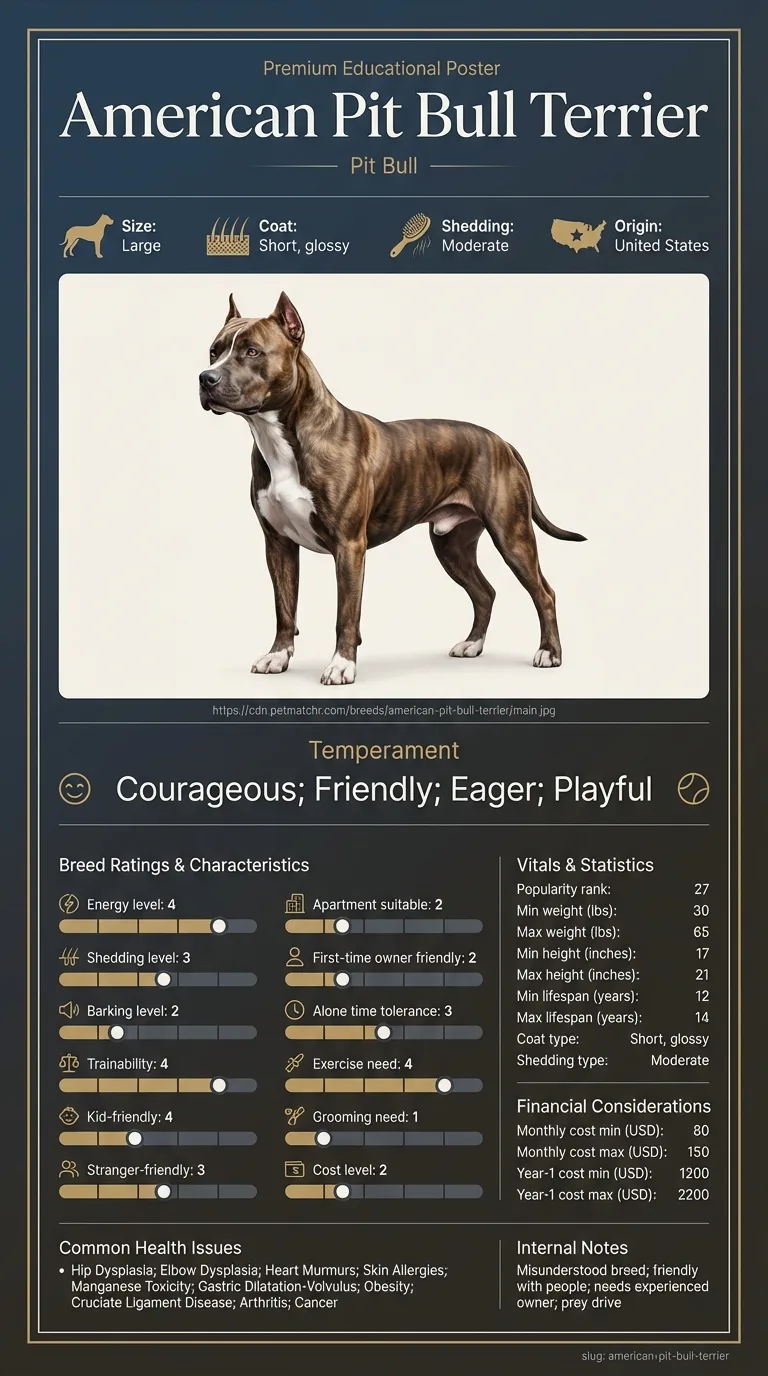
american pit bull terrier infographic
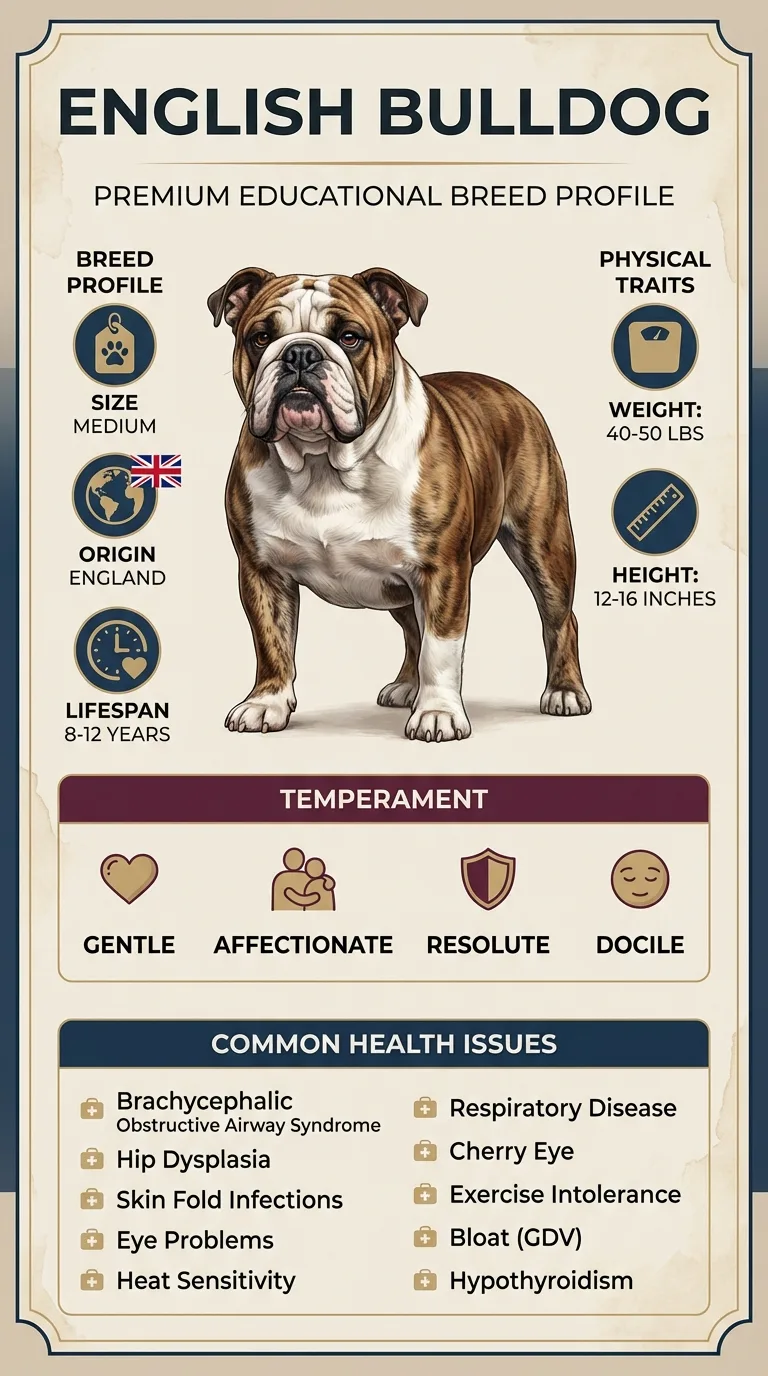
bulldog infographic

This page is for someone weighing a low-exercise, flat-friendly, famously gentle breed against an athletic one, and wanting the running costs and the health picture set out plainly.

Quick verdict

The Bulldog is calmer, more sociable and far better suited to a small flat, and it will cost roughly two to three times as much across a life that is likely to be shorter by several years.

Choose american pit bull terrier if...

Choose the American Pit Bull Terrier if you want an athletic, long-lived, inexpensive dog with almost no maintenance, and you can supply an hour a day, manage dog-dog introductions and check local restrictions.

Choose bulldog if...

Choose the English Bulldog if you want a genuinely low-exercise, gentle, sociable companion for a flat, you have the budget for 5/5 running costs, and you will choose a breeder producing a moderate dog rather than an extreme one.

Head-to-head comparison

Featureamerican pit bull terrierbulldogWinner
Weight30–65 lbs40–50 lbsEqual
Height17–21 in12–16 inEqual
Lifespan12–14 years8–12 yearsamerican pit bull terrier
CoatShort, glossyShort, smoothEqual
Grooming need1/53/5american pit bull terrier
Shedding3/5 — moderate3/5 — moderateEqual
Energy level4/52/5bulldog
Exercise need4/52/5bulldog
Trainability4/53/5american pit bull terrier
Barking2/52/5Equal
Good with kids4/55/5bulldog
Good with other dogs2/54/5bulldog
Friendly to strangers3/54/5bulldog
Apartment suitability2/55/5bulldog
Good for first-time owners2/53/5bulldog
Tolerates being alone3/53/5Equal
Typical monthly cost$80–150$150–350american pit bull terrier
Typical first-year cost$1,200–2,200$2,500–5,000american pit bull terrier

Deep dive

Cost level 5/5 against 2/5: where the money goes

The Bulldog is one of very few breeds on this site rated 5/5 for cost, and its own notes name it directly as the most expensive medically. The gap is not marginal: $150–350 a month against $80–150, and a first year of $2,500–5,000 against $1,200–2,200.

Food is not the reason. A 45 pound Bulldog eats less than a 60 pound Pit Bull. The cost sits almost entirely in veterinary care, and it starts before the dog is born.

Purchase price is high partly because the breed frequently cannot whelp naturally — the puppies' heads are large relative to the dam's pelvis, and a large proportion of litters are delivered by planned caesarean. That surgery is priced into the puppy.

Afterwards, the recurring costs come from the health list, which is unusually long and unusually predictable: airway problems that may need surgery, skin fold infections needing treatment and sometimes surgical correction, eye conditions including cherry eye that is commonly repaired surgically, joint disease, and heat-related emergencies. Anaesthesia is riskier and needs a practice set up for brachycephalic patients, which sometimes means a referral rather than the local clinic — at referral prices.

Insurance reflects all of this. Premiums for Bulldogs are among the highest of any breed, and exclusions for pre-existing respiratory or skin problems are common, which makes insuring before anything is diagnosed genuinely important.

The Pit Bull's 2/5 is one of the lowest here. Its money goes on food and routine care and essentially nothing on maintenance. Its own financial uncertainty is different in kind: bully-type dogs are frequently surcharged or excluded outright by insurers and restricted by tenancy agreements, so the question is availability of cover rather than the size of the premium.

Breathing, heat and exercise intolerance as a listed condition

Three entries on the Bulldog's health list describe the same underlying issue: brachycephalic obstructive airway syndrome, respiratory disease, heat sensitivity — and then exercise intolerance, listed as a health condition in its own right.

That last one is worth pausing on. On most breed pages, a low exercise rating describes a preference. Here it partly describes a limitation. The Bulldog's 2/5 is not only a calm temperament; it is a dog that physically cannot sustain much exertion, and pushing one to do so is a welfare problem rather than good training.

The mechanism is the shortened skull: the nose and throat are compressed without a matching reduction in soft tissue, so airflow meets high resistance. Because dogs cool by panting, poor airflow means poor cooling, and a Bulldog can go from panting to heatstroke faster than almost any other breed.

The practical rules are strict. Walk in the cool parts of the day and keep walks short and flat. Use a harness rather than a collar. Never leave the dog in a car or a conservatory, even briefly, even with a window open. Keep the dog lean, because excess weight worsens the breathing directly. Avoid swimming — Bulldogs are dense and front-heavy and many cannot swim at all. And treat noisy laboured breathing at rest, blue-tinged gums or collapse as an emergency.

The range between individuals is wide and it is decided by breeding. Look for open nostrils rather than pinched slits, a visible muzzle, a dog that walks briskly without noisy effort, and parents that breathe quietly at rest. Ask whether any dog in the line has needed airway surgery, and whether the breeder uses a respiratory grading scheme. Those questions change the outcome more than anything an owner does afterwards.

The Pit Bull has a normal muzzle, normal cooling and no equivalent constraint.

Skin folds, eyes and the daily routine

The Bulldog rates 3/5 for grooming despite a short coat that needs almost nothing, and the reason is everything other than the coat.

Skin fold infections appear on the health list. The facial folds, the nose rope and the tail pocket — a fold beneath a short screw tail — trap moisture, skin oils and debris, and left alone they become red, sore, smelly and infected. The routine is daily: wipe each fold out, dry it thoroughly, and check the tail pocket specifically, since it is easy to forget and one of the most common sites of trouble. Two minutes a day prevents most of it; skipping it reliably produces a vet visit.

Eye problems are the second entry, and cherry eye is the one owners see. It is a prolapse of the gland of the third eyelid, appearing as a pink or red fleshy lump in the inner corner of the eye, usually in a young dog. It is not an emergency but it does need surgical repositioning rather than removal, because the gland produces a significant share of the eye's tear film. Dry eye and lid problems also occur, and any squinting or persistent discharge deserves attention.

Hip dysplasia sits on the list too, along with bloat and hypothyroidism.

The Pit Bull's 1/5 is a rubber curry mitt once a week and nothing else — no folds, upright ears that ventilate themselves, and a normal tail. Its skin is the thing to watch, since skin allergies are its most common day-to-day complaint and present as itching, chewed paws and recurrent ear trouble.

On shedding both rate 3/5, and both produce short stiff hairs that work into fabric. Neither is a hair-free dog.

Gentle, docile and easy in public

The Bulldog's temperament is the reason people accept everything above. Its keywords are gentle, affectionate, resolute and docile, and its ratings back them: 5/5 with children, 4/5 with other dogs, 4/5 with strangers, 5/5 for apartments, 2/5 for barking.

Modern Bulldogs are not guarding dogs and are not reactive. They are heavy, slow, comic and enormously tolerant, and they will lie on a sofa for most of a day without complaint. For a family with young children, a small flat and a quiet routine, the temperament is close to ideal.

The 3/5 trainability is honest — Bulldogs are stubborn rather than slow, and they respond to short cheerful food-led sessions and disengage from repetition. Their 3/5 tolerance of time alone is decent.

The Pit Bull is warm with people too, at 4/5 with children and 3/5 with strangers, and considerably more trainable at 4/5. Its 2/5 with other dogs is the fact that shapes every walk: no dog parks, no on-lead greetings with unknown dogs, careful neutral-ground introductions, and awareness that tolerance can decline at social maturity between eighteen months and three years.

The two breeds therefore fail in opposite places. The Bulldog is easy to take anywhere and hard to keep healthy. The Pit Bull is easy to keep healthy and needs planning to take anywhere.

Lifespan is the last difference and a large one: 8 to 12 years against 12 to 14. Where an individual Bulldog lands in that range is heavily influenced by how it was bred — the airway again — and by whether it stays lean.

One shared point: both benefit enormously from staying lean, and it is free.

Choosing well, in either direction

For the Bulldog, the decision is made at the breeder and it matters more than in almost any other breed on this site.

The questions are concrete. What do the parents' nostrils look like? Is there a visible muzzle? Do the adults breathe quietly at rest and walk briskly without noisy effort? Has either parent been assessed under a respiratory grading scheme? Has any dog in the line needed airway surgery, cherry eye repair or fold surgery? Were the puppies delivered naturally or by caesarean, and does the breeder select for the ability to whelp?

A breeder producing moderate, functional Bulldogs will engage with all of that. One selling extreme heads will not, and the difference will show up every summer for a decade.

Budget honestly too. A Bulldog at 5/5 for cost is a genuine financial commitment, and the most common reason the breed is surrendered is not temperament but the accumulation of veterinary bills. Insure early, before anything is on the record.

For the Pit Bull, the decision sits in the environment. Check breed restrictions where you live and where you might move, in writing. Read your insurance exclusions. Then plan the dog-dog management: which walks, at what times, with what equipment, and what happens when a loose dog approaches.

If you are adopting — which is how most dogs of this type are acquired — a rescue that has genuinely assessed the adult tells you more than any pedigree could.

Both breeds are affectionate, people-oriented, low-noise and physically undemanding to groom. One asks for an hour a day and some judgement; the other asks for money and daily care. Neither is the wrong answer, provided the trade is understood before the dog arrives.

American Pit Bull Terrier vs Bulldog (English) at a glance

The English Bulldog costs $150 to $350 a month against the Pit Bull's $80 to $150, and $2,500 to $5,000 in its first year against $1,200 to $2,200. Its own breed notes describe some of the highest medical costs on this site.

The Bulldog is calmer, more sociable, and far better suited to a small flat than the Pit Bull. In exchange it will cost roughly two to three times as much across a life that is likely to be shorter by several years, driven largely by its airway and skin.

Choose the American Pit Bull Terrier if you want an athletic, long-lived, inexpensive dog with almost no maintenance, and you can supply an hour a day, manage dog-dog introductions, and check local restrictions. Choose the English Bulldog if you want a genuinely low-exercise, gentle, sociable companion for a flat, you have the budget, and you will choose a breeder producing a moderate rather than an extreme dog.

Frequently asked questions

Why is the English Bulldog so expensive?

Because the cost is veterinary rather than dietary. High purchase prices reflect frequent caesarean deliveries, and the recurring costs come from airway surgery, skin fold infections, eye repairs, joint disease and higher-risk anaesthesia — plus some of the highest insurance premiums of any breed.

What does exercise intolerance mean on the health list?

That the low exercise rating is partly a physical limitation rather than only a preference. A Bulldog's airway restricts how much exertion it can sustain, so pushing one to exercise hard is a welfare issue rather than good conditioning.

Can Bulldogs swim?

Many cannot. They are dense and front-heavy, and a shortened airway close to the waterline makes it worse. Unsupervised access to a pool or pond is a genuine risk for the breed rather than a theoretical one.

What is cherry eye?

A prolapse of the gland of the third eyelid, showing as a pink fleshy lump in the inner corner of the eye, usually in a young dog. It needs surgical repositioning rather than removal, since the gland produces much of the tear film.

How much daily care do the folds need?

About two minutes. Wipe out the facial folds and the nose rope, dry them thoroughly, and check the tail pocket beneath the screw tail — that last one is the site owners most often forget and infections start there.

How do I choose a healthier Bulldog?

Look for open nostrils, a visible muzzle and parents that breathe quietly at rest and walk briskly. Ask about respiratory grading, previous airway surgery in the line, and whether the breeder selects for natural whelping.

Which lives longer?

The Pit Bull at 12 to 14 years against 8 to 12. Where an individual Bulldog falls in its range depends heavily on how moderate its build is and on whether it stays lean.

Quick answers

View more answers
Living

Pit Bull or English Bulldog: which should I choose?

The Bulldog if you want a gentle, sociable, genuinely low-exercise companion for a flat and can afford 5/5 running costs. The Pit Bull if you want a long-lived, cheap, athletic dog and can manage dog-dog introductions.

Costs

How much more does a Bulldog cost?

Roughly two to three times as much — $150–350 a month against $80–150, and $2,500–5,000 in the first year against $1,200–2,200, at cost level 5/5 against 2/5.

Health

What is the most urgent Bulldog emergency?

Overheating. Noisy laboured breathing at rest, blue-tinged gums or collapse in warm weather needs immediate veterinary attention. Prevention is short cool-hour walks, a harness, a lean body and never leaving the dog in a car.

Behavior

Which is better with other dogs?

The Bulldog at 4/5 against 2/5. The Pit Bull needs planned introductions on neutral ground and can become less tolerant at social maturity between eighteen months and three years.

Related DogBreedCompass guides

  • American Pit Bull Terrier breed guideThe Pit Bull profile covers temperament, exercise and the practical realities of ownership.
  • English Bulldog breed guideThe Bulldog profile covers airway health, fold care and the breed's running costs.
  • skin allergies in BulldogsSkin problems are a recurring cost in the breed and start in the folds rather than the coat.
  • hip dysplasia in BulldogsHip dysplasia sits on both lists and is worth asking either breeder about.
  • obesity in Pit Bull TerriersWeight worsens the Bulldog's breathing directly and drives the Pit Bull's joint risk.
  • American Pit Bull Terrier vs BoxerThe other bull breed on the athletic side of the family tree is worth comparing directly.

Related guides

Important reminder

Health information here is general and is not veterinary advice. Airway assessment, anaesthetic risk and heat emergencies should be discussed with your own veterinarian.

Some links on this site are affiliate links. We may earn a commission if you buy through them, at no additional cost to you.

Find Your Perfect Breed

Match your lifestyle to the right dog.

Take quiz

Find your match

Not sure which breed is right for you? Take our 2-minute quiz to find out.

Take the quiz