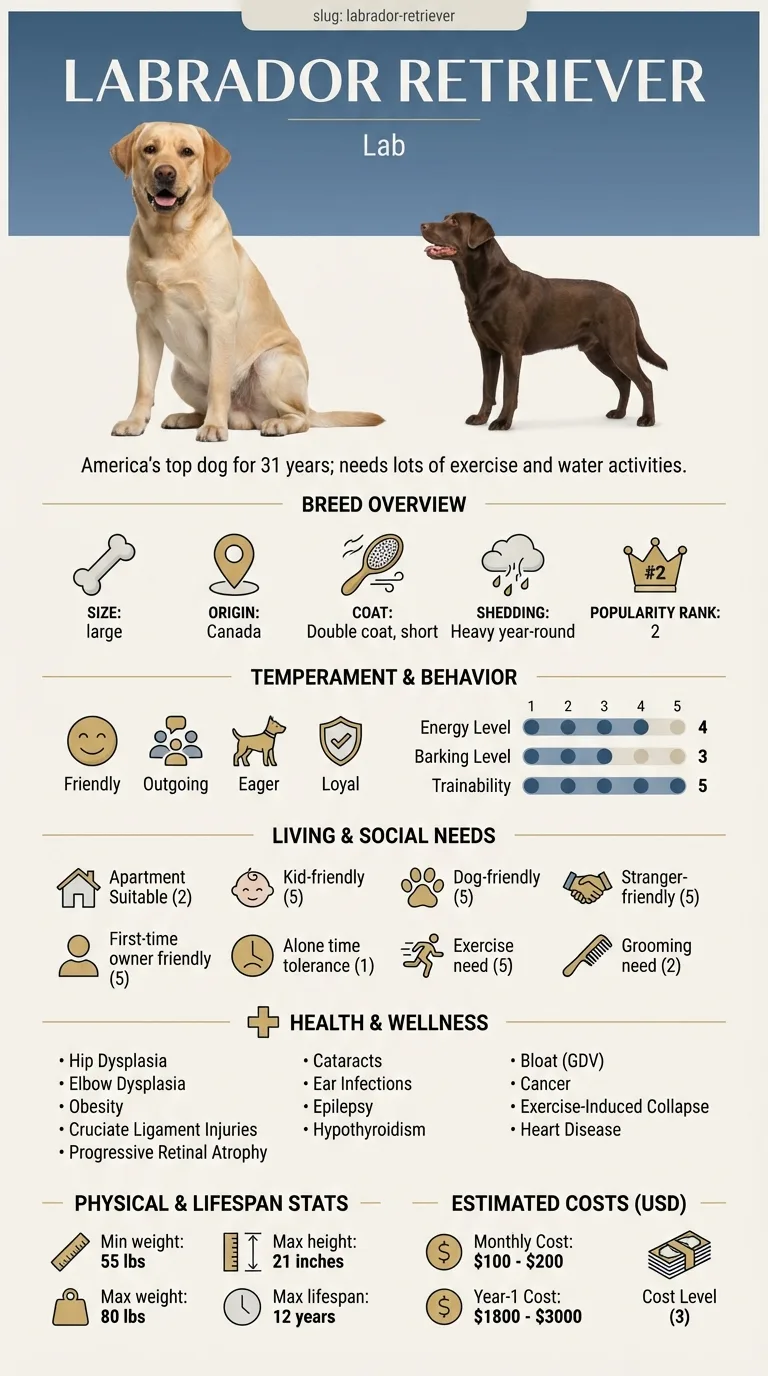
The Labrador's social ratings are as good as they get: 5/5 with children, 5/5 with other dogs, 5/5 with strangers, 5/5 for first-time owners. There is no hidden catch in those numbers. It is a breed that likes everyone, forgives handling, works in group settings and rarely surprises anyone. That combination is why it appears in guide, assistance, detection and therapy work more than any other breed, and why it is the default recommendation for families.
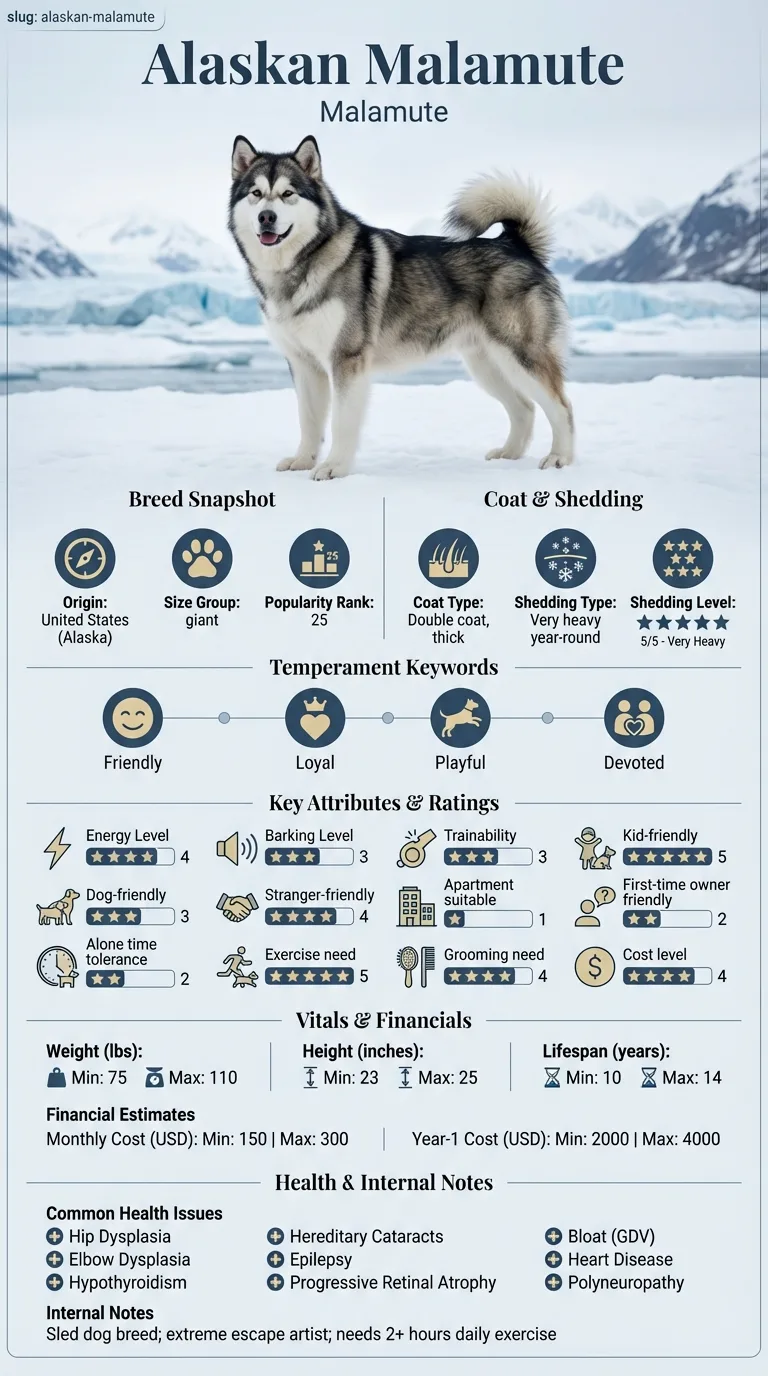
The Malamute is 5/5 with children and 4/5 with strangers — warm, but a 3/5 with other dogs that narrows further with same-sex adults, and a 2/5 for beginners. Around cats the difference is stark: the Labrador's soft mouth and low kill drive make cohabitation ordinary, while the Malamute's hunting drive keeps it a managed arrangement.
On cost the Labrador is cheaper: cost level 3/5 against 4/5, $100–200 a month against $150–300, and $1,800–3,000 in the first year against $2,000–4,000. Insurance can narrow that, because the breed's cruciate, orthopaedic and cancer history is well known to underwriters.
Lifespan runs the other way — 10 to 12 years for the Labrador against 10 to 14 for the Malamute, with cancer and the downstream effects of weight the usual limiting factors.
The fair summary is that the conventional choice is conventional for good reasons. The Malamute is not a better dog hiding behind an unpopular reputation; it is a specialist animal that rewards a specific life. If you do not have that life, the Labrador is not a compromise.