Behavior
What are quick tips for managing Alaskan Malamute obesity?
Limit treats and ensure they are healthy, increase their exercise time, and measure their food portions. Regular vet visits can help track their weight and overall health.

Quick answer
What are quick tips for managing Alaskan Malamute obesity?
Limit treats and ensure they are healthy, increase their exercise time, and measure their food portions. Regular vet visits can help track their weight and overall health.
Alaskan Malamute obesity is a serious issue that can lead to various health problems. Managing their weight is crucial for their long-term well-being.
Owners of Alaskan Malamutes often face obesity-related challenges, especially those who live in apartments or have busy lifestyles. First-time dog owners may also struggle to determine the right exercise and feeding routines for their Malamutes.
This guide is not medical advice. If your dog shows pain, sudden behavior change, or worsening symptoms, consult a licensed veterinarian.
Some links may be affiliate links. We may earn a commission at no extra cost to you. We only suggest products we believe are helpful for dog owners.
We research and check what we publish, but we do not warrant that any figure, date, price, or statement is accurate, complete, or current, and we accept no liability for any loss, cost, injury, or other harm arising from the use of this site. Use it as one reference among several. You remain responsible for your own decisions and for your dog's care - confirm anything that matters with a licensed veterinarian or another qualified professional before you act on it. Full disclaimer.
Check this first
Recognizing when Alaskan Malamute obesity is an emergency is crucial for your pet's health. Certain signs indicate that immediate veterinary attention is needed. If your Malamute is experiencing difficulty breathing, severe lethargy, or shows signs of pain when moving, these are red flags. Additionally, if your dog has lost interest in food or water, this requires prompt action.
On the other hand, if your Alaskan Malamute is mildly overweight but still active, you can monitor the situation. Look for gradual weight gain, slight changes in energy levels, or a few extra snacks sneaking into their diet. These cases may require a structured weight management plan rather than immediate intervention.
Remember, maintaining a healthy weight is essential for your Malamute's overall well-being. If you're unsure, it's best to consult with your veterinarian for a tailored approach to your dog's health needs.
If any of these apply, call your vet or an emergency clinic now. The rest of this page is for the cases that are not an emergency.
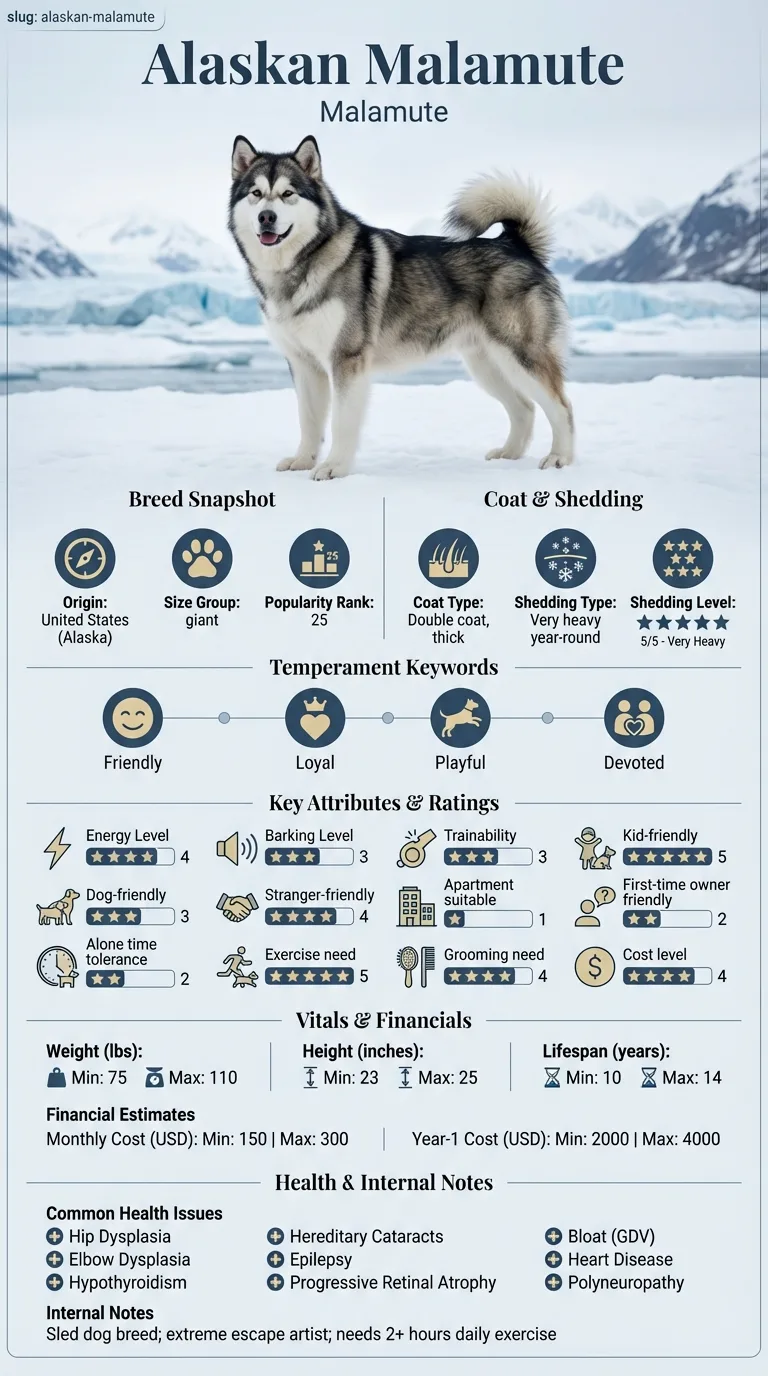
Alaskan Malamute obesity can be a serious issue for this breed. These giant dogs love to eat and can quickly gain weight if their diet and exercise aren't properly managed. Common signs include difficulty in movement, excessive panting, and a noticeable lack of energy.
Obesity is quite common among Alaskan Malamutes, especially since they require over two hours of exercise daily. Without proper management, many Malamutes can easily tip the scales, leading to potential health problems.
Alaskan Malamutes are giant dogs with a strong build, which can sometimes lead to overeating if not monitored. Their high energy and playfulness require a lot of exercise; without it, they may gain weight quickly. Additionally, their thick double coat can make them appear larger than they are, masking weight gain until it becomes a serious issue.
An environment that lacks physical activity can contribute to obesity in Malamutes. Many owners may not realize that these dogs need at least two hours of exercise daily. Also, the temptation of high-calorie treats and lack of structured feeding times can lead to weight problems.
If your Malamute is noticeably overweight or if you're unsure about their diet, consult your vet. They can provide tailored feeding guidelines and check for any underlying health issues contributing to obesity.
Managing Alaskan Malamute obesity can be tricky. Here are some common mistakes owners make that can actually worsen the situation, along with safer alternatives.
Start here: Alaskan Malamute Most Common Genetic Disorders: Screening
See all Alaskan Malamute health problems, which breeds are prone to obesity, or the full Alaskan Malamute breed guide for temperament, exercise needs and ownership costs.
You should start noticing improvements in your Alaskan Malamute's weight within 4 to 6 months of implementing a new diet and exercise plan.
Success means your Malamute reaches a healthy weight, has increased energy, and shows improved mobility. Their overall health and happiness will also enhance.
When Sarah adopted Max, her Alaskan Malamute, he was already overweight at 115 pounds. As a busy marketing manager, Sarah struggled to find time for his exercise needs, leading to his weight gain. After seeking help, she adjusted Max's diet and committed to daily walks, gradually increasing their duration. Within six months, Max lost 20 pounds, gained energy, and became more playful. Sarah learned to incorporate exercise into her routine, making it a bonding experience for both of them.
Key takeaway: Prioritize a balanced diet and regular exercise for your Alaskan Malamute, even with a busy schedule. Small changes can lead to significant health improvements.
Common signs of obesity in Alaskan Malamutes include difficulty breathing, excessive panting, and reluctance to exercise. You may also notice that their belly hangs lower than normal or that they have difficulty feeling their ribs. If you're unsure, a vet can help assess their weight.
To manage Alaskan Malamute obesity, start by adjusting their diet to include healthy portions and high-quality food. Increase their physical activity with daily walks and playtime, aiming for at least two hours of exercise. Consistency is key, so make these changes part of their routine.
Signs of obesity in Alaskan Malamutes include difficulty in breathing, a lack of energy, and difficulty in movement. You should also check if you can feel their ribs easily; if not, they might be overweight. Regularly monitoring their weight is essential for maintaining their health.
Yes, look for dog foods that are labeled as 'light' or 'weight control.' These options typically have fewer calories but maintain essential nutrients. Always consult your vet before making significant changes to their diet.
Engaging in high-energy activities is ideal for Alaskan Malamutes. Consider hiking, running, or playing fetch to keep them active. Incorporating training sessions can also mentally stimulate them while burning calories.
Since Alaskan Malamutes are a giant breed, it can be tricky to determine their ideal weight. A healthy Malamute typically weighs between 75 to 110 pounds. Consulting a vet can provide clarity on whether your dog is overweight based on their body condition score.
Yes, obesity can significantly increase the risk of health issues like hip dysplasia, heart disease, and diabetes. It's essential to manage their weight to prevent these potential complications. Regular check-ups with your vet can help monitor your dog's health.
If your senior Alaskan Malamute is gaining weight, consider adjusting their diet and exercise routine. Older dogs may require fewer calories and less intense exercise. Speak to your vet about a weight management plan tailored to your dog's age and activity level.
Obesity in Alaskan Malamutes can occur even with regular exercise if their diet is not properly managed. Overeating or high-calorie treats can contribute to weight gain. Keeping a close eye on their food intake and ensuring they have a balanced diet is crucial for weight management.
Limit treats and ensure they are healthy, increase their exercise time, and measure their food portions. Regular vet visits can help track their weight and overall health.
Aim for at least two hours of exercise each day. This can include walks, playtime, and training activities to keep them engaged.
Yes, obesity can contribute to serious health issues like hip dysplasia and heart disease. Keeping your Malamute at a healthy weight is crucial for their long-term wellbeing.
Absolutely! A vet can provide a tailored plan for weight management and check for any underlying health issues that may contribute to obesity.
A one-page prep sheet for this condition: the signs, the questions to ask, what to get priced. Unlocks here.
You get: Vet visit prep sheet
No spam. One-click unsubscribe. See our privacy policy.
Preview page 1 before you decide.