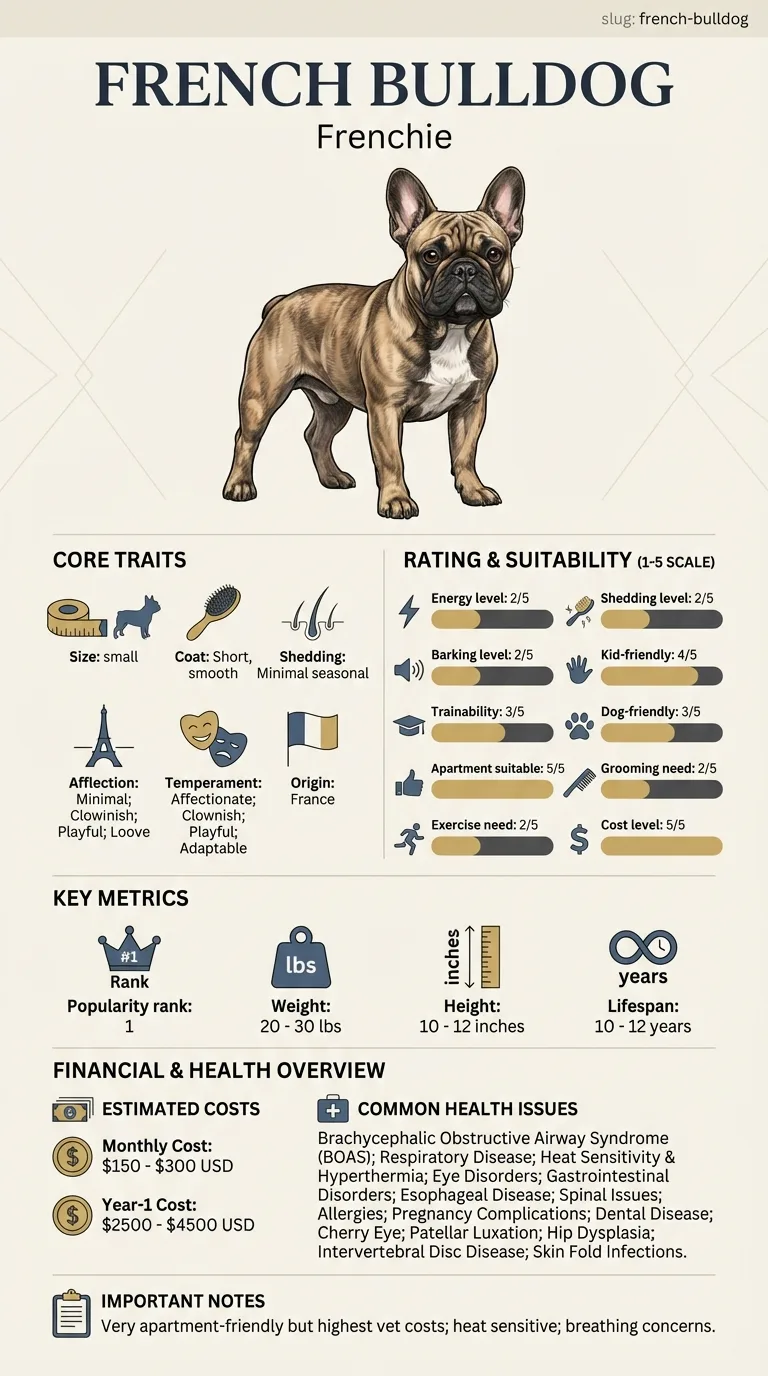
Spinal issues and intervertebral disc disease both appear on the French Bulldog's list, and they connect to something that looks purely cosmetic.
The short screw tail is produced by malformed vertebrae, and the same developmental process can affect vertebrae further up the spine — hemivertebrae, wedge-shaped bones that can destabilise the column and in some dogs compress the cord. Most affected dogs are fine; a proportion develop hind limb weakness or incontinence in the first year.
Practically that means treating a young Frenchie's back the way a Dachshund's is treated: discourage jumping off furniture, use ramps, keep the dog lean, and take unexplained hind limb weakness seriously and quickly.
Skin fold infections, eye disorders and cherry eye, allergies, gastrointestinal and oesophageal disease, dental disease and patellar luxation complete a long list, most of which follows from anatomy rather than luck.
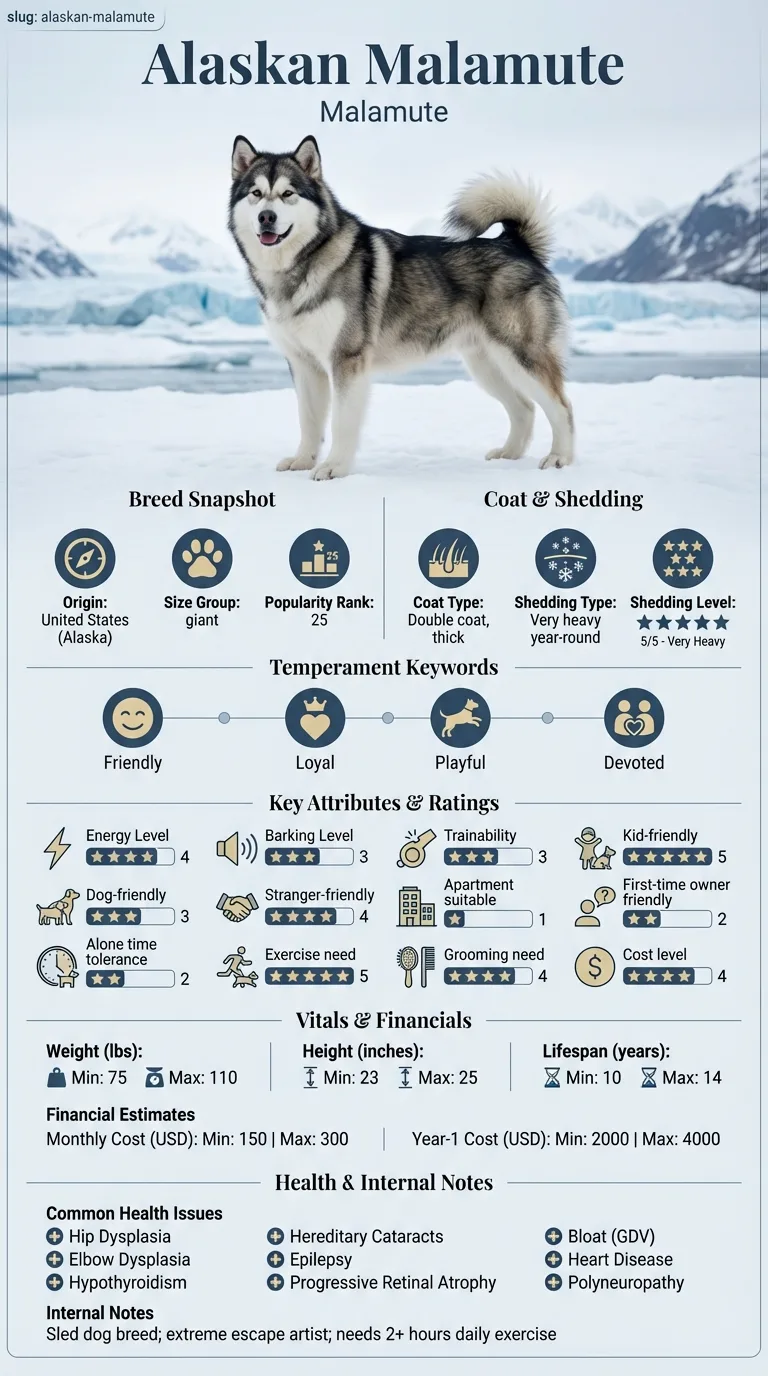
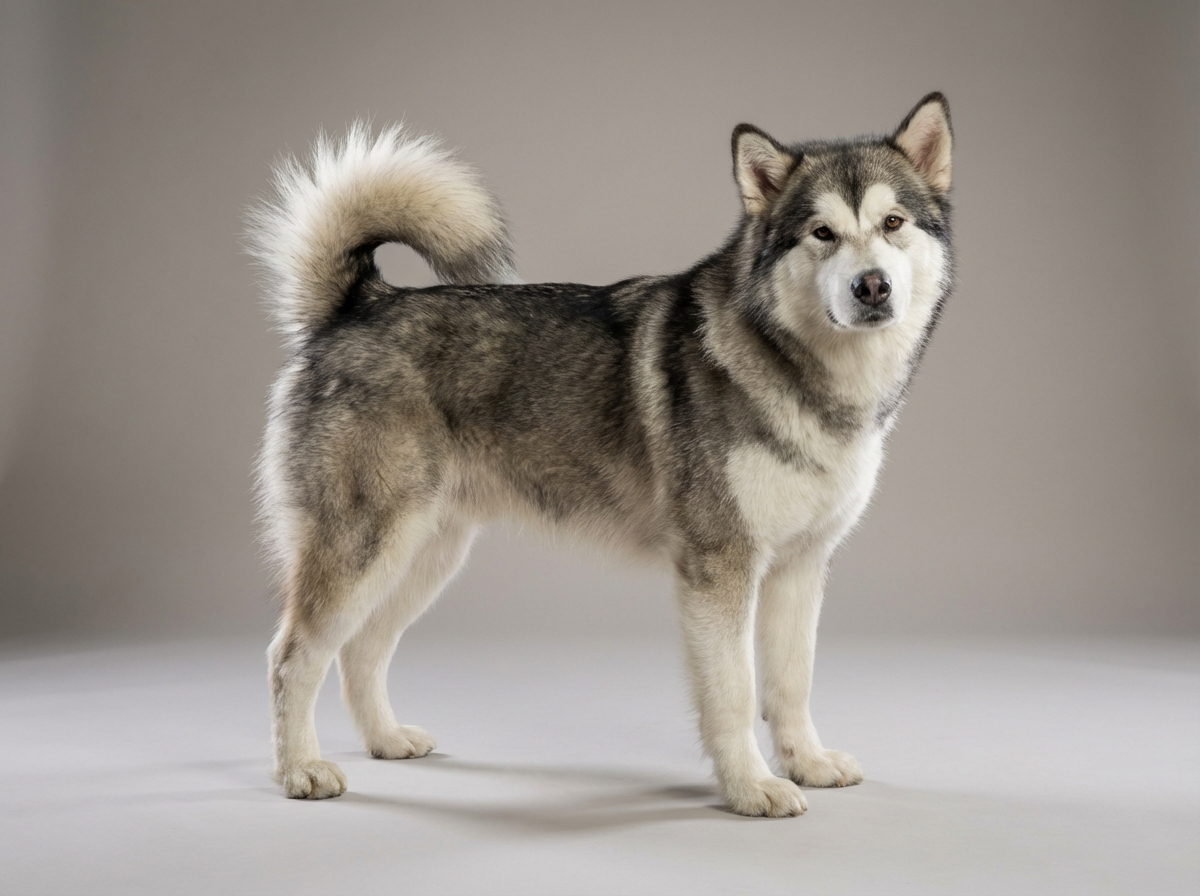
The Malamute's list is systemic instead — hip and elbow dysplasia, hypothyroidism, hereditary cataracts, progressive retinal atrophy, epilepsy, heart disease, bloat, inherited polyneuropathy and zinc-responsive skin disease — and only the Malamute carries a real bloat risk.