DogBreedCompass

Malamute or Basset: Two Hours a Day, or Twenty Minutes

The Malamute rates 5/5 for exercise and the Basset Hound rates 2/5. That is the widest gap on this site between two breeds of broadly similar weight, and it is the whole comparison: one dog needs two hours of hard work every day and the other genuinely does not.

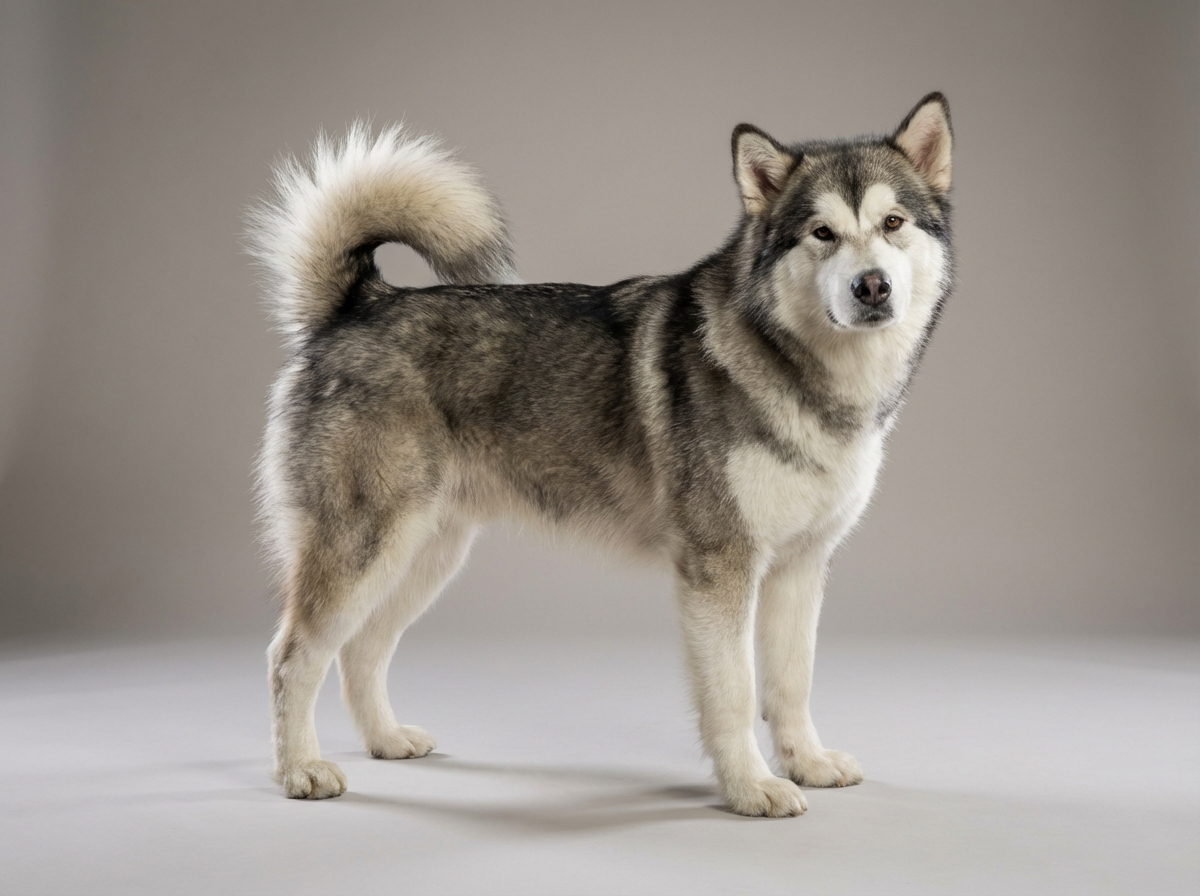
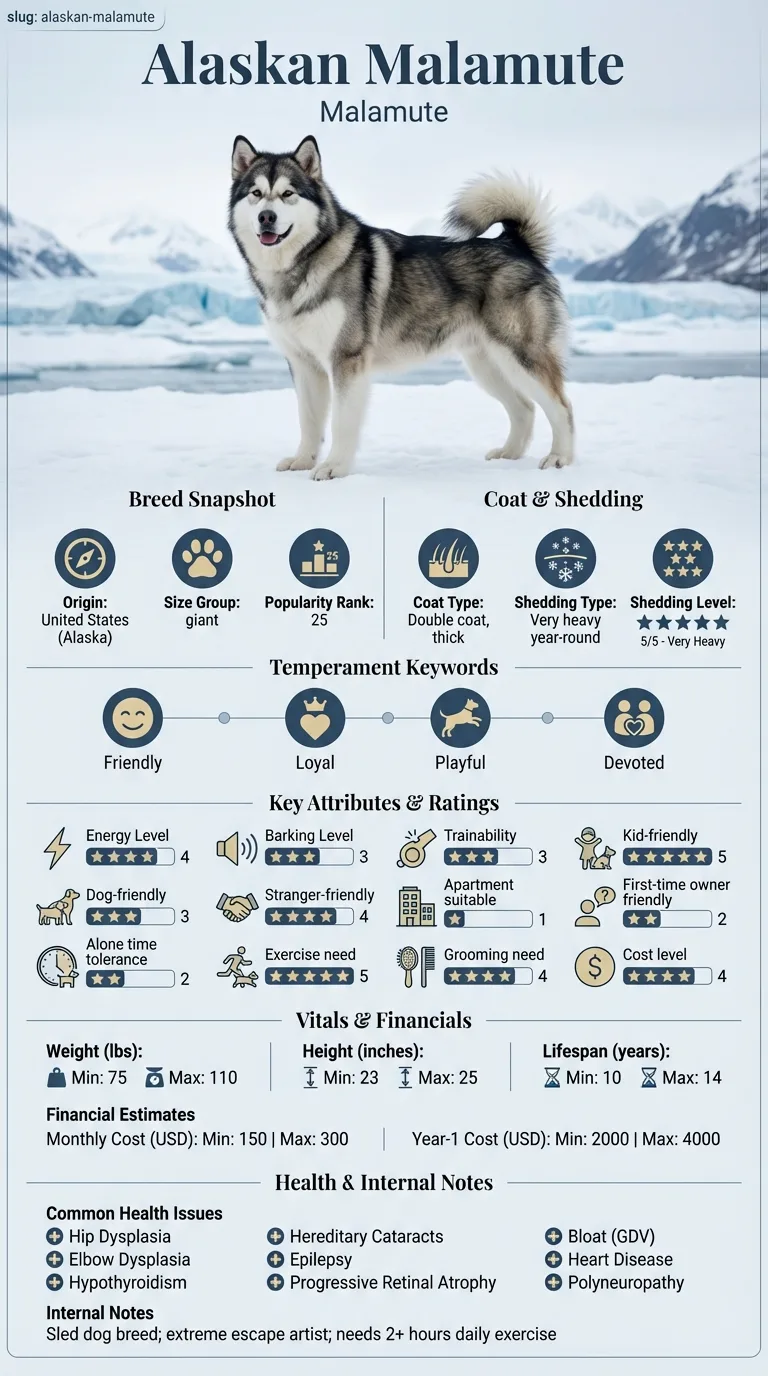
alaskan malamute infographic
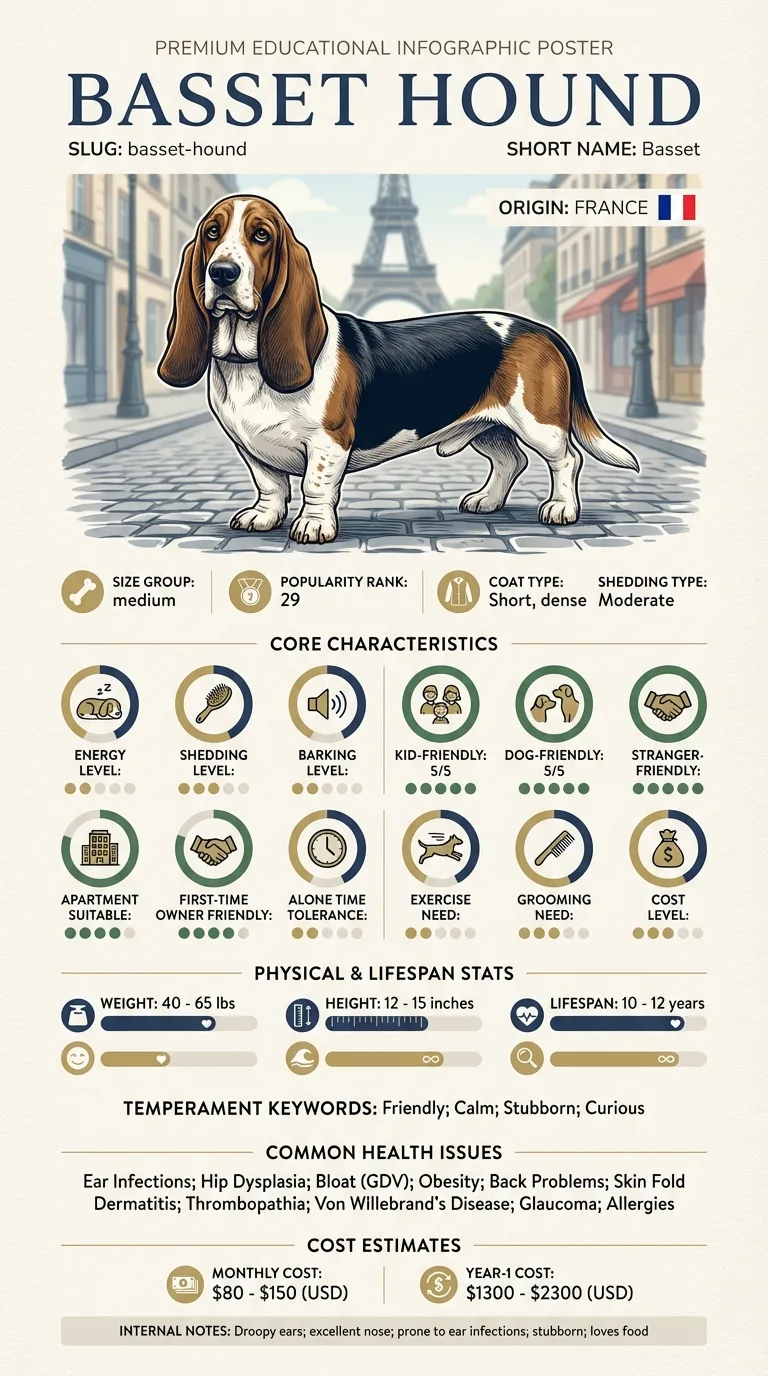
basset hound infographic

This page is for someone weighing a low-output scent hound against a high-output sled dog. It covers the exercise gap honestly, why weight matters so much in a Basset, chronic ear disease, a clotting disorder with a DNA test, and cost.

Quick verdict

The Basset is one of the least demanding dogs here in exercise and one of the most demanding in daily maintenance; the Malamute is the reverse.

Choose alaskan malamute if...

Choose the Alaskan Malamute if you are athletic and want a large sociable northern breed. It needs 5/5 exercise against the Basset's 2/5 and trains at 3/5 against 2/5. You are accepting $150–$300 a month against $80–$150, 5/5 shedding, 4/5 grooming, a 1/5 apartment rating and a determined escape artist.

Choose basset hound if...

Choose the Basset Hound if you want a calm, friendly, low-output dog. It rates 5/5 with children, other dogs and strangers, needs only 2/5 exercise, rates 4/5 for apartments and first-time owners, and costs $80–$150 a month. You are accepting daily ear and fold care, relentless food motivation and back problems.

Head-to-head comparison

Featurealaskan malamutebasset houndWinner
Weight75–110 lbs40–65 lbsEqual
Height23–25 in12–15 inEqual
Lifespan10–14 years10–12 yearsalaskan malamute
CoatThick double coatShort and denseEqual
Grooming needHigh (4/5)Moderate (3/5)basset hound
SheddingVery high (5/5)Moderate (3/5)basset hound
Energy levelHigh (4/5)Low (2/5)Equal
Exercise needVery high (5/5)Low (2/5)basset hound
TrainabilityModerate (3/5)Low (2/5)alaskan malamute
BarkingModerate (3/5)Low (2/5)basset hound
Good with kidsVery high (5/5)Very high (5/5)Equal
Good with other dogsModerate (3/5)Very high (5/5)basset hound
Friendly to strangersHigh (4/5)Very high (5/5)basset hound
Apartment suitabilityVery low (1/5)High (4/5)basset hound
Good for first-time ownersLow (2/5)High (4/5)basset hound
Tolerates being aloneLow (2/5)Low (2/5)Equal
Typical monthly cost$150–$300$80–$150basset hound
Typical first-year cost$2,000–$4,000$1,300–$2,300basset hound

Deep dive

Two hours against twenty minutes

A Malamute wants around two hours a day and it wants to pull. Carting, scootering, canicross and long hikes suit it; a walk does not. Heat is the constraint, so summer sessions move to the cool ends of the day.

A Basset wants two moderate walks and a chance to use its nose. Scent games and sniffing routes do far more for it than distance, and the breed is happy to trail slowly for a long time and then sleep for most of the day.

The important caveat is the opposite of what people assume. A Basset is not a lazy dog that can skip exercise — it is a heavy dog on short legs that will become obese without steady daily walking, and obesity is on its condition list for exactly that reason.

Jumping is the other limit. A 60-pound body on 13-inch legs should not be leaping off furniture repeatedly, and ramps are worth having.

The Malamute's 1/5 apartment rating against the Basset's 4/5 is entirely about this difference in output.

Why weight is the whole game in a Basset

Obesity and back problems both appear on the Basset Hound's condition list, and they are the same issue at two stages.

The breed is chondrodystrophic — the short legs come from a genetic condition that also makes the spinal discs degenerate and calcify earlier than they should. A degenerated disc can herniate and press on the spinal cord, producing anything from reluctance to jump through to hind limb weakness.

Every extra pound loads that spine, and a Basset gains weight extremely easily. This is one of the most food-motivated breeds alive: it will counter-surf, raid bins, and eat things that are not food, and a hound's portion looks small because the dog is short.

The management is unglamorous and lifelong. Weigh the food rather than scooping it. Use part of the daily ration for training instead of adding treats. Ramp the furniture the dog uses every day. Keep the dog visibly lean — a Basset should have a waist, which many do not.

The Malamute has no comparable spinal vulnerability, though it shares hip dysplasia and bloat risk.

Ears, folds and the daily maintenance

Ear infections head the Basset's condition list and the anatomy explains it completely. The ear leathers are the longest in dogs, they lie flat over the canal, they trail through everything on the ground, and they seal in warmth and moisture.

The routine is daily: check inside, dry thoroughly after any water or wet grass, and treat head shaking, a smell or head tilting as a reason to be seen rather than to wait. Repeated infections thicken the canal and each episode becomes harder to treat than the last.

Skin fold dermatitis is the second maintenance job. The loose skin around the face and neck traps moisture and debris, and folds need wiping and — importantly — drying.

The eyes are the third. Droopy lower lids leave the surface exposed, and glaucoma appears on the list, which is a same-day emergency: a suddenly red, cloudy or painful eye loses sight within hours if pressure is not brought down.

The Malamute's maintenance is seasonal rather than daily: an undercoat rake through two heavy shedding periods a year at 5/5, and a coat that should never be clipped.

A clotting disorder, and what each costs

Thrombopathia is the Basset item most owners have never heard of. It is an inherited platelet function disorder — the platelets are present in normal numbers but do not work properly — producing nosebleeds, bleeding from the gums, and excessive bleeding during surgery. There is a DNA test, and von Willebrand's disease appears on the list as well. Test before any elective procedure, including neutering.

Hip dysplasia, bloat and allergies complete the list.

The Malamute's own list runs to hip and elbow dysplasia, hypothyroidism, hereditary cataracts, progressive retinal atrophy, epilepsy, heart disease, bloat, inherited polyneuropathy and zinc-responsive skin disease.

Both carry a real bloat risk and both households should know the signs — unproductive retching, a distending abdomen, restlessness.

On money the Basset runs $80–$150 a month against $150–$300, and $1,300–$2,300 against $2,000–$4,000 in the first year. The gap narrows in practice because recurring ear treatment is close to inevitable in a Basset.

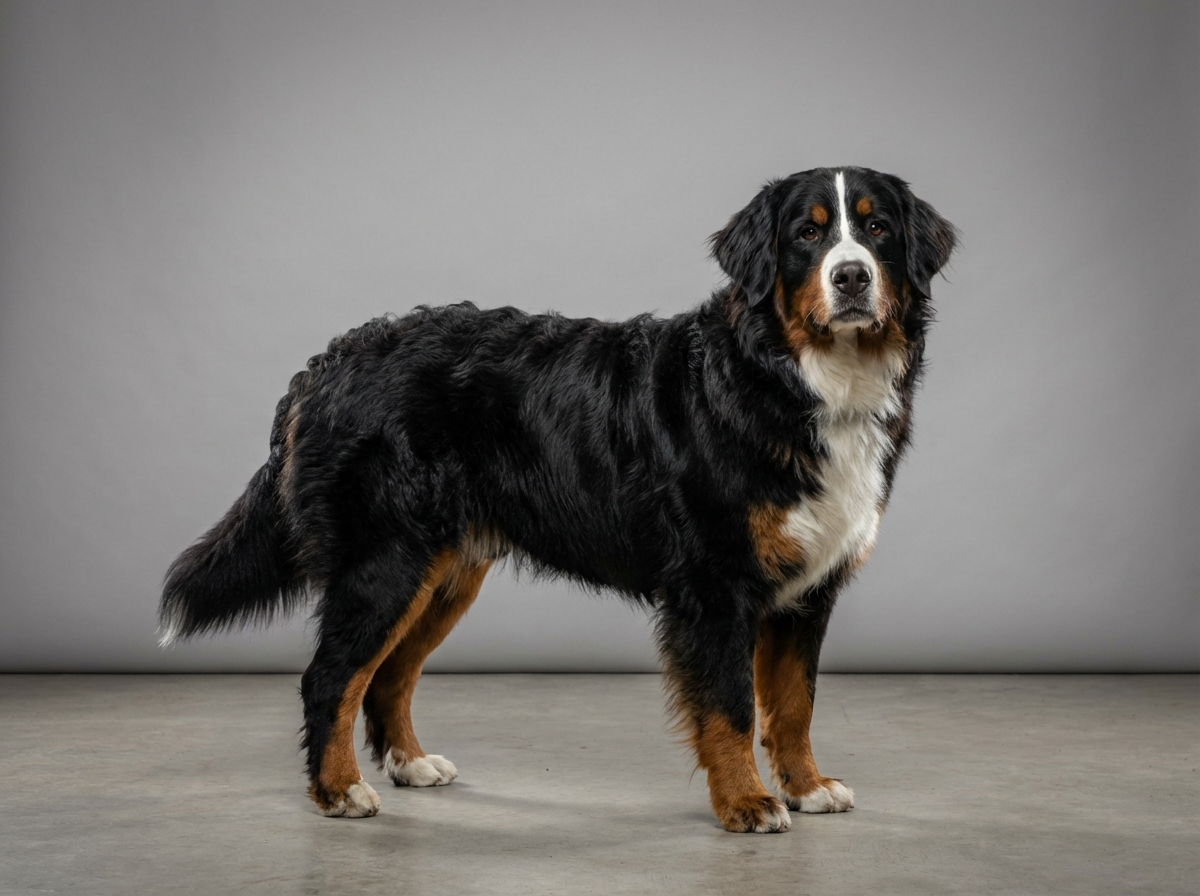
Alaskan Malamute vs Basset Hound: opposite ends of the same scale

Children ties at 5/5 and time alone ties at 2/5. Both are affectionate breeds that would rather not be left, and both are hopeless as guard dogs — the Basset rates 5/5 with strangers and the Malamute 4/5.

Everything else diverges. Exercise 5/5 against 2/5. Apartments 1/5 against 4/5. Cost $150–$300 against $80–$150.

The Basset is the easier dog on paper by a wide margin: friendlier with other dogs at 5/5, quieter at 2/5, cheaper, and suited to a flat.

What the ratings do not show is that the Basset's demands are daily and physical in a different way — ears, folds, weight and a vulnerable spine — while the Malamute's are simply hours outdoors.

Both have famously unreliable recall, for opposite reasons: one follows a scent and stops hearing you, the other simply travels.

Frequently asked questions

How much exercise does a Basset Hound need?

2/5 — two moderate walks a day with a chance to use its nose, against the Malamute's 5/5 and two hours of pulling work. The caveat is that a Basset is not a dog that can skip exercise: it is heavy, short-legged and gains weight extremely easily, and obesity is on its condition list.

Why do Basset Hounds get so many ear infections?

The ear leathers are the longest in dogs, lie flat over the canal, trail along the ground and seal in warmth and moisture. Check inside daily, dry thoroughly after water or wet grass, and treat head shaking or a smell as a reason to be seen — each infection makes the next harder to treat.

Do Bassets have back problems?

Yes. The short legs come from chondrodystrophy, which also makes the spinal discs degenerate and calcify early. A herniated disc can cause anything from reluctance to jump through to hind limb weakness. Keep the dog visibly lean, ramp the furniture it uses daily, and discourage repeated jumping down.

What is thrombopathia?

An inherited platelet function disorder found in Bassets — the platelets are present in normal numbers but do not work properly, causing nosebleeds, gum bleeding and excessive bleeding in surgery. There is a DNA test, and von Willebrand's disease also appears on the list. Test before any elective procedure.

Which is friendlier?

The Basset, and it is one of the friendliest profiles on this site — 5/5 with children, other dogs and strangers. The Malamute is close behind with people at 5/5 and 4/5 but only 3/5 with other dogs, where same-sex intolerance is common at social maturity. Neither is a guard dog.

Which is easier for a first-time owner?

The Basset Hound at 4/5 against the Malamute's 2/5. It is calm, friendly and low-output. The two things a novice underestimates are the daily ear and fold routine and how easily the breed gains weight — both are simple habits, and both matter more here than training does.

Can either be let off the lead?

Neither reliably. A Basset on a scent is genuinely deaf to you and will follow it for miles at its own pace; a Malamute simply travels, and its own breed notes call it an extreme escape artist. Long lines in open ground and a properly secured garden are the answer for both.

Quick answers

View more answers
Living

Malamute vs Basset Hound: which should I choose?

The Basset if you want a calm, friendly, low-output dog that suits a flat and a modest budget. The Malamute if you are athletic, have space and a properly secured garden, and want a large northern breed.

Costs

How much does each cost per month?

The Malamute runs $150–$300 a month and the Basset Hound $80–$150, with first-year totals of $2,000–$4,000 and $1,300–$2,300. Recurring ear treatment narrows the gap in practice.

Health

What is the most important Basset habit?

Weighing the food. Obesity is the main modifiable risk for the breed's spine and joints, and a short dog's portion looks small enough that scooping by eye reliably over-feeds it.

Living

Which sheds more?

The Malamute, by a wide margin — 5/5 against the Basset's 3/5, with grooming at 4/5 against 3/5. It sheds year-round and blows its undercoat in sheets twice a year, and the coat should never be clipped.

Related DogBreedCompass guides

  • Alaskan Malamute breed guideThe Malamute profile covers exercise, containment and the breed's coat.
  • Basset Hound breed guideThe Basset Hound profile covers ear care, weight management and spinal protection.
  • Malamute vs BeagleThe Beagle is the smaller scent hound most often weighed against the Basset.
  • Akita vs Alaskan MalamuteThe Akita comparison sets out how the Malamute differs from a Japanese guardian breed.
  • Basset Hound ear infectionsChronic ear disease is the condition most Basset owners will deal with at some point.
  • Malamute bloat and GDVBloat is a genuine emergency in both breeds and every owner should know the signs.

Related guides

Important reminder

Health information here is general and is not veterinary advice. If your dog shows pain, sudden behaviour change, or worsening symptoms, consult a licensed veterinarian.

Some links on this site are affiliate links. We may earn a commission at no extra cost to you, and we only suggest products we believe are helpful for dog owners.

Find Your Perfect Breed

Match your lifestyle to the right dog.

Take quiz

Find your match

Not sure which breed is right for you? Take our 2-minute quiz to find out.

Take the quiz