Behavior
What are quick tips for Alaskan Malamute separation anxiety?
Start with short absences and gradually increase the time. Provide puzzle toys to keep them busy while you’re gone. Avoid long goodbyes to lessen anxiety.

Quick answer
What are quick tips for Alaskan Malamute separation anxiety?
Start with short absences and gradually increase the time. Provide puzzle toys to keep them busy while you’re gone. Avoid long goodbyes to lessen anxiety.
Alaskan Malamute separation anxiety can be a challenging problem for both dogs and their owners. This condition leads to distress when left alone, which can manifest in various destructive behaviors.
Owners who work long hours or frequently leave their dogs alone may find this behavior particularly troubling. Busy families or first-time dog owners might also struggle to manage the emotional needs of their Malamute.
This guide is not medical advice. If your dog shows pain, sudden behavior change, or worsening symptoms, consult a licensed veterinarian.
Some links may be affiliate links. We may earn a commission at no extra cost to you. We only suggest products we believe are helpful for dog owners.
We research and check what we publish, but we do not warrant that any figure, date, price, or statement is accurate, complete, or current, and we accept no liability for any loss, cost, injury, or other harm arising from the use of this site. Use it as one reference among several. You remain responsible for your own decisions and for your dog's care - confirm anything that matters with a licensed veterinarian or another qualified professional before you act on it. Full disclaimer.
Alaskan Malamute separation anxiety is a common issue for this breed. They thrive on companionship and can become distressed when left alone. Symptoms may include excessive barking, destructive behavior, and attempts to escape, which can be challenging for owners to manage.
Separation anxiety is quite common among Alaskan Malamutes, especially for those who are not accustomed to being alone. Many owners report struggles with this issue, making it crucial to address early.
Alaskan Malamutes are naturally social and loyal dogs. Their strong bond with their owners can lead to anxiety when they are left alone. This breed thrives on companionship and can struggle to cope with solitude.
Changes in the home environment, such as moving to a new place or changes in family dynamics, can trigger separation anxiety. Additionally, a lack of mental and physical stimulation may leave them feeling anxious when alone.
If your Alaskan Malamute’s separation anxiety continues despite your efforts, a professional trainer can help. Look for trainers experienced in positive reinforcement techniques. They can provide personalized strategies tailored to your dog's needs.
If your dog's anxiety leads to destructive behavior or other health issues, it's time to talk to your vet. They may recommend behavior modification programs or medications to help manage your Malamute's anxiety.
Start here: Alaskan Malamute Most Common Genetic Disorders: Screening
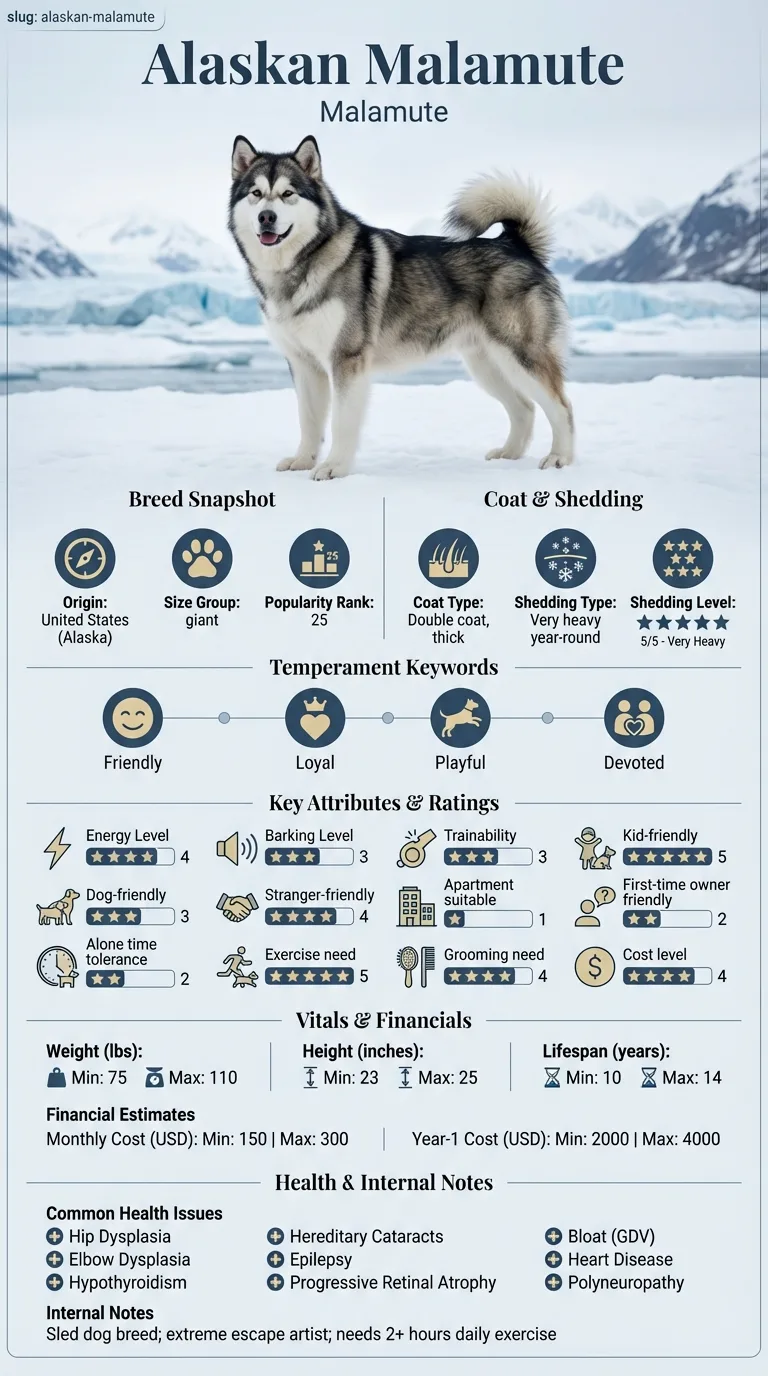
See all Alaskan Malamute health problems, which breeds are prone to separation anxiety, or the full Alaskan Malamute breed guide for temperament, exercise needs and ownership costs.
Typically, you should expect to see improvements in your Alaskan Malamute's separation anxiety within 4 to 6 weeks of consistent training and behavior modification techniques.
Success means your Malamute can stay alone for longer periods without distress. They may whine or bark less, appear relaxed, and engage in calming activities while you are away.
Avoiding common pitfalls can help ease your Alaskan Malamute's separation anxiety. Here are some mistakes to watch out for, along with safer alternatives.
Recognizing when your Alaskan Malamute's separation anxiety is an emergency can save your dog from serious distress. If your dog is showing signs of extreme panic, such as destructive behavior, excessive barking, or trying to escape, it's crucial to take action immediately. These behaviors can lead to injury or damage to your home, so don't hesitate to call your vet or a professional trainer.
On the other hand, if your Malamute is just whining or pacing but not causing harm, you might choose to monitor the situation. Creating a safe space with toys and comfort items can help. Gradual desensitization to your departures, along with consistent training, can also be effective without needing immediate intervention.
It's essential to distinguish between urgent cases and mild anxiety. If your dog is exhibiting severe distress, like excessive drooling or attempting to harm themselves, seek help right away. For milder signs, such as mild whining or restlessness, develop a plan to manage their anxiety over time. Always trust your instincts; if you're in doubt, a vet’s advice is invaluable.

Jessica, a busy nurse in Seattle, adopted Max, her Alaskan Malamute, thinking he would be a perfect companion. However, she quickly realized that he struggled with severe separation anxiety. Every time she left for work, Max would bark incessantly and even try to escape the house. Jessica felt guilty and overwhelmed. After researching online, she learned about separation anxiety training techniques. She started by gradually increasing the time Max spent alone, rewarding him for calm behavior. Slowly, Max began to feel more secure. Now, he waits patiently by the door and spends his alone time napping with his favorite toys. Jessica feels relieved knowing Max is more comfortable when she leaves.
Key takeaway: With patience and consistent training, you can help your Alaskan Malamute manage separation anxiety and feel secure when alone.
Common signs of separation anxiety in an Alaskan Malamute include excessive barking or howling, destructive behavior, and attempts to escape. You may also notice your dog becoming overly clingy when you're home or showing signs of distress when you prepare to leave.
To stop Alaskan Malamute separation anxiety, gradually train them to be alone for short periods. Start with just a few minutes and slowly increase the time while providing positive reinforcement. Consistency is key, so stick to a routine.
Signs include excessive barking, destructive behavior, and trying to escape when left alone. You might also notice changes in eating habits or increased clinginess when you are home. If these behaviors persist, consider consulting a trainer.
Yes, training can greatly help in reducing separation anxiety. Techniques such as crate training, desensitization, and providing engaging toys can ease their distress. Training should be combined with patience and understanding.
Medication can be effective for severe cases of separation anxiety. However, it should only be used under the guidance of a veterinarian. Combining medication with behavior modification techniques often yields the best results.
The time it takes varies by dog, but with consistent training, you may see improvements within a few weeks. Some dogs might take several months to fully adjust. Patience and consistency are important during this process.
Older Alaskan Malamutes may need a gentler approach to managing separation anxiety. Gradual desensitization to being alone, along with short departures that increase in duration, can help. Always consult your vet if the anxiety seems severe or if your dog shows signs of distress.
Yes, separation anxiety can develop suddenly in Alaskan Malamutes, often triggered by significant changes like moving to a new home, a change in family dynamics, or the loss of a companion. It's essential to address this behavior promptly to prevent it from worsening.
In some cases, medication may be necessary to help manage your Alaskan Malamute's separation anxiety, especially if training and behavior modification aren't enough. It's best to discuss this option with your veterinarian to find the right solution for your dog's needs.
Training an Alaskan Malamute with separation anxiety can take time and varies depending on the dog's individual temperament and the severity of the anxiety. Consistent training and patience are key, and it may take several weeks to months to see significant improvement.
Start with short absences and gradually increase the time. Provide puzzle toys to keep them busy while you’re gone. Avoid long goodbyes to lessen anxiety.
Alaskan Malamutes need at least 2 hours of exercise daily. Regular physical activity can help reduce anxiety and improve their overall mood.
If your Malamute destroys items, it’s a sign of anxiety. Ensure they have safe toys and consider training them to stay calm while you’re away.
Behaviour changes often start with pain. The prep sheet for this page covers what to rule out, and what to ask.
You get: Vet visit prep sheet
No spam. One-click unsubscribe. See our privacy policy.
Preview page 1 before you decide.