Health
What is DCM in dogs?
Dilated cardiomyopathy is a weakening and enlarging of the heart muscle that reduces the heart's pumping efficiency.

Quick answer
What is DCM in dogs?
Dilated cardiomyopathy is a weakening and enlarging of the heart muscle that reduces the heart's pumping efficiency.
Dilated cardiomyopathy is progressive, meaning it gets worse over time, and it often builds quietly for months before a dog shows any outward sign that something is wrong.
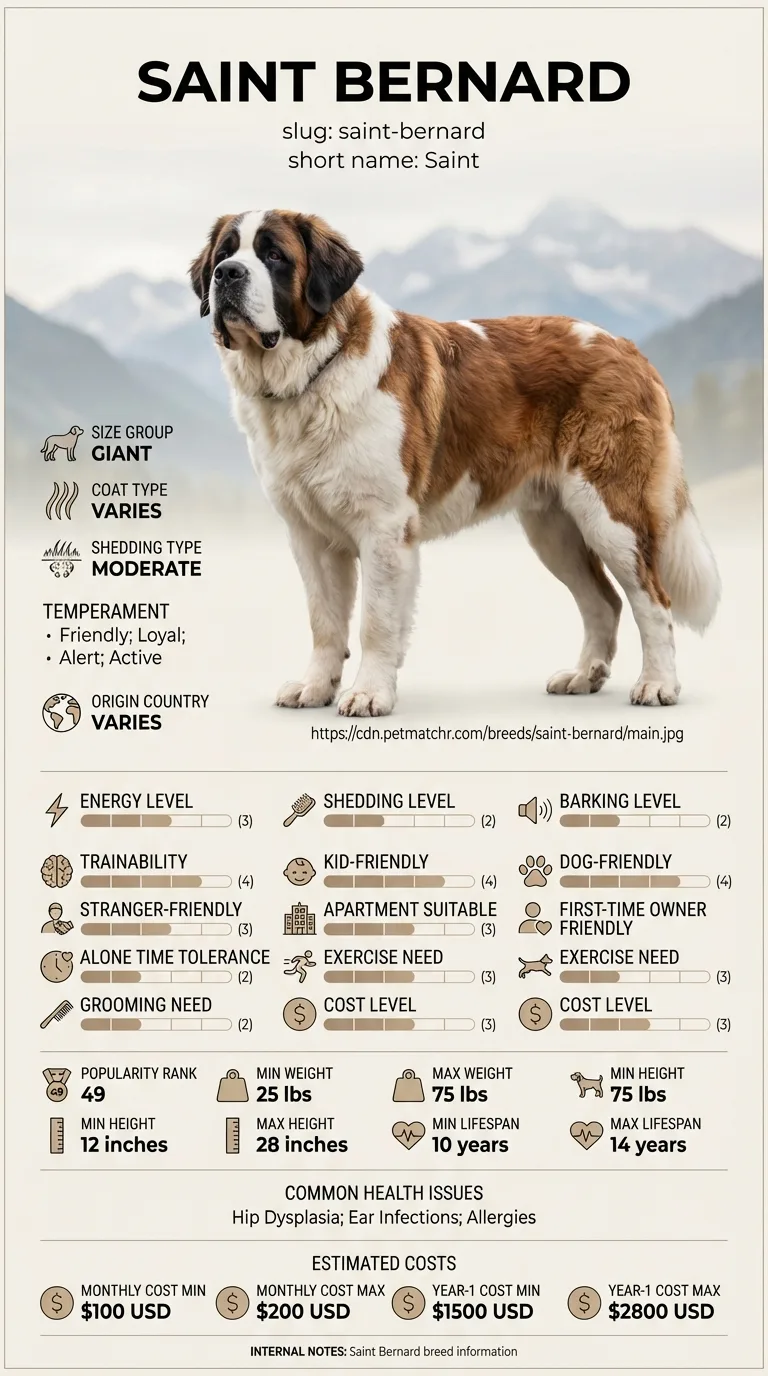
This hits hardest for owners of middle-aged Saint Bernards who assumed slowing down was just normal aging, only to learn later that a weakening heart was the actual cause.
This guide is not medical advice. If your dog shows pain, sudden behavior change, or worsening symptoms, consult a licensed veterinarian.
Some links may be affiliate links. We may earn a commission at no extra cost to you. We only suggest products we believe are helpful for dog owners.
Check this first
Congestive heart failure is the emergency version of dilated cardiomyopathy, and it happens when the weakened heart can no longer keep up and fluid backs up into the lungs or abdomen. Signs that mean an immediate vet visit include rapid or labored breathing at rest, a persistent cough that worsens at night, a swollen belly, pale or bluish gums, or sudden collapse. Any of these in a dog with known or suspected DCM should be treated as urgent.
Earlier-stage DCM looks much quieter: mild exercise intolerance, a slightly faster resting heart rate, or an incidental arrhythmia caught on an EKG with no symptoms the owner would ever notice at home. This stage is exactly why screening matters, because a dog can look completely normal while the heart muscle is already measurably weaker than it should be.
The practical takeaway is that DCM has a long silent runway and a short loud ending. Dogs diagnosed during the silent phase, through routine screening or investigation of a murmur, generally have more medication options and more time than dogs first diagnosed in the emergency room during a heart failure crisis.
If any of these apply, call your vet or an emergency clinic now. The rest of this page is for the cases that are not an emergency.
Dilated cardiomyopathy is a progressive disease of the heart muscle itself, distinct from a valve problem or a birth defect. In Saint Bernards it usually develops silently across months or years before symptoms are visible, which is why it is so often first discovered through a routine murmur check or screening echocardiogram rather than a complaint from the owner.
DCM is one of the more frequently cited cardiac conditions in Saint Bernards and other giant breeds, and it is a meaningful contributor to the breed's relatively short eight-to-ten-year average lifespan.
Giant breeds like the Saint Bernard carry a documented genetic vulnerability to dilated cardiomyopathy, where the heart's structural proteins or electrical conduction pathways don't hold up under the demands of moving blood through a very large body. As the left ventricle stretches to compensate, the muscle wall grows thinner and less able to contract forcefully.
Diet is the most studied environmental factor, particularly certain grain-free and legume-heavy commercial diets that have drawn scrutiny for a possible link to DCM in large dogs. General cardiovascular strain from excess weight, minimal exercise conditioning, or high heat can also accelerate how quickly a genetically predisposed heart begins to show measurable changes.
Reach out promptly for new coughing, faster resting breathing, reduced stamina on familiar routes, or an irregular pulse you notice while petting your dog's chest. Labored breathing at rest, blue or pale gums, a swollen abdomen, or collapse are emergencies requiring immediate veterinary care.
Because DCM is gradual, it is easy to make choices that quietly accelerate it without realizing what's happening.
See all Saint Bernard health problems, which breeds are prone to heart disease, or the full Saint Bernard breed guide for temperament, exercise needs and ownership costs.
DCM is typically caught in middle age through screening or symptom investigation, and once medicated, many dogs remain stable for a year or more, though the disease usually continues to progress slowly beneath the surface even with treatment.
Success means stable heart function on rechecks, a dog that can still enjoy an appropriate activity level, and avoiding or delaying congestive heart failure, rather than reversing the underlying muscle changes, which is not possible with current treatment.
If you think your Saint has heart disease, the plan is three steps: write down what you have seen and when it started, book a veterinary appointment rather than waiting for the next flare, and take video of the behaviour or symptom before you go — the thing you are worried about rarely happens in the consulting room. Screening in the parents covers hip dysplasia, elbow dysplasia, dilated cardiomyopathy.
What the vet visit should produce is a diagnosis and a written plan, not just reassurance: what is being ruled out, what the monitoring interval is, and which signs mean you come back sooner. Ask what the treatment costs across a year rather than per visit, because that is the number that decides whether you are managing this condition or reacting to it.
Between appointments, keep a short log — dates, what you saw, what changed. It is the single most useful thing an owner brings to a follow-up, and for heart disease it is often what separates a clear pattern from a guess.
Mark noticed Otto, his seven-year-old Saint Bernard, seemed to want shorter walks than usual, though he still ate and played normally. A vet check found a slightly elevated resting heart rate and referred Otto for an echocardiogram, which showed early dilated cardiomyopathy with a mildly enlarged left ventricle. Otto started cardiac medication immediately, and Mark switched him off a grain-free diet his vet flagged as a possible contributing factor. On recheck imaging eight months later, Otto's heart measurements had stabilized rather than worsened, and he was still managing his normal, slightly shortened walks without symptoms.
Key takeaway: Reduced stamina alone, without a cough or collapse, was enough of a signal to investigate, and that early catch is what gave Otto's treatment room to work before heart failure ever set in.
It is a disease where the heart muscle weakens and the chambers, especially the left ventricle, stretch and enlarge. As the muscle wall thins, the heart pumps less efficiently, which eventually can lead to congestive heart failure if untreated.
Giant breeds carry a documented genetic predisposition to DCM, and researchers have also examined links between certain grain-free or boutique diets and DCM development in large dogs, though the full picture is still being studied. A vet can advise on diet review alongside genetic risk.
An echocardiogram is the main diagnostic tool, measuring chamber size and how well the heart wall contracts. A vet may also use an EKG or a Holter monitor to catch arrhythmias that come and go, since DCM often carries irregular heartbeats alongside the structural changes.
No, DCM is not curable, but it is manageable. Medications can help the heart pump more efficiently, control fluid buildup, and manage arrhythmias, often extending both quality of life and lifespan meaningfully compared to no treatment.
It varies by dog, but progression can be faster in giant breeds simply because there is more body mass demanding blood flow from an already compromised heart. Some dogs stay stable on medication for a year or more; others progress to heart failure within months of diagnosis.
Subtle ones exist: quicker tiring on familiar walks, a slightly elevated resting respiratory rate, occasional coughing, or reduced enthusiasm for exercise. These are easy to miss because they build slowly, which is why periodic screening catches more cases than waiting for symptoms.
Yes, a vet-guided diet review is a standard part of treatment, particularly to rule out taurine or diet-related contributing factors and ensure the dog's nutrition supports rather than strains cardiac function.
Ongoing costs include ongoing cardiac medications, periodic rechecks with imaging, and potential hospitalization if the dog develops congestive heart failure, which together typically represent a significant recurring expense for the rest of the dog's life.
Dilated cardiomyopathy is a weakening and enlarging of the heart muscle that reduces the heart's pumping efficiency.
Yes, dilated cardiomyopathy is one of the most documented cardiac issues in this giant breed.
Often yes, at a reduced intensity set by a vet or cardiologist based on echocardiogram findings.
It typically involves ongoing medication and recurring cardiology rechecks, making it a real long-term cost.
Reduced stamina on a walk that used to be easy, or a new cough with no cold symptoms, are both worth mentioning to a vet.
A one-page prep sheet for this condition: the signs, the questions to ask, what to get priced. Unlocks here.
You get: Vet visit prep sheet
No spam. One-click unsubscribe. See our privacy policy.
Preview page 1 before you decide.